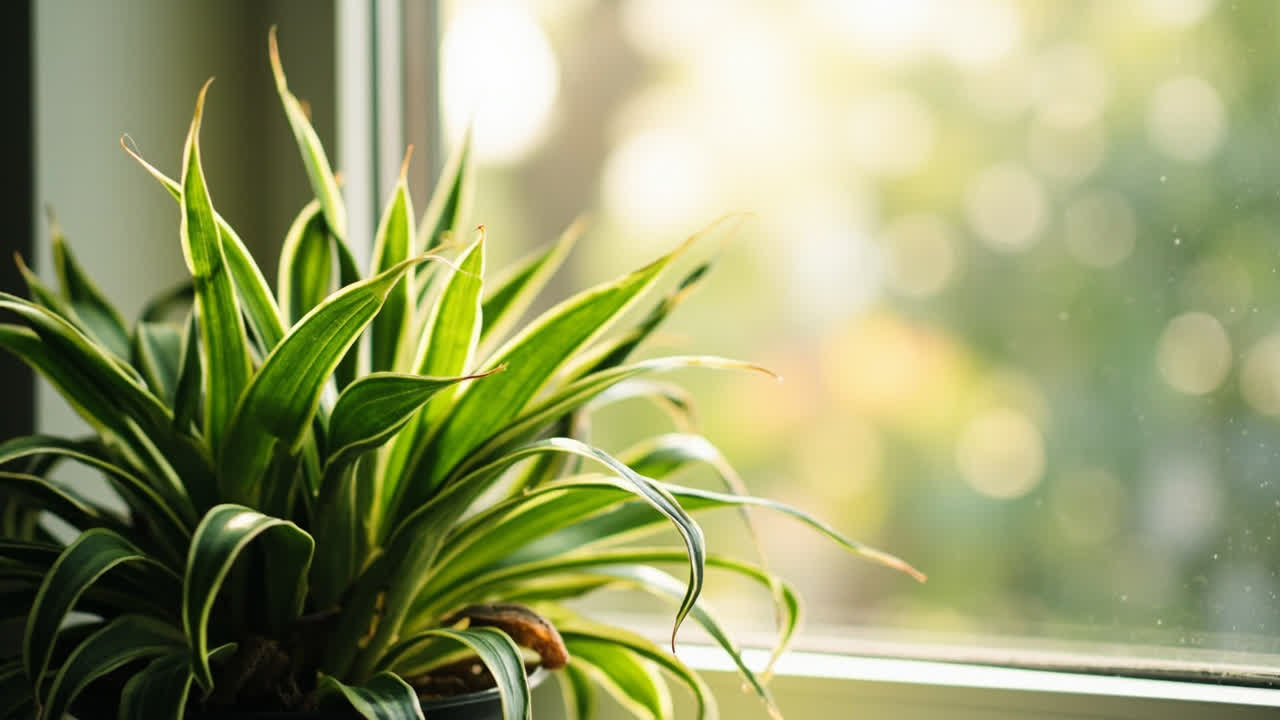
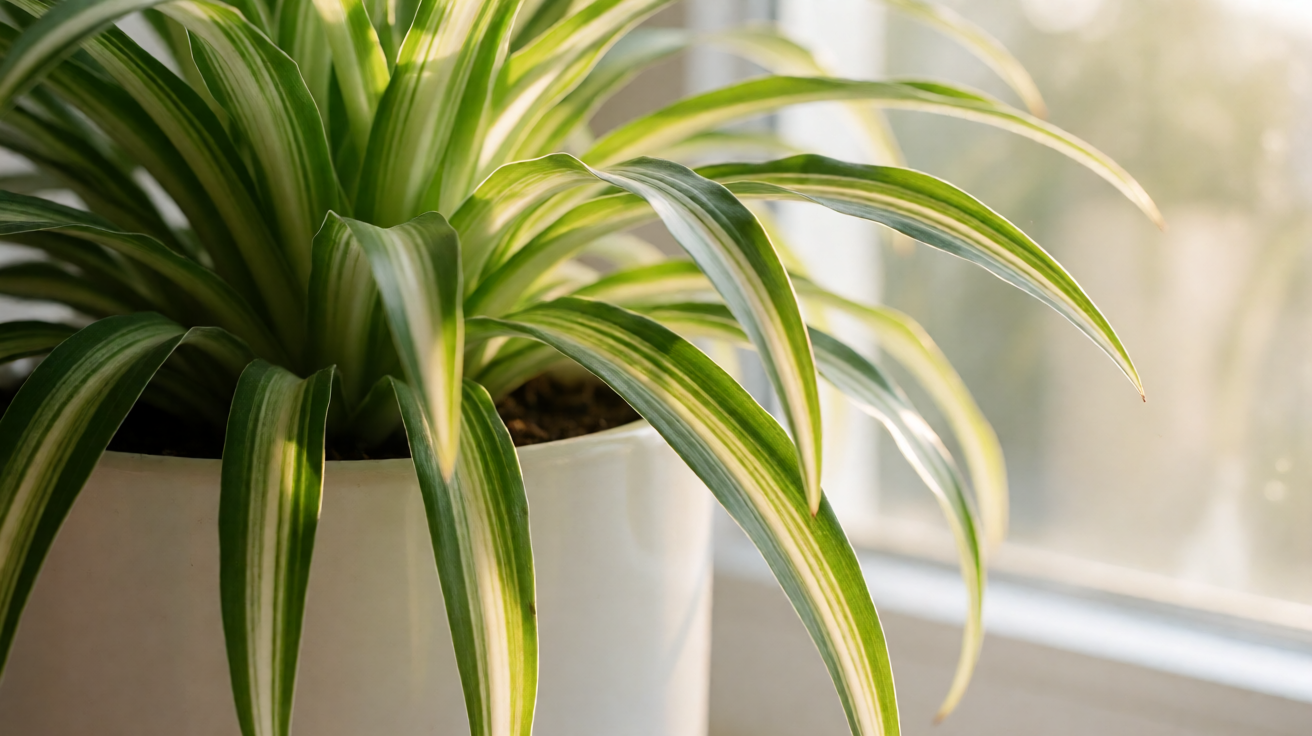
A Vittatum spider plant (Chlorophytum comosum) earns its name from the cream-white stripe that runs down the center of every ribbon leaf. If you are starting from scratch, the spider plant care guide covers the species-level rules this page builds on. That stripe is the first thing to disappear when the plant does not get enough bright indirect light. Vittatum is also pet-safe, and non-toxic to cats and non-toxic to dogs, which is one reason it shows up in so many beginner houseplant collections.
Most new Vittatum owners reach for this beginner houseplant because the central variegation on the arching leaf looks like a “premium” version of a normal spider plant. Then they quietly watch the white stripe fade within a few months. That fade is not a flaw in the plant. It is the plant telling you one thing: more light.
The stripe is not paint, and it is not a careful breeding trick that locks the variegation in place no matter where the plant sits. Vittatum is a chimeral variegation. The white cells are genetically distinct tissue living side by side with green cells. The green tissue photosynthesizes normally. The white tissue photosynthesizes poorly because it lacks chlorophyll.
When the plant senses it has plenty of bright indirect light to feed itself, it keeps both cell types and the variegated foliage stays stable. When it senses light is scarce, the plant starts producing leaves with more green and less white. Green cells earn more energy per leaf.
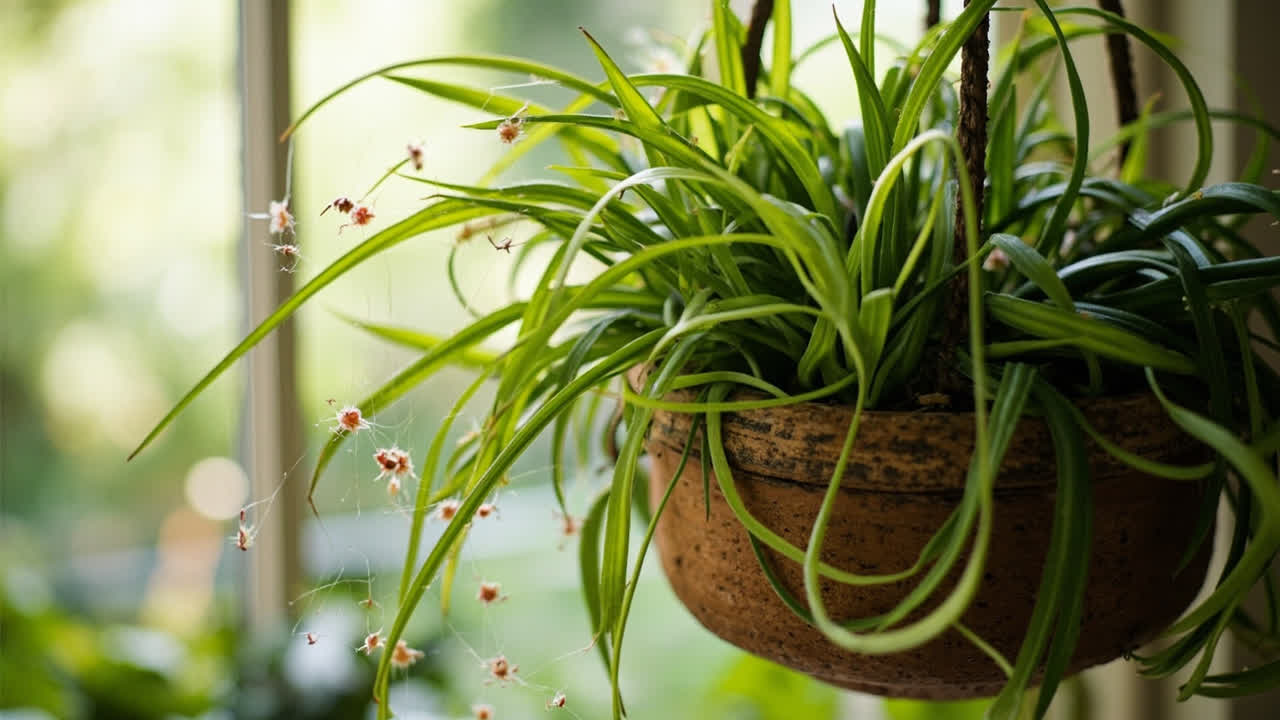
That is why your Vittatum came home with a crisp white center stripe on its arching leaf and is now sending out pale green leaves instead. A hanging basket near an east-facing window shows off the trailing plant at its best, and the white stripe looks crisp against a plain wall in bright indirect light.
The fix is light, and the rest of this page is the order in which you should fix it. Move the plant first, repot if the soil is heavy, then pause fertilizer for at least a month. If you do those three things in that order, the white stripe usually reasserts within four to six weeks.
Why the White Stripe Fades (and What That Tells You)
Chimeric variegation looks dramatic because two genetically different tissues coexist in the same leaf. It is also metabolically expensive. The white stripe carries little chlorophyll, so the plant has to run more bright indirect light through every leaf to keep both tissues alive.
The Royal Horticultural Society lists Vittatum as a bright-indirect-light cultivar, not a low-light cultivar. That single line is the most important sentence you will read about your plant. Treat it as a contract.
Marginal variegation behaves a little differently. The white sits on the leaf edge, which is older tissue and less central to the plant’s energy budget. Marginal cultivars tolerate a touch less light before they fade.
Vittatum is the opposite of Variegatum. The white runs down the center of the leaf, the most photosynthetically valuable real estate, so the plant treats the stripe as a luxury it can downsize in low light and revert to green.
That is why a Vittatum on a north-facing window in winter almost always reverts to green and reverts to type. The fleshy root and runner system gives Vittatum its tolerance for missed waterings.
A Vittatum four feet back from an east-facing window keeps its variegated foliage year-round. The plant is picky about photons.
If you remember one sentence from this page, make it this: Vittatum fading to green is a light problem, not a water problem, not a fertilizer problem, not a pot problem. For the deeper diagnostic, see spider plant variegation fading. The plant is conserving energy by reducing the white tissue it cannot afford to maintain. You reverse that decision by raising the bright indirect light it receives, not by adding anything else.
Reverting to green is also not a death sentence. The plant is alive, healthy, and capable of re-asserting variegation once light returns. Some owners even treat the fade as a diagnostic tool for this houseplant.
When new growth comes in pale green, you know exactly which window to move the plant toward. Watch the newest leaf two weeks after the move. If the white center stripe is whiter than the leaf before it, the plant is responding.
The One Rule: Bright Indirect Light, Every Day
Bright indirect light for Vittatum means four to six hours of sun filtered through a sheer curtain, or three to four hours of direct morning sun from an east-facing window. For the broader protocol, see the spider plant light requirements page. The plant handles an hour or two of direct late-afternoon sun from a west-facing window without burning. Anything more than that bleaches the white tissue and turns the stripe papery.
South-facing windows in summer usually need a sheer curtain or a back-from-the-glass placement to keep the white stripe from scorching. A fluorescent grow light on a six-hour timer covers winter.
Average humidity is fine. Monthly leaf cleaning with a damp cloth keeps the variegation crisp and catches early spider mites before they spread.
North-facing windows are where most Vittatum trouble starts. Vittatum’s low light tolerance is the lowest of any spider plant cultivar, which is why a north window in summer is fine only because the days are long and even a low sun angle adds up.
A north window in winter is not enough for a Vittatum in most climates. If your only window is north and the days are short, the plant will lose the white stripe and revert to type between November and February.
The honest fix is a cheap full-spectrum grow light on a six-hour timer for winter. Eight to twelve inches above the foliage is plenty for a Vittatum, and the white stripe will hold through the dark months.
If you are choosing between east and west windows, east is the safer default. Morning sunlight is cooler and matches the plant’s natural habitat under tree canopy in southern Africa.
West light works, but watch the leaf tips in late summer. The white tissue on the stripe browns first when heat and light combine, and that tip burn is what most owners read as a water problem rather than a fluoride sensitivity issue.
Pick a window, leave the plant alone, and let the new leaves tell you whether the spot is right.
Water, Pot, and Soil for Vittatum
Vittatum is not a different species from a regular spider plant, so its water needs are similar to the species average. What changes is that the white tissue shows stress first.
Fluoride, chlorine, and salt buildup show up as brown leaf tips before the rest of the plant looks thirsty. The best water for spider plants page compares tap, filtered, distilled, and rainwater side by side. If your tap water is heavily treated, switch to filtered water, distilled water, or rainwater within a week of bringing the plant home.
The white stripe is the canary. Brown leaf tips on Vittatum almost always point to the water source. Distilled water, rainwater, or filtered water all work; tap water is the usual culprit behind leaf tip browning. A solid-green spider plant hides the damage for months; Vittatum shows it within days.
A well-draining mix matters more for Vittatum than for a solid-green spider plant because the variegated tissue rots faster when it sits wet. Plain potting soil holds too much moisture for a Vittatum in a plastic nursery pot, especially in low humidity apartments.
Mix your own at two parts potting soil, one part perlite, and one part orchid bark. The best soil for spider plants page has the full ratio options. The goal is a mix that drains within ten seconds and does not stay soggy at the bottom of the pot. Good drainage prevents root rot in the storage root system.
Watering frequency depends on pot size and season, and the how often to water a spider plant guide covers the species rhythm. A Vittatum in a six-inch nursery pot under bright indirect light usually wants water every seven to ten days in summer and every fourteen to twenty-one days in winter.
The reliable test is weight. Lift the pot right after watering, then again two days later. When it feels noticeably lighter and the top inch of soil is dry, water thoroughly.
If you cannot lift the pot, push a wooden chopstick two inches into the soil. Clean and dry means water; dark and damp means wait two days.
Repotting Vittatum is not urgent, but the plant runs root bound faster than people expect because the fleshy storage root tubers multiply quickly. A Vittatum in a six-inch nursery pot usually wants an eight-inch decorative pot within twelve to fourteen months. Move up one pot size at a time to keep the pot size proportionate to the root bound stress.
Move up one pot size at a time, refresh half the soil, and water once after the move. Pause fertilizer for at least a month after repotting. Fresh soil has enough nutrients, and Vittatum responds to over-fertilization by dropping the stripe.
Fertilizer, or Why Less Is More for Vittatum
Spider plants in general do not need much fertilizer. Vittatum needs even less than a solid-green spider plant because the white tissue cannot use the extra nitrogen.
Use a balanced NPK diluted fertilizer at half strength once a month during spring and summer. Skip fertilizer from October through February to avoid salt buildup.
If your Vittatum came from a garden center, it was probably fed recently. The first month at home is a fertilizer pause, not a feeding window. New growth in that pause tells you whether the bright indirect light is right, without the noise of extra nitrogen.
Over-fertilizing Vittatum has a specific symptom pattern. The leaf tips show leaf tip browning with salt buildup, the white stripe shows leaf yellowing at the edges, and new leaves come in narrower. Leaf folding is another tell.
None of those symptoms look like a nitrogen shortage, which is why most owners fertilize again, making the symptoms worse. If your Vittatum has those three signs, leach the pot with plain water three times in a row, then skip balanced fertilizer for six weeks.
The honest limit on fertilizer for Vittatum is that the plant does not reward you for feeding it. A Vittatum in bright indirect light with the right pot and water will hold its stripe and produce plantlets with no fertilizer at all.
Fertilizer speeds growth, but growth is not the goal. Stable variegation is. Treat fertilizer as an optional accelerant, not a care requirement, and watch for over-fertilization signs within a month of any feed.
Propagation That Keeps the Stripe
Vittatum propagates true to type from plantlets. The full spider plant propagation guide covers water, soil, and division mechanics. The spiderettes grow from the mother plant’s meristem on a stolon (also called a runner) and carry the same chimeric tissue pattern. A spiderette that drops from a Vittatum stolon will grow into a Vittatum, not a generic spider plant.
Propagation in water and propagation in soil both work, and an offset already separated from the mother plant can be potted directly. Division is a different story, and root pruning during division often costs the variegated foliage on the cut half.
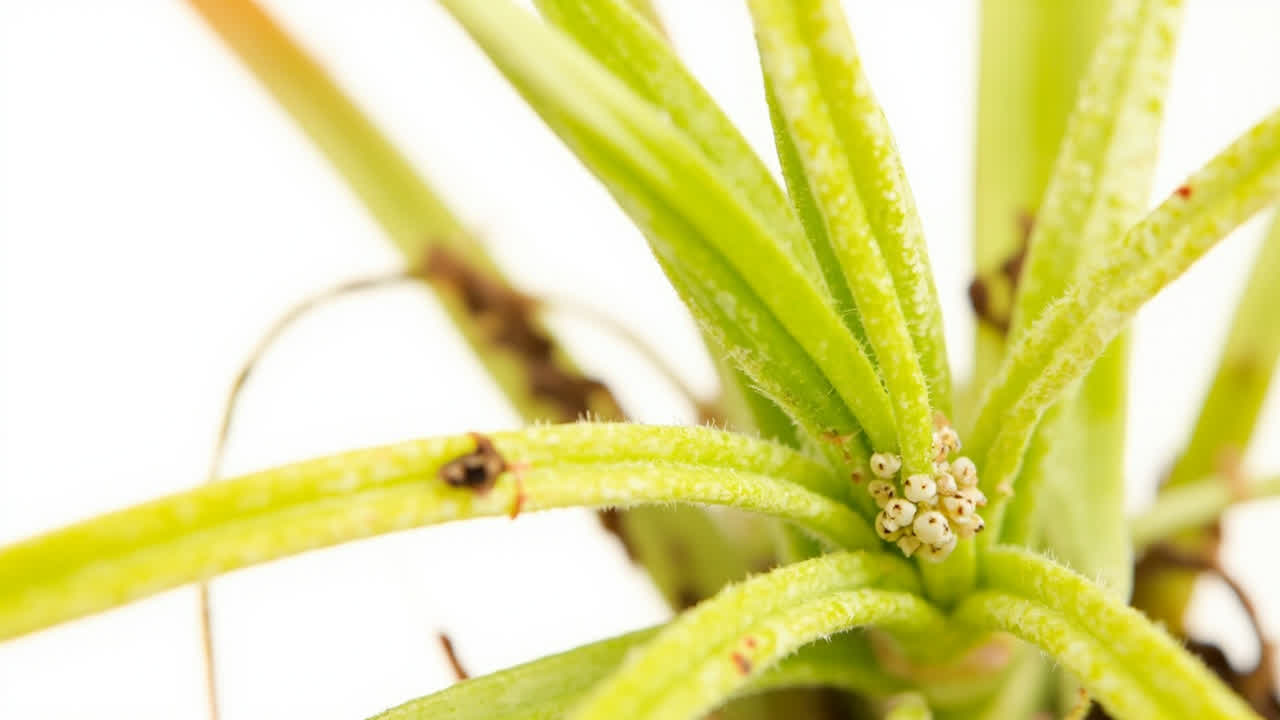
Water-propagating a Vittatum plantlet is the easiest method. Leave the spiderette attached to the mother plant until you see small white nubs at the base of the stolon. Those are the root initials that signal the plantlet is ready to root in filtered water.
Cut the stolon an inch below the plantlet, set the base in a narrow glass of filtered water, and refresh every three to four days. Roots appear within two to three weeks.
Pot the plantlet into a three-inch nursery pot with the same well-draining mix you use for the mother plant once the roots are about an inch long. Keep the soil lightly moist for the first two weeks, then move to the normal watering rhythm. The spiderette will root fast in bright indirect light.
Soil-propagating a plantlet while it is still attached to the mother plant is the lower-effort path. Pin the base of the spiderette into a small nursery pot next to the mother plant.
Keep the soil lightly moist, and sever the stolon once the plantlet has rooted, usually within four to six weeks. This method skips the water-to-soil transition shock and works well for owners who do not want to manage a propagation jar.
Division is risky for Vittatum because the chimeric tissue is not evenly distributed across the fleshy root mass and tuber storage. If you slice a clump in half, one half may come up solid green because the white tissue was concentrated in the other half.
Root pruning does not change that outcome, and root rot risk rises on a half-clump with no tuber backup. An offset taken from the outside of the mother plant is the safer division.
If you need to divide, take smaller sections from the outside of the clump, where the variegated daughter plants have already separated naturally. Do not split the central crown.
If a division comes up green, do not discard it as a failure. It is still a healthy spider plant, just not a Vittatum anymore.
When to Move, Repot, or Replace
Three observations tell you which move to make next. If new leaves come in pale green or solid green, the plant wants more light, so move it.
If roots are circling the pot or pushing the plant up out of the soil, the plant wants a bigger pot, so repot it.
If the crown has gone fully green and the plant has stopped producing plantlets after a season in better light, the chimeric tissue has reverted and the plant is now a generic spider plant. Replace it or accept it as a green spider plant.
Moving a Vittatum should be done all at once, not gradually. The plant adapts to its light environment within two to three weeks.
Partial moves reset the adaptation clock each time. Pick the brightest indirect spot you have, move the plant there, and leave it alone for six weeks. New growth during that window tells you whether the move worked.
Repotting is its own decision. Skip fertilizer for a month. A Vittatum that jumps from a six-inch to a ten-inch pot often drops the stripe for a season while its roots fill the new soil.
Replacing a Vittatum is not a defeat. Most beginner houseplant owners go through two or three Vittatums in the first year of learning the plant, and that is normal. A pothos comparison comes up often in houseplant forums because both species tolerate some neglect, but Vittatum punishes low light faster.
The replacement cycle is faster than for a solid-green spider plant because variegation adds an extra variable to manage. If you decide to replace, buy from a source that shows the mother plant, so you can see the white stripe contrast on a mature specimen and pick one that has held its variegation under the seller’s conditions.
Vittatum vs the Other Cultivars (Quick Map)
Vittatum is the most widely sold spider plant cultivar and the easiest to find in garden centers, with its signature ribbon leaf and central white stripe. Bonnie is the curly-leafed variant with the same variegation, slightly slower-growing, and a touch more forgiving of lower light.
Reverse Variegatum and reverse variegation flip the pattern entirely. Propagation in water and propagation in soil both work on Vittatum plantlets.
Reverse Variegatum flips the pattern. The green runs down the center and the white sits on the edges, and it tolerates a touch less light because the green tissue is in the most valuable position. Curly spider plant has the same central stripe as Vittatum but with tightly curled leaves.
Hawaiian is a golden-striped cultivar that behaves like Vittatum but stays smaller. Curly spider plant adds tight leaf curl to the same central stripe. Both are valid second cultivars once Vittatum is stable, and both work as a trailing plant in a hanging basket for any pet-safe beginner houseplant collection.
If your window is dim, look at Reverse Variegatum first. The variegation sits on the edges and the plant tolerates lower light.
For the largest specimen with bright light, Vittatum is still the right pick. The cultivars are siblings, not substitutes.
This page does not cover those cultivars in depth. For the full cultivar map, see the spider plant varieties comparison. Each has its own care profile, and the sibling Variant pages cover the cultivar-specific rules. Treat Vittatum as the central member of the family, the one to learn first, and add the others once the stripe is stable on your Vittatum.
What This Page Owns, and What It Does Not
This page owns Vittatum-specific care decisions: the bright indirect light requirement, the water and fluoride sensitivity, the fertilizer restraint, and the propagation methods that keep the stripe. It does not own general spider plant care, pest identification, toxicity to pets, or cultivar comparisons.
For pest problems, start with the spider plant pest identification page. For toxicity to cats and dogs, the pet safety page is the right stop.
For a full comparison of cultivars, the varieties guide and the Vittatum-vs-Variegatum page go deeper than this article does. Vittatum is also non-toxic to cats and non-toxic to dogs, which makes it a safe pick for pet owners who want a forgiving houseplant.
The single sentence to carry forward is that Vittatum is a forgiving houseplant with one rule. Give it bright indirect light and the variegation holds. Break the rule and no balanced NPK fertilizer will save the central variegation.
Turn That PDF Into a Spreadsheet in Minutes
You've seen how to do it manually — now let the tool handle the heavy lifting. Upload your bank statement and get Excel, CSV, or QBO in a few clicks.
Try It Free