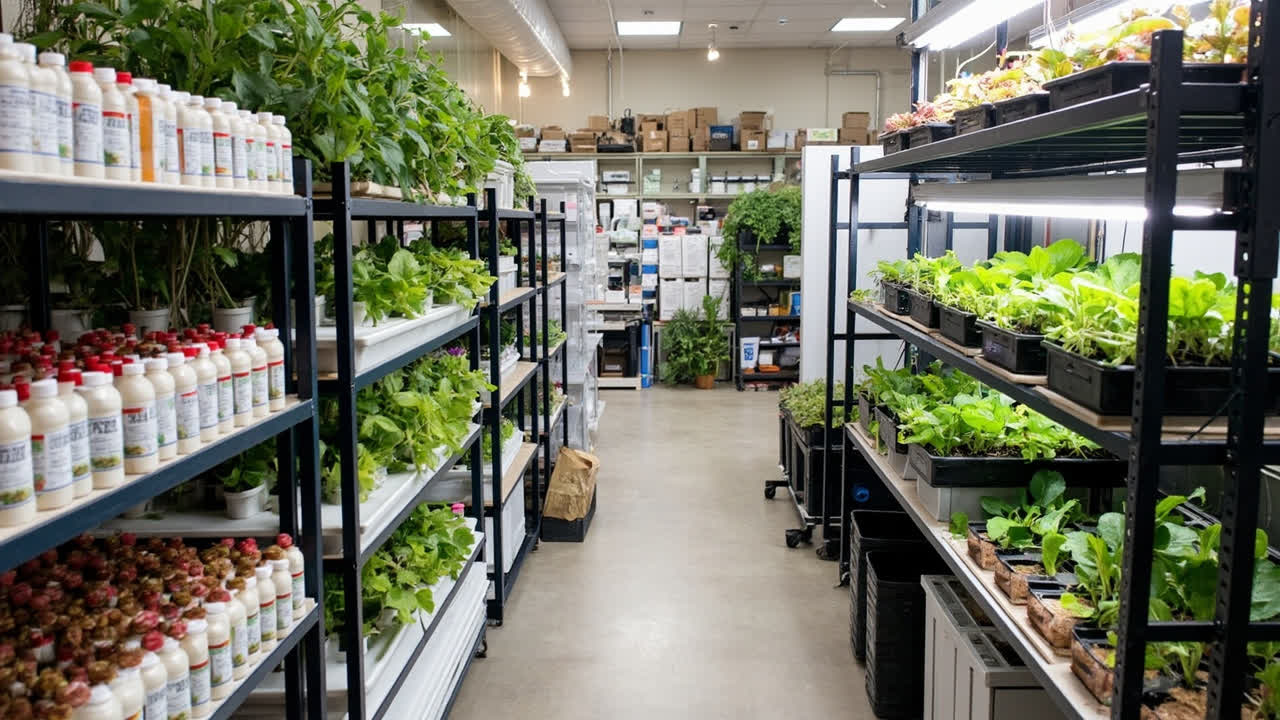

A hydroponics store is not the same as a garden center with a soilless-growing aisle added on. It is a specialty retailer that stocks entire systems, replacement parts, and a depth of consumables — nutrients, calibration solutions, growing media, pH meters — that general retailers do not carry or do not stock reliably. The difference matters because the most common failure modes in home hydroponic gardens are not equipment problems. They are calibration errors, mismatched nutrient regimes, and silent reservoir drift that goes unnoticed until a crop is past saving. A good hydroponics store is one that catches you before those mistakes compound.
Choosing the right store is therefore a meaningful decision — one that affects every grow cycle you run, not just the first one. The store you visit in week one is the store you return to when the EC reading climbs, when the pH drifts overnight, when a pump fails the day before transplant. A retailer that is operationally thoughtful — that stocks consumables for the brands it sells, that asks what you are growing before recommending a system, that explains trade-offs instead of upselling — is worth a slightly higher price on day one. The cost of the first system is a small fraction of the total cost across multiple grows. The reliability of the store behind it is a much larger factor in your long-term success.
This guide walks through what actually predicts whether a hydroponics store will serve you well, the product categories you will encounter, and the questions worth asking before you commit. It applies whether you are a first-time buyer setting up a single DWC system on a balcony or an experienced grower expanding a multi-channel NFT setup. The criteria do not change — only the weight you assign to each one based on your specific goals and budget.
How to Evaluate a Hydroponics Store Before You Buy
A useful evaluation does not require deep hydroponic knowledge — it requires asking a few specific questions and noticing how staff respond. The quality of answers to these questions tells you more than any online rating, return policy, or shelf space the store occupies.
- Ask what pH range they target for the specific crop you want to grow, and whether that target shifts based on growth stage. Staff who know hydroponics will have a specific answer. Staff who do not will give you a vague range or redirect to a product.
- Ask whether they recommend starting with a pre-mixed nutrient or a two-part formula for your experience level. The answer should reflect your stated experience, not upsell to the most expensive option.
- Ask what happens if your EC reading comes back higher than the target range. The correct answer involves dilution with pH-adjusted water and identification of the cause — not “call us if that happens.”
- Ask whether they carry replacement parts for the systems they sell, or whether a warranty claim requires direct manufacturer contact. Stores that stock common consumables — air stones, air pumps, net pot rings — are operationally thoughtful in ways that matter when something breaks at 7 p.m. the night before harvest.
If the answers feel scripted or product-driven rather than diagnostic, that is a reliable signal that the store’s depth of expertise may not match its inventory breadth. A store that knows hydroponics well will guide you away from purchases you do not yet need — that is the strongest indicator of trustworthy advice. A pH management routine is one of the most common things first-time buyers underestimate, and a good store will warn you about the daily commitment before you spend.
What Most Buyers Get Wrong About Choosing a Hydroponics Store
The most common miscalculation is assuming that the store with the widest product selection or the lowest entry-level price is the best choice. Neither metric reliably predicts whether you will have a productive grow experience.
The criteria that actually predict a store’s usefulness are harder to evaluate before you visit: can they describe the difference between a DWC and an NFT system in the context of your specific growing goals? Do they stock replacement parts — air stones, air pumps, net pots, drip emitters — for the specific brands they sell, or do they point you to a manufacturer warranty for everything? Do they ask what you are growing, how much space you have, and whether this is your first hydroponic attempt before suggesting a system tier?
For a first-time buyer, the most useful hydroponics store is one where the staff can walk you through a complete first-grow cycle before you have bought anything: system selection, nutrient dosing schedule, pH management routine, and the most common failure modes to watch for in your first 30 days. That kind of guidance — specific, proactive, and grounded in direct experience — is what a general garden center cannot offer and what distinguishes a specialty hydroponics retailer worth returning to.
What Makes a Hydroponics Store Different from a Garden Center
A standard garden center sells plants, soil, and general-purpose fertilizers. A hydroponics store sells a complete soilless growing framework. The distinction matters because most failures in home hydroponic gardens do not come from faulty equipment — they come from the gap between buying a system and understanding how to run it.
A specialty hydroponics store bridges that gap. Staff at a well-run location should be able to explain why a deep water culture reservoir needs different calibration than a nutrient film technique channel, and why your pH target shifts depending on whether you are growing leafy greens or fruiting plants in the same system. That level of specificity — rooted in direct experience with the products they sell — is what you are paying for when you choose a dedicated retailer over a big-box gardening section.
The honest trade-off: Specialty hydroponics stores typically carry 20–40% higher prices than general retail for equivalent equipment. In return, you get product familiarity and the ability to source replacement parts without waiting for an online order. If your budget is strictly constrained, an online retailer can work — but factor in the cost of debugging your first grow without in-store guidance.
The Five Dimensions That Separate Good Stores from Great Ones
Not all hydroponics retailers perform equally across every category. Breaking the evaluation into five dimensions helps you identify which trade-offs matter most for your specific situation.
- Product range breadth — how comprehensively the store covers systems, nutrients, substrates, and instrumentation
- Nutrient and plant-science expertise — whether staff can explain feeding schedules, lockout prevention, and EC/pH calibration in practical terms
- System support and troubleshooting depth — can they help you diagnose a root rot issue or a dosing miscalculation over the counter?
- Price transparency and value — are entry-level kits clearly distinguished from commercial-grade equipment, or is everything bundled at a single price point?
- Online versus local presence — a physical location lets you see and handle products before buying; an online-only operation offers more catalog depth but no hands-on guidance
A store that excels in expertise and system support but carries a narrower product range will serve a beginner better than a warehouse-scale retailer with deep inventory but a staff that cannot explain the difference between a two-part nutrient formula and a pre-mixed one. For a first-time buyer, depth of guidance matters more than catalog breadth. The two are not interchangeable.
What You Can Actually Buy: Product Categories at a Hydroponics Store
Complete Hydroponic Systems
Pre-built hydroponic systems remove the trial-and-error from first-time setup. Rather than sourcing pumps, channels, and reservoirs separately and troubleshooting compatibility yourself, a complete system from a reputable hydroponics store comes assembled or in clearly labeled kits with manufacturer support behind them.
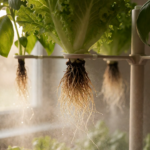
- Deep Water Culture (DWC): The plant’s root mass hangs suspended in a continuously oxygenated nutrient solution. DWC is the simplest and most forgiving system for beginners growing leafy greens and culinary herbs. The trade-off: reservoir temperature management is critical — warm solution invites root pathogens, and in ambient temperatures above 75°F (24°C), active cooling may be required. Stores with real experience will tell you this upfront rather than selling you a kit and wishing you luck.
- Nutrient Film Technique (NFT): A shallow, continuous film of nutrient solution flows over roots in angled channels. NFT excels for quick-maturing, lightweight crops like strawberries or baby lettuce. The trade-off: the margin for pump failure is narrow — if the flow interrupts in an NFT channel, plants stress within 24–48 hours. A good store will sell you a backup pump or at least warn you about the dependency.
- Aeroponics: Roots hang in air and receive periodic misting of atomized nutrient solution. This produces the fastest vegetative growth rates of any soilless method. The trade-off: atomization nozzles clog if your water source has particulates, and aeroponic misting cycles depend on reliable timers — any interruption causes rapid root dehydration. Most beginner-oriented hydroponics stores stock aeroponic kits, but whether staff can walk you through the maintenance schedule is a meaningful differentiator.
When evaluating pre-built systems at a hydroponics store, ask staff which brands they see return most often under warranty — that metric tells you more than any product spec sheet. A well-run store will give you a direct answer because they track that data internally.
Grow Lights, Nutrients, and Growing Media
These three categories form the foundational triad that every hydroponic system depends on — regardless of whether you choose DWC, NFT, or aeroponics.
Grow lights have largely transitioned from HID to full-spectrum LED in specialty retail environments. LED produces less heat, consumes 30–40% less electricity for equivalent photosynthetic photon flux, and carries a longer operational lifespan. The key metric in any lighting conversation is PAR output — photosynthetically active radiation — measured across the coverage area, not just at the bulb’s center. A reputable hydroponics store will help you match wattage and fixture design to your tent or room dimensions rather than just selling you the brightest lamp on the shelf. Budget online retailers frequently advertise theoretical coverage that underserves corner positions in larger grows.
Nutrient solutions at a dedicated hydroponics store fall into two broad categories: pre-mixed, single-bottle formulas for beginners, and concentrated two-part (A/B) solutions designed for intermediate to advanced growers. The two-part format prevents nutrient lockout that occurs when concentrated calcium and phosphate salts precipitate in storage. What most buyers get wrong: they assume more nutrient concentration produces faster growth. In reality, exceeding your system’s recommended EC range causes root-surface burn and lockout — the very condition you are trying to avoid. A store that explains EC targeting alongside your nutrient purchase is worth the visit.
Growing media provides root structural support and influences water retention, aeration, and pH stability. Expanded clay pebbles — commonly called hydroton — are inert, reusable, and drain freely, making them forgiving for first-time hydroponic gardeners. Coconut coir offers better water retention and is a renewable byproduct of coconut harvesting, but requires thorough buffering and rinsing before first use. Rockwool cubes are the standard for propagation in commercial hydroponic operations — they offer precise moisture control and rapid root establishment — but come with a significant trade-off: disposal is difficult because the material is not biodegradable, and loose rockwool fibers are a respiratory irritant during handling without proper protection.
Instrumentation and Environment Control
A complete hydroponic grow room needs more than just a system, lights, and nutrients. The ability to monitor and adjust your growing environment separates a productive setup from a frustrating one. This is the category where stores most commonly oversell beginners on unnecessary instrumentation — and where the difference between a helpful staff and a sales-driven one becomes most apparent.
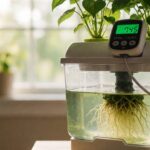
Essential instrumentation includes a reliable pH meter for testing your nutrient solution before each feeding, an EC meter for measuring total dissolved salts, oscillation fans for air circulation to prevent stagnant humidity zones, and carbon filters connected to extraction fans for odor control in enclosed grow spaces. More advanced instrumentation — infrared thermometers for canopy temperature checks, continuous PAR meters for light uniformity mapping — is worth exploring at a hydroponics store with experienced staff who can demonstrate why each tool matters for your specific crop selection.
The trade-off with instrumentation: Quality meters from brands like Bluelab or Hanna Instruments cost $60–120 and hold calibration for months. Budget meters in the $15–25 range are common at lower-end hydroponics retailers and big-box stores — they drift within weeks and give false readings that lead to nutrient miscalculation. A knowledgeable store will guide you toward the mid-tier instrument that actually works rather than the cheapest item in stock. If a store does not carry calibration solution alongside its pH pens, that gap in product thinking is worth noting.
Building a Relationship with a Hydroponics Store
A hydroponics store functions best as an ongoing resource rather than a one-time transaction. The first purchase — a system, a starter nutrient package, a basic pH kit — rarely goes perfectly, and the ability to return with questions about your specific reservoir readings or root zone observations has more impact on your first-grow success rate than the quality of equipment you selected.
The stores worth returning to are the ones where the staff treat your setup as a continuing conversation rather than a closed sale. After your first harvest, report back — even if it did not go as planned. Growers who maintain that feedback loop get earlier access to better product recommendations, advance notice of new nutrient lines or system designs, and more specific calibration support that compounds over successive growing cycles. The hydroponics store that earns that relationship is the one that becomes a genuine asset in your gardening practice, not just a place you bought a pump.
Aqualogi has deeper guides on choosing the right hydroponic system, how aeroponic and hydroponic systems compare, and optimizing grow light setups for indoor harvests — use them alongside a store visit to arrive prepared rather than overwhelmed.
Turn PDF Bank Statements Into Workable Spreadsheets
Your bank statement is a mess of numbers, but your books shouldn't be. Use our converter to get Excel, CSV, or QBO files — ready for QuickBooks.
Try It Free Now