
Spider plants (Chlorophytum comosum) are one of the easiest houseplants to ship across the US border – if you follow the right path. Most seized spider plant shipments fail for the same handful of reasons, and almost all of them trace back to a single federal rule most hobbyists have never read.
The rule sits in Title 7 of the Code of Federal Regulations, Part 319.37 – the section that governs imported nursery stock, bulbs, and roots.
The United States Department of Agriculture’s Animal and Plant Health Inspection Service (USDA APHIS) enforces it through the Plant Protection and Quarantine (PPQ) program.
Three gates apply to every spider plant that crosses the border: a soil prohibition, a permit pathway, and a state-level layer that can override the first two.
For context on the species itself – its plantlets, stolons, and root tubers – see the spider plant glossary, or the complete spider plant care guide for everyday cultivation. This page covers only the import rules.
The Three Federal Gates Every Spider Plant Must Clear
Every imported plant – spider plant, pothos, orchid, whatever – must satisfy three conditions before it enters the United States. None of them are negotiable. The good news: when a shipment satisfies the second gate (the small-lots pathway), the first and third collapse into it.
The soil prohibition
The Plant Protection Act (7 USC 2814) bans soil from entering the United States with imported plants. The ban is absolute for almost all hobbyist shipments. Soil carries nematodes, fungal spores, and insect eggs that the PPQ program has spent a century trying to keep out of domestic growing operations.
A spider plant cutting rooted in coco coir, peat, or any other organic medium is treated as if it carried soil. The only materials that survive inspection are bare-root plants with all growing media removed and rinsed clean, or tissue-cultured plantlets shipped in sterile agar in sealed containers.
The ACIR small-lots pathway
The Automated Commercial Import Records system, better known by its old name ACIR, allows small quantities of propagative material to enter the United States without a permit, without a fee, and without a phytosanitary certificate from the exporting country. The path is governed by 7 CFR 319.37-4 and applies specifically to personal, non-commercial shipments.
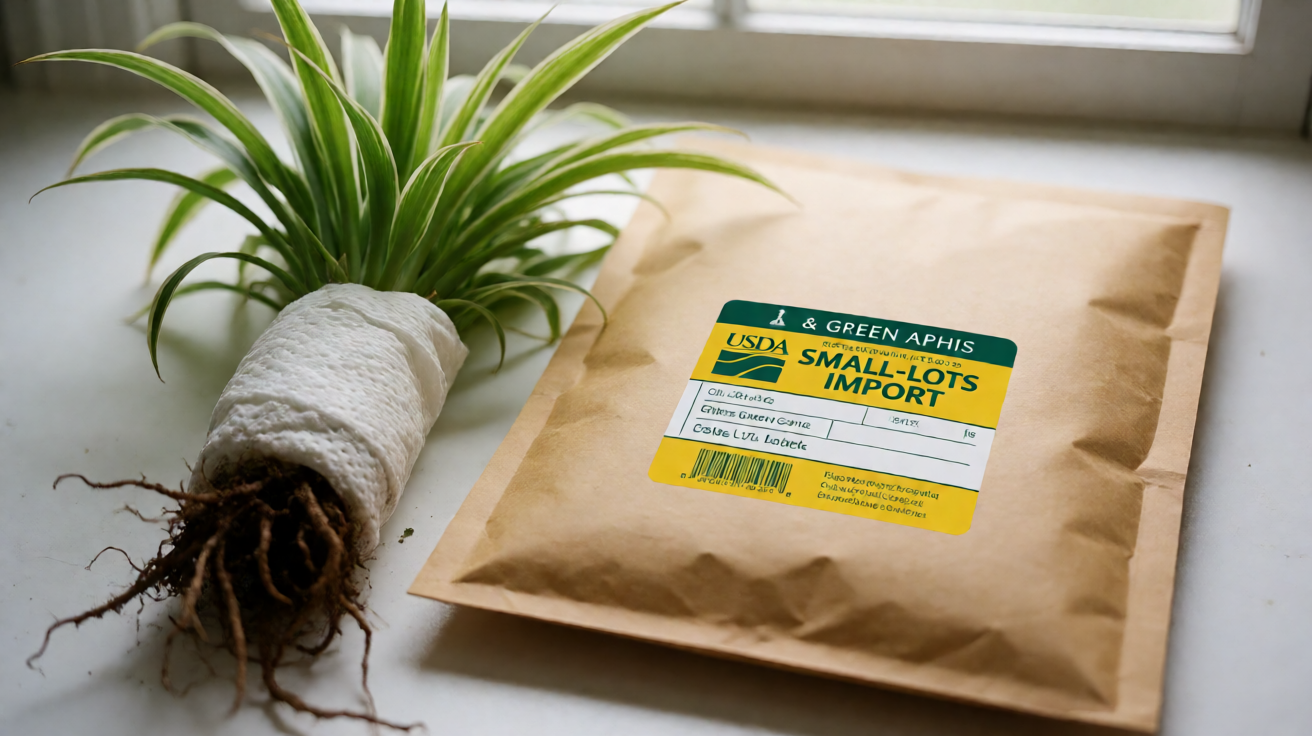
To use ACIR for a spider plant import, the shipment must arrive with a green-and-yellow label affixed to the outside of the package, must contain no more than twelve plants, and must originate from a country APHIS has not excluded from the program.
When a PPQ 587 permit is required
If the shipment is commercial – more than twelve plants, intended for resale, or arriving from a country not on the ACIR eligible list – a PPQ 587 permit is required.
The permit application costs $0 but takes 30 to 60 days to process. It requires a phytosanitary certificate from the exporting country’s plant health authority.
Post-entry quarantine may also apply, depending on the species and origin.
Most hobbyist spider plant imports will never need a PPQ 587 permit. The small-lots pathway covers the Etsy purchase, the eBay cutting swap, the rare-cultivar exchange between hobbyists in different countries. The permit exists for the nursery-scale order. Once a cutting clears import and arrives, the next question is how to root it – covered in the spider plant propagation guide.
ACIR – The Free Path for Most Hobbyist Imports
The ACIR green-and-yellow label is the single most useful tool in the hobbyist import toolkit. Stick it on the box, fill it out correctly, and the shipment is exempt from the permit requirement and from the phytosanitary certificate requirement. Forget it, and the same shipment can be seized at the port of entry.
The label itself is a small green-and-yellow sticker, available free from USDA APHIS. The importer affixes it to the outside of the package.
The exporter – the overseas nursery, hobbyist, or seller – fills in the contents, the country of origin, the importer’s name and address, and a count of the plants inside.
The importer signs a certification that the shipment is for personal, non-commercial use and not for resale.
Three constraints make or break the pathway.
First, the twelve-plant cap is per shipment – not per species or per order. Twelve spider plant cuttings across three orders is twelve plants per order, three orders to clear the cap.
Second, the plants must be clean and bare-root, or in an approved sterile medium.
Third, the country of origin must be on the APHIS-approved list. Countries with active phytosanitary restrictions are excluded.
When the label is correct, the package moves through inspection in days. When it is missing, incomplete, or filled out by the exporter instead of the importer, the package enters the hold queue at the port of entry, where PPQ officers will open it, inspect the contents, and either re-export, destroy, or – rarely – release the shipment after documentation is corrected.

State Interior Quarantines That Override Federal Permission
A federal pass is not the same as a state pass. Five US destinations maintain interior quarantines stricter than the federal framework: California, Florida, Hawaii, Puerto Rico, the US Virgin Islands, and Guam. A spider plant that clears US Customs in Miami can still be seized at the destination state agricultural inspection station.
California’s interior quarantine prohibits most out-of-state plant material without a state-issued permit.
Florida operates a similar system under the Florida Department of Agriculture and Consumer Services.
Hawaii’s quarantine is the strictest in the nation. Most mainland plants, including spider plants, require pre-shipment inspection and a Hawaii Department of Agriculture permit.
Puerto Rico, the US Virgin Islands, and Guam maintain parallel programs tied to their unique island ecologies.
The practical impact for a hobbyist is simple: if the spider plant is headed to one of these destinations, the importer needs both a federal pass (ACIR or PPQ 587) and a state or territory permit. Most hobbyist sellers on Etsy will not ship to these destinations; if they do, the buyer is responsible for the additional permit.
What Actually Happens at the Border
The ACIR small-lots pathway is designed to be invisible to the importer when it works correctly. The package arrives at a US International Mail Facility, the green-and-yellow label is scanned or visually verified, and the package moves into the domestic mail stream within 24 to 72 hours of arrival.
When something is wrong – missing label, soil contamination, prohibited country, excess quantity, misdeclared contents – the package moves to a PPQ hold area. The importer is contacted only if the package requires documentation correction. In practice, this means the importer often hears nothing until the package either arrives (everything fine) or fails to arrive and tracking shows it returned to sender (held, then re-exported).
For most ACIR-compliant spider plant imports, the process is invisible. For non-compliant ones, the most common outcome is destruction at the port of entry with no recourse to the importer beyond a request for refund from the seller.
Common Mistakes That Get Spider Plants Seized
PPQ seizure records for household houseplants show the same five failure modes year after year. Each is avoidable.
- Shipping a cutting rooted in soil. Even a teaspoon of organic growing medium around the roots triggers the soil ban. Bare-root only, or sterile agar for tissue-cultured plantlets.
- Missing or incomplete green-and-yellow label. The label must be on the outside of the package, filled out by the importer (not the seller), with the correct count and country of origin.
- Importing from a country excluded from ACIR. Countries with active phytosanitary restrictions or known invasive species pressures are excluded from the small-lots pathway. The current list is on the USDA APHIS website.
- Misdeclaring contents. Marking the package as “cuttings” or “plant material” without specifying species invites closer inspection. “12 spider plant cuttings, bare-root, personal use” is the right declaration.
- Exceeding the twelve-plant cap. A single order with fifteen cuttings is not a small lot. Split into two orders of twelve and seven (or accept the permit requirement for the larger shipment).
Of these, the soil prohibition is the one most hobbyists learn about only after the first seizure. The green-and-yellow label is the second.
Bringing a Spider Plant Back From a Trip Abroad
Travelers face the same federal rules as importers, but the inspection point is the airport agricultural inspection station rather than a mail facility. The advice from USDA APHIS is unambiguous: declare every plant, every cutting, every seed, and every fruit at the agricultural inspection station on the way back into the country.
A spider plant souvenir from a market in Mexico, a cutting shared by a fellow hobbyist in Thailand, a stolon pulled from a windowsill in Costa Rica – each one must be declared. Rinsing the roots in the hotel bathroom does not remove the soil ban; bare-root is the only acceptable state, and “rinsed” is rarely “bare-root” in the inspection sense.
If a traveler arrives with an undeclared plant, the most common outcome is confiscation and destruction.
If the traveler declares it, the officer inspects it. If it fails inspection, the traveler can abandon it, have it destroyed on-site, or in some ports re-export it at their own expense.
There is no fine for declaring. The fines and penalties attach to smuggling.
When Your Spider Plant Arrives Damaged or Wrong
If the package clears inspection and arrives but the spider plant is dead, rotting, or wrong species, recourse is against the seller, not USDA APHIS. The federal framework governs import eligibility, not plant quality. The seller’s refund policy, the payment platform’s buyer protection, and the carrier’s insurance are the only recourses.
If the package is held at the port of entry and the importer is contacted for documentation correction, the window to respond is short – typically 30 days before the package is destroyed or re-exported. Responding inside that window with corrected documentation can save the shipment; ignoring the notice guarantees loss.
For the receiving side of a hobbyist transaction – picking a healthy plant in the first place, and confirming it is non-toxic to the cats and dogs in the home – see the spider plant buying guide and the spider plant and pet safety page.
For most ACIR-compliant spider plant imports, none of this matters.
The package arrives, the plant is fine, and the importer never thinks about USDA APHIS again. The system is designed for that outcome.
One import lesson worth carrying into care: spiderettes that arrive bare-root and then sit in soggy nursery soil for a week are the fastest route to root rot. Pot them up the same day they clear inspection, into a fast-draining mix, and water once.
It is the non-compliant shipments that turn an Etsy purchase into a customs incident – and almost all of those incidents trace back to the soil ban, the missing label, or the excluded country.
Spider plants (Chlorophytum comosum) are not regulated under CITES, are not on any federal noxious weed list, and are not subject to any endangered-species protection. The only rules that apply are the import rules – and the import rules, once you understand the three gates, are surprisingly navigable for a hobbyist import.
How USDA Rules Intersect With Spider Plant Care
The import rules above cover what clears US Customs. The care terms below cover what keeps the Chlorophytum comosum alive once it arrives, because a passing inspection only solves half the hobbyist’s question.
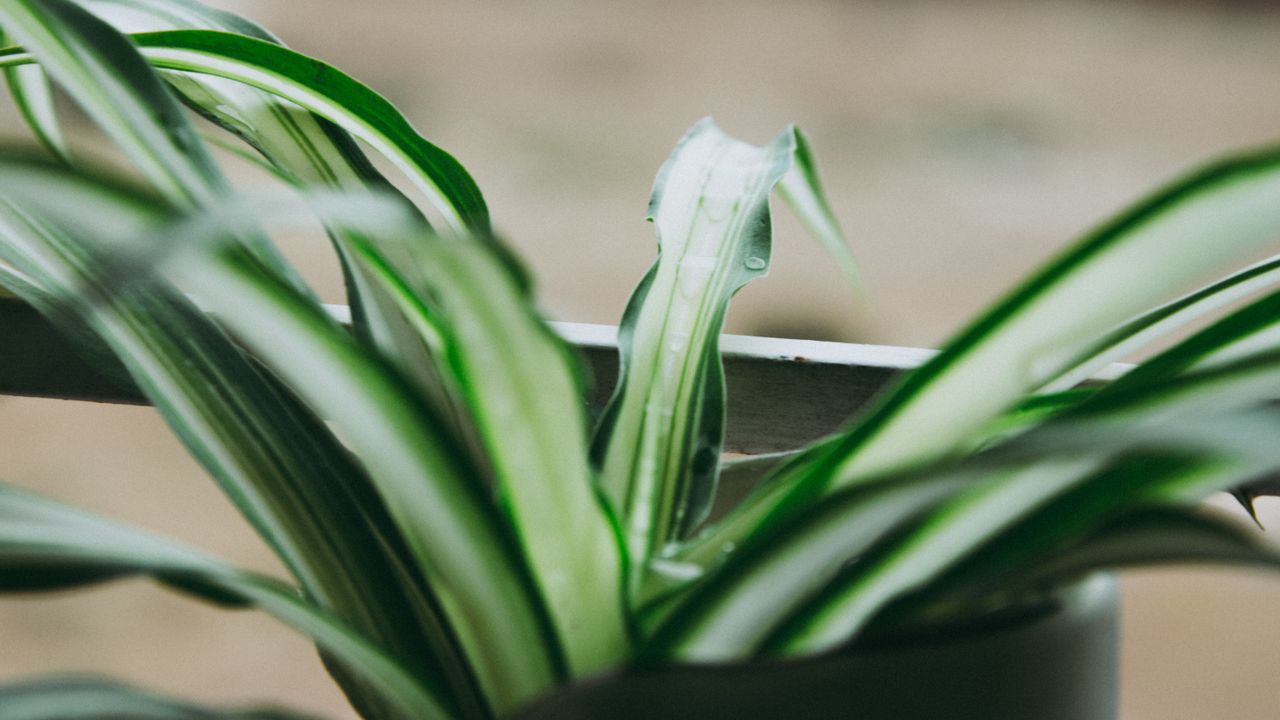
Spider plants with strong variegation on leaves with crisp white stripes, Vittatum and Variegatum cultivars, are slightly more sensitive to import stress than solid-green forms. The bright indirect light they need to keep their white stripes can fail in a north-facing window, and an east-facing window is often the safer placement.
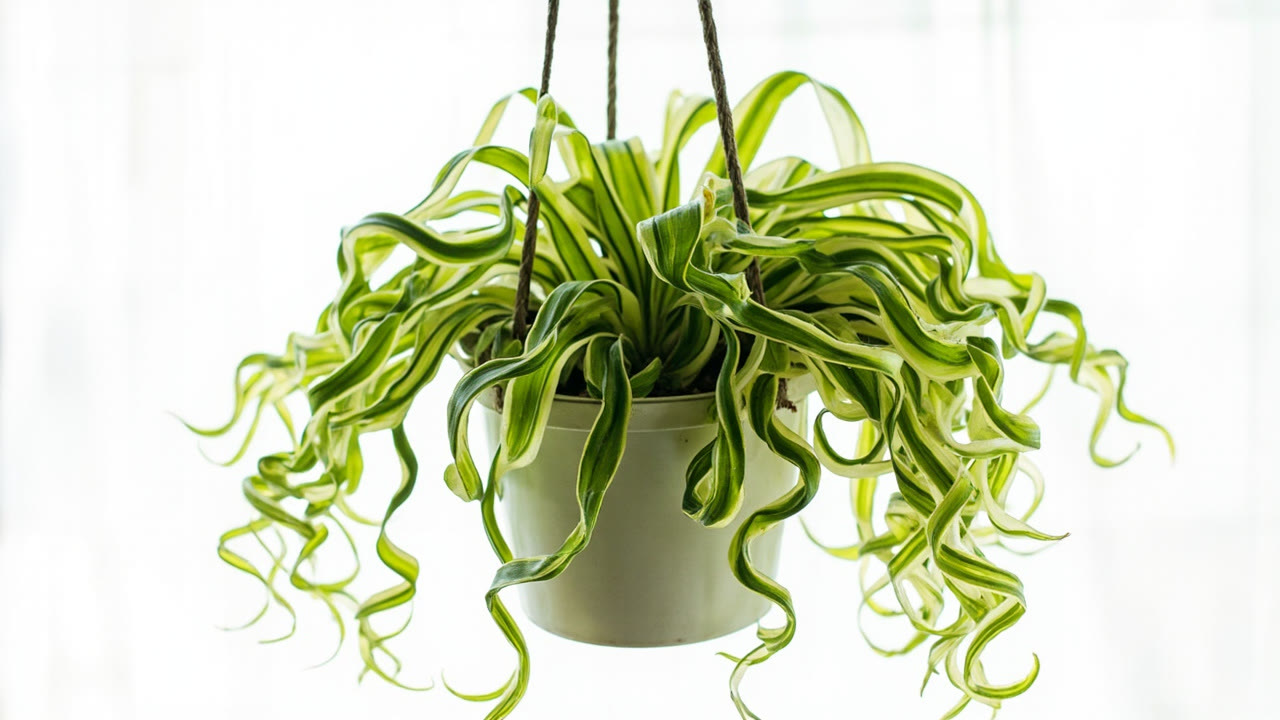
The Bonnie cultivar, a curly spider plant with tightly ruffled ribbon leaves, shows its variegation most clearly in bright indirect light. Reverse variegation, where the green is the center stripe and the cream sits at the leaf margin, behaves the opposite way – it tolerates lower light without losing its color.
Imported cuttings also have lower low light tolerance than established nursery plants for the first two months. Place them one tier brighter than usual until new growth shows the plant has settled into its arching leaf pattern.
Water quality and import survival
The biggest avoidable cause of post-import decline is watering with the wrong water. Spider plants are fluoride-sensitive; tap water with municipal fluoride causes brown leaf tips within weeks.
Three safe alternatives exist: distilled water, rainwater, and filtered water through a charcoal filter. Rainwater is the closest match to the plant’s native South African habitat.
For a hobbyist who just paid $35 in shipping and import handling to bring a rare cultivar into the US, the water choice is the cheapest insurance against leaf tip browning.
Potting and propagation after import
A newly arrived bare-root cutting should not go straight into a decorative pot without drainage. A nursery pot with drainage holes is the safer first home, even if the final pot size jump is small.
The mother plant will throw plantlets on arching stolons once it has recovered from import stress. Those plantlets can root in water (propagation in water) or directly in moist soil (propagation in soil); both work for healthy stock.
When the mother outgrows the nursery pot, division by separating the storage root and fleshy root clusters is the cleanest way to multiply without shocking the plant.
Light, humidity, and fertilizer for the imported cutting
An east-facing or north-facing window is the right home for most imported cultivars in the first month. Bright indirect light keeps variegation intact; low light tolerance is real but comes at the cost of color loss.
Household humidity above 40 percent keeps the arching leaf tips from browning. Dry winter air is the usual culprit, and a small humidifier or a pebble tray solves it.
A balanced NPK fertilizer at diluted fertilizer strength (half the label rate), applied once a month during the growing season, prevents over-fertilization and the salt buildup that causes brown leaf tip symptoms even in fluoride-free water.
Skip feeding entirely in winter. Spider plants slow growth and an excess of fertilizer during the cool months shows up as leaf yellowing and leaf folding within weeks.
Troubleshooting the imported cutting
If the cutting arrives with yellowed leaves, the cause is almost always import transit stress. Trim the yellowed leaves, water with filtered water, and let the plant settle for two weeks before any further action.
If new growth emerges with leaf folding along the central vein, the cause is usually low humidity combined with over-watering. Repot into a well-draining mix and place near a humidifier.
If the cutting arrives root-bound, with white roots circling the root ball, do not tease them apart. Score the sides with a clean knife and repot one size up.
Pet safety for the imported spider plant
Spider plants are non-toxic to cats and non-toxic to dogs, which is part of why they are a beginner houseplant favorite. Cats often chew the arching leaf tips, which is harmless to the cat but causes brown leaf tips on the plant.
For a pet-safe alternative to pothos, the spider plant comparison is straightforward. Spider plants tolerate the same low light and the same missed waterings, with a slightly higher humidity preference.
Display the imported plant in a hanging basket above the reach of curious cats, and the trailing plant habit becomes a feature rather than a vulnerability.
For the pothos comparison most beginners ask about: spider plants want a touch more direct sunlight than pothos and slightly less water. Both are pet-safe, both forgive a missed watering, and both are trailing plants that fill a hanging basket within a season.
Turn PDF Bank Statements Into Workable Spreadsheets
Your bank statement is a mess of numbers, but your books shouldn't be. Use our converter to get Excel, CSV, or QBO files — ready for QuickBooks.
Try It Free Now