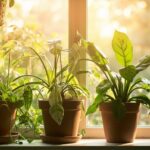
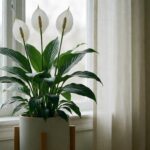
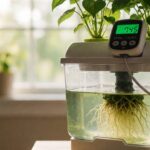
Spider plants have a reputation for being hard to overwater — and they are more tolerant than many houseplants — but that reputation sometimes leads owners to water spider plant too frequently.
The truth is that spider plants want to dry out between waterings, and understanding exactly when to water is the difference between a plant that looks mediocre and one that is actively growing, producing spiderettes, and looking genuinely healthy.
How Often to Water: The Real Answer
The honest answer is: it depends. There is no fixed schedule that works for every spider plant in every home.
The frequency depends on the season, your home’s humidity, the pot material, the size of the plant relative to the pot, and the type of soil — variables that are covered in depth in our complete spider plant care guide.
A spider plant in a terracotta hanging basket in a dry apartment in winter might need watering every five days. The same plant in a plastic pot in a humid bathroom in summer might need it every ten days. Both are normal.
The reliable method is checking the soil. Insert your finger into the top inch of soil. If it feels dry, water. If it feels moist, wait.
This sounds too simple to be useful, but it is the actual correct answer for every spider plant in every environment.
What Affects Watering Frequency
Season is the biggest factor. In spring and summer — the active growing season — spider plants absorb water faster and the soil dries more quickly. You will likely water every five to ten days during these months. In fall and winter, growth slows and the soil stays moist longer, stretching the interval to every ten to fourteen days or even longer.
Pot material matters significantly. Terracotta is porous and allows moisture to evaporate through the walls of the pot, drying the soil faster. Plastic and ceramic pots retain moisture longer. If you are using a terracotta pot — which is generally better for spider plants because it reduces overwatering risk — check the soil more frequently.
Humidity in your home affects drying time. A spider plant in a bathroom with consistent humidity will dry more slowly than one in a dry office. Air conditioning and heating both reduce indoor humidity and accelerate drying. Heated rooms in winter can be surprisingly drying for houseplants.
The size of the plant relative to the pot also matters. A spider plant with a large root system in a small pot absorbs water quickly and dries the soil faster than a small plant in a large pot, where the volume of soil holds moisture for much longer.
Signs You Are Watering Too Frequently
The most common sign is soil that stays wet for more than a week after watering. If you water and the soil is still wet a week later, you are watering too often for your conditions — or the pot is too large for the plant, or the soil mix is too heavy. Consistent overwatering leads to spider plant root rot, which then causes yellowing leaves and brown tips that are easy to mistake for other problems.
The leaves may also feel soft and slightly limp rather than firm, even though the soil is moist. This is a sign that the roots are stressed from waterlogging and cannot absorb water properly even though it is present. The plant looks like it needs water, which leads to more watering, which makes the problem worse.
Signs You Are Underwatering
The plant looks visibly thirsty. Leaves droop and curl inward, losing their turgor. The pot feels very light when lifted. The soil pulls away from the sides of the pot. The leaves brown at the tips first, starting from the oldest, outermost leaves. After watering, the plant should visibly perk up within a few hours — this is the simplest test for whether underwatering was the cause.
The Right Way to Water
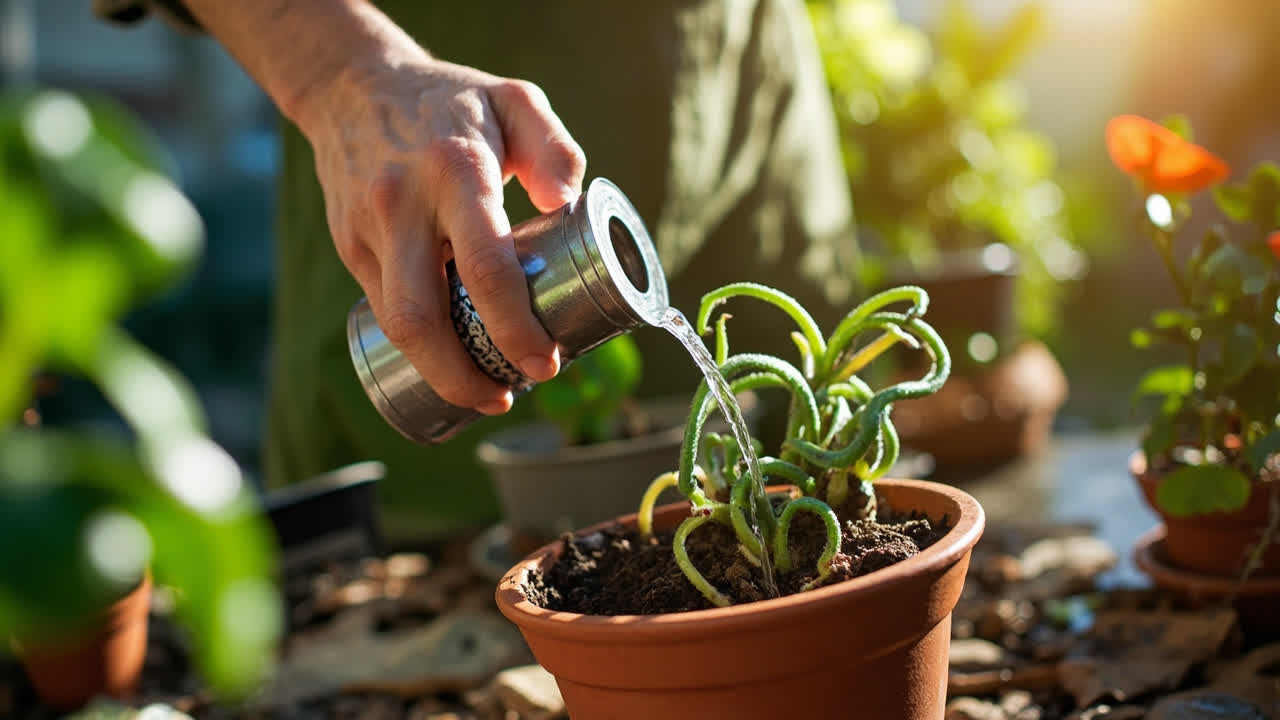
When you water, water thoroughly. Add water until it flows freely from the drainage hole at the bottom of the pot. This ensures the entire root ball is moistened. Then let it drain completely and empty any saucer — spider plants should never sit in standing water. The thorough watering followed by a proper drying period is the cycle the plant evolved to handle.
The opposite — watering lightly with small amounts more frequently — keeps only the top layer of soil moist while the majority of the root ball stays dry. This trains the roots to stay near the surface and makes the plant more vulnerable to both underwatering and overwatering fluctuations.
Water Quality and Its Effect on Watering
Filtered or distilled water is better for spider plants if your tap water is heavily treated with fluoride or chlorine, as discussed in our article on spider plant tap water sensitivity.
Beyond water quality, the temperature of the water also matters slightly — cold water can shock the roots. Room temperature water is always the best choice.
Seasonal Watering Adjustment
The easiest habit to develop: at the start of each season, assess your spider plant’s soil drying speed by checking it every two to three days and noting how long it takes to dry out completely.
Adjust your watering frequency accordingly. In summer, you might be watering every five days. In winter, every two weeks. The plant’s needs change, and your routine should change with it.
Turn That PDF Into a Spreadsheet in Minutes
You've seen how to do it manually — now let the tool handle the heavy lifting. Upload your bank statement and get Excel, CSV, or QBO in a few clicks.
Try It Free