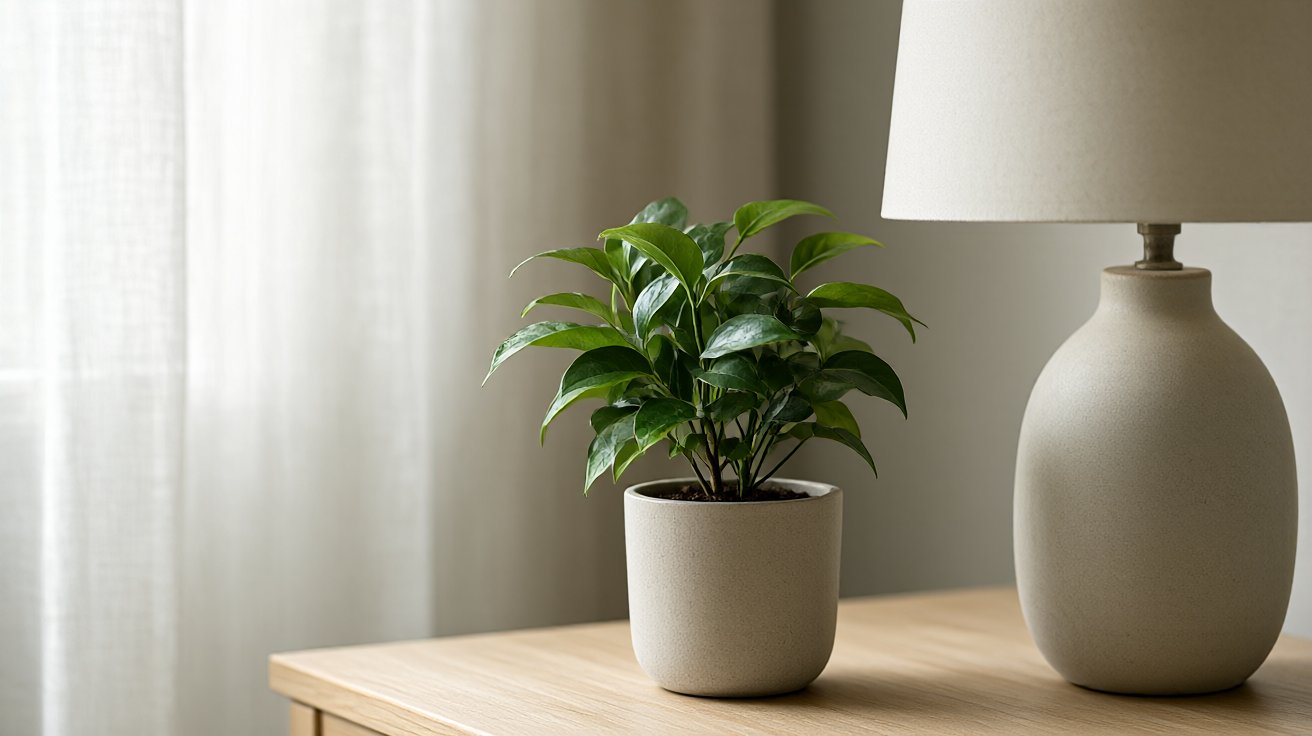

A bedroom is not a greenhouse. Light is usually limited, humidity is often low, and space is constrained. But the right plants can thrive in a bedroom and improve air quality, reduce stress, and add life to the space. The key is choosing species that tolerate the specific conditions a bedroom provides.
The most common mistake is choosing plants based on appearance alone. A beautiful flowering plant that needs bright direct light will slowly decline on a bedroom nightstand. Matching plant to environment is more important than matching plant to decor.
Bedroom Conditions
Bedrooms typically have less light than living rooms. Curtains are often closed. Windows may face north or east. The room may be used primarily in the evening, when natural light is gone. These conditions favor low-light-tolerant plants.
Humidity in bedrooms is often low, especially in winter with heating. Plants that need high humidity will struggle. Choose species that tolerate dry air or add a humidifier.
Temperature in bedrooms fluctuates. Nighttime temperatures drop when heating is reduced. Most tropical houseplants tolerate 15 to 25 degrees Celsius. Avoid placing plants near heating vents or cold drafts from windows.
Space is limited. Nightstands, shelves, and windowsills are the primary surfaces. Choose compact plants or trailing species that can hang.
Best Low-Light Plants for Bedrooms
Snake plant (Sansevieria trifasciata) is the top choice. It tolerates very low light, dry air, and irregular watering. It releases oxygen at night, making it ideal for bedrooms. It is compact and architectural.
ZZ plant (Zamioculcas zamiifolia) is nearly indestructible. It tolerates low light, drought, and neglect. Its glossy dark green leaves look polished. It grows slowly, staying compact for years.
Pothos (Epipremnum aureum) trails beautifully from shelves or hanging baskets. It tolerates low light and dry air. Variegated varieties lose their pattern in very low light, but the plant survives. Golden pothos is the most tolerant.
Peace lily (Spathiphyllum wallisii) tolerates low to medium light and produces white flowers in adequate conditions. It droops when thirsty, making watering easy to time. It prefers higher humidity but adapts to moderate levels.
Cast iron plant (Aspidistra elatior) lives up to its name. It tolerates deep shade, temperature fluctuations, and neglect. Its dark green leaves are elegant and slow-growing.
For related guidance, see what is low light for plants and grow lights for low light plants.

Plants to Avoid in Bedrooms
Avoid high-light plants like succulents, cacti, and most flowering plants. They will stretch, fade, and decline in low light.
Avoid plants with strong nighttime fragrance. Jasmine and gardenia smell pleasant during the day but can cause headaches in enclosed spaces at night.
Avoid large plants that dominate the space. A bedroom should feel restful, not crowded. Choose one or two well-placed plants rather than many.
Avoid plants that need frequent watering or high humidity. These create maintenance burden and can lead to mold in enclosed spaces.
Care Tips for Bedroom Plants
Water less than you think. Bedrooms are often cooler and dimmer than other rooms. Soil stays wet longer. Check moisture with your finger before watering.
Clean leaves regularly. Dust blocks light and reduces photosynthesis. Wipe leaves with a damp cloth monthly.
Rotate plants. Give each side equal light exposure by rotating the pot a quarter turn weekly. This prevents lopsided growth.
Use grow lights if needed. A small LED grow light on a timer can supplement natural light. See grow lights for low light plants for options.
Monitor for pests. Bedroom plants are often neglected. Check leaves regularly for spider mites, mealybugs, and scale.
How to Set Up Bedroom Plants
First, assess your light. Use a phone app to measure fc at plant level during the day. Note window orientation and distance.
Second, choose plants matched to your light level. Use the species list above. Snake plant and ZZ plant for very dim spots. Pothos and peace lily for moderate light.
Third, choose appropriate containers. Ensure drainage holes. Use saucers to protect furniture. Consider self-watering pots for consistency.
Fourth, place plants strategically. Nightstand for compact plants. Shelf for trailing plants. Windowsill for light-loving species. Hanging basket for trailing plants.
Fifth, establish a care routine. Water when soil is dry. Clean leaves monthly. Rotate weekly. Fertilize lightly during growing season.
Last reviewed on November 10, 2026