Spider plants (Chlorophytum comosum) are among the most popular houseplants in the world — and for good reason. They are resilient, adaptable, and arguably one of the easiest plants to care for. But if you share your home with a cat or dog, a question naturally comes up: is spider plant toxic to pets?
The short answer: No, spider plants are not toxic to cats or dogs. The ASPCA, Pet Poison Helpline, and most veterinary sources list Chlorophytum comosum as non-toxic to both cats and dogs. You will not find spider plant on any banned or cautionary houseplant list for pet owners.
That said, the full picture is a little more nuanced. Spider plants contain naturally occurring compounds called saponins, which can cause mild gastrointestinal upset in cats and dogs if a large amount is eaten. This is not a poisoning event — it is closer to eating something that simply disagrees with a sensitive stomach. Symptoms are typically self-resolving within 24 hours.
What the Research Actually Says About Spider Plant and Pets
Multiple authoritative sources confirm the non-toxic status of spider plants. The ASPCA’s Toxic and Non-Toxic Plant Database classifies spider plant as safe for cats, dogs, and horses. Pet Poison Helpline does the same, noting no serious toxicity risk. Veterinary literature consistently reports no fatalities or severe reactions associated with Chlorophytum comosum ingestion.
The confusion often arises because spider plants do produce saponins — natural defensive compounds found in a wide variety of plants, including many food crops. Saponins are not unique to spider plants, and in the quantities typically ingested by a curious pet, they are not dangerous. They can, however, cause mild irritation to the digestive tract, particularly in cats, who are more prone to chewing on leafy greens than dogs are.
Saponins in Spider Plant : What They Do
Saponins are bitter-tasting compounds that plants produce as a natural defense against herbivores and insects. In the context of a pet ingesting spider plant leaves, saponins may trigger:
- Mild nausea or stomach discomfort
- Vomiting (usually one episode, not prolonged)
- Diarrhea or loose stools
These symptoms arise only when a pet consumes a meaningful quantity of leaves — not from casual contact or occasional nibbling. Most pets that chew a few leaves will show no symptoms at all. The saponin content in a single leaf is too low to cause a reaction in most animals.
Temperature context for pet recovery: normal room temperature in most homes (68–75°F / 20–24°C) is perfectly suitable for a pet recovering from mild GI upset. There is no need for special environmental controls unless your pet has a pre-existing condition.
Why Cats Are More Likely to Chew Spider Plants
Cats are statistically more likely to chew on spider plants than dogs are. This is partly behavioral — cats explore with their mouths, and spider plant’s long, arching leaves resemble grass, which cats instinctively nibble on for digestive aid.
Some feline behaviorists also suggest that spider plant may produce a mild catnip-like effect in certain cats. The plant contains compounds that can cause mild hallucinations of novelty — essentially, the cat finds the plant mildly interesting or stimulating. This is not dangerous and is not the same as a toxin’s effect on the nervous system. It simply means cats may return to the plant more often than dogs would, increasing the chance of mild ingestion.
Dogs are less likely to chew houseplants deliberately, but puppies and young dogs with exploratory chewing habits may damage a spider plant. Even then, the consequences are typically limited to mild stomach upset.
Symptoms to Watch For (and When to Call the Vet)
Most spider plant ingestion events produce no visible symptoms at all. If symptoms do appear, they are generally mild and self-resolving. Here is what to watch for:
- Vomiting: One or two episodes within the first few hours. This is the most common reaction and typically resolves on its own.
- Diarrhea or loose stools: May appear 4–12 hours after ingestion. Usually resolves within 24 hours without intervention.
- Lethargy or reduced appetite: Can occur if the pet’s stomach is uncomfortable. Should improve within 12–24 hours.
When to call your vet:
- Symptoms persist beyond 24 hours
- Vomiting or diarrhea is bloody or severe
- Your pet shows signs of dehydration (dry gums, sunken eyes, loss of skin elasticity)
- Your pet has ingested a very large quantity of leaves (more than a small nibble)
- You are unsure whether your pet also ingested fertilizer, soil, or a decorative element from the pot
For context: there are no recorded fatalities from spider plant ingestion in cats or dogs. The worst-case realistic scenario is 24 hours of mild gastrointestinal discomfort that resolves without treatment. Still, when in doubt, contact your veterinarian — they are trained to assess whether symptoms warrant an in-person visit.
How to Display Spider Plant Safely Around Cats and Dogs
The safest approach is not to rely on your pet’s willpower — it is to make the spider plant physically inaccessible. This is especially relevant in households with cats who are attracted to grassy leaves or dogs who are still in their chewing phase.
Hanging Baskets and Elevated Shelves
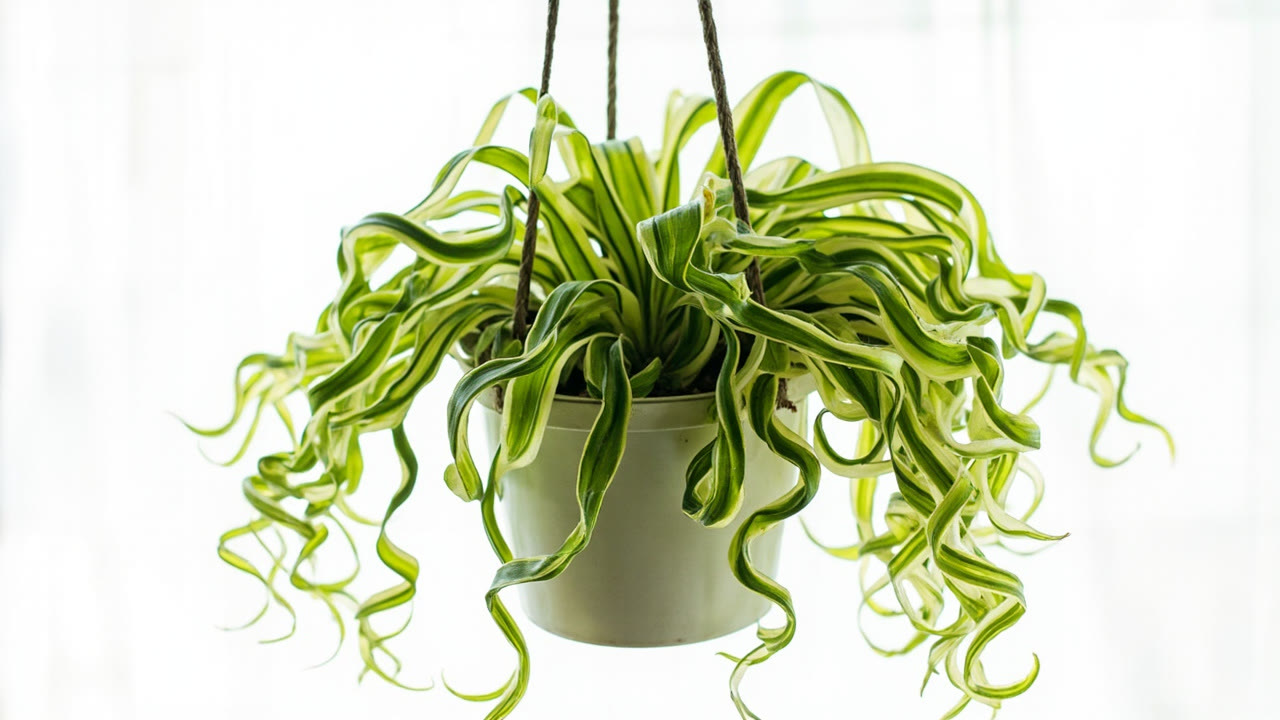
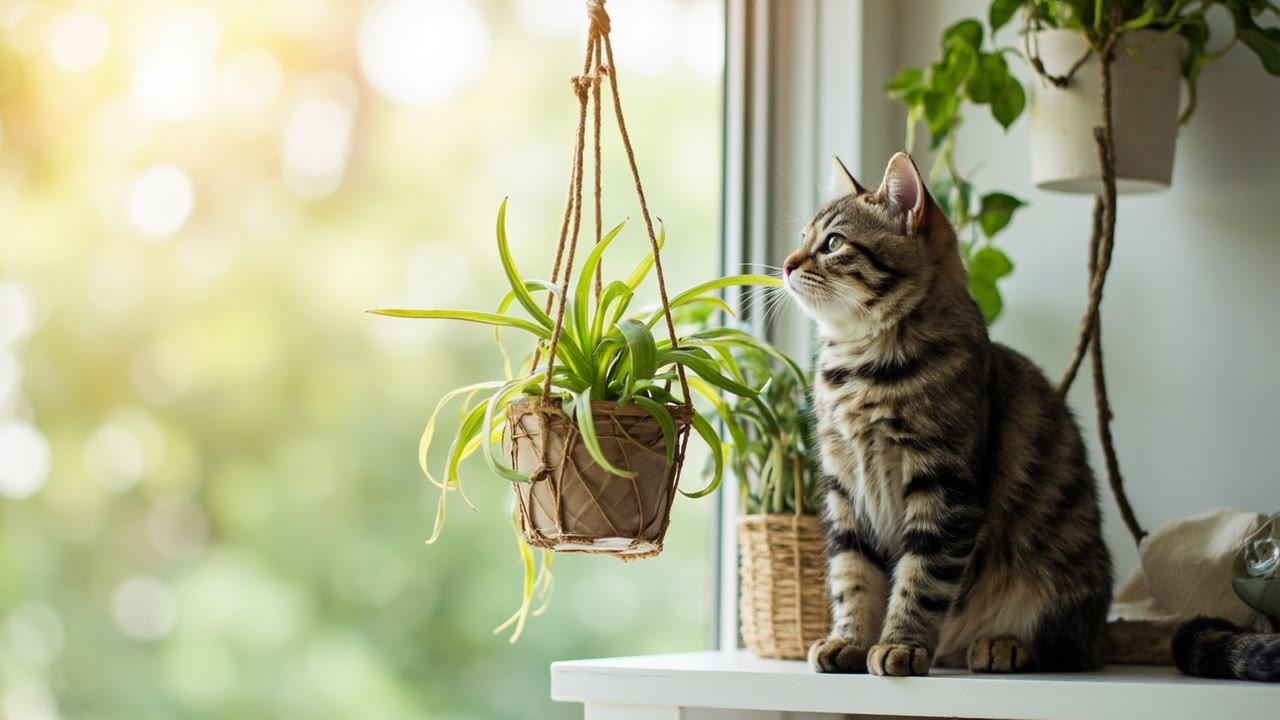
Hanging baskets are the most effective display option for pet-owning households. When a spider plant is suspended from the ceiling or a high wall bracket, even a motivated cat cannot reach it. The plant’s natural arching growth habit also looks striking in a hanging format, making elevation both a safety and an aesthetic choice.
For those who prefer shelves, a tall plant stand (36 inches / 91 cm or higher) placed away from furniture that could serve as a launching point is a practical alternative. Wall-mounted shelves work well if the plant sits high enough that a standing cat cannot reach it — generally 4 feet / 120 cm or above from the floor.
If you want to go further, consider placing the spider plant in a room that can be access-controlled — a room with a door that can stay closed, or a plant shelf with a gate. However, for most households, a well-placed hanging basket is more than sufficient. For more display inspiration, see our guide on hanging basket care for spider plants and our roundup of safe plants for hanging baskets.
Training Pets to Leave the Plant Alone
Training is a useful supplement to elevation, though it should not be the only line of defense. Some strategies that work:
- Double-sided tape on the floor around the plant’s base — most pets dislike the texture and avoid the area.
- Citrus scent near the pot — most cats and dogs find citrus unpleasant and will keep distance.
- Distraction planting — grow a pot of cat grass nearby. If your cat has access to a safe, appealing alternative, they are less likely to target the spider plant.
- Positive redirection — when your pet approaches the plant without chewing, reward them. This reinforces boundaries without punishment.
Training works best when combined with physical barriers. Do not rely on training alone in households where pets have a history of chewing houseplants.
What to Do If Your Pet Eats a Lot of Spider Plant
If you catch your pet in the act of eating a substantial amount of spider plant leaves, here is a straightforward step-by-step:
- Remove your pet from the plant. Prevent further ingestion by placing your pet in another room or a carrier.
- Check for other hazards. Determine whether your pet may have also eaten soil, fertilizer, or any part of a decorative element (some fertilizers and potting additives are more dangerous than the plant itself).
- Monitor for symptoms. Watch for vomiting, diarrhea, lethargy, or loss of appetite over the next 24 hours. Most symptoms, if they appear at all, resolve within that window.
- Hydration support. Ensure your pet has access to fresh water. Mild GI upset can lead to dehydration, especially in small cats and puppies.
- Call your vet if symptoms are severe or persistent. Describe what your pet ate, approximately how much, and what symptoms you are observing. Your vet will advise whether an in-person visit is needed.
If symptoms are mild and resolve within 24 hours, no vet visit is typically required — but it is always better to call and be reassured than to wait and worry. For follow-up care and recovery tips, see our guide on saving a struggling spider plant (the plant may need attention after your pet’s encounter too).
Bottom line: Spider plants are safe for cats and dogs according to every major veterinary and toxicology source. The primary risk — mild, self-resolving gastrointestinal upset — is not serious and rarely requires veterinary intervention. In households with pets that have a habit of eating everything, elevation is the most reliable solution. A hanging basket keeps the plant beautiful, accessible for care, and completely out of your pet’s reach.
Pair this with good general care — and if you want to learn more about keeping your spider plant healthy and lush, our full spider plant care guide covers watering, light, and common problems. If you are ever unsure whether your pet’s symptoms relate to the plant or something else, call your vet first. For pet-safe pest management, also review our guide to pest identification — distinguishing between ingestion symptoms and pest damage matters.
From PDF to Excel in one click
Forget retyping line by line. Upload any bank statement, get a spreadsheet you can actually use. Your files are never stored, and you can test the converter with 3 free conversions.
Try it free