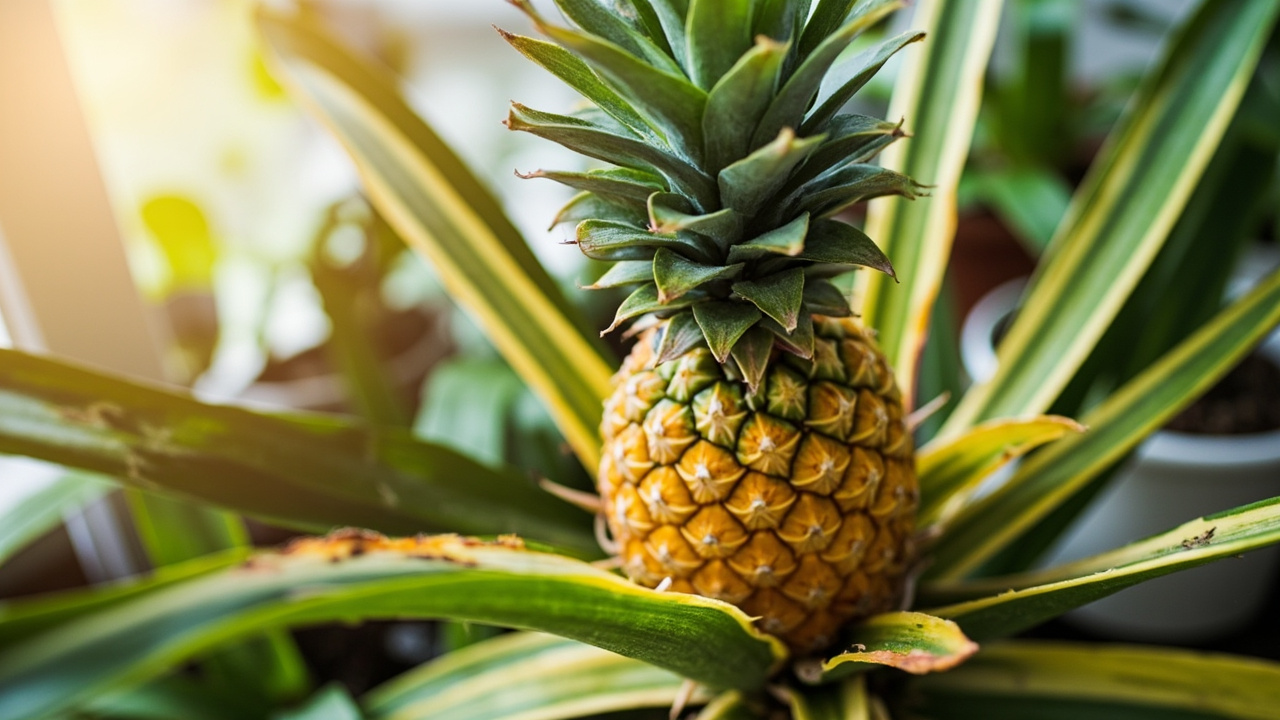
Pineapple plants handle low humidity better than most tropical houseplants, but that tolerance has limits. When indoor air gets consistently dry — especially in winter or in air-conditioned rooms — the plant shows it in subtle ways before the problem becomes obvious. Understanding what dry air does to a pineapple plant helps you catch it before it becomes a bigger issue.
Pineapple Plants Are Tougher Than Ferns, But They Still Notice Dry Air
Pineapple plants are not humidity divas. They are much more forgiving than calatheas, ferns, or thin-leaved tropicals that collapse the minute indoor air gets dry. But forgiving is not the same as indifferent, and consistent low humidity affects watering frequency as much as the leaves themselves. That is the good news. They are much more forgiving than calatheas, ferns, or thin-leaved tropicals that collapse the minute indoor air gets dry. But forgiving is not the same as indifferent.
When humidity stays too low for too long, pineapple plants usually do not fail dramatically. They decline in quieter ways: leaf tips crisp, growth slows, stress recovery takes longer, and the plant becomes less forgiving about missed watering or strong afternoon heat. You can still keep it alive, but it stops looking confident.
The hidden issue is that most growers blame watering first. Sometimes they should. But sometimes the real bottleneck is that the air is too dry and the leaves are losing moisture faster than the roots can replace it.
What Humidity Level Is Best for Pineapple Plants?
The sweet spot is 50% to 70% humidity. That range supports steady growth, cleaner leaf edges, and better stress tolerance.
- 50% to 70%: ideal for most indoor pineapple plants
- 40% to 50%: acceptable, especially with good watering and light
- below 40%: workable but more stressful over time
- below 30%: brown tips, slower growth, and general dryness become much more likely
This is where pineapple plants are refreshingly practical. They do not need greenhouse humidity to survive. They just perform better when the air is not aggressively dry.
How Dry Air Shows Up on a Pineapple Plant
Low humidity symptoms usually start at the edges and tips of the leaves, especially the older outer leaves. This overlaps with the kind of browning covered in the brown leaves guide — humidity stress is one of several causes, and the pattern helps you distinguish it.
- brown, crispy tips that slowly spread inward
- slower new growth from the center rosette
- leaves that look slightly dull or tired, even when color is still decent
- more sensitivity after repotting or feeding
What makes this confusing is that these signs overlap with mineral buildup, uneven watering, and strong sun through hot glass. So you have to think causally. If the soil is balanced, the watering schedule is reasonable, and the light is not scorching, dry air becomes the likely explanation.
Indoor Humidity vs Outdoor Humidity
Outdoors, pineapple plants usually handle humidity swings more naturally because airflow is better and the root zone dries in a more predictable rhythm. Indoors, the problem is not just low humidity by itself. It is low humidity combined with still air, heating vents, and containers that dry unevenly.
If your plant spends summer outdoors and winter indoors, expect a transition period. The move indoors often creates the problem, not because the plant suddenly hates your house, but because the humidity drops while light drops too. That combination compounds stress quickly.
Outdoor Conditions
In warm climates above 70°F / 21°C, outdoor humidity is often enough on its own unless you are in a very dry inland region. The plant can usually compensate because sun, airflow, and temperature are all aligned with active growth.
Indoor Conditions
During winter, indoor heated air can push humidity down below 30% to 35%. What happens next is predictable: leaf tips brown first, the center slows down, and the plant becomes less resilient. It may still survive, but it stops building momentum.
How to Raise Humidity Without Creating New Problems
You do not need to turn your room into a greenhouse. You just need to improve the environment enough that the plant is not drying out faster than it can recover.
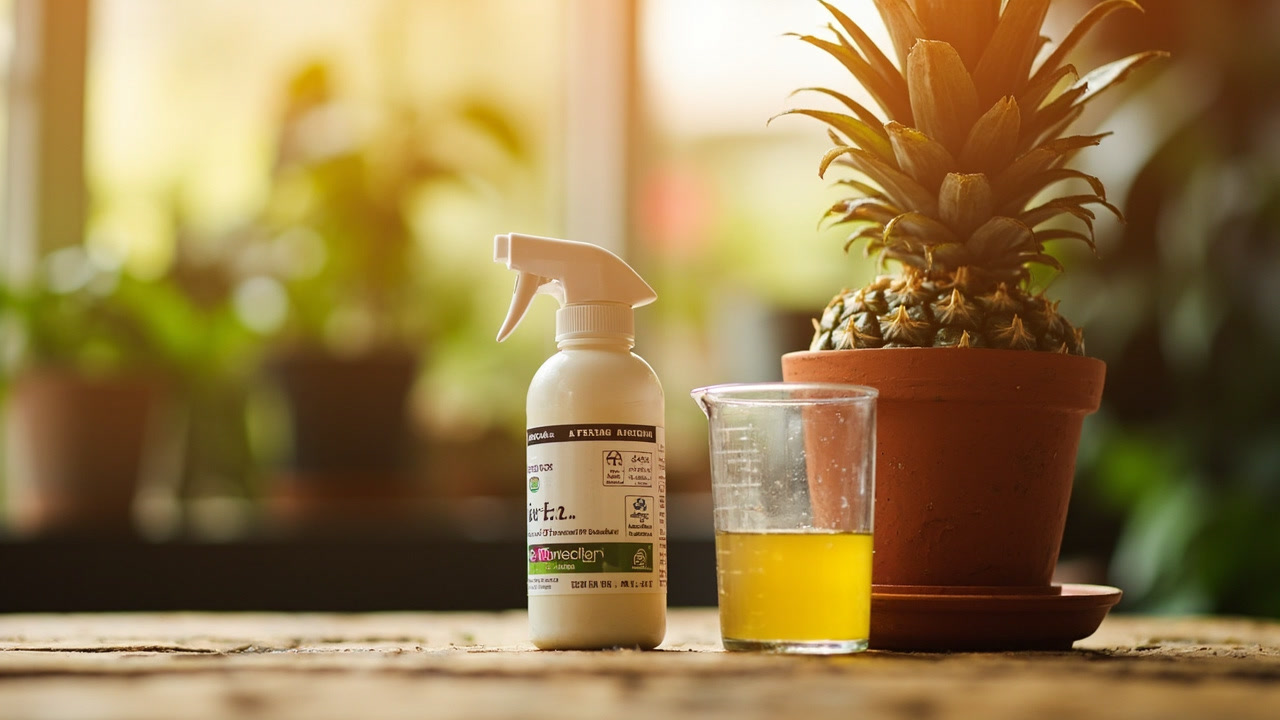
Use a Humidifier
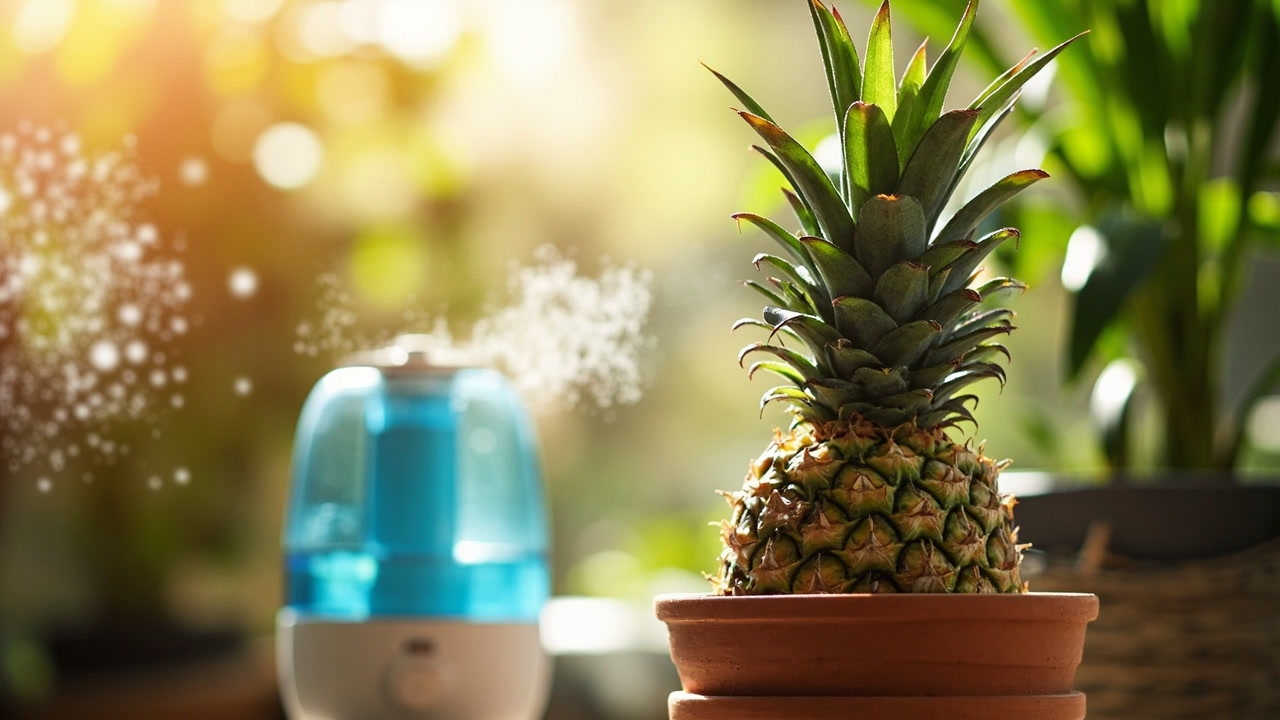
This is the most effective fix. A small humidifier placed a few feet away can lift the area into the 45% to 60% range. The benefit is consistency. What happens next is not dramatic overnight growth — it is steadier hydration, cleaner leaf edges, and less stress accumulation over weeks.
The trade-off is obvious: a humidifier is one more device to maintain. You need to refill it, clean it, and avoid blasting the leaves directly with cold mist.
Group Plants Together
Grouping plants helps create a slightly more humid microclimate. It is not magic, but it can make a measurable difference when several plants transpire in the same bright area. The trade-off: if airflow is poor, crowding plants too tightly can also encourage fungal issues. So cluster them loosely, not like passengers in an elevator.
Move Away From Vents and Drafts
Heating vents, air conditioners, and strong drafts strip moisture from the leaves faster than most people realize. Winter is when this gets worst — the care calendar has specific steps for the transition from outdoor growing to indoor overwintering. If your pineapple plant sits in front of a vent, move it. After relocating it, the leaf tips should stop worsening within a couple of weeks if dry air was the real cause.
Use a Pebble Tray Carefully
Pebble trays help a little, but only a little. Put pebbles in a tray, add water below the top of the stones, and place the pot above the water line so the roots never sit in water. The benefit is modest. The limitation is that pebble trays do not raise room humidity much — they only soften conditions right around the plant.
Should You Mist a Pineapple Plant?
Sometimes, but not as a main strategy. Light misting can temporarily ease dryness on the leaf surface, especially in very dry air. But it is a short-lived effect, not a humidity solution. If your room sits at 28% humidity, misting once or twice a day does not meaningfully change the environment.
The more useful way to think about misting is as a minor support tool, not treatment. If you rely on it as the full answer, the underlying problem stays in place.
Also, avoid soaking the center rosette late in the day in cool indoor conditions below 68°F / 20°C. Water sitting too long in low evaporation conditions can encourage minor crown issues.
Humidity, Light, and Water Work as One System
This is where people get stuck. They treat humidity like an isolated variable. It is not. Low humidity compounds when temperatures drop — the temperature tolerance guide explains why cool and dry together is harder on pineapple than either factor alone. Low humidity changes how quickly the plant loses moisture through the leaves. Light changes how actively the plant can use water and build tissue. Soil changes how safely the roots can resupply that moisture.
That means a pineapple plant in bright light with balanced soil can tolerate lower humidity better than a plant in dim light and dense soil. Strong roots plus enough light create margin. Weak roots plus low light remove it.
So if your plant is struggling, do not ask only, “Is humidity too low?” Ask:
- is the potting mix too dense?
- is the plant getting enough direct sun?
- is it sitting near a vent?
- is the watering schedule matching the season?
That layered view is more useful than chasing one symptom.
What Humidity Problem Looks Like in Winter
Winter is where humidity problems usually become obvious. Day length drops, the air gets drier, and windows that were strong enough in summer become weaker. A plant that handled 40% humidity in July may start crisping in January because the total energy environment changed.
What happens next is subtle but important: the plant uses water more slowly through the roots because growth is slower, but the leaves can still dry out from heated air. That creates the strange combination of dry leaf tips and wet soil. People see the brown tips and water more. Then the roots get stressed too.
If you see that pattern, the answer is not simply more water. It is better humidity, better light, and patience with the slower winter dry-down.
How to Tell If Humidity Is the Real Issue
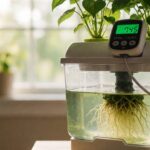
A cheap digital hygrometer helps. If the reading stays below 35% humidity for days at a time, you have your answer. Pair that reading with symptoms:
- brown tips without mushy bases
- no sour smell from the soil
- soil drying normally but leaves still crisping
That combination points toward air dryness much more than overwatering. If, on the other hand, the soil stays wet, the base softens, and lower leaves yellow first, root stress is the better diagnosis.
The Practical Recommendation
If your home stays around 45% to 55% humidity, you are fine. Focus on light and soil first. If your home drops below 35% to 40%, especially in winter, take action: move the plant away from vents, group plants loosely, and use a humidifier if you want the cleanest result.
The honest limitation is this: humidity improvement alone will not rescue a pineapple plant sitting in bad soil or weak light. But when the basics are already decent, the right humidity level is often what moves the plant from merely surviving to actually growing well.
For that reason, read the pineapple soil requirements guide and the light requirements guide together with this one. Pineapple care works best when you manage the whole environment, not one variable at a time.
Turn PDF Bank Statements Into Workable Spreadsheets
Your bank statement is a mess of numbers, but your books shouldn't be. Use our converter to get Excel, CSV, or QBO files — ready for QuickBooks.
Try It Free Now