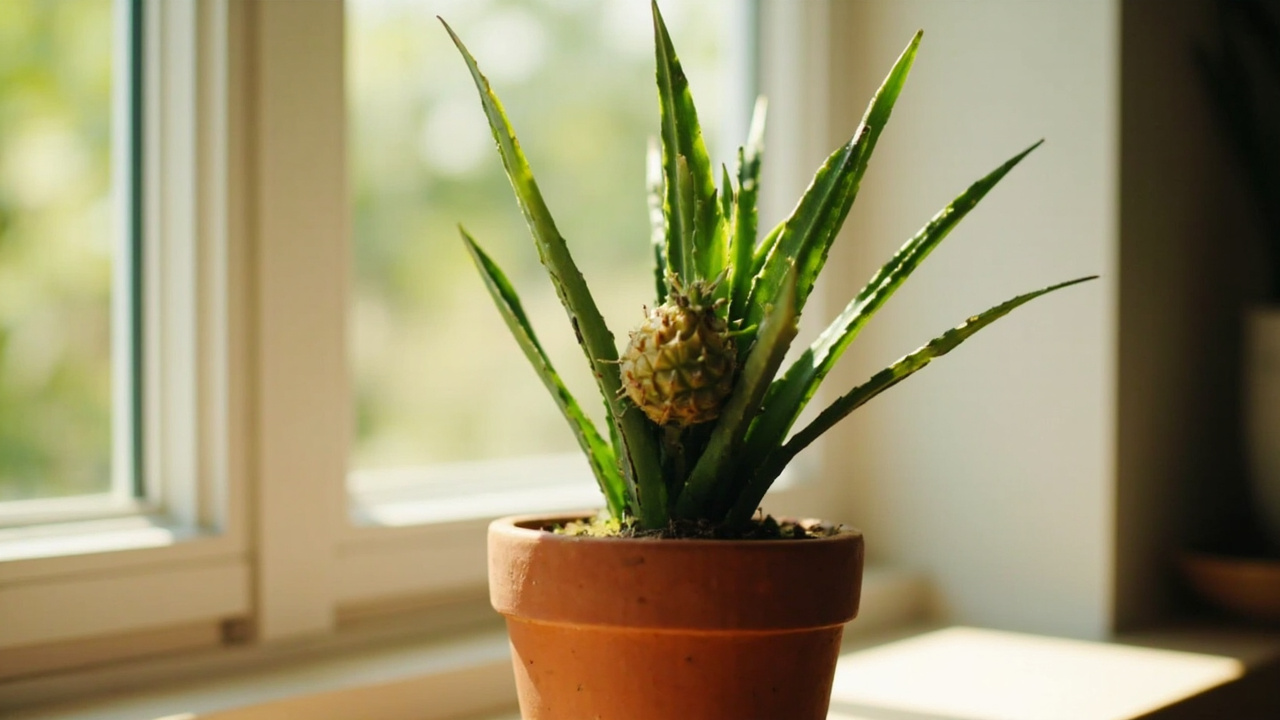
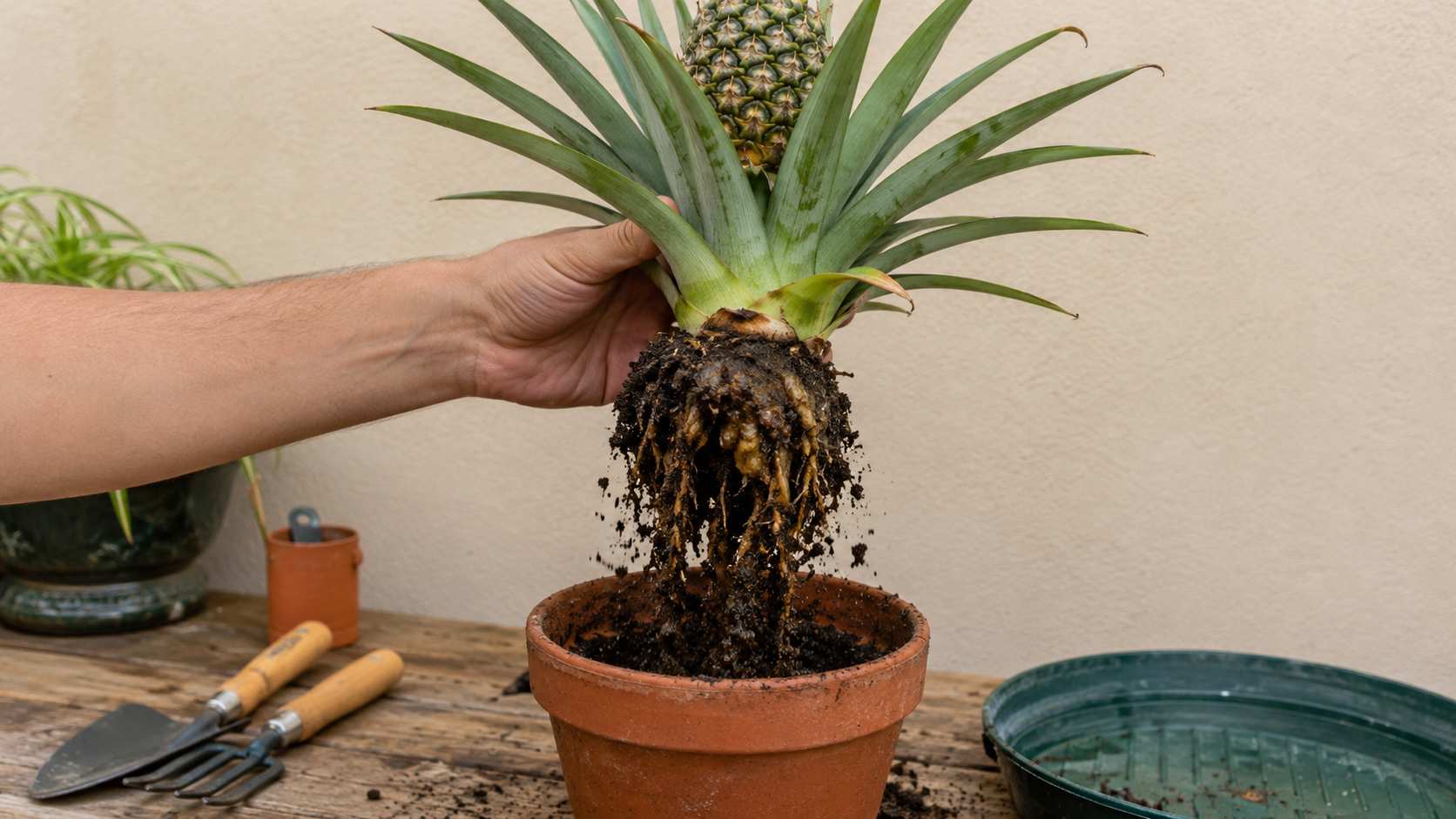
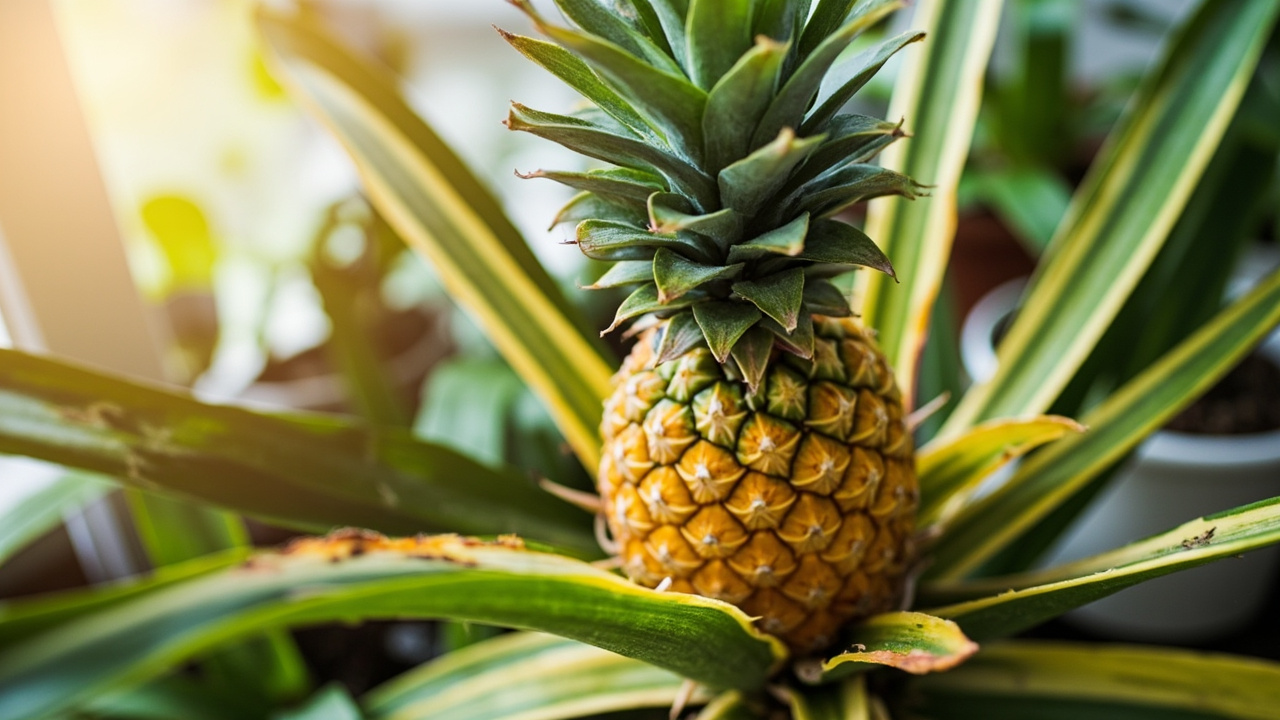
Every tropical plant has a temperature range where it looks happy. Pineapple plants included. But what a lot of growing guides do not say clearly is that the range where a plant survives and the range where it actually progresses are not the same thing.
You can keep a pineapple plant alive in cool conditions. It just will not do much. And for many people, that is not the point.
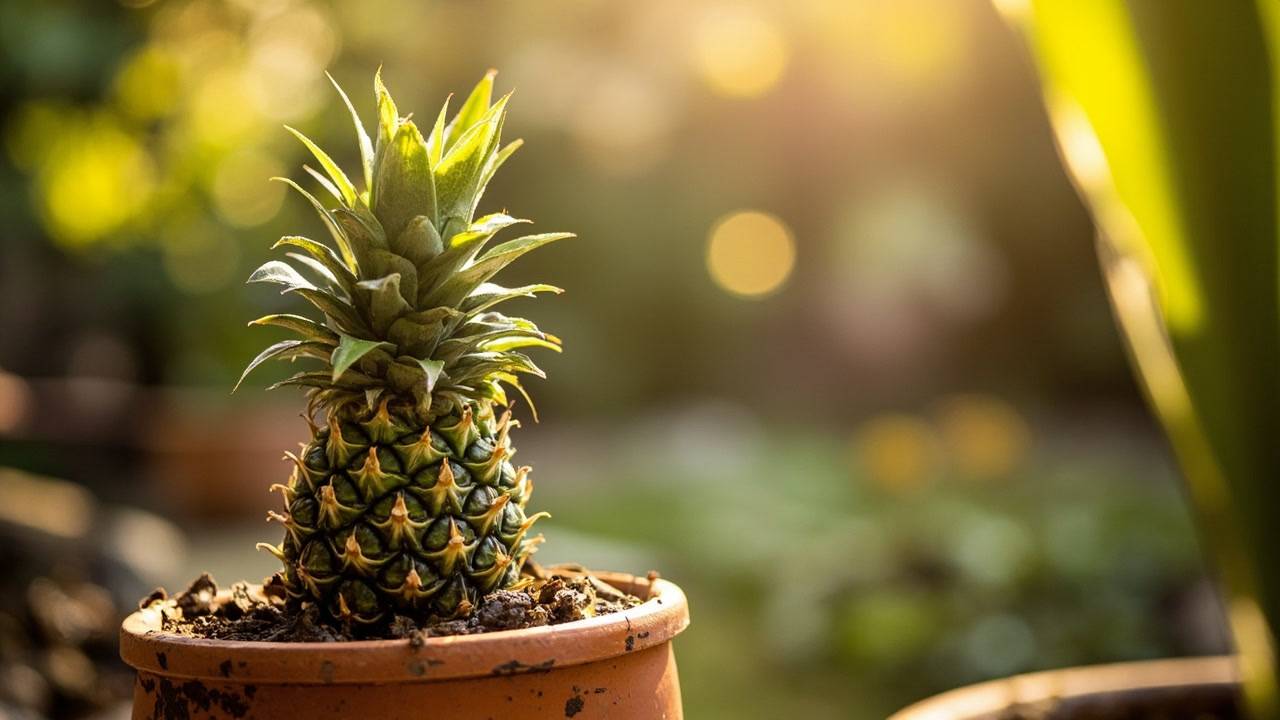
The Comfort Zone: Where Pineapple Actually Thrives
For active, meaningful growth, your pineapple plant wants 70–90°F / 21–32°C. Not occasionally. Consistently. That is where the roots move water efficiently, the leaves photosynthesize at a normal rate, and the plant has enough energy to build toward maturity.
What happens next in this range is the kind of steady, visible progress that makes growing feel worth it. New leaves emerge at a regular clip, the center stays tight, and the plant looks like it is working toward something rather than just surviving.
Does that mean everything stops below 70°F? No. But it does mean you should expect things to slow, and slow noticeably.
Where Growth Starts Dragging: Below 68°F / 20°C
Below about 68°F / 20°C, most pineapple plants start losing momentum. The visible signs may be subtle at first — a slightly longer gap between new leaves, the same watering routine but the soil staying damp longer.
That slower water use is the part people miss. When growth slows, the plant is not pulling moisture through the soil at the same rate. So what was a fine watering routine in warm conditions becomes a subtle overwatering condition in cool ones. This is why pineapple plants often crash in fall and winter even when nothing else changes — the temperature dropped and the watering rhythm did not.
What to Watch For in Cool Conditions
If you are growing in a room that drops below 68°F regularly, pay attention to:
- Soil that stays visibly wet more than two days after watering
- Leaves that look the same week after week with no new growth at the center
- A general flattened look rather than the upright vigor the plant had in warmer months
What happens next when you catch this early: you adjust watering frequency, maybe move the plant to a warmer spot, and avoid compounding the problem. The plant slows but does not crash.
When Real Stress Kicks In: Below 55°F / 13°C
This is where the plant stops tolerating cool and starts being genuinely stressed. Below 55°F / 13°C, the likelihood of visible damage climbs and the plant becomes much less forgiving of other growing mistakes.
Symptoms to watch for:
- Leaves dulling or losing the slight glossy quality they have in good warmth
- Yellowing that spreads rather than staying isolated at the base
- The center growth point looking less active or slightly soft
What happens next when cold stress sets in depends on duration. A couple of cold nights will slow the plant. Repeated or prolonged exposure will compound the problem and recovery becomes much slower.
Why Duration Matters More Than the Number
You might see a temperature threshold and think the plant is fine above it and ruined below it. It does not work that way. A brief dip to 50°F may cause only mild stress that the plant shakes off. But six hours at that temperature every night for two weeks does cumulative damage that compounds.
Cold damage is not just about how cold it got. It is about how long it stayed cold.
Damage Zone: Below 50°F / 10°C
Below 50°F / 10°C, tissue damage risk rises fast. This is not a zone of slow decline — it is where the plant starts visibly failing. Leaf edges may brown and spread, the center may soften, and recovery — if it happens — takes weeks or months.
Frost is the extreme version of this. A light frost can damage the growing tip permanently. The plant may look okay at the edges for a while but never recover proper growth pattern.
What happens next after cold damage: even if the plant survives, it often has lasting structural issues.,侧柏or the growth pattern stays irregular. This is why prevention is so much simpler than recovery in cold-sensitive plants.
The Damage You Cannot See
Even when leaves look okay after a cold event, the root system may have been affected. Roots are less cold-tolerant than foliage in most tropical plants. So you might see the plant recover at the top while the root function remains compromised. This shows up later as watering problems that do not resolve no matter how carefully you water.
Heat Tolerance: Better Than Cold, But Not Unlimited
Pineapple plants handle heat better than most tropical houseplants. Above 90°F / 32°C, they can continue functioning — with the right adjustments.
The main issue in high heat is water balance. When temperatures spike, the plant transpires more and dries faster. This is where consistent watering becomes critical — the plant needs water to cool itself through transpiration, and dry soil in high heat compounds stress quickly. If you are watering on a fixed schedule, you may find the plant running dry between waterings. Also, if the plant is in direct sun and not acclimated to that light level, light requirements and heat exposure can combine to cause stress that looks like underwatering. The light requirements guide covers how to balance sun exposure and heat stress in summer.
What happens next in prolonged high heat without adequate water: the plant draws down its reserves, leaf growth slows, and older leaves start declining faster than they should.
The Airflow Question in Hot Conditions
Heat damage is more likely when the plant is in stagnant hot air rather than moving air. A fan going in a warm room helps more than people realize. Stagnant heat is the real danger at the high end of the range.
Balancing Everything: Temperature in Context
Temperature does not act alone. It interacts with watering frequency, light levels, and humidity. A plant at 65°F with low light and high humidity is under more stress than the same temperature reading might suggest. Temperature never works in isolation — it connects directly to soil drainage, watering frequency, and humidity levels.°F with low light and high humidity is under more stress than the same temperature reading might suggest.
This is why single temperature recommendations are only part of the picture. What matters is the combination: warm and bright is excellent. Cool and dark is slow but manageable. Cool and wet is where problems compound quickly.
The Honest Take
Pineapple temperature tolerance has a comfortable range and a survival range, and they are not the same thing. If you want a plant that looks like it is actually progressing — new leaves, strong center, real vigor — the comfortable range is not optional. It is the point.
Protecting the plant from cool stress is usually the bigger challenge for most indoor growers than heat damage. Watch the temperature, adjust watering with the seasons, and resist the temptation to treat the plant the same way in January that you do in July. The pineapple care calendar maps out what to do at each seasonal transition so you are not caught off-guard when temperatures shift., and resist the temptation to treat the plant the same way in January that you do in July.
Turn That PDF Into a Spreadsheet in Minutes
You've seen how to do it manually — now let the tool handle the heavy lifting. Upload your bank statement and get Excel, CSV, or QBO in a few clicks.
Try It Free