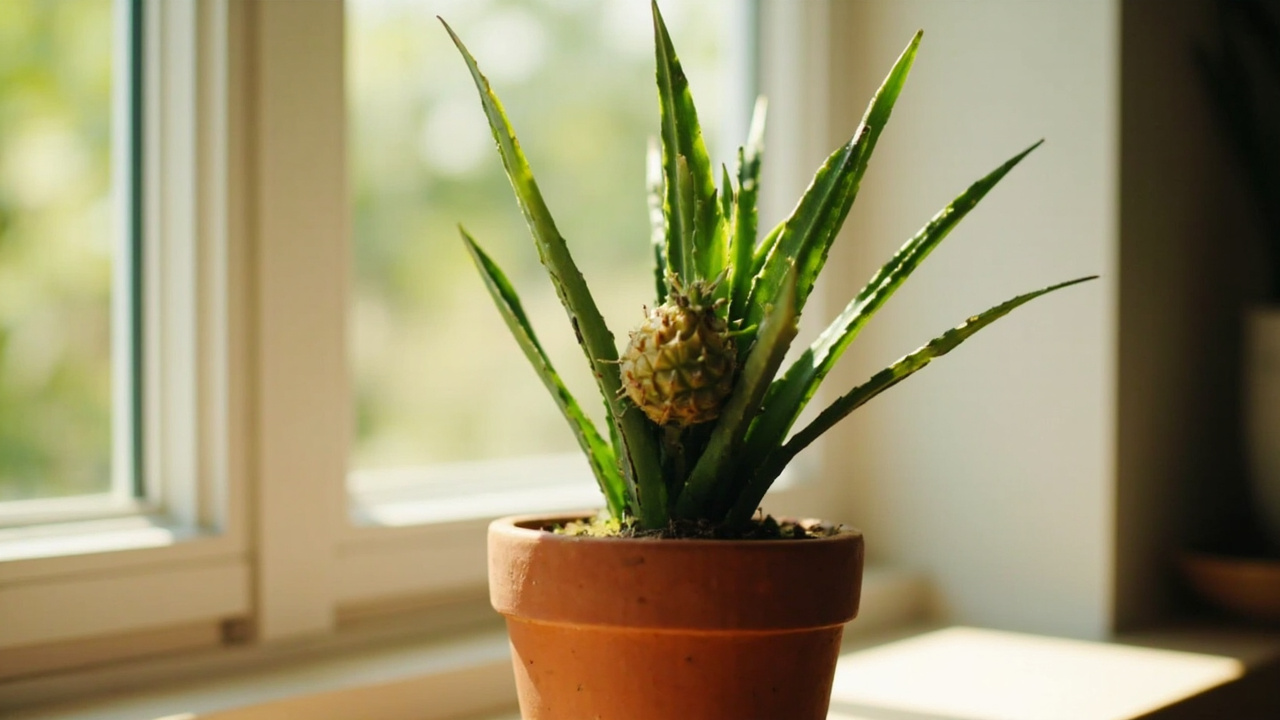
Pineapple plants are simple in principle: give them strong light, warmth, fast-draining soil, and sane watering. The complication is that those needs do not feel identical all year. Summer growth and winter survival are different phases, and the plant responds accordingly.
If you keep watering, feeding, and repotting on the same schedule every month, the plant eventually tells you that was a bad idea. Usually with slower growth first. Then stress symptoms. Then a confused owner trying to fix three issues at once.
A care calendar solves that by matching your actions to the plant’s actual seasonal rhythm.
Spring: Restart the Plant Properly
Spring is when pineapple plants usually wake up and resume stronger growth, especially once temperatures stay around 70–85°F / 21–29°C. This is the season to reset the basics.
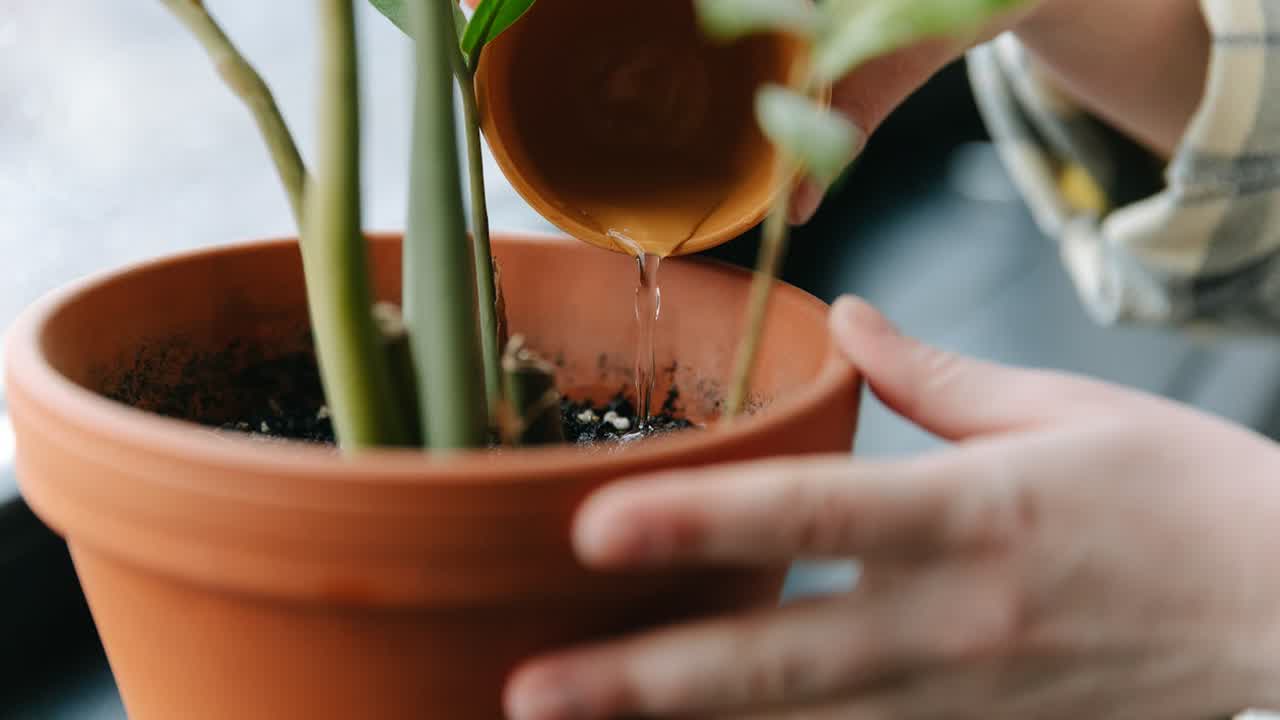
- increase watering gradually as growth resumes
- resume feeding lightly every 3–4 weeks
- check whether the plant needs repotting
- clean up dead outer leaves
n
What happens next if you do this well is stronger center growth and a more predictable rhythm heading into summer. Do not jump from winter neglect to heavy care overnight. Increase inputs gradually so the roots can catch up.
Best Spring Tasks
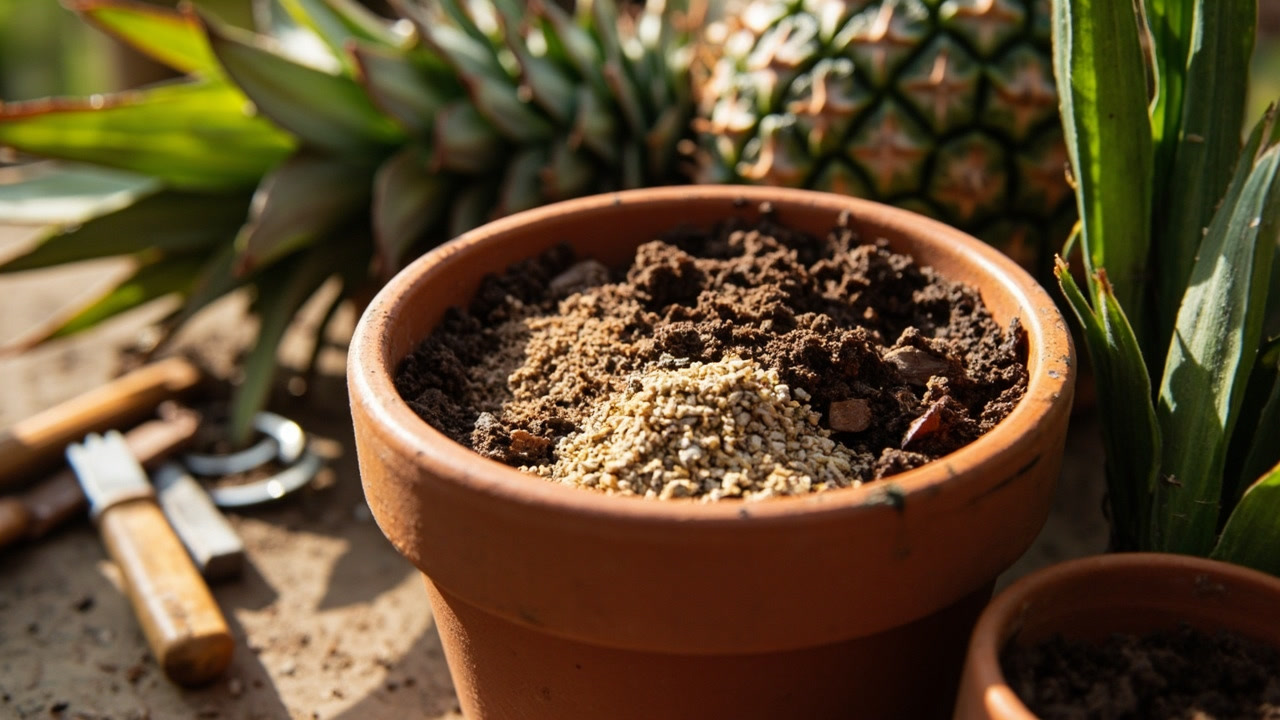
Spring is the best time for repotting if the roots are crowded or the soil has broken down. The soil guide helps you pick the right mix so you do not repot into a better-looking but worse-performing container.
Summer: Growth Season
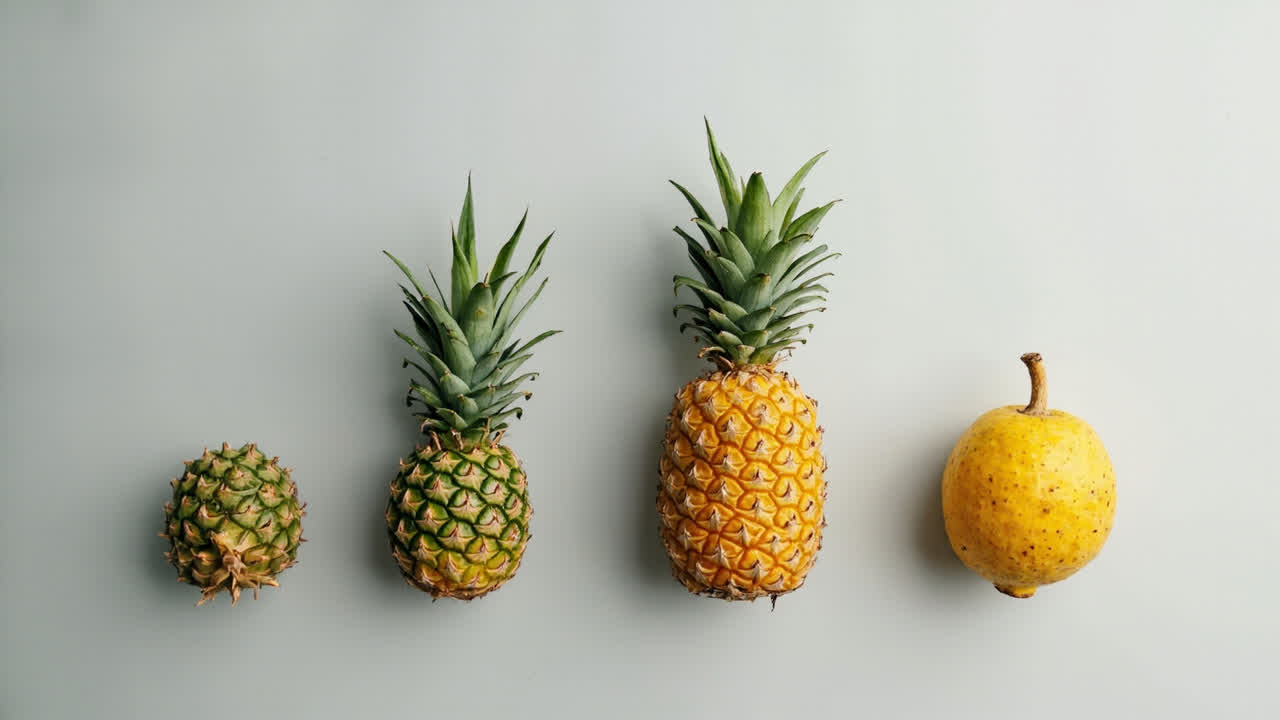
Summer is usually the easiest season for pineapple plants if they have enough sun and warmth. Active growth is strongest here, especially above 75°F / 24°C with good direct light.
- water when the upper layers dry, not by fixed dates
- feed every 2–4 weeks if growth is active
- watch for faster dry-down in heat waves above 90°F / 32°C
- rotate indoor plants if they lean toward the window
n
The watering guide has the rhythm that keeps root stress from building up even when summer heat accelerates dry-down.
The trade-off in summer is simple: you get faster growth, but mistakes show faster too. Overfertilization, sunburn from sudden exposure changes, and drought stress all move quicker in hot weather.
If the Plant Goes Outdoors
Move it outside gradually. A pineapple plant can love summer sun and still get burned if it goes from indoor light straight into all-day exposure. Harden it off over 1–2 weeks. After that, new growth should strengthen noticeably.
Fall: Slow the System Down
Fall is the transition season. The plant may still grow if temperatures and light remain strong, but this is when you start reducing care rather than increasing it.
- space out fertilizer more
- watch how quickly the pot dries instead of assuming summer timing still applies
- bring outdoor plants in before nights regularly drop below 55°F / 13°C
n
What happens next if you ignore this shift is classic fall stress: the plant gets watered and fed like it is still midsummer, but the reduced light and slower growth mean the roots use less of everything.
Winter: Survival Mode, Not Performance Mode
Winter is where many indoor pineapple plants get into trouble. Growth slows because the light drops, but people keep feeding and watering as if nothing changed. That is how root problems begin.
- water less often
- stop or sharply reduce fertilizer
- protect from cold windows and drafts
- maximize light, even if that means adding a grow light
n
Below 68°F / 20°C, growth often slows enough that the plant uses much less water. Below 50°F / 10°C, cold damage risk rises quickly. The temperature tolerance guide explains the thresholds in more detail.
The honest truth: winter is not usually the season when pineapple plants impress you. It is the season when good growers prevent avoidable setbacks.
Best Winter Strategy
Keep the plant bright, warm, and slightly on the dry side. Do not let it get bone-dry for weeks, but do not keep it moist out of habit. If the air is very dry from heating, revisit the humidity guide because brown tips often worsen in winter.
Monthly Quick Calendar
January–February
Protect from cold, maximize light, water cautiously, avoid feeding unless there is clear active growth.
March–April
Resume light feeding, inspect roots and soil, repot if needed, increase watering gradually as temperatures rise.
May–August
Main growth season. Feed regularly, monitor watering more closely, and use the strongest light the plant can handle safely.
September–October
Reduce feeding, track nighttime temperatures, prepare outdoor plants for indoor transition.
November–December
Slow everything down. Keep the plant bright and warm, but do not push growth.
When to Repot, Propagate, and Feed
The best window for repotting and propagation is spring through early summer. That is when warmth and light support recovery and new root growth. The best window for regular feeding is also spring through summer. The propagation guide covers offset separation and crown rooting for when you need to expand your collection.
The worst time for heavy intervention is deep winter unless the plant is in active decline and you are correcting a real problem like rot. Healthy maintenance tasks can wait. Emergency rescue cannot.
The Real Decision Guide
If the plant is actively growing, you can water and feed more confidently. If it is barely moving, reduce both. That one principle gets you surprisingly far.
Calendar care is helpful, but the better rule is to combine the calendar with the plant’s behavior. Season tells you what probably changed. The plant tells you whether it actually changed yet.
The Honest Recommendation
Treat summer as building season and winter as protection season. That is the cleanest way to think about pineapple care over a full year. If you do that, the plant usually stays stable enough that the individual problems — yellow leaves, stalled growth, root stress — become much less common.
For a complete setup, pair this with the watering guide and fertilizer schedule. A calendar only works if the actual tasks are right.
n”}
Turn any PDF statement into a clean sheet
Skip the typos and the hours of copying. Our converter handles any bank statement format and outputs Excel, CSV, or QBO for QuickBooks. No file retention, free to try.