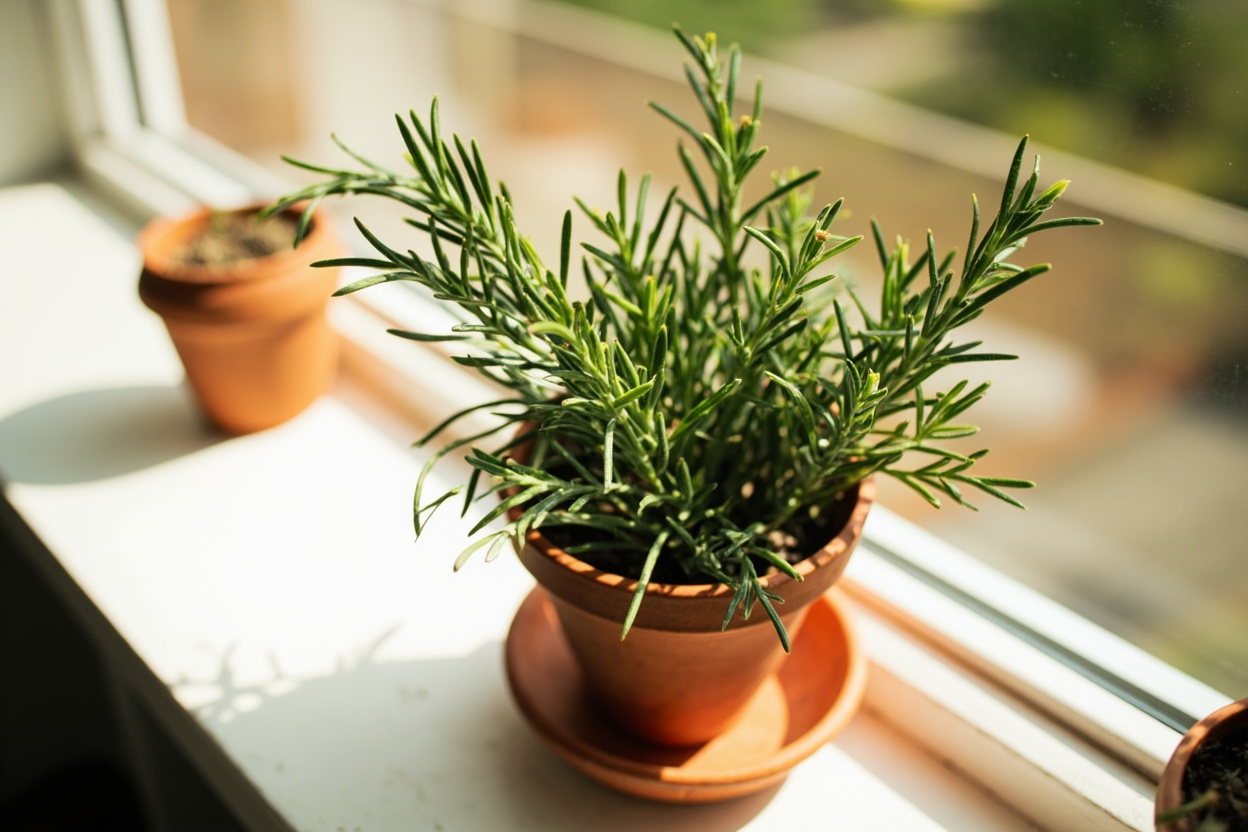

Most dying rosemary plants can be saved if you diagnose the cause within the first 2 weeks of visible decline. The rule that matters: match the symptom to the cause before touching the watering can. Wrong treatment kills rosemary in 14 days — overwatering a plant that already has root rot finishes it within a week, while underwatering a plant with cold damage usually works out, but you will lose time. Diagnosis first, always.
Rosemary evolved on dry Mediterranean hillsides, so its roots rot within 4-5 days of constantly wet soil even though its woody stems can survive weeks without water. This is the central paradox most guides miss: rosemary is drought-tolerant above ground and rot-vulnerable below. Once you understand this, the three common failure modes become obvious. Cold damage is the third cause most home growers never suspect because rosemary looks tougher than it is.
Honest limit up front: if more than half the canopy is brown and stems snap cleanly without flexing, propagation from healthy cuttings is the only path forward. Read rosemary propagation guide for the rescue-by-cuttings protocol. This article focuses on revival when the plant is still savable. If you are in the marginal zone — half the canopy is brown, but some stems still flex — start with revival steps and keep cuttings as a backup.
Why Rosemary Plants Die: The Three Causes Behind 90% of Failures
Three causes account for almost every rosemary death: root rot from overwatering, severe underwatering (the dried-out case), and cold damage. A fourth cause — soil that has gone hydrophobic — is a variant of underwatering and is worth its own diagnosis. Read the full rosemary plant care guide for baseline conditions a healthy plant needs.
The Mediterranean origin is the reason. Wild rosemary grows on rocky slopes in poor, well-drained soil with winter rain followed by a long dry summer. The root system evolved to grab water quickly when it rains and then sit in dry soil for months. In a pot, that means the roots cannot tolerate sitting in wet soil — they evolved for the opposite. Within 4-5 days of continuously wet soil at temperatures below 65°F (18°C), the fine feeder roots die, opening the door to fungal infection. Once that happens, the plant cannot pull water up even if the soil above is moist. The visible wilt looks like underwatering, which leads most owners to water more, which kills the plant faster.
Cold damage is the cause most growers miss. Rosemary is hardy to about 20°F (-7°C) when planted in the ground and well-established, but container-grown rosemary can take damage at 25°F (-4°C) or higher, especially when wet. A single night below 15°F (-9°C) typically kills the canopy. Indoor rosemary rarely faces cold damage unless it sits near a drafty window in winter or goes onto a patio for one night too early in spring.
Symptom Diagnosis: Match the Sign to the Cause
Match what you see to the cause before you act. The same visible symptom — brown leaves dropping from the bottom up — can mean three different things. Use this table to identify the cause, then jump to the right revival section. For more on the most common visible symptom, see rosemary turning brown.
| What You See | Most Likely Cause | Confirming Check | Action Within |
|---|---|---|---|
| Bottom leaves turning brown, dropping; stems still firm | Root rot from overwatering | Soil stays wet 24+ hours after watering; roots smell musty | 24 hours |
| Whole plant crispy-dry; soil bone-dry and pulling from pot edge | Severe underwatering | Pot feels light when lifted; soil hydrophobic (water beads on top) | 1 hour |
| Tips and outer growth blackened after a cold night | Cold damage | Temperature dropped below 25°F (-4°C); damage appears 2-5 days later | Within 24 hours |
| Whole canopy brown, stems snap cleanly without flexing | Dead — beyond revival | Scratch bark with fingernail: if no green underneath, the stem is dead | Skip revival — go to propagation |
| Yellow leaves with green veins, mostly new growth | Nutrient deficiency (rare in rosemary) | Soil exhausted after 2+ years; fertilizer long overdue | 1 week |
| Sudden leaf drop after moving plant outdoors | Transplant shock or light change | Plant moved within last 7-14 days | 48 hours |
If multiple symptoms are present, start with the most urgent. Root rot kills the fastest — within a week of confirmed wet soil. Cold damage can wait a few days while you assess which stems are alive. Severe underwatering looks dramatic but is the easiest to reverse.
Saving a Rosemary Plant With Root Rot (Overwatering)
Root rot is the most common cause of rosemary death because the visible wilt tricks owners into watering more. If you see bottom leaves browning while the soil stays wet, assume root rot until proven otherwise. The protocol below has a 60-70% success rate when started within 5 days of first symptoms. Outside that window, success drops to under 30% because the rot has spread into the crown. See the rosemary watering guide for the long-term watering schedule that prevents recurrence.
- Unpot the rosemary and gently shake off all wet soil. Rinse the root ball under lukewarm running water to see exactly what you are working with — contaminated soil reinfects fresh roots if left behind.
- Trim every brown, mushy, or hollow root back to firm white tissue with sterilized scissors. If any main stem has soft brown spots at the base, cut the entire stem back to firm green tissue. Do not leave soft areas to rot further.
- Soak the remaining healthy roots in diluted hydrogen peroxide (1 part 3% H₂O₂ to 4 parts water) for 5 minutes. This kills surface bacteria without damaging healthy tissue.
- Air-dry the plant on a paper towel in a warm, shaded spot for 1-2 hours. This calluses the cuts and prevents reinfection during repotting.
- Repot in a clean terracotta pot with fresh dry mix — 2 parts perlite, 1 part peat-free compost, 1 part coarse sand. Terracotta breathes and pulls moisture from the soil, which is exactly what rosemary needs. Never reuse the old soil.
- Do not water for 5-7 days after repotting. The damaged roots need time to heal before they handle moisture. When you do resume watering, moisten lightly around the base — never a full soak.
- Place in bright direct light (6+ hours) at 60-75°F (15-24°C). Avoid drafts. Within 4-6 weeks, new growth should appear from healthy stems. Skip fertilizer until then.
Trade-off: washing the roots under running water risks losing fine feeder roots that the plant needs to recover. If the root mass is already small, gently tease the soil loose instead of rinsing. The 60-70% success rate assumes you caught the rot early; if the entire root system is mush, propagation from stem cuttings is the only path.
Saving a Rosemary Plant That Has Dried Out (Severe Underwatering)
Severe underwatering looks dramatic — the entire plant is crispy, the soil has pulled from the pot edge, water poured on top runs straight through — but it is the easiest cause to reverse. Rosemary can lose 70-80% of its moisture and still recover because its woody stems store water and its small needle leaves lose moisture slowly. For the narrow question of fully dried-out rosemary, see dried out rosemary revival.
The key with a dried-out rosemary is that the soil has likely gone hydrophobic — it has been dry so long that water beads on top and runs down the inside edge of the pot without wetting the root ball. Surface watering in this state is pointless. Use bottom-watering instead.
- Place the entire pot in a basin or bucket filled with 2-3 inches of room-temperature water. The water level should reach the rim of the pot or just below.
- Let it soak for 30-60 minutes. You will see air bubbles escaping from the soil as the dry mix rehydrates. When the bubbles stop, the soil has absorbed what it can.
- Lift the pot out and let it drain fully for 10-15 minutes. Never let the pot sit in standing water after this — that converts underwatering into overwatering within hours.
- Prune any fully brown stems back to where you see green tissue inside. Use sharp scissors and cut at a 45-degree angle. Dead wood is a parasite on the plant’s energy.
- Resume normal care. Water again only when the top 1-2 inches of soil are dry to the finger — typically every 7-10 days for a healthy plant, more often in summer heat or dry indoor air.
Recovery takes 4-6 weeks. New growth appears from the surviving stems first — pale green shoots at the leaf nodes closest to the woody parts. If no new growth appears within 8 weeks, the plant is gone. Take cuttings from any healthy stem at that point and start propagation.
Saving a Rosemary Plant With Cold Damage
Cold damage is the cause most home growers never consider until they see blackened growth after a frost. The damage is often cosmetic in early stages — blackened tips, soft new growth — and the plant can recover from the woody stems. Severe cold (below 15°F / -9°C for more than a few hours) typically kills the entire canopy. Read rosemary plant care guide for cold tolerance and zone limits.
The protocol here is mostly patience. Pruning too early is the mistake most cold-damaged rosemary owners make.
- Do not prune immediately after cold damage. The damaged top growth actually protects the stems beneath from further cold. Wait 4-6 weeks of consistent warm weather (above 50°F / 10°C) before assessing.
- Within 4-6 weeks of consistent warmth, expect new growth on undamaged stems. Look for green buds at the leaf nodes along the woody parts — those are the recovery signal.
- Once new growth is visible, prune the dead wood back to the nearest healthy bud. Cut at a 45-degree angle just above the new growth. This redirects the plant’s energy to the live tissue.
- If no new growth appears within 8 weeks of consistent warm weather, the plant is dead above the crown. Check the base by scratching the bark with a fingernail — green means alive, brown means dead. If the crown is alive, the plant will regrow from the base.
- Move container rosemary indoors before temperatures drop below 25°F (-4°C). Outdoor plants in zones 7-10 need no protection; zone 6 and below should mulch heavily or bring containers inside.
Predictive guidance: most cold-damaged rosemary either recovers fully within 2-3 months or is clearly dead within 6 weeks. The intermediate case — slow partial recovery — typically stabilizes by month 4 with reduced canopy size. A rosemary that lost 50% of its canopy to cold usually takes 9-12 months to return to full size. Patience, not more watering, solves this.
When Rosemary Cannot Be Saved: Honest Limits
Some rosemary is beyond revival. Knowing when to stop trying is the difference between a wasted month and a healthy new plant. The honest limits: black mushy roots, total stem collapse, or >50% canopy damage with no flex in the stems typically mean the plant is gone. Read rosemary propagation guide for the rescue-by-cuttings protocol.
The scratch test is the most reliable check. Scrape the bark on the main stem with a fingernail or knife. If you see green underneath, the stem is alive and can recover. If you see brown throughout, that stem is dead. Test multiple stems across the plant — a partial loss means revival is possible; a full loss means propagation is the only path.
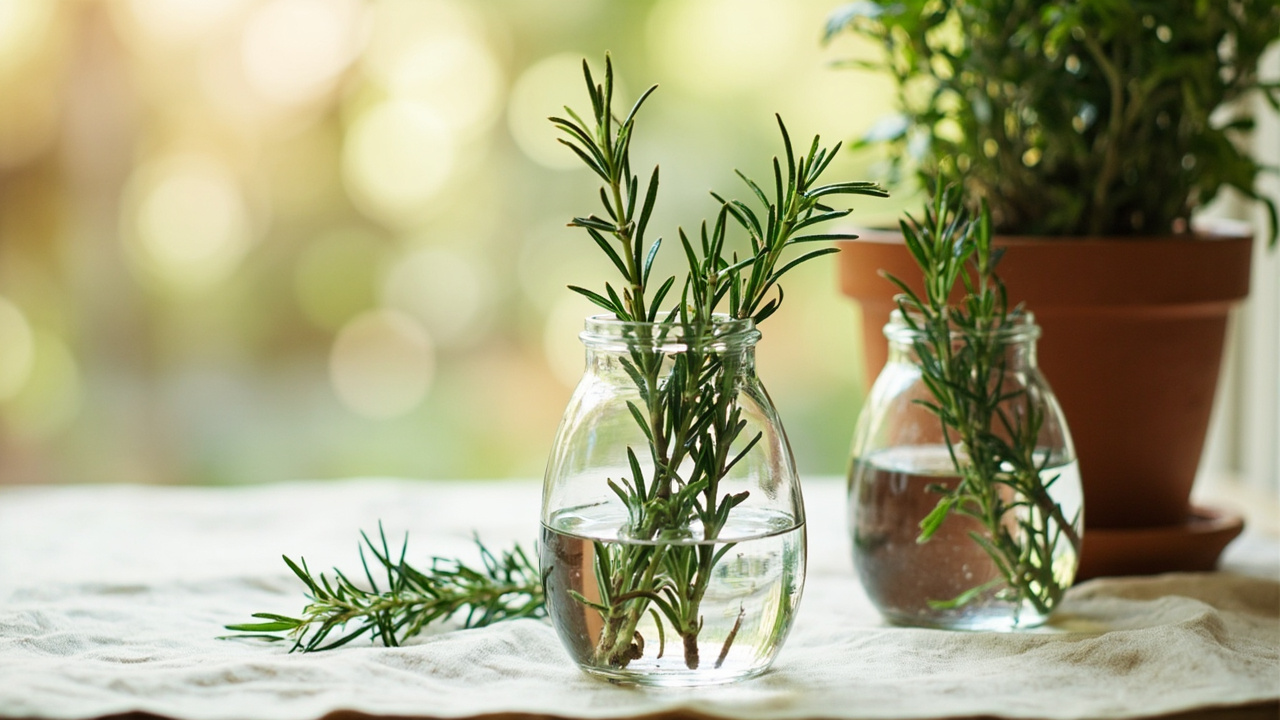
Propagation rescue: take 4-6 inch cuttings from any healthy stem that still flexes when bent. Strip the lower leaves, dip in rooting hormone (or skip if you do not have it), and place in moist perlite or a 50/50 perlite-vermiculite mix. Cover with a clear plastic bag to maintain humidity. New roots appear in 4-6 weeks. The propagated cuttings are genetic clones of the dying plant — same flavor, same growth habit, same hardiness. This is the rescue path that most guides skip because it requires admitting the original plant is gone.
Recovery Timeline and Long-Term Rosemary Care
- Week 1: Stabilize. Whatever the cause, no further decline should appear within 3-4 days of starting the correct treatment. If new symptoms appear, the diagnosis was wrong or the underlying cause is still active.
- Week 2-3: Soil recovery. Roots begin to recover or fail in this window. For root rot cases, new white root tips should emerge by week 3. For dried-out cases, the soil structure should be visibly restored.
- Week 4-6: First visible growth. New shoots appear at the leaf nodes. This is the earliest reliable signal that the plant is out of danger. Do not fertilize yet — the roots are still rebuilding.
- Month 3: Confirmed recovery. Multiple new stems, firm to the touch, with characteristic dark green needle leaves. Begin light feeding (half-strength liquid fertilizer once a month).
- Month 6: Full canopy or honest assessment. Full recovery takes 4-6 months from the start of treatment. Plants that lost more than half the canopy may take 9-12 months. If the plant has not pushed any new growth by month 4, the root system is permanently damaged and propagation is the next step.
Long-term care that prevents the same failure: water only when the top 1-2 inches of soil are dry — typically every 7-10 days in growing season, every 14-21 days in winter. Use terracotta pots, not plastic — the porosity pulls moisture away from the roots. Use a gritty, fast-draining mix (2:1:1 perlite to peat-free compost to coarse sand). Fertilize sparingly — once a month at half strength during the growing season only. Skip fertilizer entirely from November through February. Outdoor rosemary in zones 7-10 needs no winter protection; zones 6 and below should mulch heavily or bring containers inside before temperatures drop below 25°F (-4°C).
From Bank Statement to QuickBooks-Ready File
That manual cleanup you just read about? This tool skips it. Turn your PDF into QBO for QuickBooks without storing your data anywhere.
Start Converting