Coleus delivers some of the most extraordinary foliage colour in the plant world. Getting the basics right separates a vibrant, bushy plant from a leggy, faded one.
This guide covers everything you need to grow coleus successfully: light, water, soil, temperature, feeding, pinching, propagation, and overwintering. The advice draws on Royal Horticultural Society standards and University of Florida IFAS Extension guidelines.
Coleus (Solenostemon scutellarioides) is a tropical perennial from Southeast Asia, prized for its leaves rather than its flowers. In most climates it is treated as an annual — planted fresh each spring and replaced after frost.
Indoors, with enough light, coleus performs as a long-lived houseplant that colours up beautifully in a bright window. The main challenge for most gardeners is keeping it alive through winter, since coleus collapses at the first frost. As a frost tender half-hardy annual in most outdoor climates, coleus is planted fresh each spring and replaced after the first hard freeze.
For detailed guidance on specific care topics, see our coleus light requirements, coleus watering guide, coleus propagation guide, coleus varieties guide, coleus leaves turning yellow, coleus leaves curling, save dying coleus, and coleus vs croton comparison.
What Is Coleus: Getting to Know This Foliage Plant
Coleus (Plectranthus scutellarioides, formerly Solenostemon scutellarioides) belongs to the mint family (Lamiaceae) and is native to tropical regions from Southeast Asia to Australia. Every member of this family shares a distinctive square stem — a four-sided cross-section that distinguishes it from look-alike species in other families.
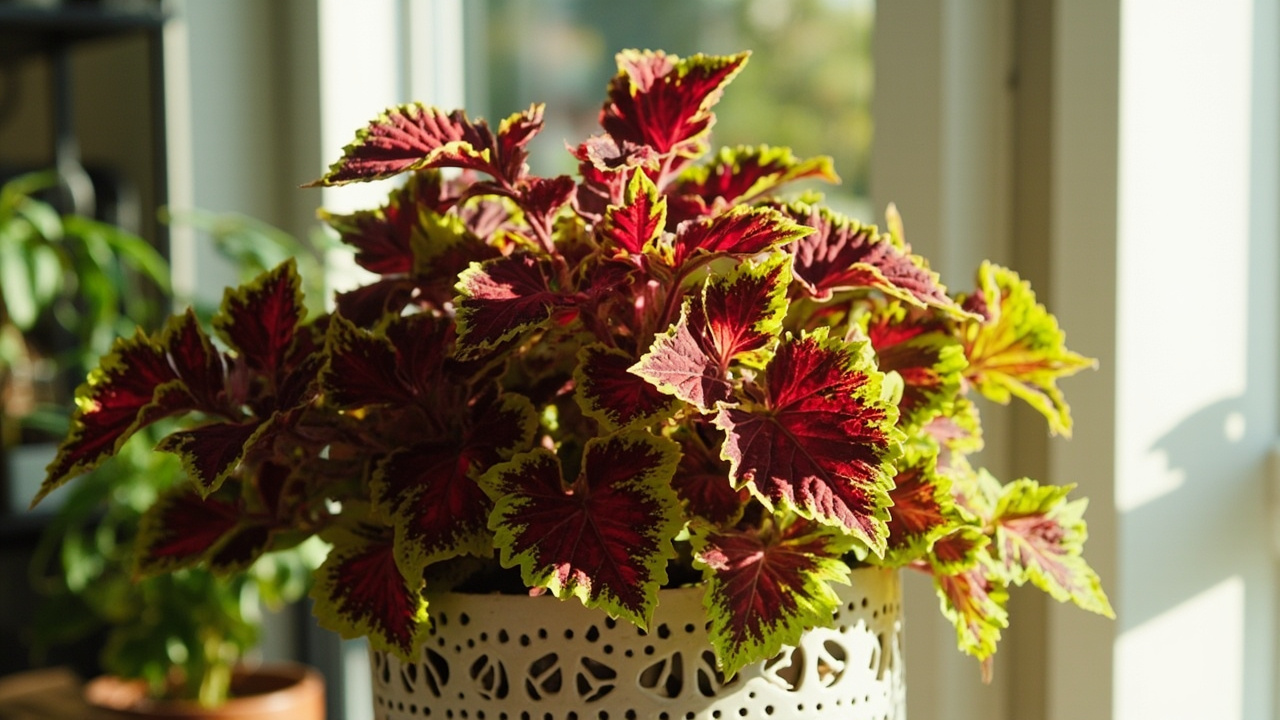
What makes it remarkable is the sheer range of foliage colours: deep burgundy, bright red, lime green, sunset orange, electric pink, and almost-black purple — often all on a single plant.
The leaves are oval to scythe-shaped with serrated edges, growing on square stems characteristic of the mint family.
Coleus was a Victorian bedding plant staple and remains a garden favourite. It is inexpensive, easy to grow from seed or cuttings, and delivers consistent colour from late spring right through to the first frost.
Modern breeding has produced sun-tolerant varieties that hold their colour even in full sun.
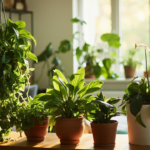
Indoors, coleus thrives in a bright spot with several hours of indirect light daily. In lower light, the vibrant colours fade to plain green. For other plants sharing similar light and watering needs, see the indoor herb garden guide.
Coleus Variables: What Changes the Routine
The same coleus, in the same pot, can need water every 2 days in one position and every 7 days in another. Six variables drive the routine:
Light intensity. More light means faster photosynthesis, pulling water from soil faster. The University of Florida IFAS Extension notes that foliage colour saturates as light intensity rises, up to a point where excessive light causes scorch rather than richer pigment.
Pinching timing. Pinching exploits apical dominance — the principle that the terminal bud suppresses lateral growth. When you pinch (cut back) the stem tip or terminal bud, you remove that hormonal signal and the leaf nodes below the cut break dormancy, producing side branches. The earlier a coleus is pinched, the bushier it grows from the base. A plant pinched at 15 cm (6 in) branches low.
A plant pinched only at 30 cm (12 in) branches high and stays leggy.
Soil moisture range. The Royal Horticultural Society recommends keeping tropical foliage in containers at 40–60 percent of field capacity.
Below 30 percent, wilting appears within hours. Above 80 percent, roots begin to suffocate.
Temperature. Coleus grows fastest between 18–24°C (65–75°F). Above 27°C (80°F), it wilts faster than it can drink.
Below 10°C (50°F), growth halts and leaves discolour.
Humidity. Average home humidity of 40–60 percent suits coleus well. Below 30 percent, leaf edges crisp.
Above 70 percent with poor airflow, fungal leaf-spot can appear.
Container versus ground. Potted coleus dries out roughly twice as fast as in-ground coleus. A potted plant in summer heat may need daily watering.
The same variety in a garden bed needs water every 2 to 3 days.
Coleus Light Requirements: Bright and Colourful
Light drives everything in coleus. The more light it gets (within reason), the more intense the foliage colour.
The general rule is bright indirect light indoors and partial shade outdoors in summer. Modern sun-tolerant cultivars hold colour in full sun. Older varieties scorch in full sun.
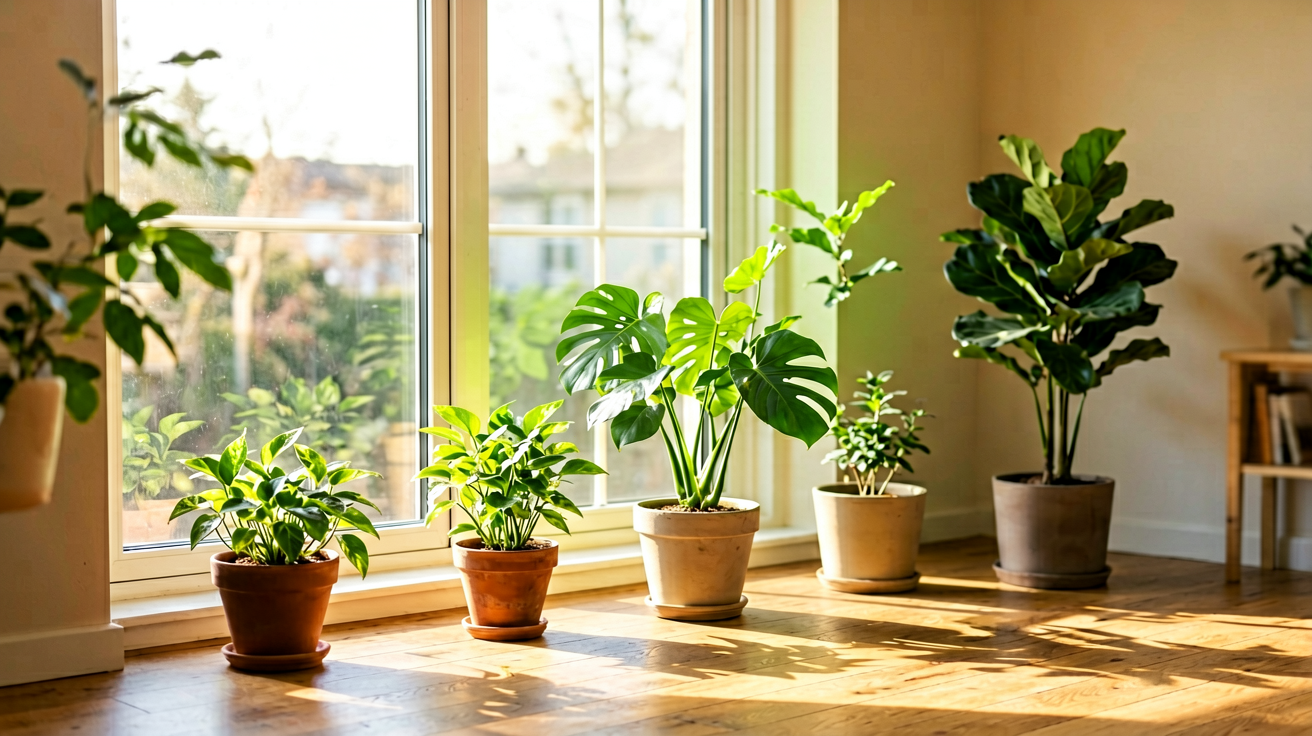
Indoors, place coleus near a south- or east-facing window with at least 4–6 hours of bright, indirect light daily.
Direct afternoon sun through glass can scorch the leaves, causing brown edges and faded colour.
If the plant starts stretching or becoming leggy, it is reaching for more light. An east-facing window with gentle morning sun is often ideal.
Outdoors, partial shade (2–4 hours of direct sun or dappled light) is the sweet spot for most varieties. In full shade the plant survives but becomes leggy and loses colour.
In full sun, newer cultivars hold their colour, but older varieties may scorch. Afternoon shade is especially important in hot climates.
Coleus Watering, Soil, Temperature and Humidity
Coleus has high water needs. The phrase to remember is “evenly moist.”
The soil should feel damp to the touch but never waterlogged. Allowing it to dry out completely causes the leaves to wilt and drop, sometimes dramatically.
Letting soil stay waterlogged leads to root rot, which is harder to recover from than wilting.
Top-inch test. Push your finger into the soil to the first knuckle. If the top inch feels dry, water thoroughly until you see runoff draining from the bottom of the pot.
Discard the excess — coleus does not want to sit in standing water.
For potted outdoor coleus in summer heat, daily watering may be necessary. For indoor coleus, 2–3 times per week is typical.
In winter, when growth slows, watering frequency drops. Always check the soil before watering rather than following a fixed schedule.
A rich, well-draining potting mix works best. A standard peat-free potting compost amended with perlite for drainage is sufficient. Coleus is not fussy about pH but struggles in compacted or sandy soils that drain too fast.
Coleus is genuinely cold-sensitive. It thrives in temperatures of 15–27°C (60–80°F) and suffers below 10°C (50°F).
A light frost kills it outright. Cool nights below 13°C (55°F) slow growth and cause leaf discoloration.
Do not plant coleus outside until all risk of frost has passed. Indoors, keep it away from cold drafts and air conditioning vents.
Humidity is less critical for coleus than for many tropical houseplants. Average home humidity (40–60%) is perfectly adequate. However, in very dry conditions — indicated by crispy leaf edges — a pebble tray or grouping with other plants helps.
Diagnosis Decision: What’s Wrong With My Coleus?
Coleus signals problems quickly. The leaves are expressive — colour, posture, and drop pattern all point to a specific cause.
If you see leggy stems with fading colour, not enough light is the cause. The plant stretches toward the window and loses pigment because chlorophyll is not being suppressed by bright light.
Move to a brighter position within 7 days. New growth colours up within 3 weeks.
If you see wilting despite damp soil, waterlogged roots are the cause. Usually from too-frequent watering without drainage. The roots cannot breathe, so the plant cannot drink.
Unpot, trim any black or mushy roots, and repot in fresh mix. Recovery takes 2 to 3 weeks if caught early.
If you see leaves dropping from the bottom up, a combination of cold and overwatering is usually the cause.
Move to a warmer spot and hold off watering until the top inch dries. Expect new growth within 10–14 days.
If you see colour loss on top leaves only, sun scald or sudden exposure to brighter light is the cause. The plant has not had time to acclimatise.
Move to dappled shade for 5 to 7 days, then reintroduce bright light gradually over a week.
If you see crispy leaf edges without wilting, low humidity is the cause — not underwatering. Common in heated winter rooms.
Raise humidity with a pebble tray. New leaves come in clean within 3 to 4 weeks.
Three Coleus Case Studies
The rules above apply universally, but they look different in practice depending on where you grow. For example, three real scenarios from different growing conditions:
An indoor east-facing windowsill in the UK. A ‘Wizard Mix’ coleus in a 15 cm terracotta pot. Watering every 3 to 4 days in summer, every 7 to 10 days in winter.
Pinching started at 10 cm — the plant branched from the base and stayed compact at 25 cm.
The caveat: leaf edges crisped in February when the radiator ran. Moving the pot 60 cm away from the heat source resolved it within 2 weeks.
An outdoor shade bed in the Pacific Northwest, USA. A ‘Kong’ coleus series planted in a partly shaded border under a Japanese maple. Watering every 2 to 3 days in July heat, weekly in September.
The dappled light kept colour saturated without scorching. Pinching done weekly through July.
The trade-off: the first cold snap in October blackened foliage overnight. These are tropical plants, not hardy perennials.
A mixed container on a south-facing patio in southern Spain. Coleus combined with trailing sweet potato vine in a 40 cm terracotta pot.
Daily watering in July and August — the pot dried out completely by late afternoon. Morning sun, afternoon shade from a pergola.
The result: the most vivid colour of the three cases. The trade-off is daily attention to keep the plant alive through the heat.
Coleus Feeding, Pinching and Propagation
Coleus is a vigorous feeder. During the growing season, apply a balanced liquid fertilizer (such as 10-10-10) diluted to half strength every 2–3 weeks. This sustains the rapid leaf growth that makes the plant so rewarding.
In rich garden soil outdoors, monthly feeding is often sufficient. In pots, nutrients deplete faster and fortnightly feeding makes a visible difference.
Coleus grows quickly. Without pinching, it produces tall, leggy stems with a single growing tip.
Pinching removes the growing tip and redirects the plant’s energy into side branches, producing a bushier, more compact plant with more leaves and therefore more colour.
Use your thumb and forefinger or clean scissors to remove the top 2–5 cm (1–2 in) of a stem when the plant is 15–20 cm (6–8 in) tall. This stimulates growth from the leaf joints below the cut.
Repeat every few weeks throughout the growing season. Do not feel shy about cutting back hard — coleus regenerates readily from old wood and bare stems.
Coleus also produces flower stalks in late summer. These are not attractive, and the plant diverts energy into seed production rather than foliage. Pinch them out as they appear.
Stem cuttings root quickly in water or moist compost within 7–14 days. Take a 7–10 cm (3–4 in) cutting just below a leaf joint — the node is where roots emerge, not the internode between nodes.
Remove the lower leaves and place in water or moist compost. Change the water every few days.
Once roots are 2–5 cm (1–2 in) long, transplant to a small pot. Spring and early summer are the best times to propagate — cuttings root fastest in warm conditions with plenty of light.
Overwintering Coleus Indoors: Your Options
Coleus is frost-tender. In most climates it dies with the first hard freeze. Three practical approaches exist, and the trade-offs are real:
Bring the plant inside. This works best for potted coleus. Move it indoors before temperatures drop below 10°C. Coleus is frost tender and cannot survive a hard freeze — it is classified as a half-hardy annual in temperate zones, meaning it completes its life cycle in one growing season outdoors.
Place it in the brightest spot available — a south-facing window is ideal. Growth slows in winter but the plant survives and performs strongly again in spring.
Growth slows in winter but the plant survives and performs strongly again in spring. The cost: it takes up window space for 5 months.
Take cuttings before frost. This is the most space-efficient approach. Take 6–8 cuttings in early autumn, root them, and keep the young plants on a bright windowsill through winter.
They need less space than a mature plant. However, the trade-off is ongoing attention through the winter months.
However, the trade-off is ongoing attention through the winter months.
Treat as an annual. This is entirely valid. Seed costs very little and nursery seedlings are inexpensive in spring.
If you do not have a bright enough spot for overwintering, there is no shame in starting fresh. However, the trade-off is losing the specific varieties you liked and spending money each spring.
However, the trade-off is losing the specific varieties you liked and spending money each spring.
When the Coleus Rules Break
The light, water, and pinching rules cover 90 percent of coleus situations. However, five cases need adjustment:
Outdoor sun limits. In climates where afternoon summer temperatures stay above 32°C (90°F), even sun-tolerant cultivars struggle. Leaves bleach to pale yellow and growth stalls.
The workaround: afternoon shade cloth at 30 to 40 percent, or move containers to a shaded patio from noon onwards.
Frost damage. Coleus cannot recover from a hard frost — the cell walls rupture and the stems collapse within hours. The recovery window for light frost (down to 0°C) is narrow.
Cut back to firm green tissue the morning after. Withhold water for 5 to 7 days. New growth may emerge from the base if the roots were insulated.
Heat stress. A wilted coleus in 35°C (95°F) heat is not signalling thirst. It is signalling that transpiration has outpaced root uptake.
Water thoroughly, move to shade, and mist the foliage. The plant usually recovers within 2 to 3 hours. However, repeated daily heat-stress cycles weaken the plant and invite spider mites.
Legggy recovery timeline. A coleus that has stretched to 60 cm (24 in) with bare lower stems will not fill in from below. The fix: cut back hard to 10–15 cm (4–6 in) above the soil.
Keep in bright light and pinch new shoots when they reach 10 cm. Full recovery takes 4 to 6 weeks. However, the plant looks stark for the first 2 weeks of that window.
Cold windowsills in winter. A coleus sitting where night temperatures drop below 13°C (55°F) drops leaves and stops growing.
Move the plant 30 cm (12 in) back from the glass in cold weather. Alternatively, use an insulating mat under the pot. The leaves return within 3 to 4 weeks once temperatures stabilise.
Whether you overwinter one plant on a windowsill or fill a whole container display in summer, coleus remains one of the most rewarding foliage plants — bringing vivid colour from late spring right through to the first frost.
Turn That PDF Into a Spreadsheet in Minutes
You've seen how to do it manually — now let the tool handle the heavy lifting. Upload your bank statement and get Excel, CSV, or QBO in a few clicks.
Try It Free