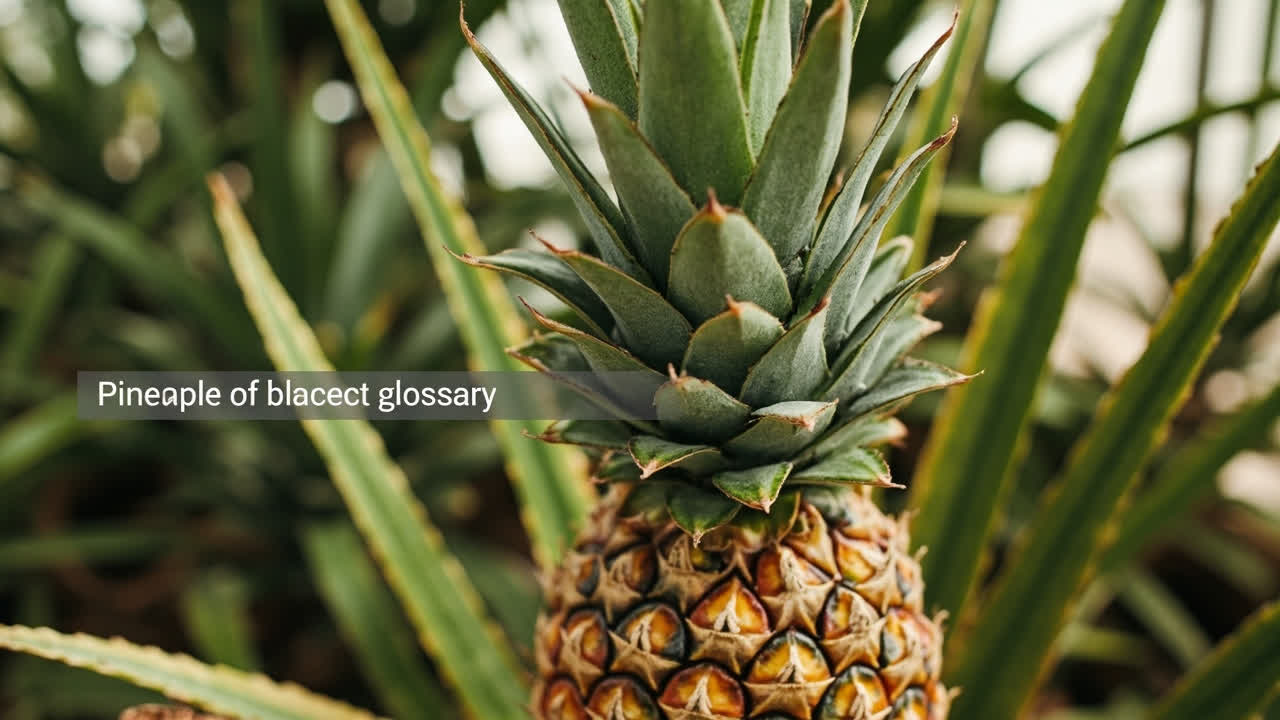
Pineapple plants are not like your pothos or monstera. They store water in their leaves — those thick, serrated rosettes that define the plant — and they have a root system that’s actually designed to handle periods of drought, not constant moisture. So when people apply the standard houseplant watering logic (water when the top inch of soil is dry), they create exactly the conditions for root rot. The soil stays wet too long. The roots suffocate. The plant declines, and the most common response is to water it more — because it looks wilted — which finishes the job.
The number-one thing that kills pineapple plants in containers is overwatering. Not underwatering, not pests, not wrong light — overwatering. And it’s almost always well-intentioned care that does it.
How Pineapple Plants Actually Handle Water
The Ananas comosus root system is relatively shallow and inefficient compared to many houseplants. These roots don’t process water at the rate most people assume. The plant evolved in environments with intermittent rainfall — wet seasons followed by dry spells — and it adapted by storing moisture in the leaf rosettes (the “tank” effect). When you water it constantly, the roots can’t breathe or process the volume, and anaerobic conditions develop in the soil. That’s when rot sets in.
What this means practically: let the soil dry out between waterings, more than you’d expect for a tropical-looking plant. And when you water, water thoroughly — but then leave it alone until the soil is genuinely dry.
When to Water: The Finger Test and Beyond
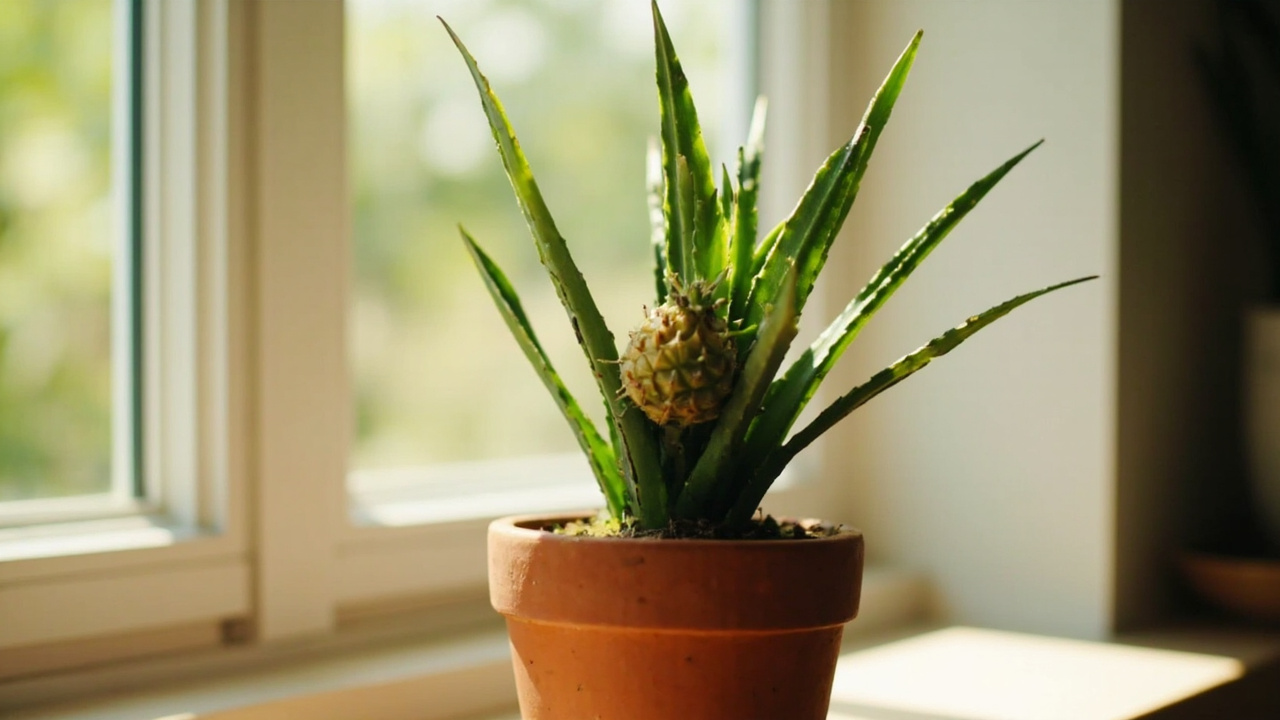
For pineapple plants in containers, the rule is straightforward: water only when the top 2–3 inches of soil are completely dry. Not slightly dry, not barely moist — dry. Here’s the test:
- Insert your finger into the soil up to the second knuckle (about 2 inches deep)
- If it comes out clean and dry with no soil adhering, it’s time to water
- If there’s any soil moisture or residue, wait another 2–3 days and test again
In practice, depending on your climate and pot size, this typically means watering every 7 to 14 days in warmer months, and every 14 to 21 days in winter or cooler periods. The exact interval matters less than waiting for the dry signal before watering.
Seasonal Watering Schedule
- Spring/Summer (active growth): Water every 7–10 days on average. If the plant is in a porous terracotta pot in a hot climate, it may need water every 5–7 days. If it’s in a plastic pot in a cooler room, every 10–14 days.
- Fall/Winter (slow or dormant): Water every 14–21 days. The plant’s water requirements drop significantly when growth slows. Overwatering in winter is the most common mistake — the soil stays wet for two weeks or more while the plant uses almost none of it.
- Indoor heating: If your plant is near a radiator or heating vent, the air is dryer and the soil will dry faster. Test more frequently in this setup.
How to Water Correctly
The method matters as much as the frequency. For pineapple plants:
- Water thoroughly — pour water over the soil surface until it flows freely from the drainage hole. This ensures the entire root zone is moistened, not just the top layer.
- Empty the saucer — immediately after watering, empty any collection tray or saucer beneath the pot. Pineapple roots should never sit in standing water. This single habit prevents more problems than any other.
- Let it drain fully — don’t place the plant back in a decorative pot or tray immediately. Let it drain for at least 30 minutes so excess water leaves the root zone.
What happens next is important: within 2–3 days after watering, the soil should be visibly drying at the surface. If it’s still wet and saturated after a week, you have a drainage problem — either the pot doesn’t drain well, the soil mix is too water-retentive, or the plant is in a location with insufficient light to drive evaporation. Fix the environment first, not the watering schedule.
The Pour-Through Method: An Alternative Approach
For a more precise reading of what the root zone actually looks like, use the pour-through method:
- Water the plant thoroughly from the top until water flows from the drainage hole
- Wait 30 minutes
- Place the pot in a saucer and observe how much water collects
- If the pour-through is more than 20% of the pot volume, the drainage is good. If it’s less than 5%, the soil is retaining too much.
This method helps you calibrate your soil mix and drainage — it’s a diagnostic tool as much as a watering technique.
Water Quality: What Type of Water to Use
Pineapple plants are somewhat sensitive to dissolved salts and minerals in water. Tap water that is very hard (high mineral content) can cause leaf tip burn and gradual buildup in the soil. The signs of poor water quality:
- Leaf tips turning brown, especially on the older outer leaves
- White crusty deposits on the soil surface or pot rim — mineral buildup
- Slow overall decline even when watering and light are correct
If your tap water is very hard (more than 200 ppm total dissolved solids), use filtered or rainwater for your pineapple plant. This is an easy adjustment and makes a noticeable difference over months. For most city tap water in moderate hardness areas, standard tap water is fine — just let it sit overnight in a container before using so the chlorine dissipates and it reaches room temperature.
Temperature matters too: never use cold water straight from the tap. Pineapple plants are tropical and the shock of cold water can cause the leaves to contract and stress the roots. Use room-temperature water (around 68–72°F / 20–22°C).
Signs of Overwatering vs. Underwatering
The symptoms look similar at first glance — both cause wilting and leaf discoloration. Here’s how to distinguish them:
Overwatering Signs
- Leaves turning yellow, starting with the older outer leaves and progressing inward
- Soft mushy leaf bases — the base of the leaves where they meet the soil is soft instead of firm
- Soil stays wet — if you check the soil 5 days after watering and it’s still damp, this is the clearest signal
- Fungal smell from the soil — a sour, musty odor indicates anaerobic decomposition
- No new growth — the center stops producing new leaves
Underwatering Signs
- Leaves looking limp and wilted even though the soil is dry
- Leaf edges browning and crisping, starting at the tips
- Soil pulling away from the pot edges — the root ball has contracted away from the container wall
- Entire plant looking droopy, not just the lower leaves
The fastest fix for underwatering is to soak the entire root ball: place the pot in a bucket or basin of room-temperature water and let it absorb from the bottom for 20–30 minutes. Then drain thoroughly. The plant usually recovers within a day or two.
The Hole at the Bottom: Why Drainage Is Everything
This cannot be said enough: no drainage hole = no pineapple plant in containers. Not for a week, not for a month — it will kill the plant through root rot every time. Even “self-watering” pots with a reservoir system at the bottom are problematic for pineapple because the root zone sits in water.
The pot must have one or more holes at the base for excess water to escape. The holes should be at least 1/2 inch in diameter — smaller holes clog with soil over time. And the saucer should be emptied after every watering, not left to collect standing water.
Pot Material Considerations
- Terracotta pots: Excellent for pineapple — the porous walls allow soil to breathe and dry faster, reducing overwatering risk. In hot climates, terracotta may require watering every few days more often than other materials.
- Plastic pots: Retain moisture longer. Fine in cooler rooms or if you’re a cautious waterer, but higher overwatering risk in warm climates.
- Ceramic/glazed pots: Moderate moisture retention. Ensure the drainage hole is not blocked by the glaze material.
The Humidity Factor
Pineapple plants appreciate humidity above 50%, but they are not as demanding as tropical ferns. Average household humidity (40–60%) is generally acceptable. The more important factor is the soil moisture balance — humidity affects how fast the soil dries more than it affects the plant directly.
If your home is very dry (heated winter air, desert climates), the leaves may develop brown tips even though the roots are fine. In this case, occasional misting of the leaves helps — but the real fix is addressing the watering schedule and ensuring the plant isn’t sitting in water-retentive soil.
The Trade-offs: What This Approach Can’t Do
This watering method is designed to keep the root zone healthy, but it depends entirely on having the right soil mix (fast-draining) and enough light (for evaporation and active growth). If either of those is wrong, even perfect watering technique won’t prevent decline.
The other honest limitation: in very high-humidity environments (rainforest climates, poorly ventilated greenhouses), the soil dries much slower even when the watering schedule is correct. In these conditions, increase the drainage material in your soil mix (more perlite or pumice) and consider a fan for air circulation to speed evaporation.
What this method won’t fix: if your plant already has advanced root rot from chronic overwatering, adjusting the watering schedule alone won’t save it. You will need to unpot the plant, trim dead roots, and repot in fresh fast-draining soil — a topic covered in the pineapple problem guides.
From PDF to Excel in one click
Forget retyping line by line. Upload any bank statement, get a spreadsheet you can actually use. Your files are never stored, and you can test the converter with 3 free conversions.
Try it free