
Pineapple care gets easier when the language stops getting in the way. A lot of advice sounds more complicated than it really is because growers use terms like pup, slip, rosette, or crown rot without defining them clearly.
This page is not trying to turn you into a botanist. It is meant to make every other pineapple article easier to read, easier to use, and harder to misunderstand.
If you are moving through the cluster, this glossary is the translation layer between the care guides, the problem pages, and the propagation pages. It saves time because the same few terms repeat everywhere.
Why Pineapple Terms Matter More Than They Seem
Most pineapple mistakes start with a translation problem. A grower reads a term incorrectly, then applies the wrong fix. If you know what the word means, you can follow the advice with much better judgment.
What happens next is simple: you stop guessing and start recognizing patterns. That matters in propagation, diagnosis, and fruiting.
Core Pineapple Terms
Ananas comosus
The botanical name for the common pineapple plant. If you see this in plant labels or care guides, it simply means pineapple.
Bromeliad
The plant family pineapple belongs to. This matters because pineapple is a terrestrial bromeliad, which helps explain its rosette form and its dislike of soggy roots.
Terrestrial bromeliad
A bromeliad that grows in soil instead of on trees. Pineapple fits this category, so drainage and root oxygen matter more than a lot of beginner growers expect. If you want the practical side of that, see the soil requirements guide.
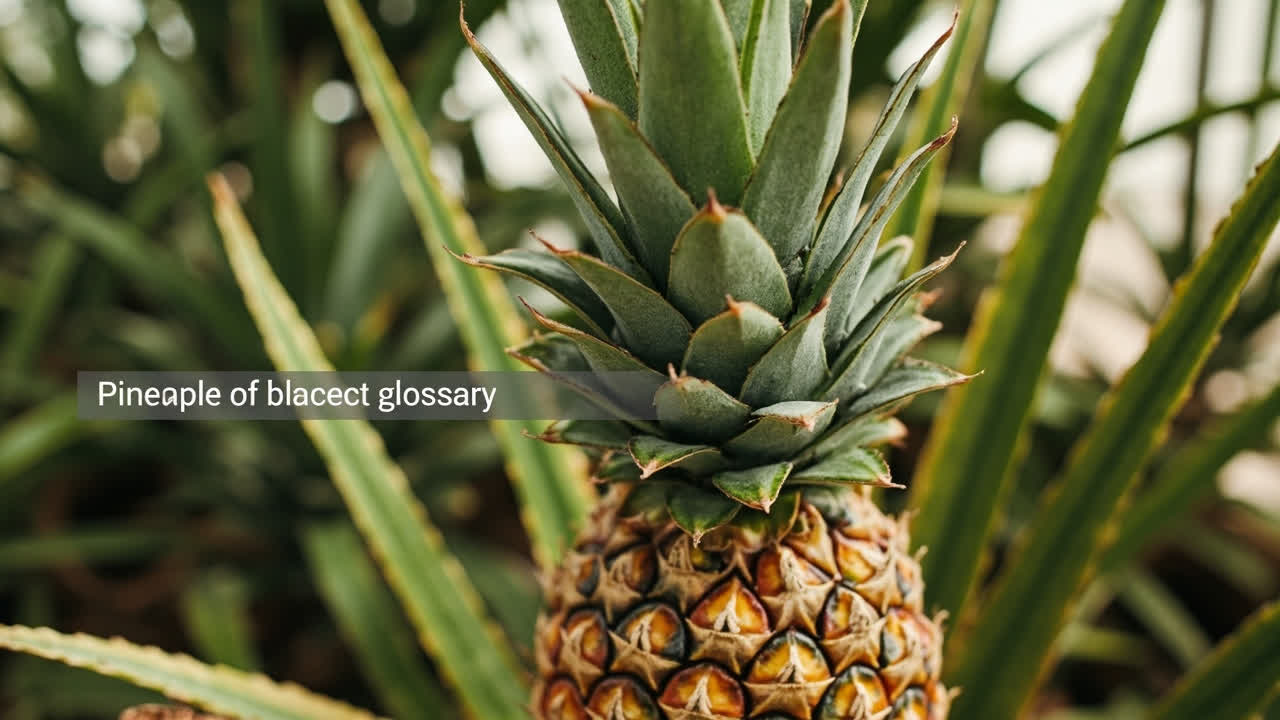
Crown
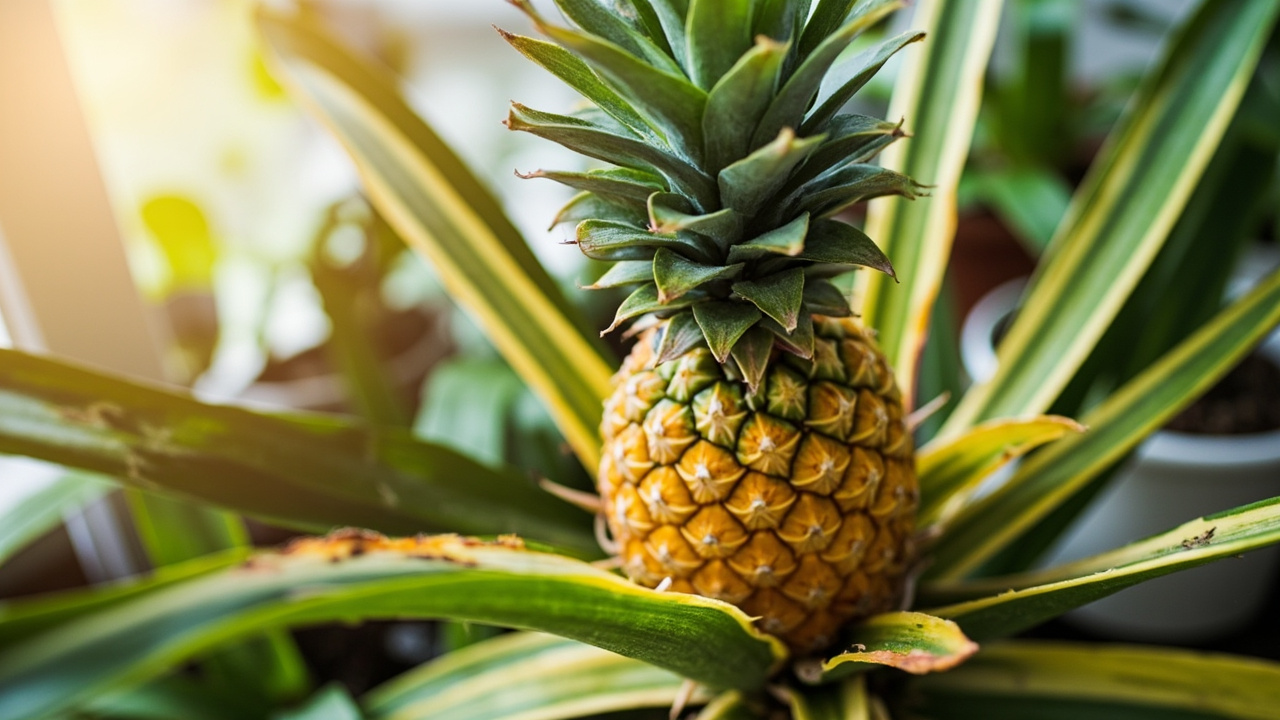
The leafy top of the fruit. This is the part most people use for propagation from a store-bought pineapple. The best method for that process is covered in growing from fruit.
Rosette
The circular arrangement of leaves growing from the center. When pineapple guides mention the center or growing point, they are talking about this rosette system.
Growing point
The active center where new leaves emerge. If this point is damaged, the plant’s future growth is at risk even if the outer leaves still look acceptable. That is why center injuries matter in pages like center leaves pulling out.
Pup
A small new plant that forms near the base of the mother plant. Pups are one of the easiest and most reliable propagation options once the mother plant matures.
Slip
An offset that forms on the stalk below the fruit. Slips are often vigorous and useful for propagation because they already have a head start.
Sucker
An offset that grows from the leaf axils or near the base of the plant. Suckers are commonly used to produce new plants and often establish faster than crowns.
Offset
A general term for any baby plant produced by the mother plant. Pups, slips, and suckers are all offsets.
Crown rot
Rot affecting the central top growth point of the plant, often caused by trapped moisture and poor conditions. It is more serious than simple leaf-tip browning because it threatens the growing center itself. See crown rot for the full symptom pattern.
Root rot
Decay of the root system caused by excess moisture and poor oxygen around the roots. It often starts before the top of the plant looks obviously sick. See root rot if the plant is declining from the bottom up.
Fruiting
The stage when a mature pineapple plant produces a flower and then develops fruit. In home conditions, this usually takes patience and steady conditions rather than special tricks. For timing, see how long pineapple takes to fruit.
Cultivar
A named variety bred or selected for specific traits such as fruit size, sweetness, or ornamental value.
Propagation Terms You Will See Often
These terms matter because they tell you where to take new plant material from.
- crown — the top of the fruit
- pup — baby plant from the base
- slip — offset from the fruit stalk
- sucker — offset from the lower plant
What happens next once you know the difference is better propagation choices and fewer failed starts. The propagation guide and the water-versus-soil comparison become much easier to follow after that.
Diagnosis Terms You Will See Often
These words usually show up in problem articles.
- rot — tissue breakdown from excess moisture and decay organisms
- burn — damage from too much sun, fertilizer, or stress
- chlorosis — yellowing from poor nutrient use or stress
- stress — the plant is coping, but conditions are not ideal
If a term sounds vague, the surrounding symptoms matter more than the word itself. The term narrows the search; it does not replace it.
How to Read Pineapple Advice More Accurately
When a guide says the plant needs a brighter site, it means stronger light without scorching. When it says the plant is a bromeliad, it is pointing you toward drainage and structure, not air plants on shelves. When it says slips or pups, it is telling you the plant can make offspring in more than one way.
The best use of this glossary is practical: read the word, picture the plant part, then apply the advice to that exact part.
What happens next is fewer care mistakes caused by misunderstanding the instructions.
Most Useful Terms to Learn First
If you only remember five terms, make them these:
- crown
- pup
- sucker
- root rot
- growing point
Those five show up repeatedly across propagation, troubleshooting, and general care.
The Honest Recommendation
You do not need to memorize every term to grow pineapple well. But understanding the core vocabulary makes every other article in the cluster more useful. That alone is worth it.
From here, the best next reads are the propagation guide, root rot guide, and varieties guide.
Turn PDF Bank Statements Into Workable Spreadsheets
Your bank statement is a mess of numbers, but your books shouldn't be. Use our converter to get Excel, CSV, or QBO files — ready for QuickBooks.
Try It Free Now