
People imagine pineapple root rot as a dramatic last-stage problem. Mushy plant, awful smell, obvious collapse. Sometimes it gets there. But the dangerous part begins much earlier, when the plant still looks salvageable and the warning signs are easy to dismiss.
A pineapple plant with root rot often starts with slower growth, duller leaves, and a pot that stays wet too long. Nothing about that sounds urgent, which is exactly why root rot gets worse. The roots lose oxygen, decay begins, and the plant gradually loses its ability to absorb water — even while sitting in too much of it.
This is the cruel logic of root rot: the plant can look thirsty and overwatered at the same time. That contradiction confuses people into watering again, which pushes the damage further.
What Causes Root Rot in Pineapple Plants?
The immediate cause is excess moisture around the roots for too long. The deeper cause is usually a combination of mistakes:
- dense soil that drains badly
- watering too often
- pots without proper drainage
- low light that slows evaporation and growth
- cool temperatures below 68°F / 20°C that slow root activity
Most people focus on the watering frequency alone. The real bottleneck is often the whole environment. If the soil is heavy and the light is weak, even a careful grower can accidentally create rot conditions.
Early Signs of Root Rot
Catch it here if you can. Early detection changes everything.
- pot feels heavy for too long after watering
- new growth slows down noticeably
- outer leaves yellow first
- leaf texture becomes softer instead of firm and upright
- soil smells sour or swampy
What happens next if nothing changes is usually gradual worsening: more yellowing, slower center growth, then softness at the base where the leaves meet the stem.
Advanced Signs of Root Rot
- base of the plant feels mushy
- center growth weakens or stops
- whole plant loosens in the pot because roots have decayed
- lower leaves pull away too easily
At this stage, waiting rarely helps. You need to inspect the roots.
How to Confirm Root Rot
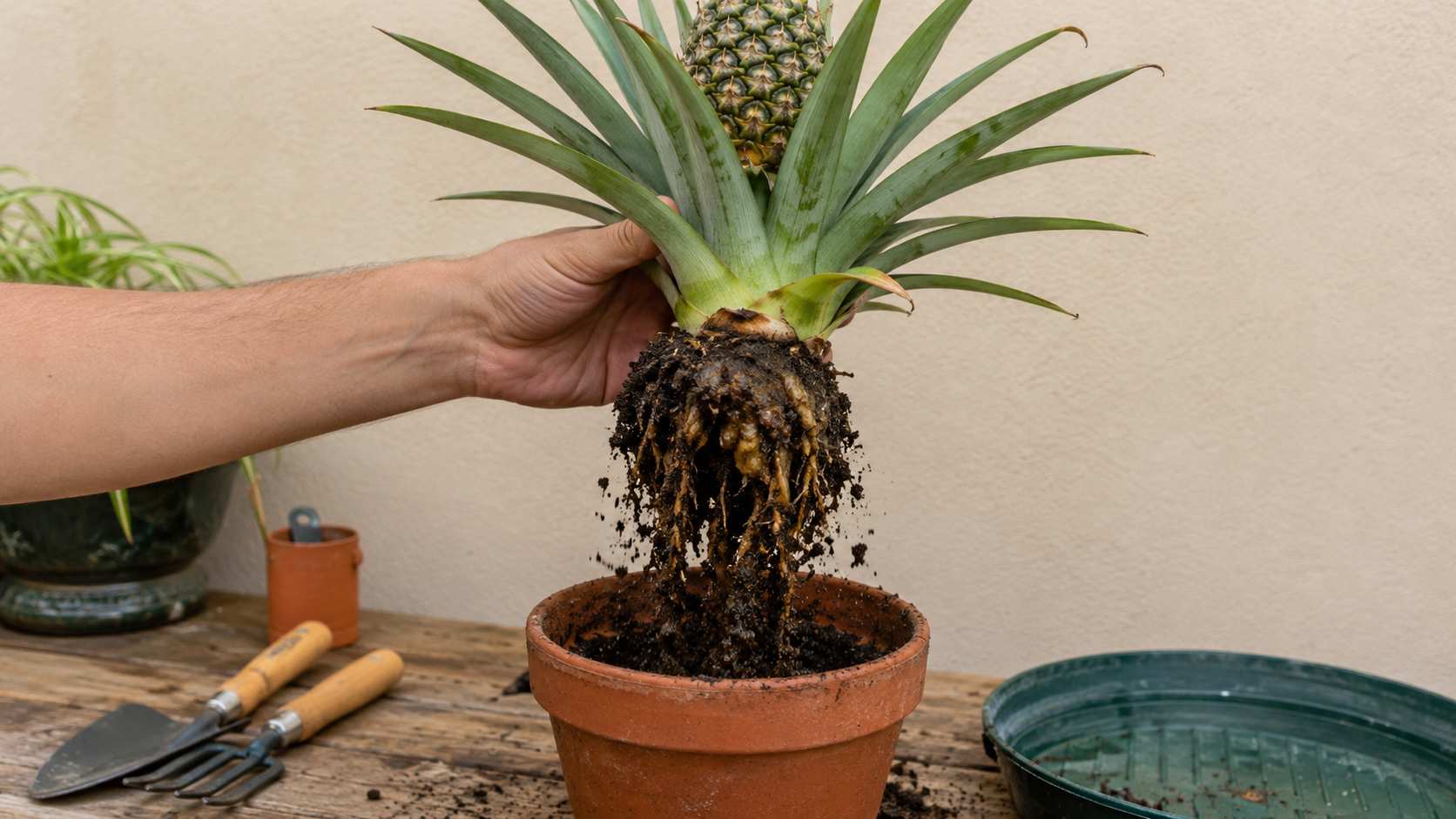
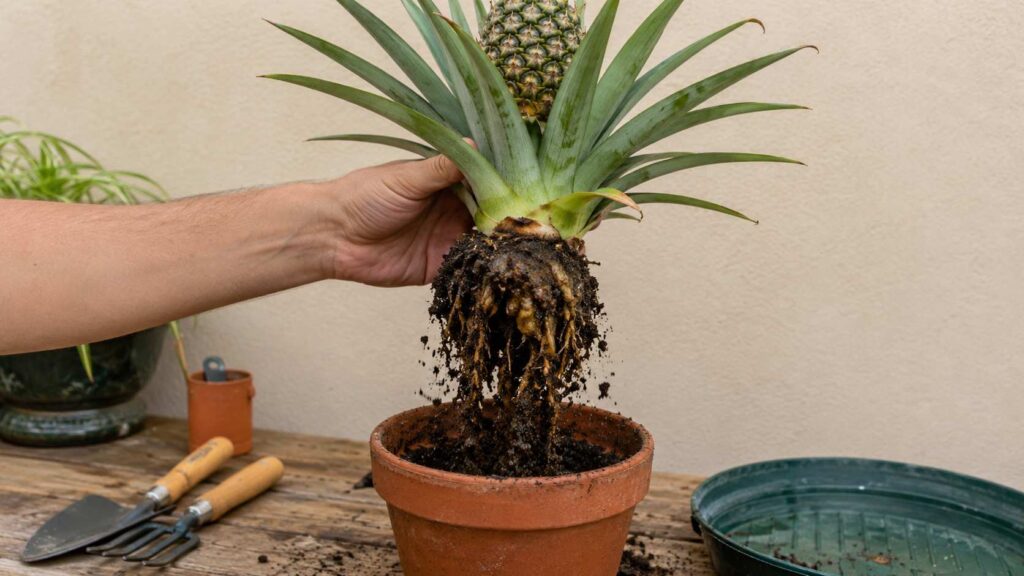
Take the plant out of the pot carefully and inspect the roots directly. Healthy pineapple roots are pale, firm, and intact. Rotting roots are brown, black, mushy, or stringy.
If the root ball smells sour and parts of it collapse in your hand, the diagnosis is clear. That is root rot.
The trade-off is that unpotting a stressed plant creates short-term shock. But leaving a rotting root system in place is worse. Once rot has started, inspection is usually the right call.
How to Save a Pineapple Plant With Root Rot
- remove the plant from the pot
- shake off wet soil gently
- trim away all black, brown, soft, or foul-smelling roots with sanitized scissors
- let the cut roots air-dry briefly for an hour or two in a shaded area
- repot into fresh fast-draining mix
- do not water heavily right away
What happens next is crucial: after repotting, the plant needs oxygen more than moisture. Water lightly just to settle the mix if needed, then let the upper layers dry before watering again. If you soak the fresh pot immediately, you recreate the same problem in clean soil.
The Right Soil After Root Rot
Use a fast-draining mix like:
- 50% potting mix
- 30% perlite or pumice
- 20% orchid bark or coarse sand
The goal is not just drainage. It is oxygen. The roots need a loose structure so they can recover instead of sitting in another damp block of organic matter. Pair this with the soil guide if you want the full breakdown.
Should You Water Less or Change More?
If the mix is wrong, simply watering less is not enough. That is one of the biggest mistakes growers make. They keep the same dense soil, then try to compensate with extreme caution. Sometimes that delays the problem. It rarely fixes it.
You need to solve the cause, not just reduce the symptom. Better soil, better light, and proper drainage matter more than promising yourself to be more disciplined next time.
Can a Pineapple Plant Recover Fully?
Yes, if the center crown is still firm and enough healthy root tissue remains. Recovery depends on how much of the root system survives and whether the stem base is still sound.
Here is the practical rule:
- firm center + some healthy roots: good recovery potential
- soft base + crown collapse: poor recovery odds
If recovery is possible, expect slow progress first. The plant usually stabilizes before it visibly grows. New center leaves are the best sign that the root zone is functioning again.
How Long Recovery Takes
In warm bright conditions between 70–90°F / 21–32°C, a recovering pineapple plant may show stabilization within 2–3 weeks and clearer new growth within 4–6 weeks. In cooler or lower-light conditions, everything takes longer.
This is where patience matters. People often overreact during recovery and start watering too much again because the plant is not bouncing back fast enough. Do not do that. Root recovery is slower than leaf decline.
How to Prevent Root Rot From Coming Back
- use a pot with a real drainage hole
- switch to a more open soil mix
- wait for the upper soil to dry before watering again
- give the plant stronger direct light
- avoid cold wet conditions
What happens next when you get these pieces right is that the pot dries on a predictable rhythm, the leaves stay firmer, and the plant stops cycling between stress and recovery.
When Root Rot Is Actually Crown Rot
Sometimes the real problem is not just in the roots. If water sits in the crown in poor conditions, the central growing point can rot too. That often shows up as a soft or discolored center and a bad smell from the rosette itself.
If the crown is rotting, recovery is harder. You may still save offsets or pups if the plant has them, but the main growing point is often lost. That is why catching root stress early matters so much.
The Honest Take
Root rot is not bad luck. It is usually the result of a system that stayed wet, dense, or dark for too long. The good news is that once you understand that system, prevention gets much easier.
If your pineapple plant still has a firm center, act now. Recovery is possible. If you wait for dramatic collapse, you are asking a damaged root system to do work it can no longer do.
For full recovery strategy, pair this with the dying pineapple plant guide and the watering guide. Those two pages fill in the rest of the rescue process.
Turn PDF Bank Statements Into Workable Spreadsheets
Your bank statement is a mess of numbers, but your books shouldn't be. Use our converter to get Excel, CSV, or QBO files — ready for QuickBooks.
Try It Free Now