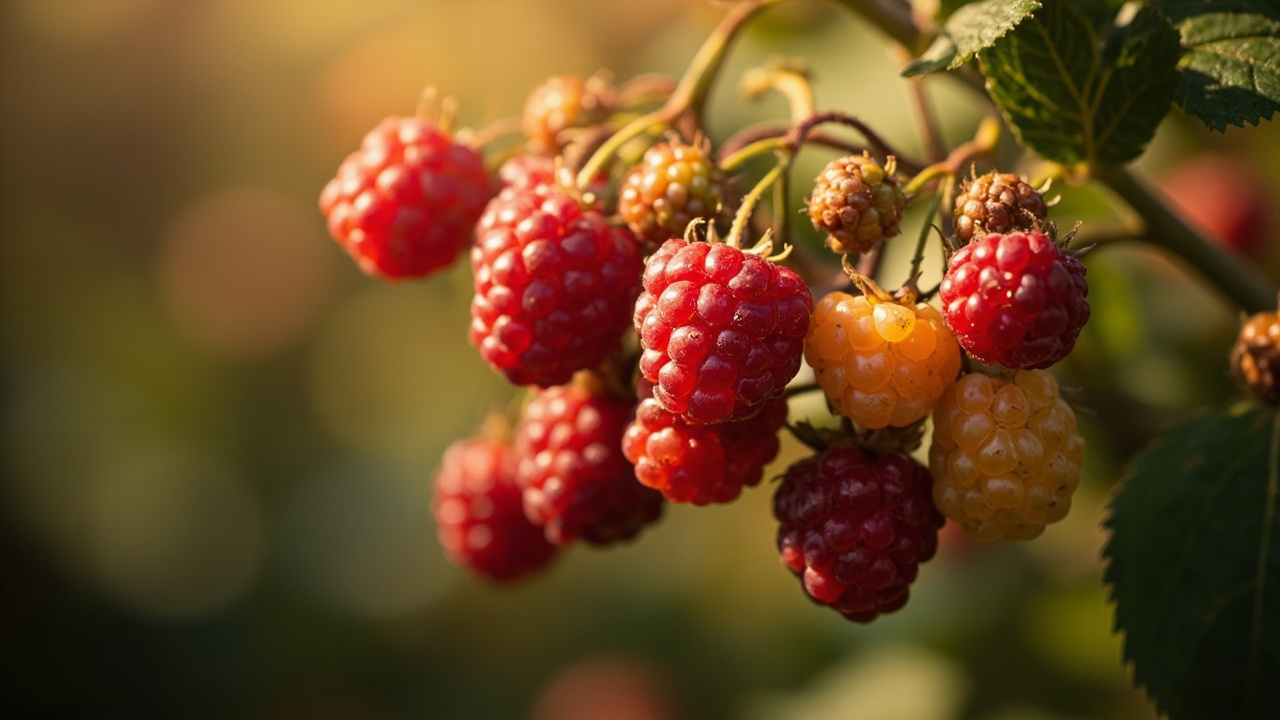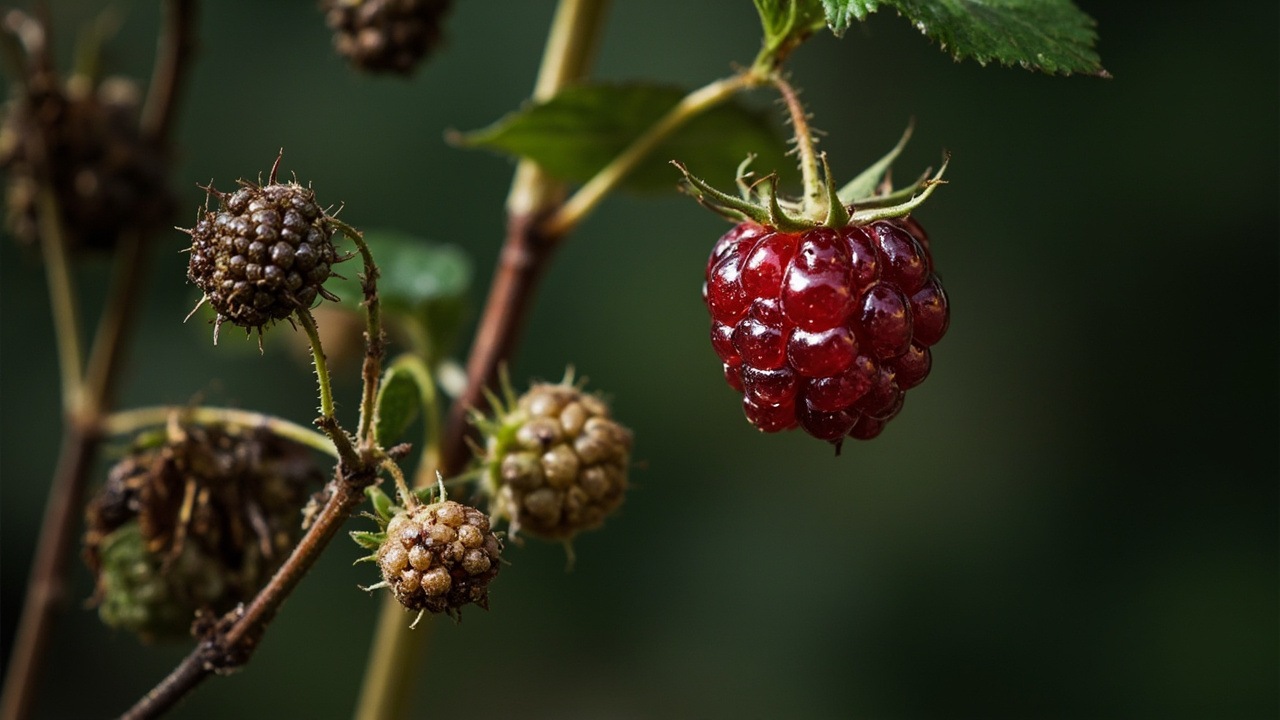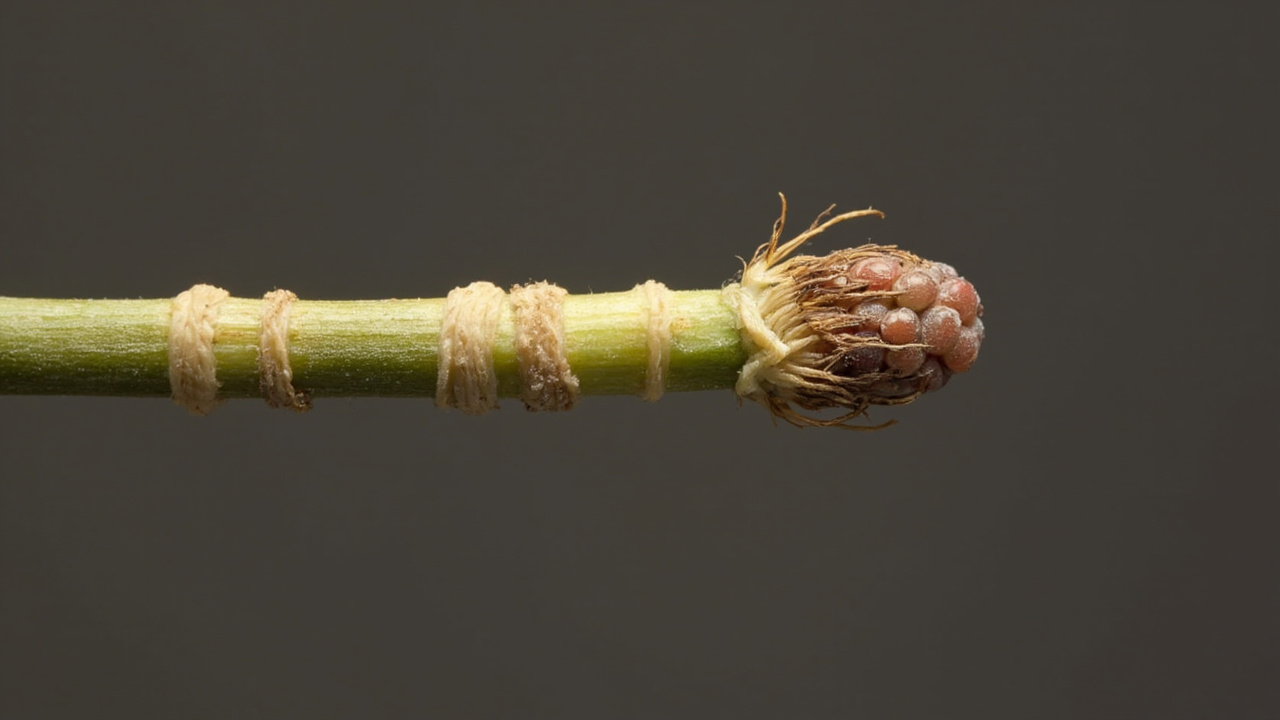

A raspberry cane that wilts suddenly right at the tip with no yellowing lower down usually has a cane borer larva tunneling inside the stem. The characteristic swelling rings on the cane tell you exactly where to cut. The raspberry cane borer, Oberea bimaculata, is a longhorn beetle whose larvae feed inside the cane, disrupting the vascular tissue that carries water to each drupelet on the developing fruit cluster.
Unlike nutrient deficiency or overwatering, cane borer damage is sudden, localized to individual canes, and accompanied by physical signs on the stem. The pest produces two generations per year. Adult beetles emerge in late May and lay eggs on tender primocane tips. The larvae tunnel downward through the cane pith before overwintering near the crown.
A second generation of adults emerges in late summer, laying eggs on new growth. Understanding this two-generation cycle is essential because treatment timing differs for each generation. Start with the complete raspberry care guide if you need a baseline for healthy cane development and pest management.
What Is the Raspberry Cane Borer — Life Cycle and Generations
The raspberry cane borer is a slender, dark longhorn beetle approximately half an inch long with orange-red markings on the thorax. Adults are active in late spring, feeding briefly on cane tips before the female deposits a single egg just below the growing point. She then chews two distinctive rings around the cane about half an inch apart, girdling the stem above the egg site.
The girdling causes the cane tip to wilt within days — the first visible sign of infestation. The egg hatches into a cream-colored larva that tunnels downward through the soft pith, feeding as it goes. By mid-summer, the larva may have tunneled four to twelve inches below the girdle rings, packing the tunnel with frass that you can see if you split the cane open.
The first-generation larva overwinters inside the cane, usually within two to three inches of the crown. It pupates in spring and emerges as an adult in late May. The second generation appears in August, laying eggs on primocane growth. These late-season larvae tunnel down and overwinter, meaning a single cane can harbor larvae from both generations.
Cane borers prefer vigorous, fast-growing primocanes over weak growth. Over-fertilized patches with lush new growth attract more egg-laying females than balanced plantings. Container-grown raspberries with frequent feeding are especially attractive to beetles seeking tender cane tips for egg-laying. Acidic soil with pH below 6.5 supports healthier root systems that resist secondary infections after borer damage.
Two treatment windows exist: late spring for first-generation adults, and late summer for second-generation activity. Dormant-season pruning is the most effective intervention because it removes overwintering larvae before they emerge. The raspberry pruning guide covers dormant-season cane removal timing and technique.
Identifying Cane Borer Damage — Wilting, Swelling, and Cane Collapse
The diagnostic signature of cane borer damage is a cane tip that wilts suddenly while the leaves below it remain green and turgid. This distinguishes borer damage from overwatering or root rot, which cause systemic yellowing before wilting. Look for the two girdle rings — small, evenly spaced grooves chewed around the stem about half an inch to an inch below the growing point.
Below the girdle rings, the cane may show swelling where the larva is tunneling. Split the cane lengthwise with a knife between the girdle rings and the next node below. You will find a cream-colored larva, packed frass, and browned pith tissue. If infested for several weeks, the larva may already be several inches below the girdle site.
Cornell Cooperative Extension describes the progression: wilting tip within a week, progressive browning over two to three weeks, and eventual cane death above the girdle point. The cane below the damage often survives and produces lateral branches, but harvest is reduced. Root suckers near the crown may also show borer damage if adults lay eggs on the tender new shoots.
Second-generation damage in late summer looks similar but occurs lower on the cane, usually on side shoots rather than the main tip. These girdle sites are smaller and harder to spot during routine inspection. If you notice individual laterals wilting in August while the main cane stays green, check for the characteristic ring pattern on the affected shoot. The raspberry leaves turning yellow guide covers other causes of cane decline that can mimic borer damage.
Treatment — Pruning, Removal, and Destroying Infested Canes
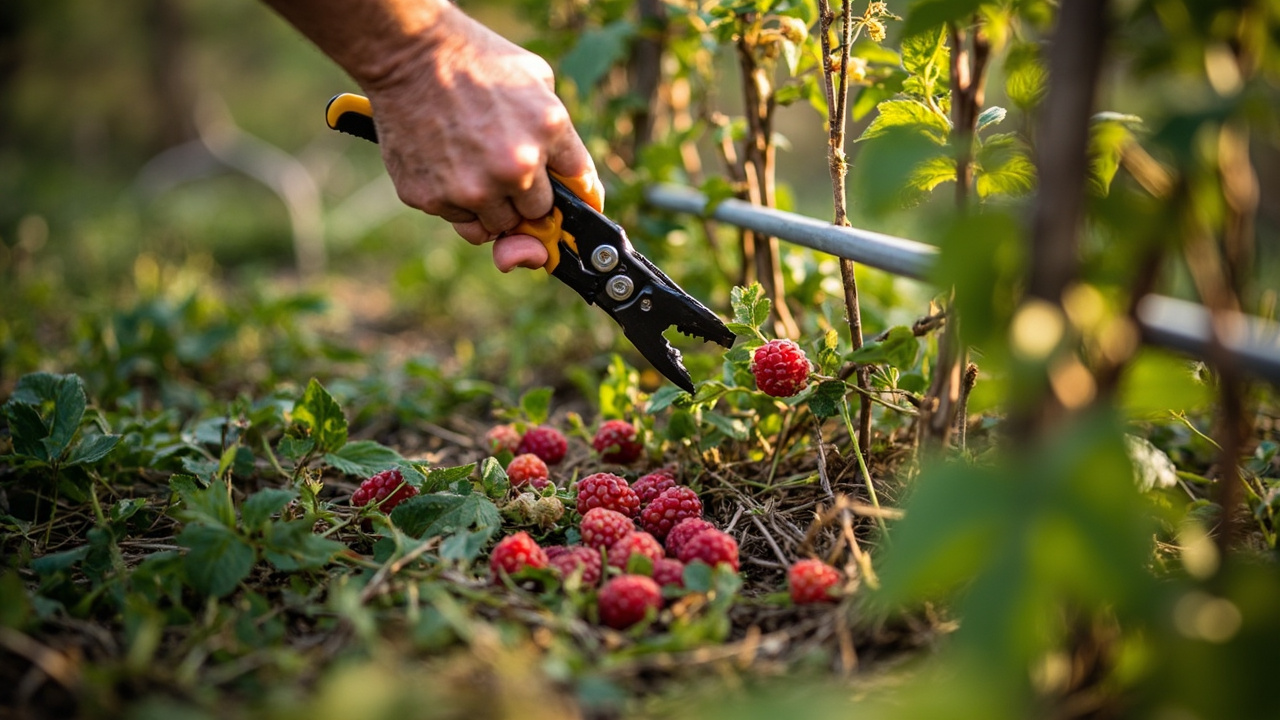
The treatment for cane borer damage is mechanical, not chemical. Prune the cane four to six inches below the lowest girdle ring to ensure you cut below the larva’s current position. If the larva has already tunneled close to the crown, remove the entire cane at ground level. Dispose of infested cane material in the trash or by burning — do not compost it, because larvae survive in compost piles and reinfest the patch when the compost is applied.
Prune as soon as you spot the wilting tip. Early removal in June kills the first-generation larva before it tunnels deep, reducing the overwintering population. Late-season removal kills second-generation larvae before they reach the crown. Every larva removed is one fewer adult beetle laying eggs next year.
Sterilize pruning shears between canes with a 10% bleach solution. While borers are not transmitted on tools, this prevents spreading cane blight and spur blight through fresh cuts. Oregon State University Extension recommends pruning in dry weather because wet conditions favor fungal spore germination on cut surfaces.
For heavy infestations affecting more than 20% of primocanes, remove the most damaged canes and thin the rest to improve air circulation. A dense, shaded row holds humidity that favors beetle activity. The raspberry planting guide covers cane spacing and trellis setup that reduces pest-friendly microclimates. Maintain a clean patch floor with mulch but no cane debris to eliminate overwintering habitat.
Prevention — Breaking the Life Cycle
Prevention starts with dormant-season sanitation. Remove all spent floricanes and any primocanes showing old girdle rings before the soil warms in spring. Overwintering larvae inside standing canes will emerge as adults within two to three weeks of sustained soil temperatures above 50°F. Removing these canes before emergence breaks the cycle for the entire year.
Monitor for adult beetles in late May by walking the row in early morning when they are sluggish. Hand-picking is practical for small patches and removes egg-laying females. A sheet under the canes and a sharp shake dislodges beetles for counting — five or more per cane indicates a population needing active management.
Avoid excessive nitrogen fertilization, which produces the lush, tender primocane growth that female beetles prefer for egg-laying. A single application of balanced fertilizer in early spring is sufficient for most raspberry patches. Supplement with compost around the crown rather than high-nitrogen feeds through summer, which push the soft growth that attracts borers and spider mites alike.
Remove all pruned cane material, leaf litter, and debris before winter. Larvae overwinter in the top inch of soil and in cane fragments on the ground. A clean mulch layer of straw reduces overwintering survival without providing habitat for emerging adults. Bird netting encourages insectivorous birds that feed on adult beetles during the day.
Choose resistant varieties when establishing new plantings. Heritage and Nova show moderate tolerance compared to susceptible varieties like Tulameen. Thornless varieties are easier to inspect because you can run your hands along the cane without snagging. Chill hours affect emergence — in warm-winter climates, beetles may appear two to three weeks earlier than late May. Bare root transplants from reputable nurseries are less likely to introduce borers. Aphids on nearby plants can attract predatory beetles that feed on cane borer eggs.
Related Raspberry Problems — When It Is Not the Cane Borer
Not every wilting cane has a borer. Crown gall causes wilting but produces tumor-like growths at the base rather than girdle rings on the tip. Root rot causes systemic yellowing and cane collapse from the base. The raspberry light and soil guide covers root rot identification and the soil conditions that favor Phytophthora infection in garden beds and raised bed plantings.
Sunscald causes cane tips to wilt and brown in midsummer, but the damage is confined to the south-facing side and shows no girdle rings. Drought stress causes wilting across the entire plant simultaneously. If multiple canes wilt at once, check soil moisture before inspecting for borers — the fix is irrigation, not pruning. Well drained soil dries evenly and makes drought stress easier to distinguish from pest damage.
Spur blight produces purple-brown lesions below leaf nodes and can cause lateral wilting, but the lesions are visible externally and do not involve internal tunneling. Cane blight causes similar lesions and enters through pruning cuts or winter injury. Both are fungal, not insect, and require sanitation rather than cane removal. Self fertile varieties are not more susceptible to cane borers, but everbearing types face higher second-generation pressure. Each drupelet develops from a pollinated flower, so pollination issues affect fruit set but not cane health.
Turn That PDF Into a Spreadsheet in Minutes
You've seen how to do it manually — now let the tool handle the heavy lifting. Upload your bank statement and get Excel, CSV, or QBO in a few clicks.
Try It Free