ZZ plants (Zamioculcas zamiifolia) are remarkably tolerant of indoor conditions, but they are not indestructible. The most common way a healthy ZZ gets sick is sitting in a cold draft or a chilly window. Understanding what temperatures the plant actually tolerates — and where the line is — keeps the leaves green and the rhizomes healthy through every season.
The short version: a ZZ is comfortable in the same temperature range most people are. Somewhere between 65 and 85°F (18 to 29°C) is the sweet spot. The plant can handle cooler nights down to about 50°F (10°C) without lasting harm, and warmer peaks up to the low 90s°F (around 33°C) as long as it is not in direct sun and the soil is not bone-dry. Outside that range, the plant starts to show stress, and the lower end of the range is more dangerous than the upper end.
If you can keep your ZZ out of cold drafts and out of air conditioner vents, you have already solved most of the temperature problem. The rest of this page walks through what to watch for in winter, what to do in summer heat, and how to read the leaves when something is off.
The Temperature Range a ZZ Plant Prefers
In its native East Africa, Zamioculcas grows in warm, semi-dry conditions with daytime temperatures well into the 80s°F (27 to 32°C) and nighttime temperatures that rarely dip below 60°F (15°C). In the home, that translates to a comfortable indoor range of about 65 to 80°F (18 to 27°C) during the day, with a few degrees of drop at night being perfectly fine.
The plant tolerates a wider range than the preferred one. Most healthy ZZs handle 60 to 85°F (15 to 29°C) without complaint. Growth slows at the cooler end of that range and speeds up at the warmer end, which is one reason ZZs grow most actively in summer.
The line where things start to go wrong is below 50°F (10°C) for any meaningful length of time, or above 95°F (35°C) in dry, sunny conditions. Inside that wide acceptable range, the plant is fine. Outside it, the plant is in stress and the leaves will tell you so.
How Cold Is Too Cold for a ZZ
Below about 55°F (13°C), a ZZ plant stops actively growing. Below 50°F (10°C), the plant starts to experience cold stress, especially if the soil is wet. Below 45°F (7°C), the leaves begin to show visible damage — soft dark spots, drooping, and a general mushy look. Below 40°F (4°C), the rhizome and stems can be permanently damaged, and recovery is not always possible.
What makes cold especially risky is the combination of cold and wet soil. Cold slows the plant’s metabolism, so it drinks less. Wet soil at low temperature is the perfect setup for root rot. A ZZ in a cold room with soggy soil can lose its roots in a week. A ZZ in a cold room with dry, well-draining soil has a much better chance of bouncing back once conditions improve.
The leaves are the early warning system. Cold-stressed ZZ leaves lose their glossy firmness and start to look dull or slightly translucent. Yellowing on the lower leaves follows. If you see those signs, check the room temperature, check for cold drafts, and check the soil moisture. Usually one of those is off, and correcting it stops the damage.
How Heat Affects a ZZ
ZZ plants handle heat better than they handle cold. The plant comes from warm conditions and tolerates indoor heat well. Above 85°F (29°C), the plant uses more water to keep its leaves cool, so the soil dries out faster and watering needs go up. Above 95°F (35°C), especially in direct sun, the leaves can scorch, with pale brown or yellow patches forming on the most exposed leaflets.
Heat stress in a ZZ is rarely a temperature problem on its own. It is usually a combination of too much light, too little water, and dry air. A ZZ in a bright window during a heat wave is much more at risk than the same plant a few feet back from the window in the same room. Moving the plant back from the glass, watering a little more often, and making sure the humidity is not unusually low are usually enough to get through a hot spell.
If the plant does show heat damage, the affected leaves will not recover. Cut them off at the base of the stem once the plant has stabilized, and let new growth replace them. A ZZ can lose most of its leaves to heat stress and still recover from the rhizome if the conditions improve before the rhizome itself is damaged.
Cold Drafts Are the Real Risk Indoors
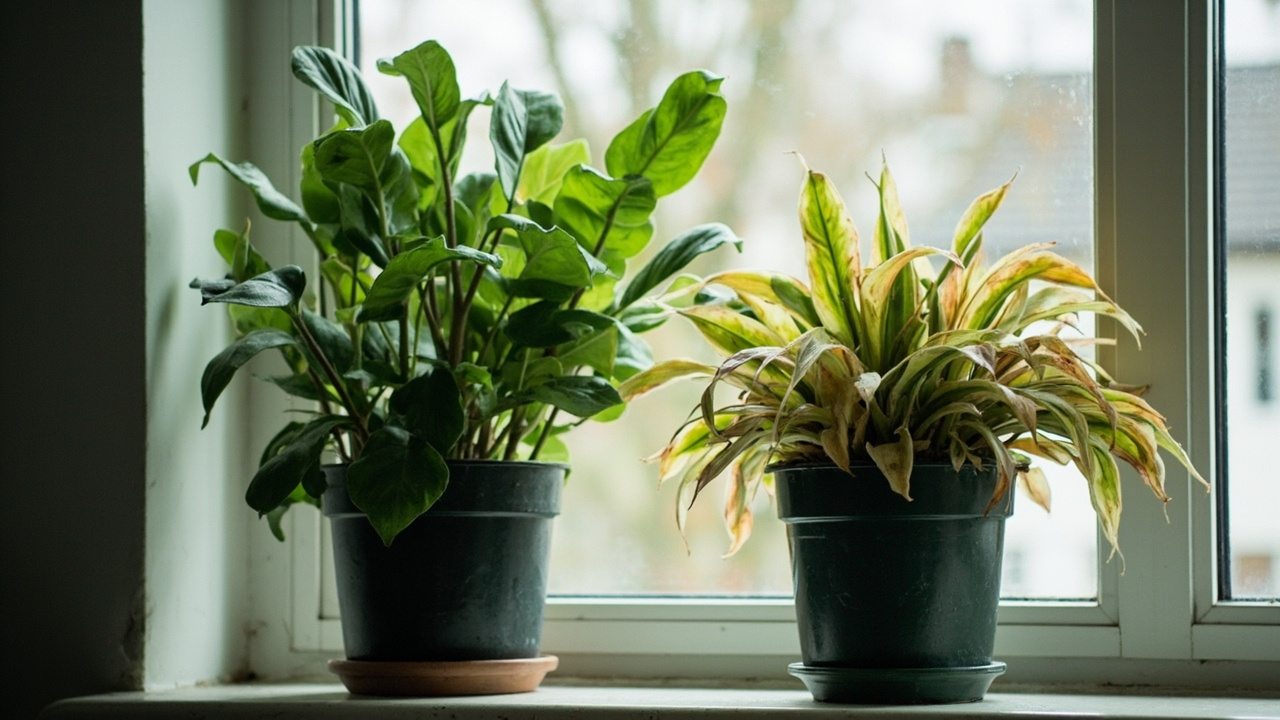
Most indoor ZZs never experience a genuinely cold room. The temperature problem almost always comes from cold drafts — a window that leaks cold air at night, a door that opens to a cold hallway, or an air conditioner vent pointed at the plant. A ZZ can sit in a 70°F (21°C) room and still suffer if a cold draft hits it for several hours each night.
The classic symptoms are leaves on one side of the plant yellowing or drooping more than the other, or stems leaning away from the cold source. The fix is to move the plant. A few feet of distance from a drafty window is usually enough. A ZZ in a north-facing window in a cold climate may need to be moved to an interior wall for the winter.
For a fuller breakdown of what cold does to ZZ leaves and how to recover them, the why is my ZZ plant turning yellow page covers the diagnostic side. The most common cold-related symptom is yellowing on the lower leaves, and the answer is almost always about location, not about watering.
Seasonal Temperature Swings
A ZZ plant is fine with the natural temperature swings between summer and winter, as long as the swing is gradual. A plant that lives outdoors in a warm climate and gets moved inside before the first cold snap will not even notice the difference. A plant that is abruptly moved from a warm living room to an unheated porch will notice — and not in a good way.
In winter, the bigger concern is windows. A ZZ sitting on a windowsill where the temperature drops below 55°F (13°C) at night, even briefly, can show cold stress by midwinter. The soil temperature drops, the roots slow down, and the lower leaves start to yellow. A thermometer next to the plant for a few nights is a quick way to see what the plant is actually experiencing.
In summer, watch for heat buildup in sunny windows. South-facing and west-facing windows can get very hot in the afternoon. If the leaves on the side of the plant facing the window start to pale or develop dry patches, the plant is getting too much direct sun and heat combined. The light requirements page covers the sweet spot, but a quick move back from the glass is often the simplest fix.
What to Do With a ZZ After a Cold Snap
If the plant has been exposed to cold but the rhizomes still feel firm, recovery is likely. Move it to a warmer spot out of drafts, leave the soil alone for a few days (do not water until the top 2 inches / 5 cm is dry), and resist the urge to repot or fertilize. The plant needs time to recover, and a quiet, warm, dry rest is the best help.
Yellow or mushy leaves can be removed once the plant has stabilized. Damaged tissue will not recover, and leaving it on the plant gives rot a place to start. Cut the affected stems at the base with a clean knife or scissors. New growth will eventually emerge from the rhizome if the plant is recovering.
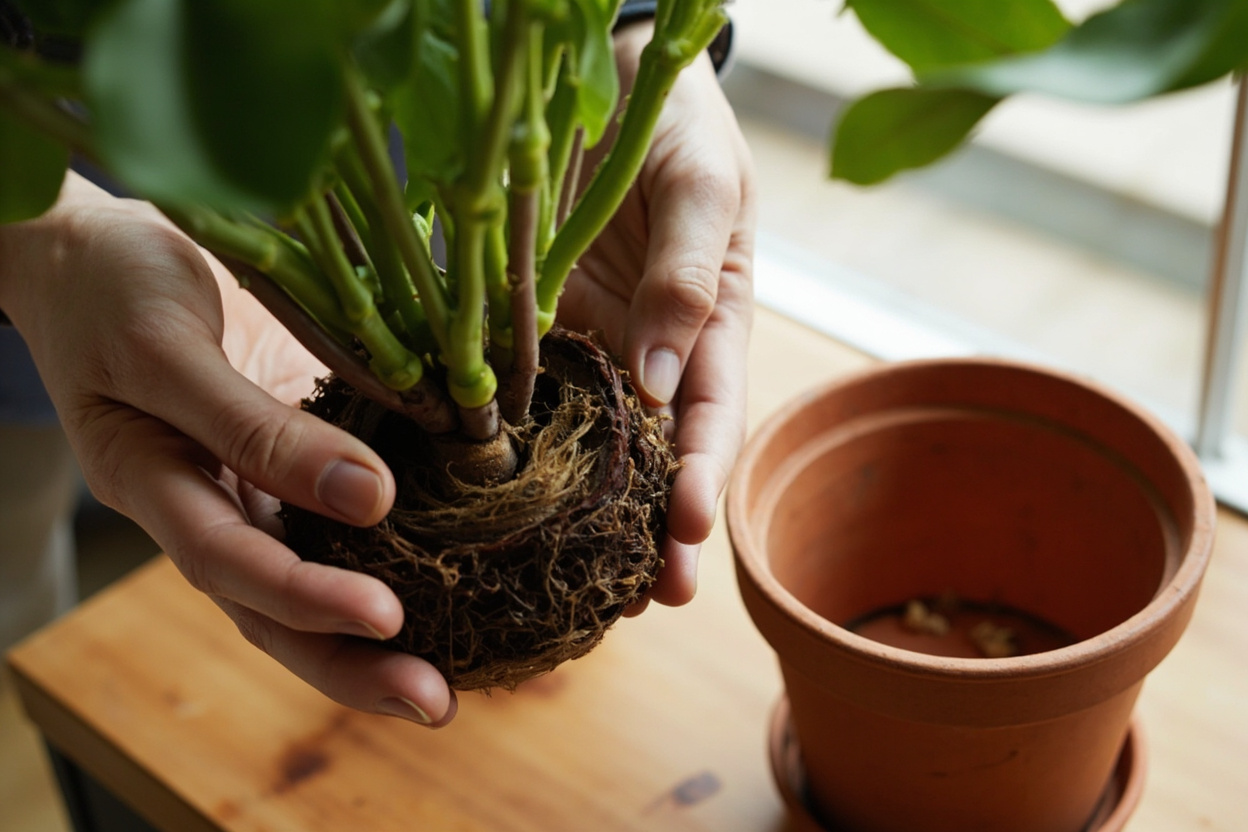
If the rhizomes are soft and dark, the cold has caused rot and the situation is more serious. Unpot the plant, trim away any rotted rhizomes, let the cut surfaces callus over for a few hours, then repot in fresh dry soil. Do not water for at least a week. The common problems page has a more complete recovery walkthrough, and the watering guide covers the post-recovery routine that keeps the plant on track.
What to Do With a ZZ After Heat Stress
Move the plant to a cooler spot with bright but indirect light. Water thoroughly if the soil is dry, then let it dry out as usual. Damaged leaves will not recover and can be removed once the plant is stable.
Heat stress combined with sun damage is more about location than temperature. The fix is to find a spot with bright indirect light and a stable indoor temperature, and to keep the plant there. The full care guide covers the broader routine, and the light requirements page explains the balance between enough light and too much.
Reading Temperature Stress From the Leaves
Cold and heat stress look different. Cold stress shows up as dull, soft, sometimes translucent leaves, with yellowing starting on the lower leaves and progressing upward. Heat stress shows up as pale or scorched patches on the leaves most exposed to the sun, with dry, papery texture rather than soft.
Both can be confused with overwatering, which is the most common cause of yellowing on a ZZ. The fastest diagnostic is to feel the soil and check the room temperature. If the soil is wet and the room is cool, cold-and-wet is the most likely cause. If the soil is dry and the plant sits in a sunny window, heat and sun are the most likely causes. The yellowing diagnostic on the why is my ZZ turning yellow page is the next read when the cause is not obvious.
The Short Version
A ZZ plant is comfortable in the same temperatures most people are. Keep it between 65 and 80°F (18 to 27°C), out of cold drafts, and away from air conditioner vents. It tolerates nights down to 50°F (10°C) and days up to 85°F (29°C) without complaint. Outside that range, the leaves tell the story before the rhizome does.
If the plant has been in a cold or hot spell, give it a quiet, stable, dry rest. Do not overwater, do not fertilize, and remove damaged leaves only once the plant has stabilized. The care guide covers the rest of the routine, and the watering guide and humidity guide cover the two related factors that interact with temperature more than most people expect.
From PDF to Excel in one click
Forget retyping line by line. Upload any bank statement, get a spreadsheet you can actually use. Your files are never stored, and you can test the converter with 3 free conversions.
Try it free