Feeding a pineapple plant well is less about the fertilizer you choose and more about understanding what the plant actually needs from the soil, the light, and the season. Most people either underfeed from caution or overfeed from enthusiasm — both mistakes come from the same root cause: not reading what the plant is doing.
Why Pineapple Plants Need a Different Fertilizer Mindset
People usually make one of two mistakes with pineapple plants: they barely feed them at all, or they treat them like hungry tomatoes and push far too much fertilizer into the pot. The second mistake is where soil matters — pineapple soil that drains fast means fertilizer moves through quickly, so what looks like “not enough” may just be a leaching problem. Neither works well.
Pineapple plants are steady growers, not greedy ones. They want regular nutrition during active growth, but they hate salt buildup and they hate being force-fed in a pot that stays wet too long. That balance only makes sense when the plant has enough light to use what you give it — the light requirements guide explains why feeding a dim plant rarely ends well. That is the real issue. The fertilizer question is never just about nutrients. It is about nutrients plus root health plus timing.
If your pineapple plant is growing slowly, producing small leaves, or looking pale despite good light, feeding may be the missing piece. But if the soil is dense or the roots are stressed, more fertilizer just accelerates the decline.
The Best Fertilizer Type for Pineapple Plants
The safest choice is a balanced liquid fertilizer diluted to half strength, usually something close to 10-10-10, 12-12-12, or balanced houseplant feed. You can also use a slightly nitrogen-forward formula during early vegetative growth if the plant is still building leaf mass.
Pineapple plants especially benefit from:
- nitrogen for leaf growth
- potassium for strength, stress tolerance, and later fruit development
- magnesium and iron for strong green color
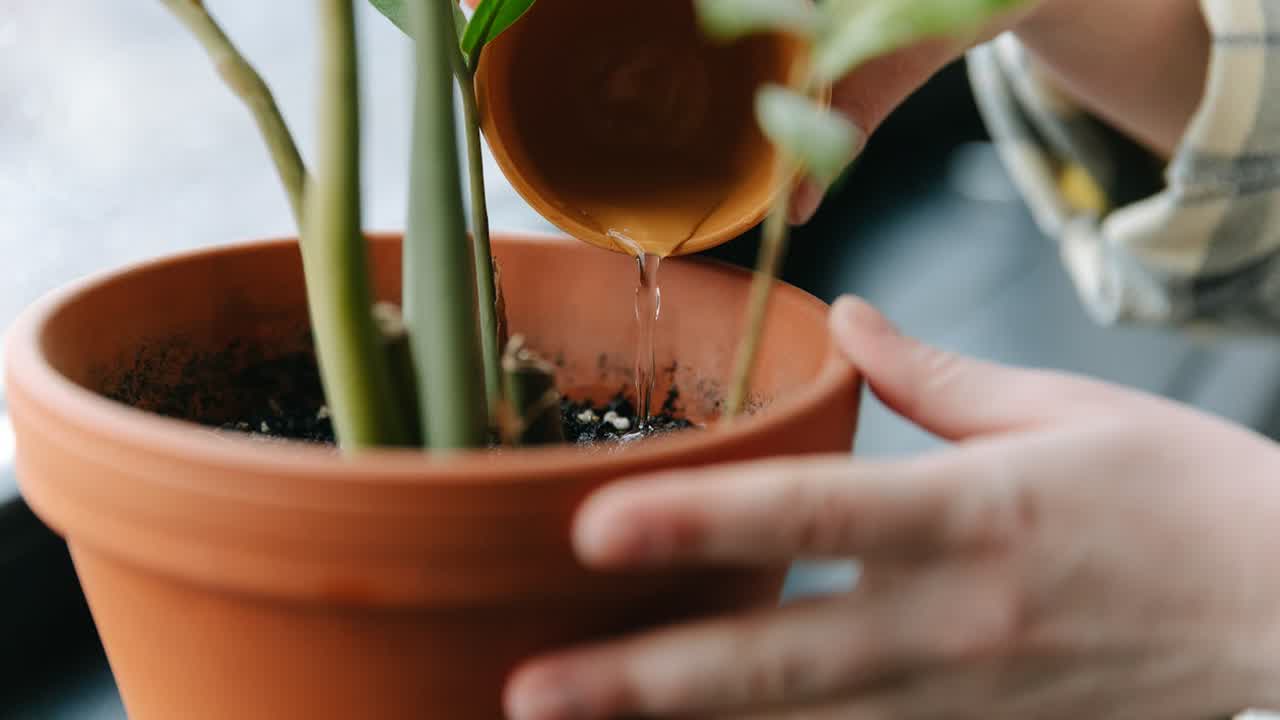
The trade-off is simple: liquid fertilizer gives you control, but it requires consistency. That matters because how often you water determines how quickly nutrients get flushed through the soil — inconsistent watering makes fertilizer timing unreliable. Slow-release fertilizer is easier, but if the dose is wrong, it is harder to correct quickly.
How Often to Fertilize a Pineapple Plant
During active growth in warm bright conditions, fertilize every 2 to 4 weeks. In cooler months or when growth slows, cut back sharply or stop.
- Spring and summer: every 2–4 weeks
- Early fall: every 4–6 weeks if growth is still active
- Late fall and winter: usually stop, especially below 68°F / 20°C
What happens next when you get this rhythm right is steady center growth, stronger leaf color, and better recovery after repotting or heat stress. If you keep feeding heavily during low-light winter conditions, salts build up faster than the plant can use them.
The Best Feeding Schedule by Plant Stage
Newly Rooted Crowns or Pups
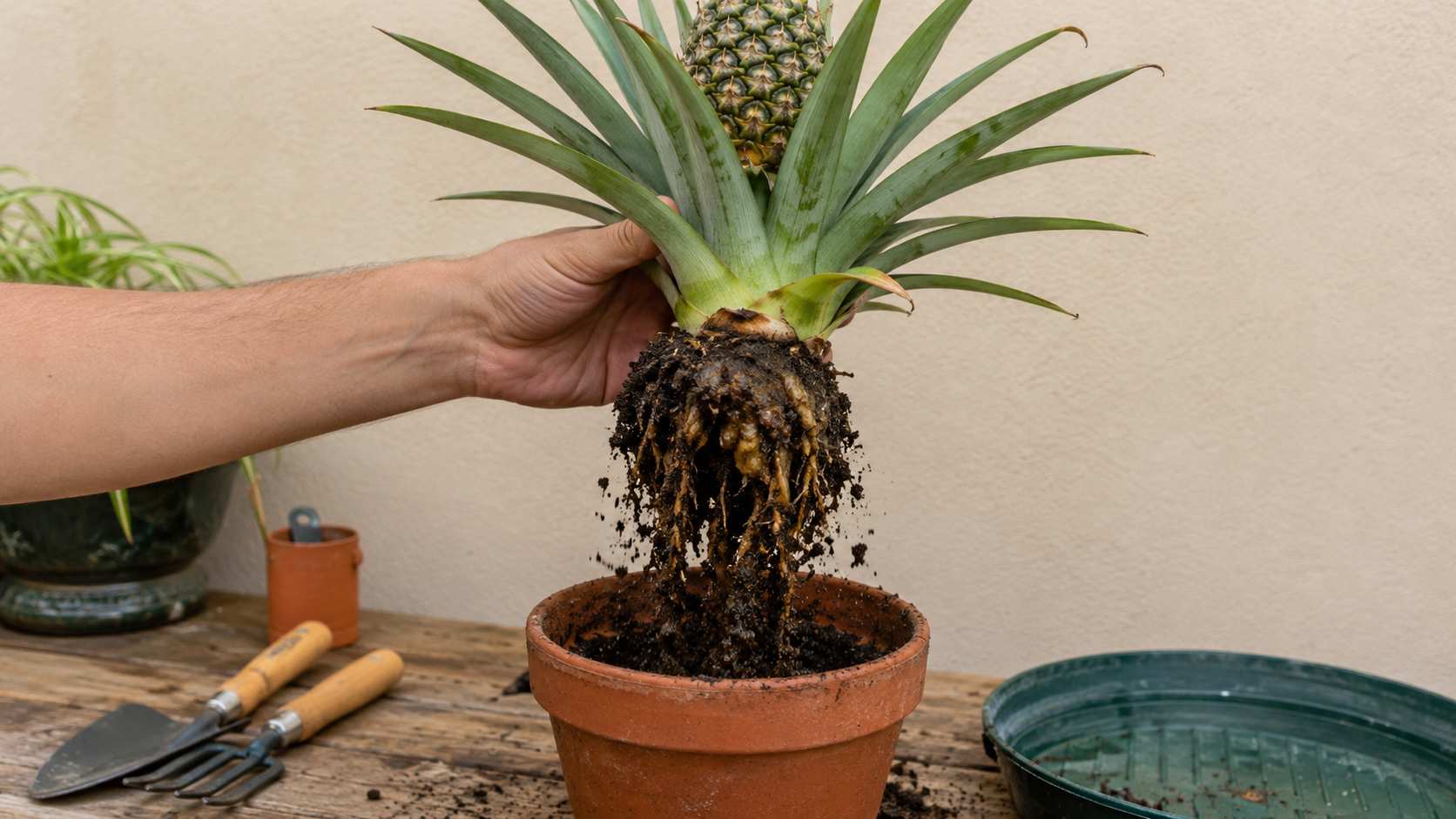
Wait at least 4 to 6 weeks before feeding. The new roots need to establish first. If you fertilize too early, the tender roots can burn, and the plant may stall instead of speeding up.
Young Vegetative Plants
Use half-strength balanced liquid fertilizer every 3 weeks during active growth. This supports leaf production without overwhelming the root zone.
Mature Established Plants
Feed every 2 to 4 weeks in strong light and warm temperatures between 70–90°F / 21–32°C. Once the plant is mature, potassium matters more because it helps overall plant strength and supports flowering and fruit development later.
Post-Repotting
Wait 2 weeks after repotting before resuming fertilizer. The roots need time to settle into the new mix. Feeding immediately after repotting sounds helpful, but it usually adds stress at the wrong moment.
Liquid vs Slow-Release Fertilizer
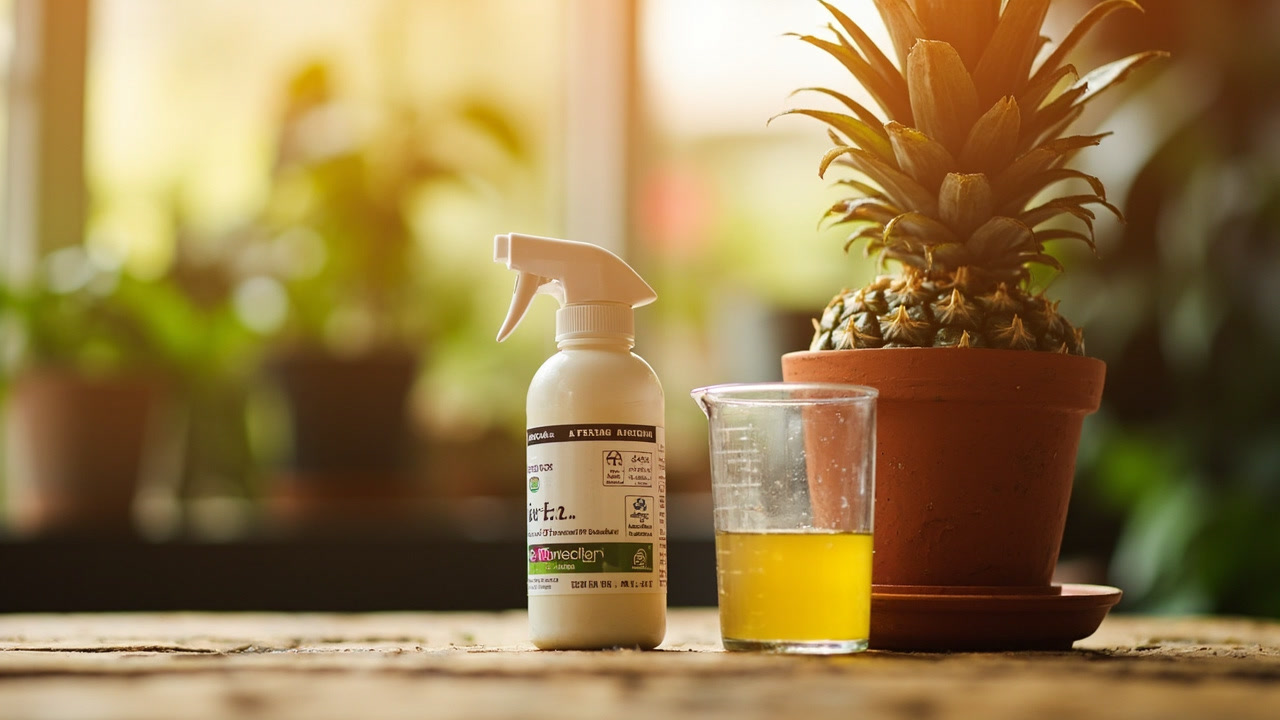
Liquid fertilizer is usually the better choice for container pineapple plants because you can adjust it to the season, the plant size, and the actual rate of growth.
Slow-release fertilizer is useful if you want lower-maintenance feeding, but choose a mild product and use less than the label suggests. In containers, a full rate can be too much, especially in humid or low-light conditions where growth is slower.
If you use slow-release granules, apply once in early spring and again lightly in midsummer. Then watch the plant carefully. If leaf tips start browning and the soil tests fine for moisture, fertilizer salts may be building up.
Signs Your Pineapple Plant Needs More Nutrients
- pale new growth instead of strong green center leaves
- small new leaves compared with older growth
- slow growth even in good light
- general washed-out appearance without clear overwatering signs
These are not automatic proof of nutrient deficiency. You still need to rule out weak light and bad soil. But if the plant has enough sun and a good root environment, feeding is the next logical move.
Signs You Are Fertilizing Too Much
- brown or burned leaf tips
- white crust on soil surface or pot rim
- sudden softness after feeding because roots got stressed
- soil that smells fine but plant still declines
What happens next with overfertilization is usually delayed. The plant may look fine for a week, then the root zone starts struggling. Flush the pot thoroughly with clean water to wash out excess salts, then pause feeding for a few weeks.
Should You Use Organic Fertilizer?
Yes, but choose carefully. Organic liquid fertilizers like fish emulsion or seaweed-based blends can work well, especially for growers who want a gentler feeding style. The limitation is smell, slower predictability, and variable nutrient ratios.
For outdoor plants in warm climates, organic feeding can be excellent. For indoor plants, a clean balanced liquid fertilizer is often easier to manage and less messy.
Micronutrients Matter More Than People Think
Pineapple plants can show iron and magnesium issues if the soil pH drifts too high or the feeding is incomplete. That often looks like fading green color or yellowing between veins on newer leaves.
If your water is hard or your mix is trending alkaline, a balanced fertilizer with micronutrients is the safer long-term choice. Feeding alone will not fix a badly alkaline mix, but it helps prevent deficiencies while the root environment stays in range.
The Practical Schedule That Works
If you want the simplest useful routine, do this:
- use a balanced liquid fertilizer at half strength
- feed every 3 weeks in spring and summer
- stop feeding in winter unless the plant is still growing actively under strong light
- flush the pot with plain water every couple of months to reduce salt buildup
After each feed, watch the next two weeks of growth. That is where the real feedback is. Stronger center growth means the plant used the nutrients well. Burned tips or sudden decline means the roots were already under stress or the dose was too high.
The Honest Recommendation
Do not chase growth with fertilizer. Build the conditions first: light, warmth, and fast-draining soil. Then fertilize consistently but gently. The pineapple care calendar maps out exactly when to push feeding and when to pull back through the year. Pineapple plants reward that approach far more than aggressive feeding.
If you want the next step, pair this with the soil guide and light requirements guide. Fertilizer only works as intended when the plant actually has the energy and root health to use it.
From PDF to Excel in one click
Forget retyping line by line. Upload any bank statement, get a spreadsheet you can actually use. Your files are never stored, and you can test the converter with 3 free conversions.
Try it free