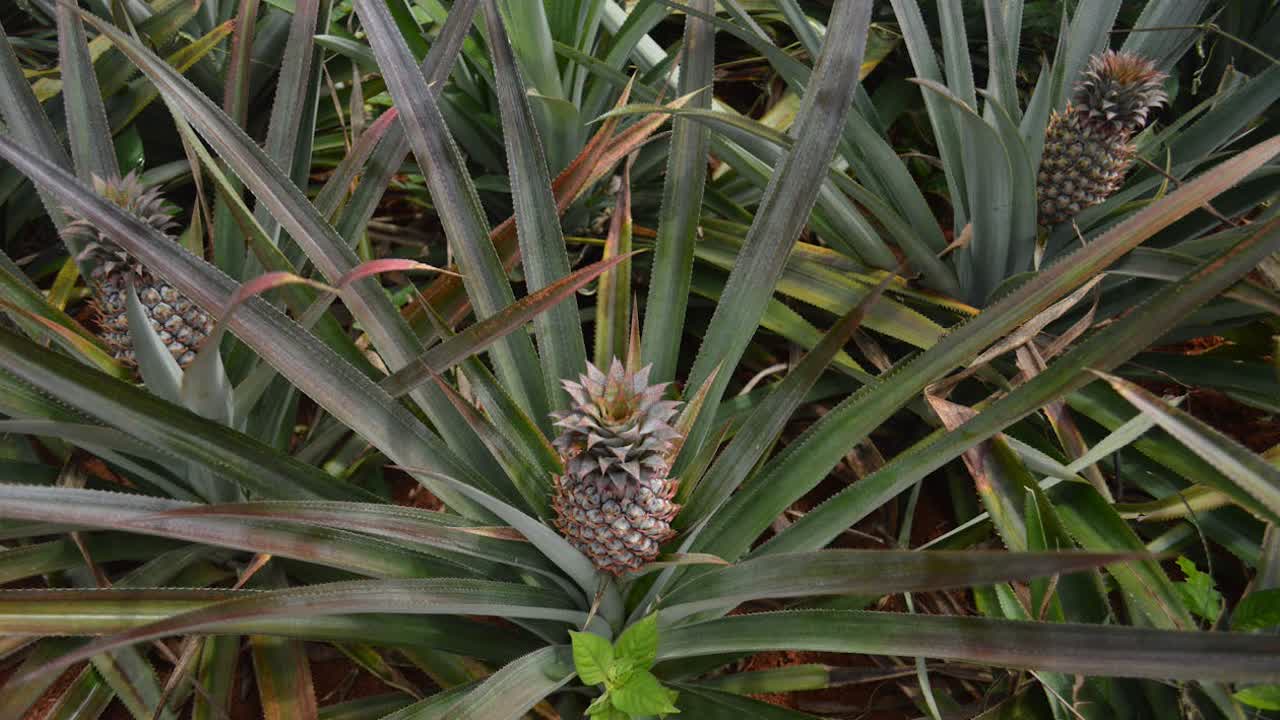
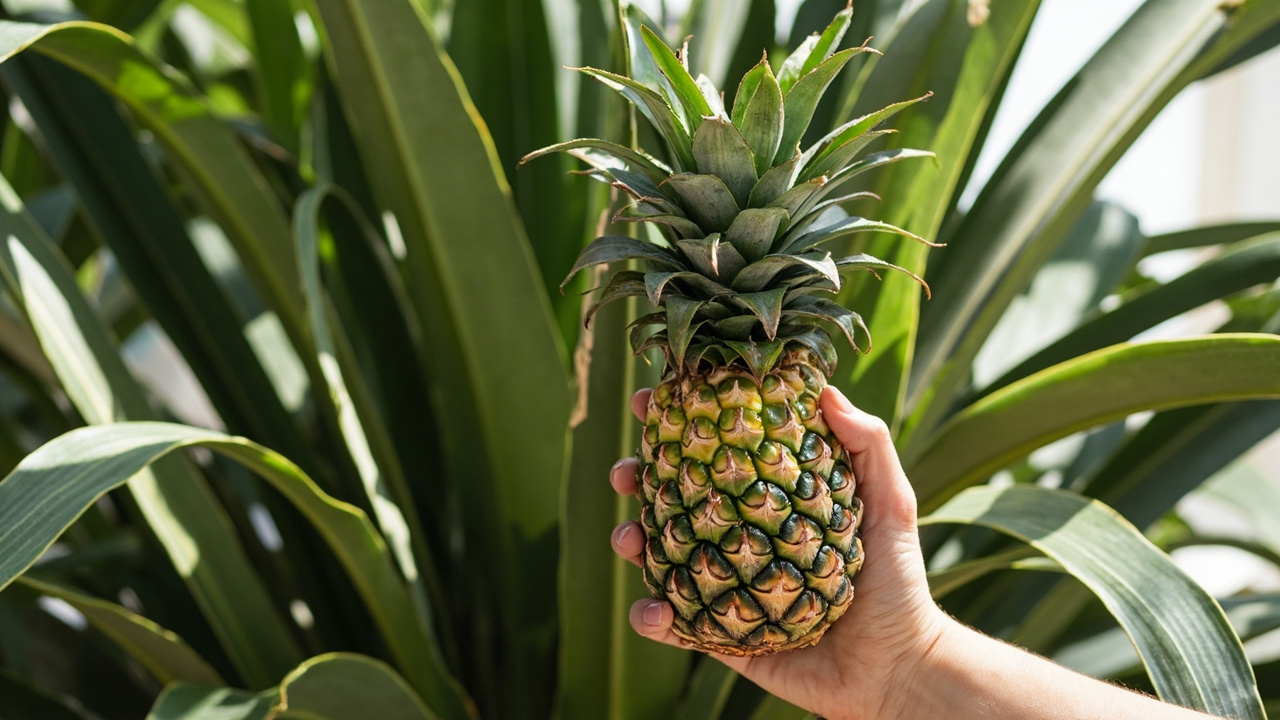
A mature pineapple plant (Ananas comosus) reaches 3–5 feet (90–150 cm) tall when grown in the ground or a sufficiently large container. That measurement is taken from the soil surface to the tip of the tallest leaf — not to the fruit, which sits much lower on the plant.
Talking in terms of rosettes makes the growth pattern easier to picture. Each new ring of spiky leaves adds roughly 2 inches (5 cm) to the plant’s height. A young crown planted in soil looks small and flat. Within 18 months it becomes a dense, fountain-like tuft that can dominate a patio corner or a bright kitchen window.
The number that matters most for home gardeners is not the absolute maximum — it is the achievable height given where you live and how you plant. Indoor container-grown specimens routinely stay 2–3 feet (60–90 cm) tall because the pot restricts root spread, which caps vertical growth. Ground-planted outdoor specimens unhindered by containers can stretch to 5 feet (150 cm) under ideal conditions.
Indoor vs Outdoor Height : What Determines the Final Size
The difference between a potted pineapple and one planted in garden soil comes down to one factor: how much root space the plant has.
Indoor Container-Grown Pineapple Plants
When you grow a pineapple plant indoors in a container, the pot becomes the ceiling — literally. The root system cannot expand beyond the walls of the container, so the plant redirects its energy sideways and upward at a reduced rate. Most indoor pineapple plants max out at 2–3 feet (60–90 cm) tall, even with excellent care.
This is not a sign of failure. A compact pineapple plant in a decorative pot is still a healthy, attractive specimen. You trade raw height for the ability to place the plant anywhere with bright light.
Outdoor and Garden-Grown Pineapple Plants
Plant the same Ananas comosus crown directly in garden soil in a tropical or subtropical climate and it will exploit every inch of available space. Roots spread freely, drawing water and nutrients from a much larger area. The plant responds with vigorous leaf growth and can reach 5 feet (150 cm) at maturity — roughly double the height of a container-grown cousin.
If you are in USDA Hardiness Zones 10–11 (or a microclimate that mimics those conditions), growing pineapple in the ground is the path to full-size specimens.
Factors That Determine How Tall Your Pineapple Plant Will Grow
Height is not fixed at planting time. Several controllable factors determine whether your pineapple plant reaches its genetic potential or falls short.
Container Size and Root Restriction
Pot size is the single most direct control on plant height. A 12-inch (30 cm) nursery pot will produce a noticeably smaller plant than a 24-inch (60 cm) container after two growing seasons.
If you want a taller plant in a container, size up gradually — go from a 12-inch pot to a 16-inch pot the second year, then a 20-inch pot by the third. Always use a well-draining mix because pineapple roots are prone to rot in soggy conditions.
Well-draining soil is non-negotiable. The link between soil quality and pineapple size is direct: heavy, compacted soil slows root development and the plant’s above-ground growth mirrors what happens below the surface.
Light Exposure and Growth Rate
Pineapple plants are sun-hungry. They grow fastest in 6–8 hours of direct sunlight daily. Bright indirect light will keep a plant alive, but growth will be sluggish and the mature height will be reduced — typically by 20–30% compared to a plant receiving full sun.
Indoors, south-facing windows produce the best results. If you only have north-facing light, supplement with a grow light to achieve anything close to outdoor heights.
This connects directly to light requirements for pineapple plants — more light means faster leaf production and a taller rosette before the plant shifts its energy toward flowering.
Age : From Crown to Full-Size Plant
Pineapple plants are not fast growers. From a fresh crown planted in soil, expect 18–24 months to reach close to mature height under ideal conditions — specifically temperatures consistently between 70–85°F (21–29°C). In rooms that drop below 65°F (18°C) regularly, or with low light, the same plant may take 30–36 months to hit its ceiling.
Trades to keep in mind: faster growth is not always better growth. An over-fertilized plant may push leaves quickly but become lush and weak, more susceptible to crown rot and pests. Patience is genuinely part of the growth trajectory.
What Happens When a Pineapple Plant Initiates Fruiting
Here is the catch that surprises most home growers: once a pineapple plant initiates fruiting, it stops growing vertically. All of the plant’s energy redirects to producing the fruit stalk, enclosing the fruit, and developing the leafy protective crown on top of it.
This typically happens after 18–36 months of growth, depending on climate and care. When the flower stalk emerges from the center of the rosette, the surrounding leaves are already near their mature maximum height. From that point on, no new leaf whorls appear and the plant does not get any taller.
What you see when flowering begins — typically a small red or purple bud cluster at the rosette center — is your signal that the plant has reached its functional height. The fruit itself adds perhaps another 8–12 inches (20–30 cm) of above-soil presence because of the stalk, but the rosette is done.
How to Estimate Your Pineapple Plant’s Maximum Height Before It Grows
You do not need to wait two years to have a height expectation. Work backwards from three observable inputs:
- Maximum pot diameter or growing bed width: Multiply the container’s interior diameter in inches by roughly 0.25–0.3. A 20-inch pot suggests a plant around 3–4 ft (90–120 cm) at maturity. If you plan to keep the plant in a smaller pot permanently, adjust your height expectation downward accordingly.
- Age since planting: If the plant is under 12 months old, expect no more than 12–18 inches (30–45 cm) regardless of conditions. Height compounds with age — a 24-month-old plant at full sun in a good pot is typically already at 60–75% of its final height. Time from planting is therefore one of the most reliable shortcuts to a height estimate.
- Average leaf length: A young plant with leaves under 24 inches (60 cm) is still in its rapid growth phase. One with leaves consistently exceeding 30 inches (75 cm) is entering maturity and approaching its ceiling. Once leaf length plateaus, height increase will slow or stop before the next growth season.
These estimates work best for container plants where root restriction creates consistent, predictable growth patterns.
Common Mistakes That Stunt Pineapple Plant Growth
Most height shortfalls trace back to a small number of fixable causes.
Pot too small from the start. A 6-inch starter pot is fine for the first six months. By the end of year one it is severely limiting. Graduate to a larger container every 12 months.
Insufficient light. This is the most common indoor problem. A pineapple plant in a north-facing window without supplemental light will grow — but it will stretch leggy and thin and never reach its potential size.
Overwatering or poor drainage. Pineapple roots rot quickly in waterlogged soil, and rotted roots cannot support foliar growth. Water thoroughly, then let the top 1–2 inches (2.5–5 cm) of soil dry before watering again.
If your plant is already showing signs of stunted or yellowing growth, start with troubleshooting a pineapple plant that is not growing before adding fertilizer or repotting.
Skipping fertilizer. While pineapple is not a heavy feeder compared to some fruiting plants, it still benefits from regular feeding during the growing season. Consistent, balanced fertilizer supports the leaf-by-leaf growth that builds height over time. See a full fertilizer schedule for pineapple plants to calibrate your approach.
Crown rot before establishment. A crown planted without callusing first often rots before sending roots. The result is a plant that survives but never thrives — stunted from day one. If you see softening at the base of the rosette, address it quickly using crown rot prevention and recovery steps.
Choosing the right variety makes a difference too. Standard commercial varieties like ‘Cayenne’ grow tall and vigorous. If height is a serious constraint — say, a windowsill in a north-facing apartment — consider a smaller-growing cultivar before planting. Our pineapple varieties guide compares mature heights across the most popular options for home growers.
Turn PDF Bank Statements Into Workable Spreadsheets
Your bank statement is a mess of numbers, but your books shouldn't be. Use our converter to get Excel, CSV, or QBO files — ready for QuickBooks.
Try It Free Now