Most pineapple guides throw around pups, slips, and suckers as if they are interchangeable. They are related, but they are not the same thing. And if you are trying to propagate intelligently, the distinction matters.
All three are offsets — new growth that can become future plants. But they emerge from different parts of the mother plant and often have slightly different growth behavior. If you understand those differences, you can choose better propagation material and set more realistic expectations.
This is one of those small vocabulary points that quietly makes you a better grower.
What Is a Pineapple Pup?
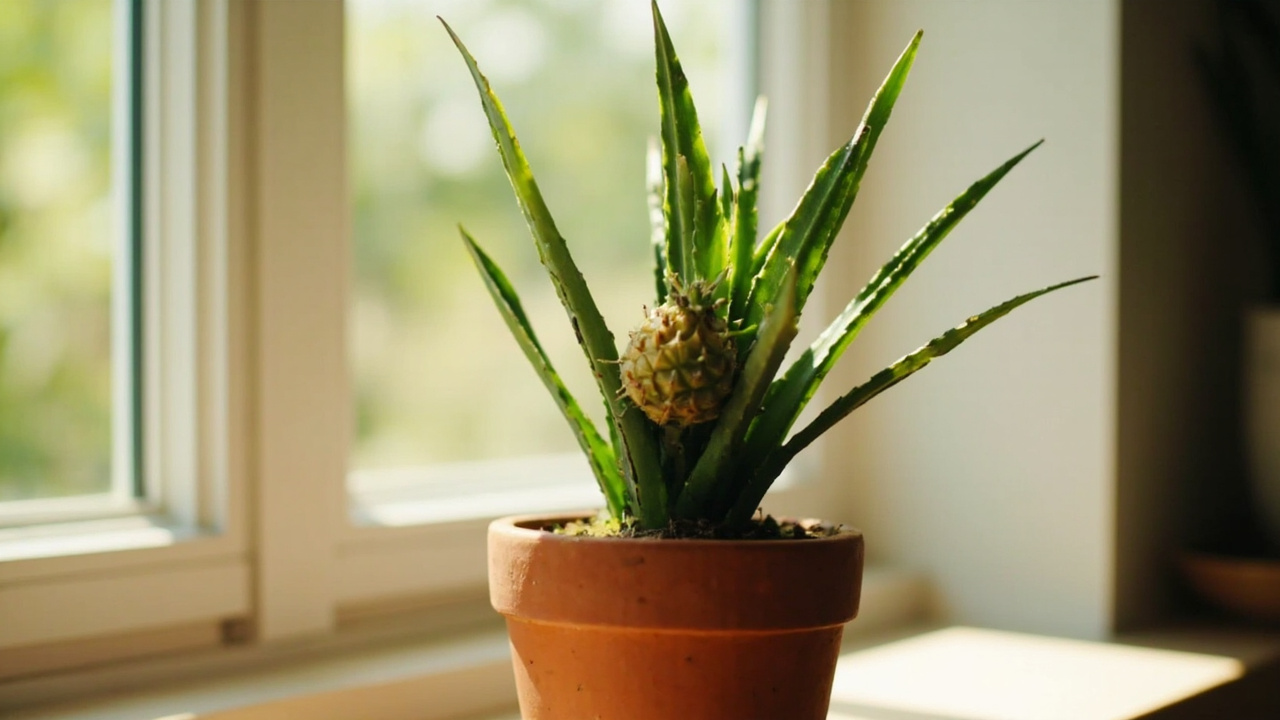
A pup is a small offset that forms near the base of the mother plant. Think of it as a baby plant emerging from low down, often close to the soil line.
- location: base of the mother plant
- use: propagation once large enough
- benefit: usually sturdy and easy to identify
What happens next is usually straightforward: if the pup is allowed to size up a bit, it can be separated and grown on as an independent plant with strong future potential.
What Is a Pineapple Slip?
A slip forms on the stalk below the fruit. It is not growing from the soil line. It is attached higher up on the fruiting structure itself.
- location: stalk beneath the fruit
- use: one of the best propagation sources after fruiting
- benefit: often vigorous and quick to establish
Slips are especially interesting because they arrive as part of the post-fruiting cycle. If your plant fruits successfully, slips often become one of the cleanest ways to continue the next generation.
What Is a Pineapple Sucker?
A sucker usually grows from leaf axils or from near the base, but not in exactly the same pattern as a pup. It often appears as a more developed side shoot with strong growth potential.

- location: side growth from the mother plant, often from leaf axils or near the base
- use: excellent propagation material
- benefit: often larger and faster than crowns from fruit tops
The trade-off is mostly identification. Beginners often confuse suckers with pups because both appear low on the plant. In practice, both are useful. The difference matters most when you are studying the fruiting cycle closely.
Which One Is Best for Propagation?
There is no universal winner, but in general:
- crowns are easiest to get from store fruit but slowest
- pups are reliable and beginner-friendly
- slips are often excellent if your plant has fruited
- suckers can be especially strong because they often begin with more maturity
What happens next depends on your goal. If you want the fastest route to a future fruiting plant, offsets usually beat crowns. If you only have a grocery-store pineapple, the crown is still a fine starting point.
When Should You Remove Them?
Wait until the offset is clearly developed, not tiny and fragile. A larger offset has more stored energy and handles separation better. Removing them too early is one of the easiest ways to slow the whole process down.
As a rough rule, once an offset has enough size to look like a small independent plant rather than a nub of growth, it is much more practical to separate.
Why This Matters for Fruiting Speed
Offsets like slips and suckers usually fruit sooner than crown-grown plants because they start from a more mature stage. That is the real advantage. You are not waiting for the whole early establishment phase in the same way.
This is why serious pineapple growers get excited about good offsets. They are not just extra plants. They are a shorter path to the next productive cycle.
The Honest Recommendation
If you have access to pups, slips, or suckers, use them. They are usually a better propagation route than starting over from a crown. If you are just learning, pups are often the easiest to understand, while slips and suckers become more interesting once you have seen a full fruiting cycle.
For the next step, read how to separate pineapple pups and what happens after fruiting. That is where the vocabulary becomes practical.
From Bank Statement to QuickBooks-Ready File
That manual cleanup you just read about? This tool skips it. Turn your PDF into QBO for QuickBooks without storing your data anywhere.
Start Converting