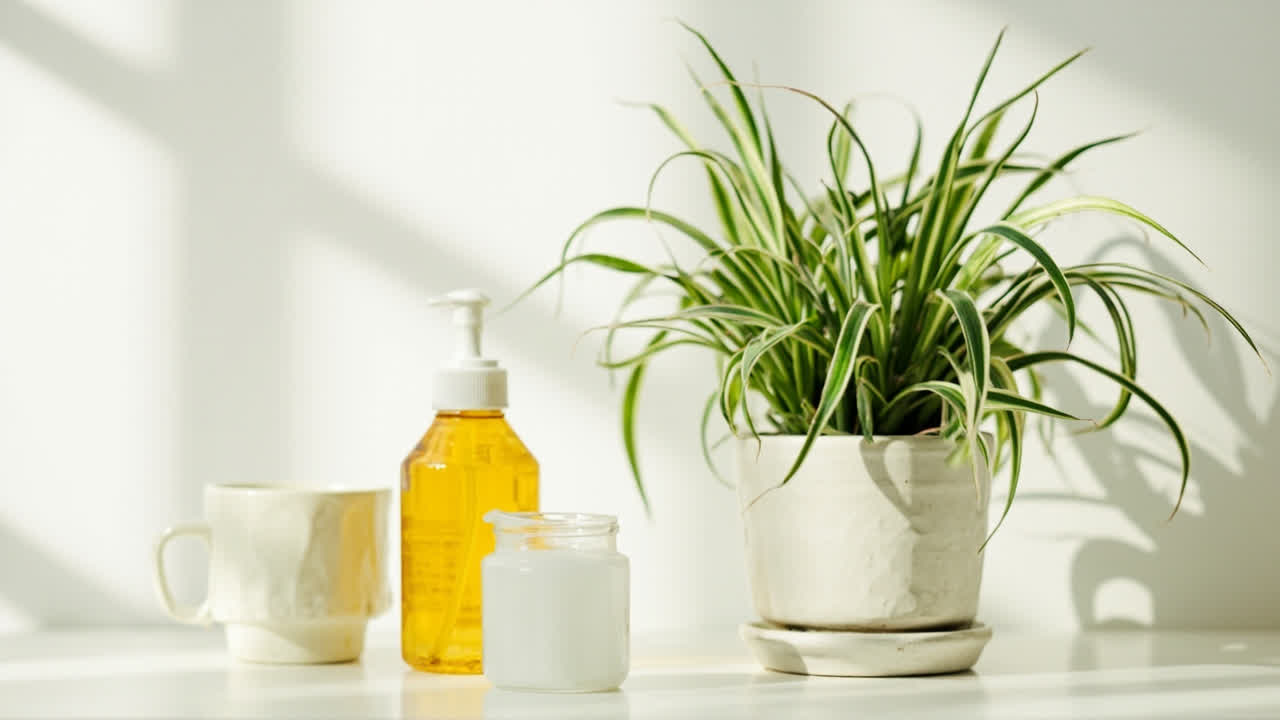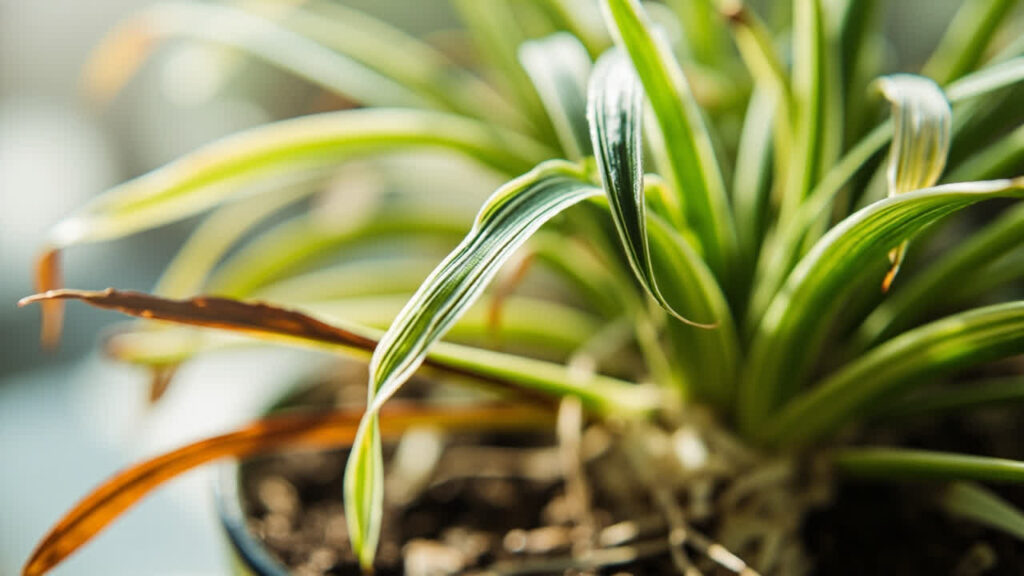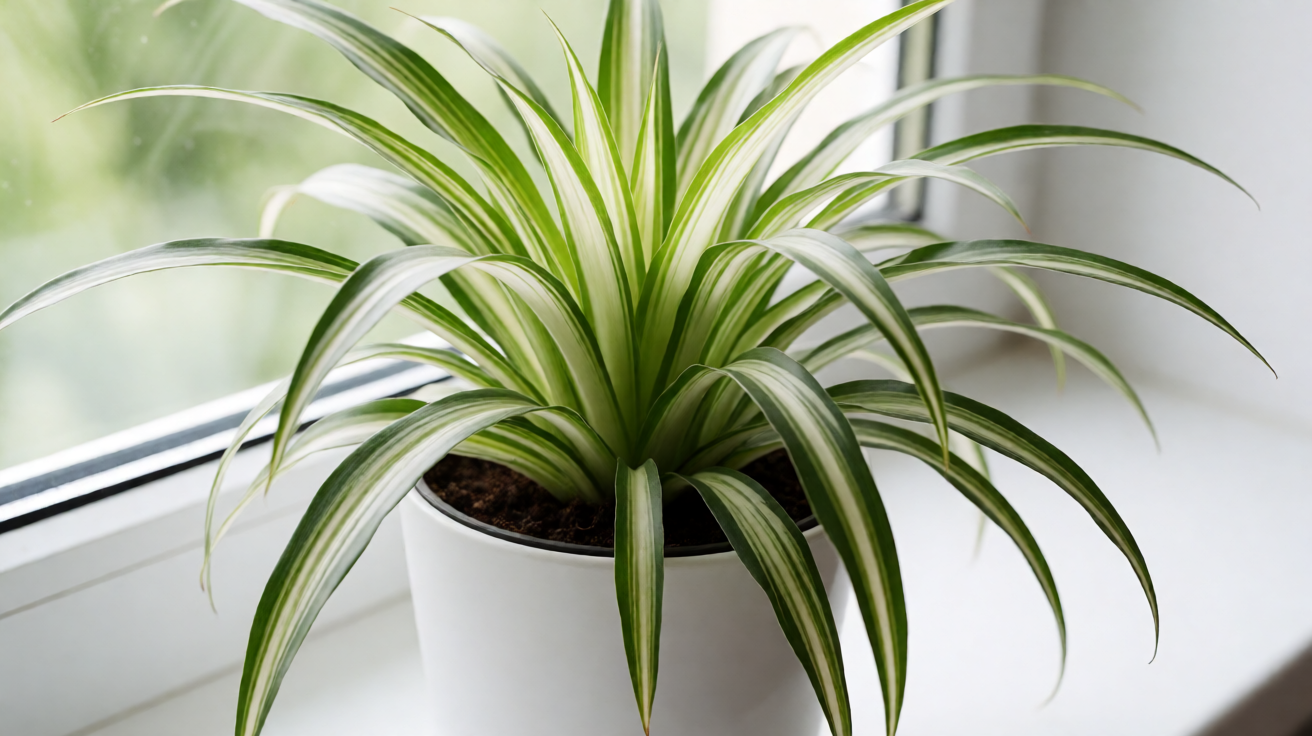

A reverse variegatum spider plant looks like a Vittatum drawn in reverse: the white stripe runs down the center of each leaf, with solid green margins on both sides. That reversed direction changes how the leaf photosynthesizes, which changes how much light the plant needs, which is why a reverse variegatum kept on the same windowsill as a Vittatum will lose its white center within weeks. Understanding the reversed chlorophyll anatomy is the difference between a stable pattern and a plant that quietly reverts to all green.
What Reverse Variegatum Actually Is
Reverse Variegatum is a Chlorophytum comosum cultivar with a variegation pattern that runs opposite to the two cultivars most readers already own. On a Vittatum, the white stripe runs along the outer edge of each leaf with a green center. On a Variegatum, the white stripe runs down the middle of each leaf with green edges. On a Reverse Variegatum, the white stripe runs down the middle while the green sits in a thin margin on both sides, then a second pale band sits along the very edge.
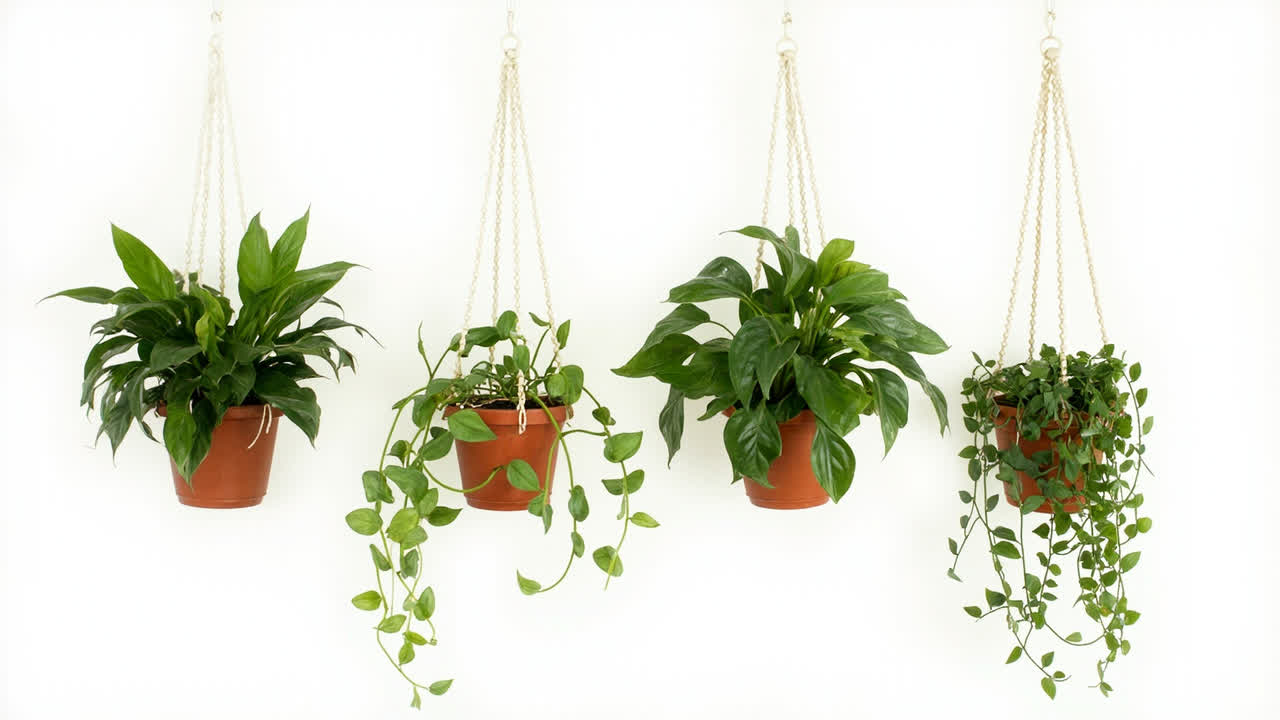
That is why a quick glance at a Reverse Variegatum in a nursery can fool an experienced plant owner. The trailing plantlets that hang on long stolons make the cultivar a strong fit for a hanging basket, and like every spider plant it is non-toxic to cats and non-toxic to dogs, so a cat can reach the arching leaves without harm. The leaf has more white than green, so it reads as “more variegated” and therefore “needs more light.” In practice the opposite is true: less of the leaf is photosynthetic, so the plant runs on a tighter energy budget and prefers the gentler end of bright indirect light.
The cultivar has been in circulation for decades, mostly as a specialty cutting from collectors rather than a mainstream nursery release. The spider-plant-vittatum-vs-variegatum comparison covers the two better-known cultivars in detail; this page covers the third pattern and the care delta it demands.
The Chlorophyll Anatomy That Drives the Pattern
The reason Reverse Variegatum cares about light differently starts at the leaf surface. Chlorophyll lives in the green tissue. The white center of a Reverse Variegatum leaf contains no chlorophyll, so it cannot photosynthesize. All the energy that leaf produces comes from the green margins.
Green margins do the photosynthesis
On a Vittatum, the green stripe runs down the center of the leaf, so the photosynthesizing tissue sits in the middle of the leaf with white edges. On a Reverse Variegatum, the green sits in two thin bands along the leaf margins. Either pattern gives the leaf some green surface, but the geometry changes how efficiently the leaf can catch light.
The white center is a passive stripe
White tissue in any variegated plant is decorative only. It does not feed the plant. A Reverse Variegatum leaf is, in effect, a green leaf with a wide white ribbon down its middle, and the ribbon shades part of the green tissue on either side. That shading cuts the effective photosynthetic area even further than the visible white would suggest.
Why this slows growth
With less green tissue and some of what remains partly shaded by the white center, each leaf produces less sugar than the same-sized leaf on a Vittatum. The plant compensates slowly: new leaves emerge at roughly the same rate as Vittatum, but each leaf is smaller and the plantlets that form on the runners (the long stolons that arch out from the mother plant) take longer to develop storage roots. The white center also marks the spot where leaf tip browning starts if humidity drops below 40 percent or if fluoride in tap water accumulates in the leaf tissue. The spider-plant-variegation-fading page covers how to diagnose the moment when slow growth tips into active revert, including the role of fertilizer buildup in the soil.
Light Range That Holds the White Center
The right light for a Reverse Variegatum is bright but not direct. The leaf has less margin chlorophyll than a Vittatum, so direct sun through a south-facing window will bleach the white center to brown within a single afternoon. Too little light and the plant will replace the white center with green tissue to harvest more energy. The sweet spot sits in a narrow band between those two failure modes.
Foot-candles target for stable variegation
Aim for 150 to 400 foot-candles of indirect light for most of the day. Below 100 foot-candles, the plant will start pushing greener leaves within a month. Watch for leaf yellowing on the older outer ribbon leaf first, then a general softening of the white stripe. Above 600 foot-candles of direct sun, the white center will scorch along the edges. The full spider-plant-light-requirements guide walks through how to measure foot-candles with a phone app and how to read leaf posture as a quick proxy.
Window placements ranked
An east-facing window with a sheer curtain sits in the middle of the right range and is the easiest placement to keep stable through the year, and it doubles as a spot where humidity stays above 40 percent without an extra humidifier. A north-facing window works if it is unblocked and bright for at least six hours a day. A south-facing window works only if the plant sits 3 to 6 feet back from the glass or behind two layers of sheer. Direct west sun is too harsh for the white center even with a curtain, and it brings the humidity drop that triggers leaf tip browning within days. If your tap water carries fluoride or chlorine, switch to distilled water, filtered water, or rainwater before you set the placement. Reverse Variegatum shows fluoride damage faster than Vittatum because the white center tissue dies back instead of just browning at the tip.
When to add a grow light
In winter, when daylight drops below eight hours, even a good east window can fall under 100 foot-candles for most of the day. A small full-spectrum LED on a 12-hour timer, hung 12 to 18 inches above the foliage, holds the pattern through the dark months. Run it during daytime hours, not overnight; spider plants do not need a dark cycle but the grow light is more useful when the plant is also doing its normal photosynthesis work.
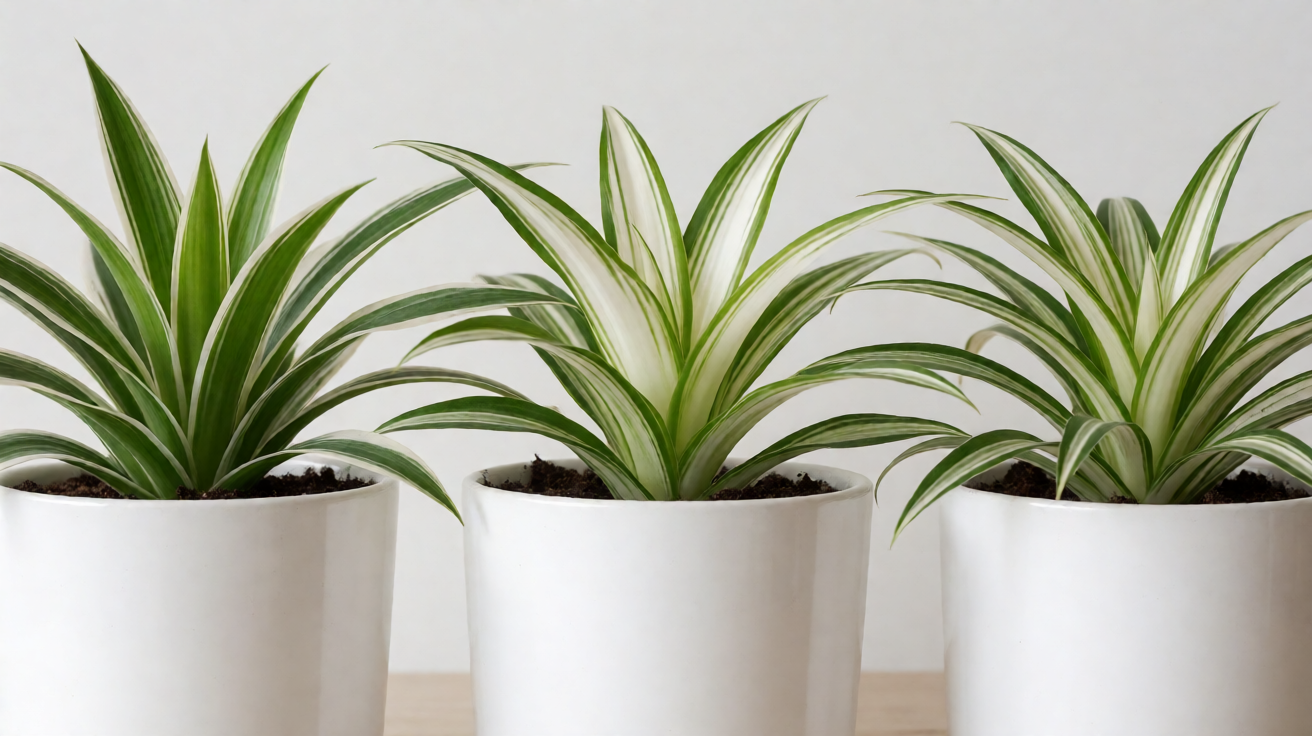
Vittatum vs Variegatum vs Reverse Variegatum
| Cultivar | Variegation direction | Light range | Revert speed if light is wrong |
|---|---|---|---|
| Vittatum | White edges, green center stripe | 200 to 600 foot-candles indirect | Slow (months) |
| Variegatum | White center stripe, green edges | 200 to 500 foot-candles indirect | Moderate (weeks) |
| Reverse Variegatum | White center, thin green margins, pale outer edge | 150 to 400 foot-candles indirect | Fast (days to weeks) |
The reverse pattern is the most fragile of the three. The spider-plant-bonnie-vs-vittatum comparison shows a similar pattern where Bonnie, with curly variegated leaves, also reverts faster than its Vittatum sibling. Reverse Variegatum sits in the same fragility tier for the same reason: less photosynthetic tissue per leaf, less energy buffer when light is wrong.
The full cultivar roster, including the rarer Hawaiian, Atlantic, and Bonnie types, lives on the spider-plant-varieties-comparison hub page.
Watering Rhythm Tuned to the Denser Crown
Reverse Variegatum leaves are wider and slightly thicker than Vittatum leaves, and the plant holds them in a tighter rosette. That denser crown shades the soil surface and slows evaporation, so the same pot on the same shelf will dry down a day or two slower than a Vittatum would. Watering on a Vittatum schedule is the most common cause of crown rot in this cultivar.
How the wider leaves change soil moisture
Each leaf acts like a small umbrella over the soil directly below it. With Reverse Variegatum’s denser rosette, the umbrellas overlap and the soil surface stays shaded even when the rest of the room is bright. The top inch of soil can feel dry on the surface while the lower half is still wet. Lifting the pot to feel its weight is more reliable than touching the surface.
The top-inch test for this cultivar
Insert a dry wooden chopstick 2 inches into the soil and leave it for 30 seconds. If it comes out clean and dry, water thoroughly until the excess drains from the bottom. If it comes out with damp soil clinging to it, wait another two days and re-test. This works for any spider plant, but Reverse Variegatum rewards the discipline more than Vittatum does because the margin between “just watered” and “starting to rot” is narrower.
Pot size trap
Overpotting is the second most common problem. A Reverse Variegatum in a pot more than 1 inch wider in diameter than the root ball will hold water around the storage roots for too long, especially through winter. Use a nursery pot one size larger than the root mass, or move the plant into a decorative pot only after the tuberous roots have filled the nursery container. If the plant becomes root bound before the year is up, divide the root ball during spring division and pot each division one size up. The spider-plant-care-guide Pillar walks through how to read pot size relative to root mass for any spider plant, including how to recognize the early signs of root rot before the leaves yellow.
Revert Management and Propagation Choices
Even with correct light and water, an occasional all-green leaf will appear. Most of the time this is the plant’s response to a temporary stress event, not a permanent revert. Decide what to do based on how much of the plant has changed.
When partial revert is fine
If a single stem pushes one or two all-green leaves while the rest of the plant holds the white center, leave them. The plant is still photosynthesizing well overall, and cutting the green leaves removes energy the plant would otherwise use to push the next variegated leaf. Monitor for two weeks; if new growth reverts back to the variegated pattern, no action is needed.
How to pick a pattern-stable plantlet
When the mother plant sends out a stolon with plantlets along the runner, choose the largest plantlet whose leaves already show the white center and the green margins in the right ratio. Tiny plantlets often revert in their first six months regardless of parent genetics. Pot the chosen plantlet in a 3-inch nursery pot with a well-draining mix of peat and perlite, water with distilled water, and keep it on the same light placement as the mother for the first year. Skip fertilizer entirely during that first year; a young plantlet pushed by fertilizer reverts faster than one that grows slowly.
Where to cut a fully-reverted stem
If a stem has gone fully green and is taking over the plant, cut it at the soil line. Do not try to convert the reverted tissue back; variegation does not return once chlorophyll has fully repopulated a leaf. The plant will push new variegated growth from the crown if the rest of the care is correct. Resume feeding only with a diluted fertilizer at quarter strength (a balanced NPK such as 5-5-5 works fine) once the new leaves show the white center, since salt buildup from over-fertilization triggers revert. The full propagation mechanics, including how to root plantlets in water versus soil and how to skip the water step by pinning a stolon into a neighboring pot, live on the how-to-propagate-spider-plant page.
Reverse Variegatum is the cultivar that punishes assumptions. Owners who treat it like a Vittatum lose the pattern within a season. Owners who treat it like a slightly more delicate Chlorophytum, with 150 to 400 foot-candles of indirect light, a watering rhythm tuned to the denser crown, and distilled water to keep fluoride out of the white leaf tissue, keep the pattern stable for years. The plant rewards patience with stolons full of pattern-stable plantlets that carry the reverse variegation into the next generation.
From PDF to Excel in one click
Forget retyping line by line. Upload any bank statement, get a spreadsheet you can actually use. Your files are never stored, and you can test the converter with 3 free conversions.
Try it free