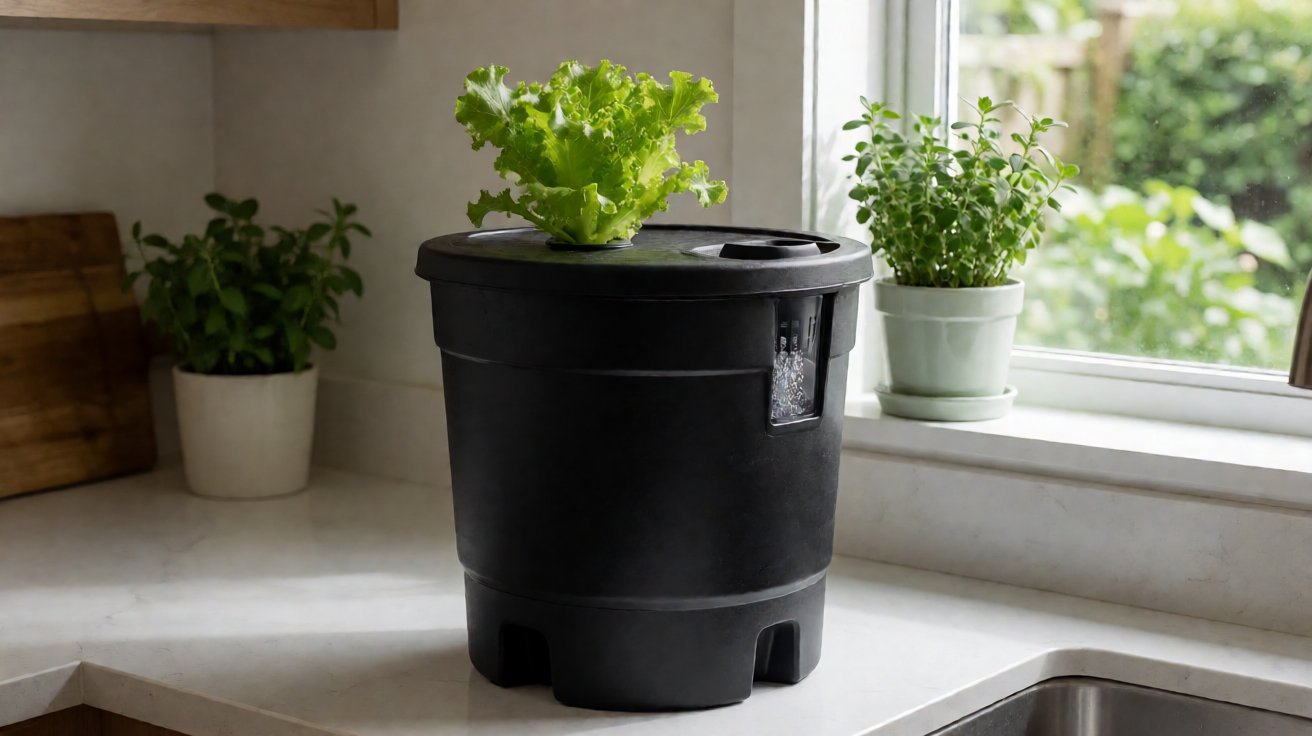

Roots sitting in water don’t drown, and that sentence is the whole game. Most people who set up a home hydroponic system lose the first crop because they assume the rule from soil applies: roots breathe air, water pushes air out, the roots suffocate. In soil that rule holds. In a working hydroponic system it does not, because the water itself is doing what the air pockets in soil were doing. The question is not whether the roots are wet. The question is how much oxygen is dissolved in that water at the moment the root is trying to breathe.
Here’s the part that trips up most beginners. The water in a hydroponic reservoir can hold about 8 to 10 milligrams of oxygen per liter at room temperature, if the water is aerated. A root sitting in unaerated, warm water sees about 4 mg/L. The plant doesn’t care about the difference between “wet” and “dry.” It cares about the difference between 4 and 8. Below 5 mg/L, root cells start losing the energy to push nutrients up the stem. Below 3 mg/L, the cells stop taking up water at all. The leaf above doesn’t turn yellow because the water is wrong. It turns yellow because the transport system shut down from oxygen starvation, even in a tank full of perfect nutrient solution.
Two failure modes follow. The first is the oxygen one: a warm reservoir with no air pump, or a pump that died and nobody noticed for two days. The second is the chemistry one: a pH drift that locks out iron, an EC climb from topping off with nutrients instead of plain water, a temperature spike that emptied the dissolved-oxygen tank overnight. The two need different fixes. Pick the wrong one and you spend the next week chasing a problem that isn’t there while the real one gets worse.
What most new growers try first is buying a bigger system. That’s the move that wastes the most money. A larger reservoir is more stable than a smaller one, but it doesn’t teach you which of the four physical levers you actually need to control. The four levers are dissolved oxygen, electrical conductivity (EC), pH, and reservoir temperature. Get all four inside their working range and the system grows plants. Miss one and no amount of money fixes it. The four levers are not a checklist you tick once. They drift every day. The job of running a home hydroponic system is the job of noticing when one of them moves and putting it back.
Why Roots Can Grow in Water Without Soil
Soil does two things for a plant. It holds the plant upright. It delivers water and dissolved nutrients to the root surface. A hydroponic system replaces the second job with a simpler mechanism: the roots sit in a solution that already contains everything the plant needs. The plant doesn’t hunt. The plant absorbs.
The biology at the root surface is the same whether the plant is in soil or in nutrient solution. Plant roots don’t take up solid particles. They take up ions: charged mineral atoms dissolved in water. Nitrogen arrives as nitrate (NO₃⁻) or ammonium (NH₄⁺). Phosphorus arrives as phosphate (H₂PO₄⁻ or HPO₄²⁻). Potassium arrives as K⁺. Calcium, magnesium, sulfur, iron, manganese, zinc, copper, boron, molybdenum, chlorine, nickel: all of them arrive as ions in solution. In soil, the ions are loosely held on the surface of clay particles and organic matter, and the plant has to exchange hydrogen ions for them to free them into the soil water. In hydroponics, the ions are already in the water. The exchange step is gone. That’s the entire difference.
The savings show up above ground. A plant in a well-managed hydroponic system typically grows 20 to 40% faster than the same plant in soil, and the reason isn’t mystery. The plant redirects the energy it would have spent on root growth into leaf and stem growth. A tomato in soil sends 30 to 50% of its total mass below the surface, building a root network large enough to find the next drink. A tomato in nutrient solution sends 10 to 15%. The above-ground harvest is bigger because the below-ground system is smaller.
One honest limit up front: hydroponics is not easier than soil. It is faster, denser, and more controllable, and it is also more fragile. A soil garden tolerates a missed watering, a forgotten fertilizer, a pH drift of 0.5 units, a temperature swing of 5°C. A hydroponic system tolerates none of these. The margin between “thriving” and “dead” in a reservoir is often smaller than the margin in a pot of soil. You trade robustness for control. If you want forgiveness, grow in soil. If you want yield per square foot, grow in water and pay attention.
The Four Physical Levers: Dissolved Oxygen, EC, pH, Temperature
Every failure in a home hydroponic system traces back to one of four variables. Three of them are chemical (EC, pH, nutrient balance). One is physical (dissolved oxygen). The fourth is the interface between the two: reservoir temperature, because temperature controls both the chemistry (how fast pH drifts, how quickly EC climbs) and the physics (how much oxygen the water can hold).
Dissolved oxygen (DO) is the gatekeeper. Cold water holds more oxygen than warm water. At 20°C, fully aerated water holds about 9.1 mg/L of dissolved oxygen. At 25°C it holds about 8.3 mg/L. At 30°C it holds about 7.5 mg/L. The plant doesn’t care which number you remember. It cares whether the water at the root surface is above about 6 mg/L, which is the threshold below which most fruiting plants start showing stress within 48 hours. Below 4 mg/L, root hair dieback begins. Below 2 mg/L, the conditions for Pythium root rot become favorable: the anaerobic pathogens that turn white roots brown and slimy in a few days. The way you keep DO up in a home system is straightforward: an aquarium air pump pushing air through an air stone in the reservoir. A 5-watt air pump with one 2-inch stone is enough for a 5-gallon bucket. For a 20-gallon tote, run two stones. The pump is on 24/7, no timer.
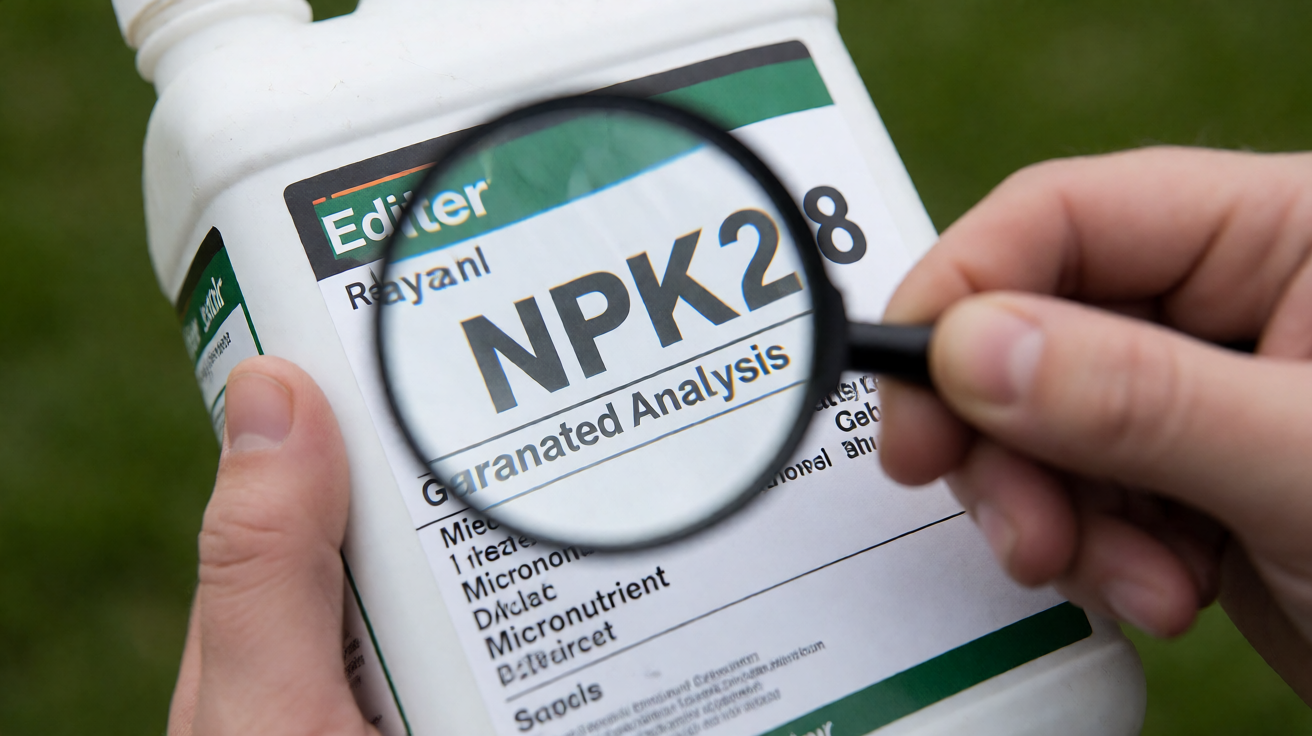
Electrical conductivity (EC) is the food meter. Every dissolved salt ion in the water conducts a tiny bit of electricity. The more ions, the more the water conducts. A meter that reads in millisiemens per centimeter (mS/cm) tells you how concentrated the nutrient solution is. For leafy greens (lettuce, basil, spinach, kale), the target EC is 1.0 to 1.6 mS/cm. For fruiting plants (tomatoes, peppers, strawberries), it’s 2.0 to 3.5 mS/cm. Below the range, the plant starves slowly: pale new leaves, slow growth. Above the range, the plant suffers osmotic stress: the roots can’t pull water in against the higher external ion concentration, and the leaves wilt even though the reservoir is full. The two failure modes look different above ground but they both start with the meter. Check EC every 2 to 3 days. When EC climbs above the target range, dilute with plain water. When EC falls below the range, top off with fresh mixed solution at target EC, not with straight nutrients.
pH is the lockout switch. Nutrient ions are not equally available at all pH levels. Iron, manganese, and phosphorus become unavailable above pH 6.5. Calcium and magnesium become less available below pH 5.5. The plant can be sitting in a perfectly mixed nutrient solution at perfect EC and still starve, because the pH is wrong and the chemistry of the solution has made one of the essential nutrients invisible to the root. The working range is 5.5 to 6.5 for most home hydroponic crops, with 5.8 to 6.2 being the practical sweet spot. pH drifts upward over time because most tap water is alkaline (pH 7.0 to 8.0) and because the plant selectively takes up nitrate, leaving the solution more basic as days pass. To bring pH down, add a two-part beginner recipe (phosphoric acid-based, available at any hydroponic supplier) and re-measure after 30 minutes. To bring it up, add pH Up (potassium hydroxide-based). Don’t make large corrections: a 0.5 unit shift in a single dose stresses roots. Move the pH by 0.1 to 0.2 at a time.
Reservoir temperature is the silent killer. Warm water holds less oxygen and grows pathogens faster. The working range is 18 to 22°C (65 to 72°F). At 24°C and above, dissolved oxygen drops below the 6 mg/L safety line for most setups, and the doubling time of Pythium zoospores drops to roughly 4 hours. A home system in a 25°C living room, with no chiller, will lose roots in late summer. The cheapest fix is to keep the reservoir out of direct sunlight (wrap it in reflective foil or paint it white) and to keep it in the coolest room of the house. The more expensive fix is a small water chiller: useful for growers in hot climates or for systems that run warm LEDs above the canopy.
The four levers interact. Raise the temperature 4°C and you lose about 1 mg/L of dissolved oxygen. Raise the pH from 5.8 to 6.8 and you lock out iron. Top off with nutrients instead of plain water and your EC climbs while your water level recovers: the plant now sits in a stronger solution than it was set up for. The four numbers aren’t independent dials. They are four readings of one system. Check all four on the same day, log the readings, and look for the one that moved most.
Why Most Home Systems Fail in the First Month
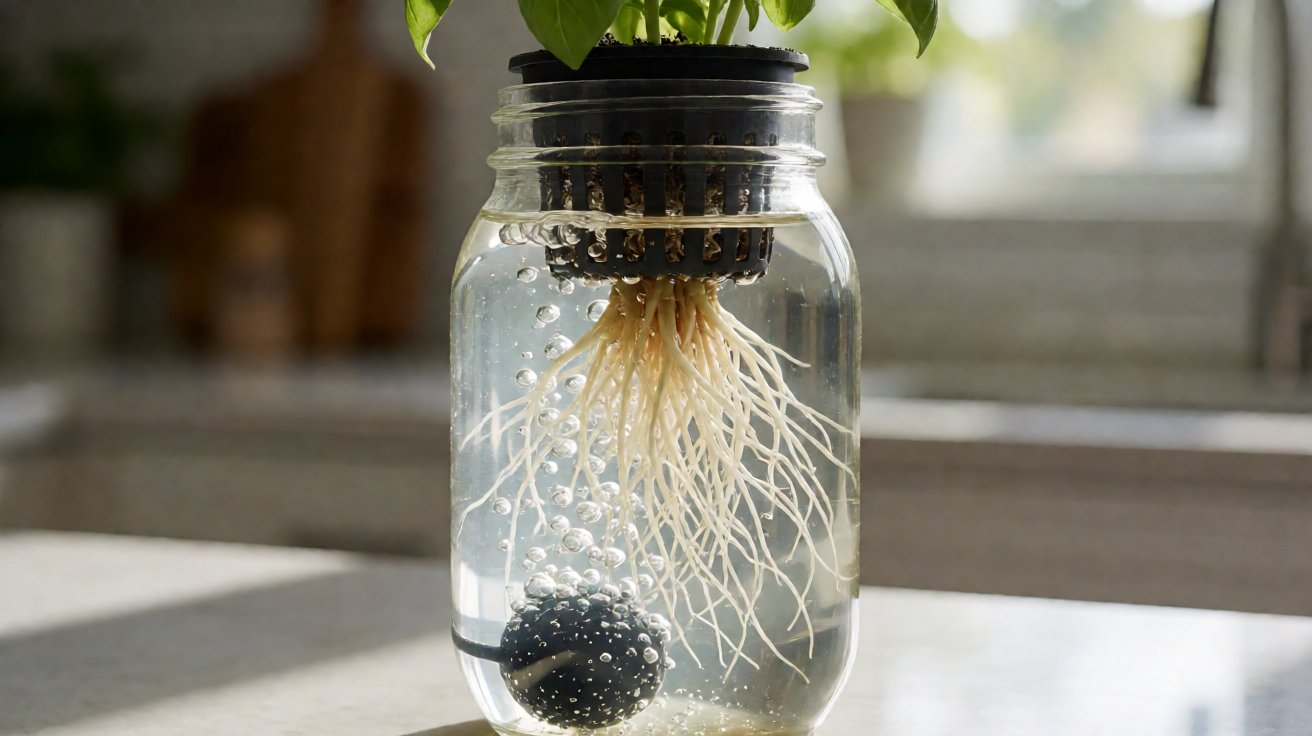
Three patterns account for the majority of first-month failures. The first is buying a system before understanding the levers. A Kratky jar on a windowsill, a 5-gallon DWC bucket, a 4-tube NFT channel: none of them are forgiving if the operator doesn’t know what EC, pH, DO, and temperature mean. The hardware is the easy part. The knowledge is what kills the first crop.
The second pattern is treating the nutrient solution as a one-time setup. It isn’t. The plant drinks the water, leaving the salts behind. The salts concentrate. The EC climbs. The pH drifts. Algae colonize any surface that gets light. Biofilm grows on the air stone and inside the tubing. A home system needs a weekly partial refresh (replace 25 to 50% of the solution with fresh mixed nutrient water) and a full reservoir change every 10 to 14 days for leafy greens, every 7 to 10 days for fruiting plants. Skipping the change is how Pythium gets established.
The third pattern is light reaching the nutrient solution. Algae is not just unsightly. Algae consumes oxygen at night and releases it during the day, but the net effect is a system that swings wildly between over-oxygenated and under-oxygenated, and the algae also consume the same nutrient ions the plant is competing for. The fix is structural: use opaque containers (food-grade black plastic, painted buckets, or light-blocking totes) and check that the lid fits with no gaps. If light can reach the solution, algae will reach the system. The rule is total darkness inside the reservoir.
One honest limit up front: a reservoir cannot fix a clogged mist nozzle, a dead air pump, a light leak in the lid, or a meter that hasn’t been calibrated in six months. Hardware fails quietly. The number-one diagnostic for a struggling system is to check the hardware before changing the chemistry. Is the air pump still pushing bubbles? Is the lid still opaque? Is the pH meter reading the same in two reference solutions? Hardware is where most “mysterious” failures live.
What Changes in the First Two Weeks
The first two weeks are a different system than the second two. In the first 14 days, the seedling’s root system is small. It drinks 100 to 300 mL per day in a 5-gallon reservoir. The nutrient concentration barely changes. The pH barely drifts. The dissolved oxygen is high because the root mass isn’t pulling much O₂ out. The system looks stable. It is. The risk in week 1 is not chemical. It is the seedling: damping off, transplant shock, cold root zone, light that’s either too close (bleaching) or too far (legginess).
In week 3, the plant’s root mass is 5 to 10 times what it was on day 1. The plant is now drinking 1 to 2 liters per day. The EC starts climbing because the water leaves faster than the salts do. The pH starts drifting upward because nitrate uptake dominates. The dissolved oxygen consumption rises, and on a warm day the air pump that was sufficient in week 1 may not be sufficient in week 4. The system crosses from “stable” to “actively managed” somewhere around day 14 to 18. The operator who doesn’t notice the transition is the operator who finds a wilted plant on day 25.
The practical cadence is this. Days 1 to 14: check the seedling daily, the water level every 2 days, the EC and pH once a week. Days 15 to 35: check EC and pH every 2 to 3 days, top off with plain water (not nutrient solution) when the level drops by more than 20%, and do a 50% reservoir change at day 14. Days 36 onward: full weekly refresh. Fruiting crops also need EC to climb gradually as fruit set begins, which means switching from the vegetative mix (higher N) to the bloom mix (higher P, K) at first flower.
The leaf is the cheapest meter you own. Yellow new growth with green veins = iron lockout (pH too high). Yellow old growth with green new growth = nitrogen deficiency (EC too low or reservoir too old). Brown leaf tips on lettuce = calcium lockout (pH too low) or tip burn from low transpiration. Brown slimy roots = root rot (DO too low, or temperature too high, or both). The leaf tells you which lever to look at first. Read the leaf before you read the meter.
Choosing Your First System Without Buying the Wrong One
Three home systems dominate the beginner market, and the differences between them are not aesthetic. They are structural, and they change which of the four levers you have to manage.
The Kratky method is the simplest. A plant in a net pot above a static reservoir. No pump. No electricity. The plant drinks the water down, and the falling water level creates an air gap that oxygenates the upper roots. Kratky is genuinely a quiet, affordable apartment system (a mason jar and a net pot will grow a head of lettuce), and it is genuinely the most forgiving for one specific reason: there is no equipment to fail. The tradeoff is that you cannot correct EC, pH, or DO without a manual reservoir change. Kratky is best for leafy greens and herbs, planted in spring or fall when the ambient temperature is between 18 and 24°C. It is not a system for fruiting crops, which need a longer run and a stable oxygen supply.
Deep Water Culture (DWC) is the Kratky method with an air pump. The roots sit fully submerged in an aerated nutrient solution. The pump runs 24/7. DWC supports larger plants (tomatoes, peppers, cucumbers) because the DO stays high, and the operator can top off and adjust EC/pH without disturbing the root zone. The tradeoff is that you now have a piece of equipment that can fail. A dead air pump on a warm day will cook the roots in 12 to 18 hours. The fix is simple: check the bubbles every day. If the bubbles stopped, the roots are about to.
Nutrient Film Technique (NFT) runs a thin stream of nutrient solution through sloped channels, with the lower portion of the root mat sitting in the film and the upper portion in air. NFT is the workhorse of commercial leafy-green production. For a home grower, the cost is higher (channels, a reservoir, a return pump) and the risk is pump failure: if the pump stops, the thin film dries in 30 to 60 minutes and the plants wilt. NFT is a scale-up choice, not a first-system choice.
For the operator’s first attempt, the honest answer is Kratky for the first three months, DWC for the next three, and a small NFT setup only if the goal is producing enough lettuce to skip the grocery store. Every step up adds hardware, and every step up multiplies the failure modes. Why your first hydroponic setup fails (and how to start).
The Honest Limits of Hydroponics at Home
A few limits that the marketing pages skip. The first is that home hydroponics is more expensive per harvest than a bag of soil and a packet of seeds. The nutrient solution, the pH meter, the EC meter, the air pump, the net pots, the growing medium: the setup cost is real. The system pays back the cost only if you actually harvest the crop, which means the operator’s attention is the most expensive input. The cheapest hydroponic system in the world still requires the operator to check it.
The second limit is that not every crop is worth growing in water. Root vegetables (carrots, potatoes, beets) an honest grow media comparison. Large vine crops (watermelon, pumpkin, winter squash) need more root volume than a home reservoir can hold. Fruiting trees are out of scope. The crops that genuinely benefit from hydroponics at home are leafy greens, herbs, small fruiting crops (cherry tomatoes, peppers, strawberries), and microgreens. If the goal is a winter tomato, hydroponics is the right call. If the goal is a winter carrot, soil is the right call.
The third limit is that home hydroponics consumes electricity. The air pump runs 24/7. The grow light runs 12 to 16 hours a day. The water chiller (if used) runs constantly. A typical home DWC lettuce system with a small LED draws 30 to 50 watts continuously, which is roughly 25 to 40 kWh per month. That is not free. It is also not catastrophic. But it is a line on the electricity bill that a soil garden does not draw.
The fourth limit is biological. A hydroponic system is a monoculture with no soil microbiome. There is no fungal network, no bacterial diversity, no worm to break down organic matter. The plant is entirely dependent on the operator for nutrition. The advantage is control. The disadvantage is fragility. A soil garden has a backup. A hydroponic system has only what the operator puts in it.
What to Watch For in the First Harvest
The first harvest is a diagnostic, not just a meal. The leaves tell you whether the system was right. Lettuce that grew slowly and tasted bitter was likely under-fertilized in the second half of its run, or it bolted from heat: both readable in the EC log. Basil that grew lush and green but tasted watery was likely over-watered relative to its nutrient uptake, or it was grown under too much nitrogen: also readable. Strawberries that set fruit but stayed small and sour were either under-polinated indoors, under-fed during fruit set, or run at the wrong EC during flowering.
a weekly feeding rhythm. A simple notebook with date, EC, pH, water temperature, and any visual change (new leaf, yellowing, root color) is enough. The log doesn’t need to be pretty. It needs to exist. The grower who logs every reading for 60 days has, at the end, a calibration curve for the specific system in the specific room. The grower who doesn’t log is guessing on day 61 the same way they guessed on day 1.
The honest summary of hydroponics at home is this: a hydroponic system is a controlled environment. The four levers: dissolved oxygen, EC, pH, and reservoir temperature: are the controls. The plant grows in direct proportion to how steadily those four numbers stay inside their working ranges. Drift on any one of them shows up in the leaves within 48 to 72 hours. Correct it before the next leaf and the system recovers. Miss the correction and the next leaf won’t be the last bad one. The system is not magic. It is not foolproof. It is a small, fast-feedback loop between an operator and a plant, with water in the middle.
The plant doesn’t care whether you call it hydroponics, soilless culture, or nutrient film technique. The plant cares whether the water at the root surface has enough oxygen, the right salt concentration, the right pH, and the right temperature. Get those four right and the plant grows faster than its soil cousin. Get any one of them wrong and the plant dies faster than its soil cousin would have. The work is the same. The feedback is just faster. The leaf will tell you which lever moved, by Thursday.
From PDF to Excel in one click
Forget retyping line by line. Upload any bank statement, get a spreadsheet you can actually use. Your files are never stored, and you can test the converter with 3 free conversions.