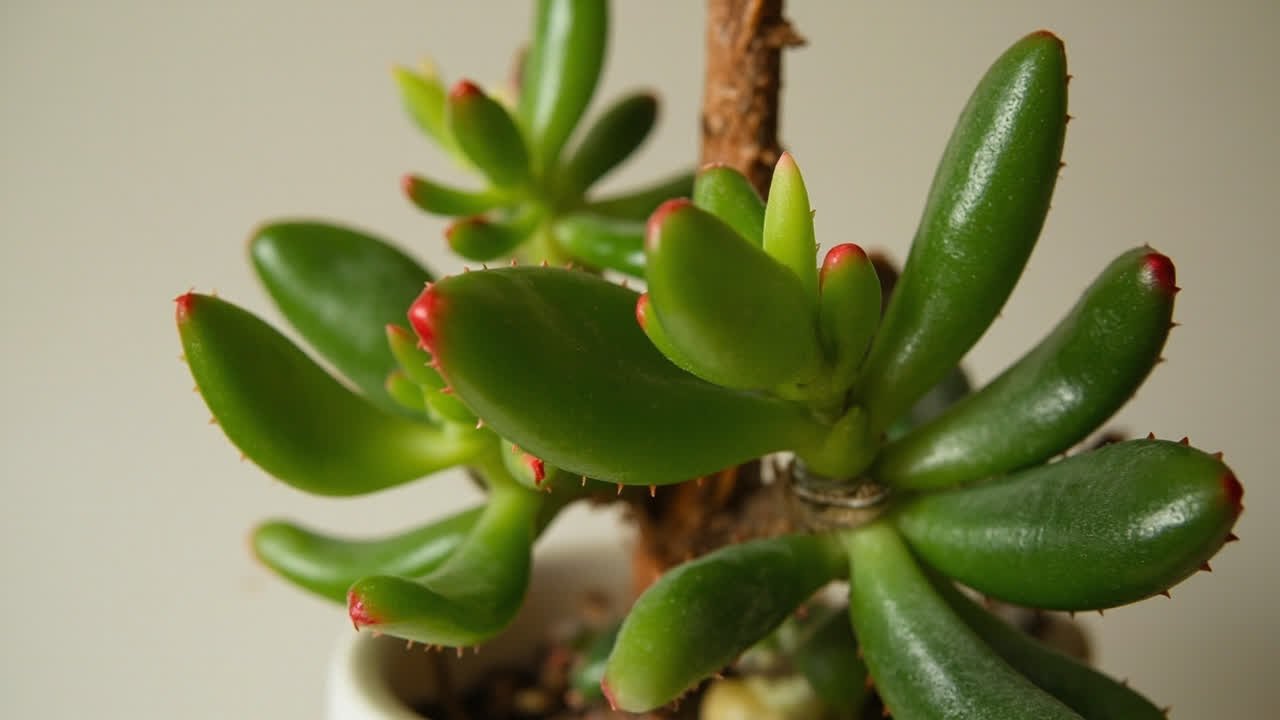
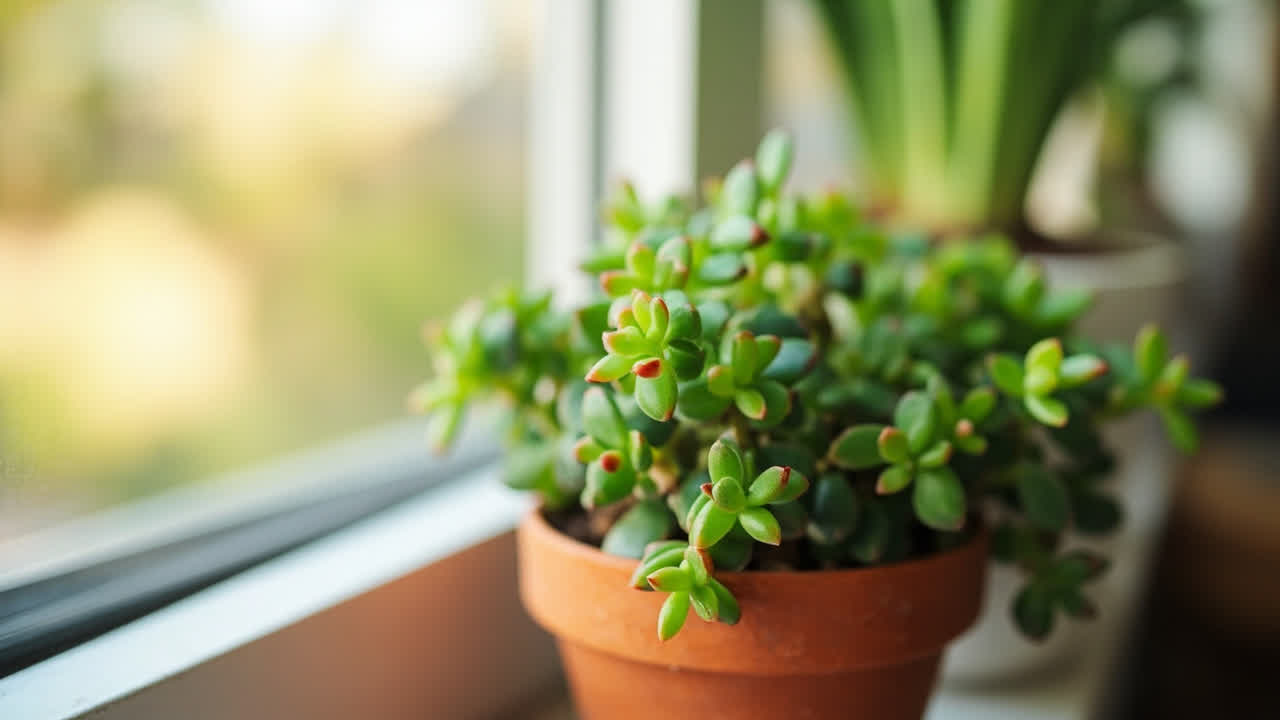
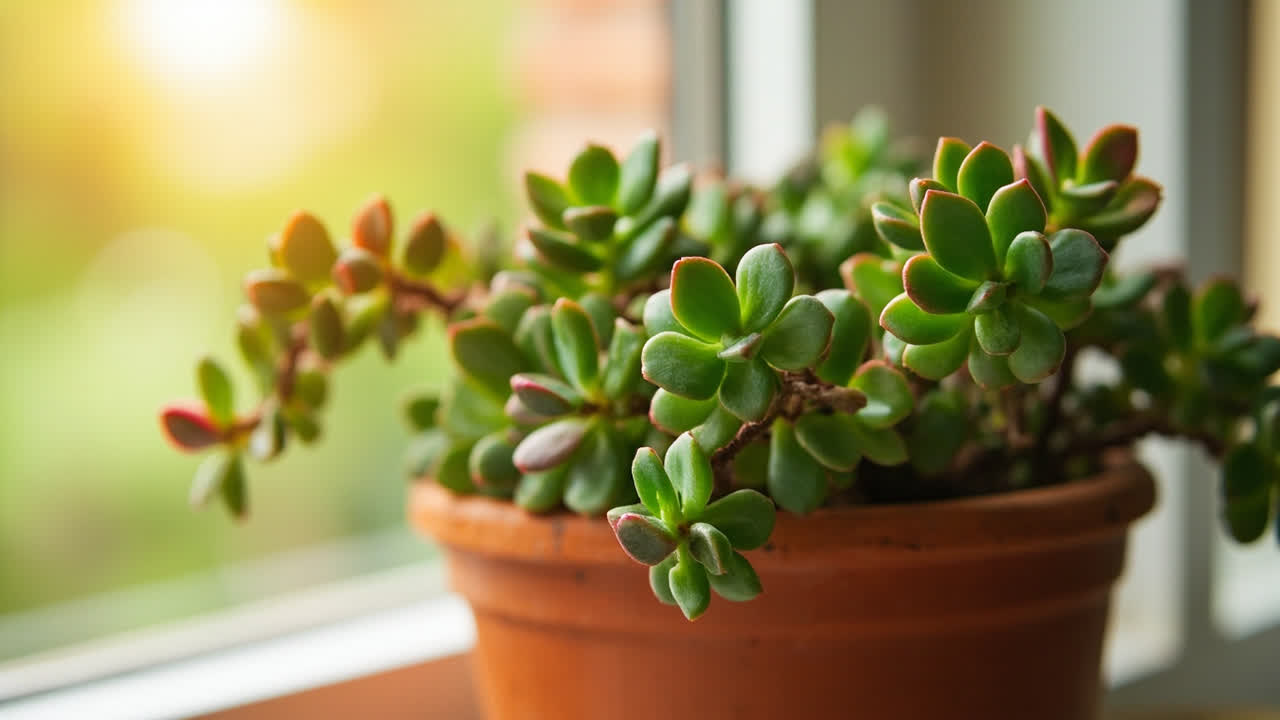
Crassula ovata — the jade plant — has earned its reputation as one of the most forgiving houseplants you can grow. With thick, glossy leaves and a woody stem that resembles a miniature tree, jade plant brings a sculptural quality to any room.
Under the right conditions Jade plants can live for decades, occasionally rewarding you with clusters of small pink or white star-shaped flowers.
This guide walks you through everything that matters for keeping a jade plant healthy and long-lived.
If you are new to succulents or have killed a jade plant before, the good news is that most problems stem from just two causes: overwatering and too little light. Fix those and your jade plant will thrive.
Light Requirements : Jade Plant Thrives in Bright, Indirect Sun
. For the complete light requirements including window direction guide, see our jade plant light requirements guide., where they grow in semi-arid conditions with plenty of sun. In your home, they do best in a spot that receives at least four to six hours of bright, indirect light daily. A south-facing or west-facing windowsill is ideal.
Direct afternoon sun can work, but introduce it gradually — a jade plant that has been indoors for months will scorch if suddenly moved into hot direct light. Start with a couple of hours of morning sun and increase gradually over two weeks.
Signs your jade plant is not getting enough light include elongated stems stretching toward the window, leaves that are smaller than normal, and pale color losing the deep green gloss that makes the plant attractive. If you see these signs, move the plant to a brighter location. Growth will slow in winter — that is normal and does not mean the plant needs more light.
Watering : The Single Most Important Care Decision
Overwatering is the leading cause of jade plant death. Because jade plants store water in their leaves and thick stems, they are built to survive drought. They do not need frequent watering and they genuinely suffer when kept in constantly moist soil.
— then let the soil dry completely before watering again. Our jade plant watering requirements guide covers the exact schedule for every season. — then let the soil dry completely before watering again. In summer, this typically means every seven to fourteen days depending on your home’s temperature and humidity. In winter, watering once a month is often enough.
The best test is to push your finger about two inches into the soil. If it feels completely dry, water. If it still feels moist at the tip of your finger, wait. The most common mistake is watering on a fixed schedule — always let the soil tell you when it is time.
Soil Requirements : Well-Draining Is Non-Negotiable
. Our jade plant soil requirements guide has the exact soil mix formula., and once that sets in, recovery is difficult. Use a commercial cactus and succulent mix — it is inexpensive and formulated exactly for this need.
If you want to mix your own, combine standard potting soil with coarse sand and perlite in roughly equal parts. The sand and perlite keep the mix from compacting and ensure water moves through quickly. A layer of small gravel or pumice at the bottom of the pot beneath the soil does not improve drainage as much as people think — what matters most is the soil mix itself.
Temperature and Humidity
Jade plants handle average household temperatures well, ideally between sixty-five and seventy-five degrees Fahrenheit during the day. They can tolerate temperatures down to fifty degrees for short periods, but sustained cold combined with wet soil is a fast path to root rot.
Average humidity is fine. Jade plants are not fussy about humidity levels the way tropical houseplants are. Keep them away from cold drafts in winter — a windowpane that cools down at night can stress a jade plant positioned too close to the glass.
Fertilizing
Jade plants are not heavy feeders. During the growing season — spring through early autumn — feed with a balanced, diluted liquid fertilizer (such as a 10-10-10 formula diluted to half strength) once a month. Do not fertilize during winter when growth slows. Over-fertilizing causes salt to build up in the soil, which shows up as brown spots on leaf edges. If that happens, flush the soil thoroughly with plain water.
Repotting
Jade plants grow slowly and do not need frequent repotting. Every two to three years, or when the plant looks like it is outgrowing its container, move it up one pot size. The best time to repot is in spring. Use a pot only one to two inches larger in diameter — too much extra soil holds moisture and increases rot risk.
Common Problems
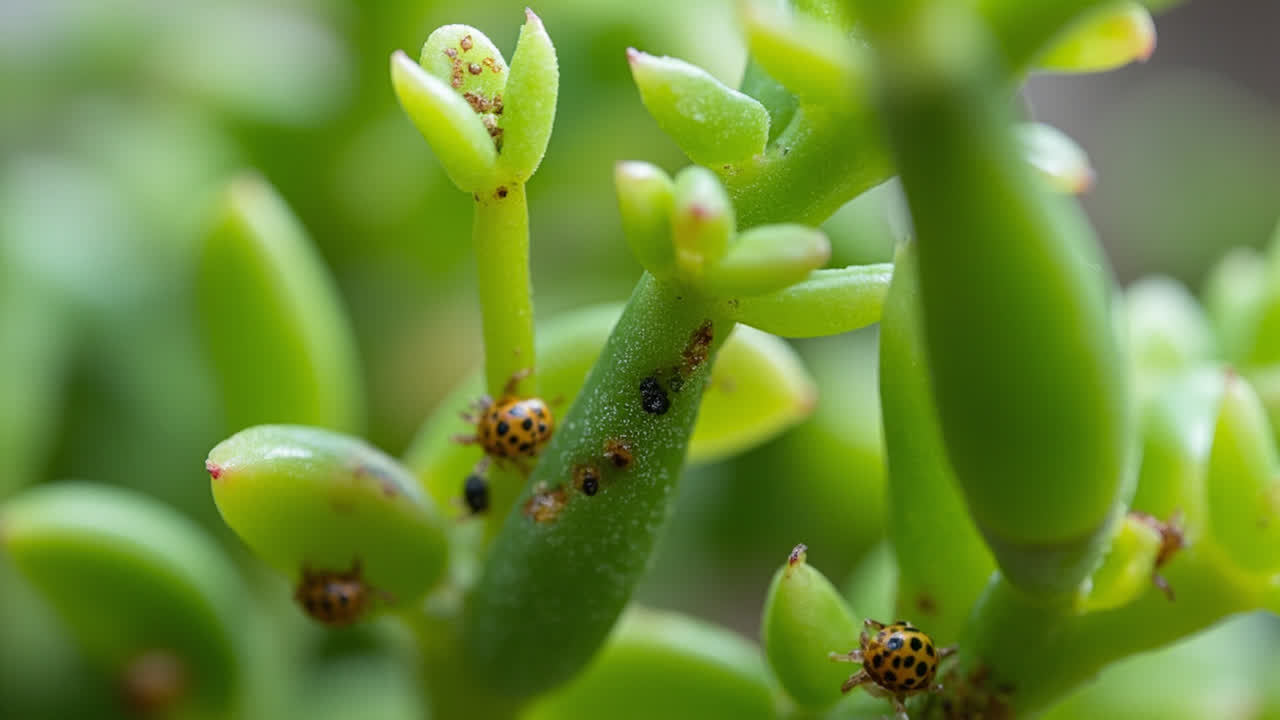
Most jade plant problems are preventable — our jade plant problems guide covers every common issue with diagnosis and treatment.
Leaf drop: Sudden leaf drop usually points to overwatering or a sudden change in temperature. Check the soil — if it is wet, let it dry out completely before watering again. If the soil is dry and the plant is dropping leaves, it may be underwatered or getting too cold.
Root rot: The main cause of jade plant death. Symptoms include black or mushy stem base, leaves that look wrinkled or dehydrated despite wet soil, and a foul smell from the pot. If caught early, trim away the rotted roots, let the plant dry for a day or two, and repot in fresh, dry soil. Water sparingly for several weeks afterward.
Mushy leaves: Usually a sign of overwatering. Leaves that look translucent or mushy have内部 damage. Remove them, let the soil dry, and adjust your watering schedule.
Stretching and leggy growth: Insufficient light. The plant is reaching for a brighter source. Move it to a sunnier spot and prune back the leggy stems to encourage bushier growth.
Pruning
Pruning keeps a jade plant compact and encourages branching. The best time to prune is in spring. Cut just above a leaf node — the point where leaves attach to the stem. New growth will emerge from the cut point, creating a fuller, more branched plant.
Pruned stems root easily in soil or water, making jade plant one of the most rewarding plants to propagate from cuttings. Any healthy prunings can become new plants at no extra cost.
Is Jade Plant Toxic to Pets?
Jade plant is considered mildly toxic to cats and dogs if ingested, causing vomiting, lethargy, and in some cases incoordination. The exact toxic compound is not well characterized. Keep jade plants out of reach of pets that are inclined to chew on houseplants, or choose a different plant for pet-accessible areas.
How to Propagate Jade Plant from Cuttings
Jade plants propagate easily from stem or leaf cuttings. Both work, though stem cuttings establish faster. Take a cutting of three to four inches from a healthy stem, let it callous over in a shaded spot for two to three days (this prevents rot), then plant in a small pot of well-draining succulent mix. Water lightly and place in bright indirect light. Roots develop in two to four weeks.
Propagation via leaf is slower but equally simple. Twist off a healthy leaf, let it callous for a day, lay it on top of moist succulent soil, and keep it in bright indirect light. A tiny rosette will form at the base of the leaf within four to six weeks, and eventually a new plant grows from it.
Both methods work best in spring and summer when the plant is actively growing. Propagation in winter is possible but slower.
Bringing It All Together
Jade plant is genuinely one of the easiest houseplants to grow — it asks for very little and forgives a lot. The core of successful jade plant care is simple: bright light, watering only when the soil is completely dry, and well-draining soil. Everything else is secondary. Get those three right and your jade plant will be with you for years, possibly decades, growing slowly into something that looks like a miniature tree with thick woody stems and glossy deep green leaves.
From Bank Statement to QuickBooks-Ready File
That manual cleanup you just read about? This tool skips it. Turn your PDF into QBO for QuickBooks without storing your data anywhere.