
Four variables decide whether an indoor plant lives or dies: light, water, soil, and the air around the pot. The leaves are the dashboard. The pot is the engine. Most guides give you a watering schedule and a species list. This one gives you the principles those lists are built from, so you can stop re-reading a care card for every plant you bring home.
If you’ve watched a plant go yellow, leggy, or limp and you didn’t know which knob to turn, the answer was almost always one of those four variables drifting out of range. Not your green thumb. Not bad luck. A variable.
One honest limit up front: a reservoir of perfect care will not save a plant whose pot has no drainage hole. The pot is the system. The four variables are what you tune inside that system. If the system itself is broken, no amount of light or fertilizer will bring the plant back.
Why Most Houseplants Die (and Why It’s Almost Always Water)
Overwatering is the leading cause of houseplant death. Not pests. Not bad light. Not bad soil. Watering too often, before the soil has had a chance to drain and dry, kills more plants than everything else combined. The University of Maryland Extension has been publishing that line for decades. It’s still true.
The mistake isn’t usually giving the plant too much water in one go. You can give a thirsty plant a full litre of water and it will not drown. The damage comes from frequency. Water too soon, the soil stays wet. Water too soon again, the soil stays wetter. The roots lose access to oxygen. Fungi that thrive in low-oxygen soil attack the weakened tissue. By the time yellow leaves appear above the surface, the root system is already half gone.
The plant is sending you a message in its leaves. You just need to learn the alphabet.
If your plant is already in distress and you need a recovery plan, the day-by-day version lives in our 7-day houseplant rescue guide. The rest of this article is the framework you’ll use to keep the next one alive.
The Mechanism: How the Four Variables Actually Work
Every indoor plant is running four systems at once. Light powers photosynthesis. Water moves nutrients and turgor. Soil holds the air-water balance roots need to breathe. The atmosphere around the pot sets the rate at which the plant loses water through its leaves. Get any one of them badly wrong and the other three can’t compensate.
Light Is the Engine, Not the Bulb
Plants don’t see light the way you do. Your eyes adapt. A dim room feels bright after a minute. A plant can’t adapt; it either gets enough photons to photosynthesize, or it doesn’t. The number that matters is foot-candles: about 1,000 to 2,000 for bright indirect light, 50 to 200 for low light, and 5,000+ for direct sun through a south-facing window.
The hand-shadow test is the cheapest light meter you’ll ever own. Hold your hand about a foot above a white piece of paper at noon in your growing spot. A sharp, defined shadow with visible finger outlines means bright light. A soft, blurry shadow means medium. No visible shadow at all, and you’re at low light, where only a handful of species will thrive. Sansevieria trifasciata (snake plant), Zamioculcas zamiifolia (ZZ plant), and Aspidistra elatior (cast iron plant) are the three that actually live there. The rest just stall.
Most popular houseplants are tropical understory species that evolved under forest canopies. They want bright, indirect light: a spot 3 to 5 feet from a south- or east-facing window, where the sun never directly hits the leaves. Direct sun on a tropical species’ leaves is sunburn. The leaves will bleach, then brown, then drop. If you’re choosing plants for a darker corner, our low-light plant list will save you from buying something that won’t make it.
Water and Oxygen: Roots Need Both
Roots respire. They pull oxygen from the air pockets between soil particles and use it to burn the sugars the leaves send down. When soil stays wet, those air pockets fill with water. The root can’t breathe. It weakens. Fungi that love low-oxygen conditions (Pythium, Phytophthora, Fusarium) move in. That’s root rot, and it usually starts before the leaves show anything.
This is why the finger test works. Push your finger 1 to 2 inches into the soil. If it feels moist at all, don’t water. If it feels dry, water thoroughly until water runs out the drainage hole at the bottom, then stop. Empty the saucer after 30 minutes. Roots sitting in standing water go back into the same oxygen-starved state you were trying to fix.
Two more things make watering confusing. First, dry soil becomes hydrophobic. It behaves like a dry sponge: water runs down the inside of the pot and out the drainage hole without wetting the root ball. If you’ve ever watered a plant and the water came straight out the bottom in three seconds, you watched hydrophobic soil do its thing. The fix is to aerate first: poke the top inch of soil with a chopstick or knitting needle to break the surface tension, then water slowly until the soil actually accepts it.
Second, water quality matters more than most guides admit. Spathiphyllum (peace lily), Calathea spp., Dracaena, and Chlorophytum comosum (spider plant) are sensitive to fluoride and chlorine in tap water. Brown leaf tips that don’t respond to humidity changes are usually a water-quality issue, not a watering-frequency issue. Letting tap water sit in an open container overnight lets the chlorine dissipate. Filtered or rainwater works better for sensitive species.
Soil Is an Air-Water Balance, Not Dirt
The soil you put a plant in determines how well everything else works. The right mix drains fast enough that roots don’t suffocate, holds enough moisture that roots don’t dry out between waterings, and leaves enough air space for oxygen to diffuse through. The wrong mix, usually something too dense, creates the waterlogged conditions that lead to root rot no matter how carefully you water.
Garden soil is the most common mistake. In a container, it compacts with every watering, blocks drainage, and suffocates roots. It also brings in pests and soilborne diseases you don’t want indoors. Use a potting mix made for containers. That’s the only rule that has no exceptions.
Three ingredients solve most soil problems. Peat moss or coco coir holds moisture. Perlite, those small white particles, is volcanic glass that improves drainage and aeration. Vermiculite holds water and slowly releases nutrients. A standard all-purpose potting mix is peat + perlite + vermiculite, sometimes with pine bark added for chunkier mixes. For succulents, cacti, Crassula ovata (jade), and Sansevieria, add 30 to 50% more perlite. For tropical foliage like Calathea and ferns, add more coco coir.
Drainage holes are not optional. A plant in a pot without drainage will eventually develop root rot, no matter how carefully you water. There’s nowhere for excess water to go. If the decorative pot you love has no hole, use it as a cache pot: keep the plant in a cheap plastic nursery pot with drainage, then drop the whole thing inside the prettier one. Take the nursery pot out to water, let it drain, then put it back. The plant gets the look you want and the drainage it needs.
Terracotta versus plastic changes the math. Unglazed terracotta is porous; the pot walls let moisture evaporate through the sides, so the soil dries faster. Plastic and glazed ceramic are non-porous; the soil holds water longer. If you tend to overwater, terracotta is your friend. If you tend to forget, plastic gives you a wider margin. There’s no universal right answer. There’s only the answer that matches your habits.
Atmosphere: Humidity, Temperature, and Airflow
Most popular houseplants are tropical. The air inside a rainforest sits at 70 to 90% relative humidity. The air inside a heated home in winter sits at 20 to 30%. That gap is the cause of most brown leaf tips, leaf curling, and crispy edges in winter, even on plants you’ve been watering correctly for years.
The mechanism is vapor pressure deficit: the difference between how much water the air can hold and how much it’s currently holding. A tropical leaf evolved to lose water slowly into saturated air. Push that same leaf into dry air, and it loses water faster than the roots can replace it. The leaf tip dies first because it’s the end of the water line. Brown tips are not a disease. They’re a hydraulics failure.
Three ways to fix it, in order of effectiveness. Group plants together: they create a humid microclimate through transpiration, raising the local RH by 5 to 10 percentage points. Add a humidifier: a small cool-mist humidifier near the plant collection is the only reliable way to hit 50% RH in a dry room. Pebble trays: a tray of pebbles with water below the pot bottom (the pot sits on the pebbles, not in the water) increases local humidity by 5 to 10 points as the water evaporates. Misting is the option most guides recommend, but it raises humidity for about ten minutes and is mostly theatre.
Temperature is the easier variable. Most houseplants want 65 to 80°F (18 to 27°C), which is the same range humans find comfortable. If you’re comfortable, your plant is comfortable. The two failure modes are cold drafts from windows or doors in winter, and hot dry air from heating vents. Move the plant three feet away from either and you’ve solved 90% of temperature stress.
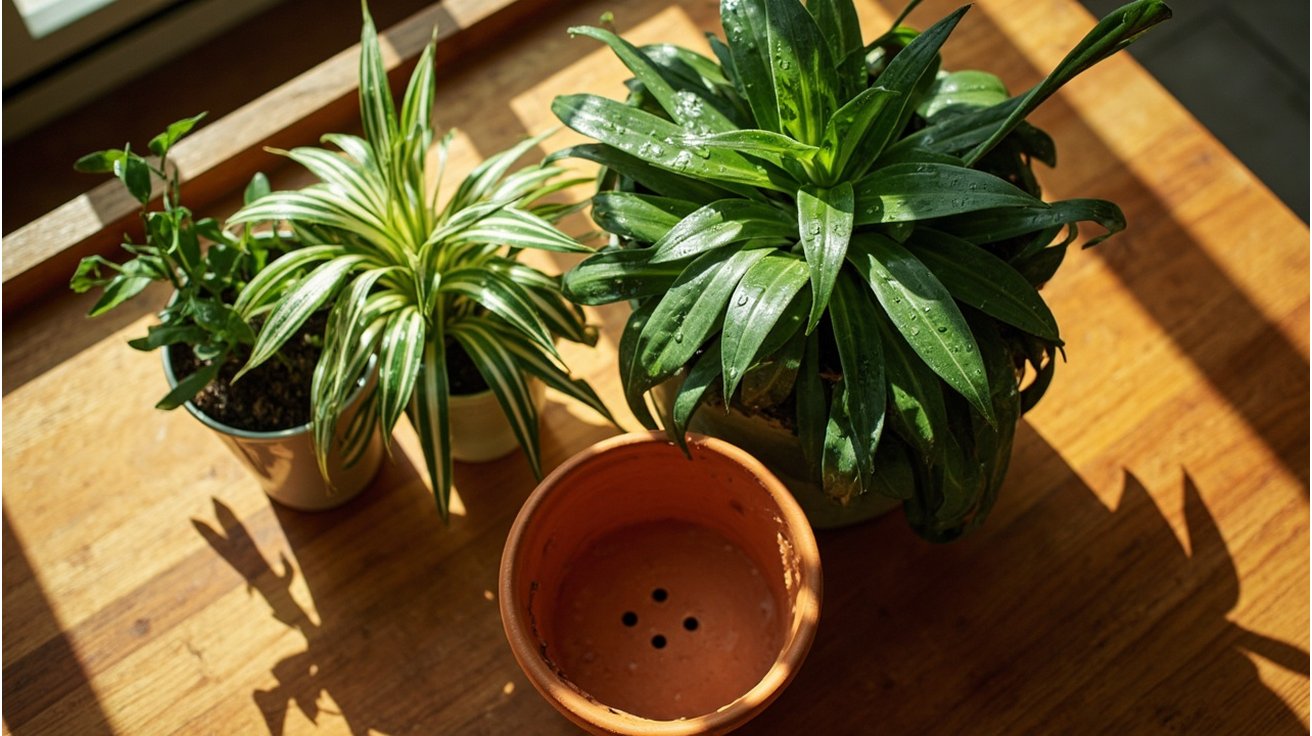
What Actually Works: A Framework for Reading the Plant
Stop watering on a schedule. Check the soil instead. Every guide you’ve read so far says this, and now you know why: the schedule doesn’t know what your apartment’s humidity did overnight, what the heater turned on at 4 a.m., or whether the plant is in active growth. The soil knows. Push your finger in. If it’s dry, water. If it’s not, don’t.
Read the leaves once a week. A healthy plant holds its leaves up, has firm stems, and produces new growth during the active season. The first sign of trouble is a change in what you’ve been seeing. A new yellow leaf on a plant that’s been green for months is data. Two new yellow leaves in a week is a signal. The plant is trying to tell you which variable is off.
Five leaf signals and what they usually mean:
- Yellow lower leaves, soft stems, soil stays wet. Overwatering. Stop watering. Check the drainage hole. If the soil smells sour, you’re in early root rot. Our 7-day rescue plan walks through recovery.
- Yellow lower leaves, dry soil, crispy. Underwatering. Soak the pot in a sink of water for 20 to 30 minutes to rehydrate the root ball evenly. Then resume finger-test watering.
- Brown leaf tips, otherwise healthy plant. Low humidity or water quality. Group plants, add a humidifier, or switch to filtered water.
- Leggy growth, long spaces between leaves, leaning toward the window. Not enough light. Move closer to the window or add a grow light. Our low-light plant list is the right read if moving the light isn’t an option.
- Pale leaves with green veins, slow growth in active season. Nutrient deficiency. Most often nitrogen. A balanced water-soluble fertilizer at half strength every 4 to 6 weeks during spring and summer solves it. Our NPK guide for indoor plants explains the numbers.
That’s the whole framework. Five leaf patterns, five variable adjustments. The rest is species detail.
The Four Variables Per Species: A Quick Map
Different species tune the same four variables differently. Below is the same plant, the same water, the same soil, the same humidity, but with the per-species numbers that actually matter. Pick the plant that matches the spot you have, not the other way around.
For full species care, follow the links. Each one is a deep dive on that specific plant.
| Species | Light (foot-candles) | Water when soil is | Soil mix | Humidity target |
|---|---|---|---|---|
| Pachira aquatica (money tree) | 1,000–2,000 bright indirect | top 2 inches dry | all-purpose + perlite | 40–60% |
| Epipremnum aureum (pothos) | 500–1,500 indirect | top 1–2 inches dry | all-purpose | 40–50% |
| Chlorophytum comosum (spider plant) | 1,000–2,000 bright indirect | top 1–2 inches dry | all-purpose | 40–60% |
| Crassula ovata (jade) | 2,000+ direct or very bright | completely dry | cactus + 30% perlite | 30–40% (low is fine) |
| Calathea spp. | 800–1,500 indirect, no direct sun | top 1 inch dry | all-purpose + extra coco coir | 60%+ (use humidifier) |
| Sansevieria trifasciata (snake plant) | 200–2,000 (tolerates low) | completely dry | cactus + 30% perlite | 30–40% (low is fine) |
The pattern: succulents and Sansevieria want the dry end of every variable. Calathea wants the wet, humid, bright-but-no-sun end. Everything else lives in the middle. That’s why picking the right plant for the spot you have beats trying to bend the spot to fit the plant.
Common Mistakes That Kill Indoor Plants
Most of the failures we see in indoor plant care come from a short list of patterns. None of them are exotic. All of them are predictable.
- Watering on a fixed schedule. The number-one mistake. The plant doesn’t know it’s Sunday. Check the soil instead. A plant that needs water every 7 days in June may only need it every 14 days in December, because light intensity dropped and growth slowed. The schedule didn’t change. The plant did.
- Choosing a plant by looks, not by the spot you have. A Fiddle Leaf Fig is gorgeous in a nursery and miserable in a dim corner. Read the light first, then pick the plant. The right plant in the wrong spot fails. The right plant in the right spot grows.
- Putting a plant in a pot with no drainage. A plant in a sealed pot is a plant in standing water within two waterings. Use a cache pot. Don’t compromise on this.
- Repotting into too-large a container. A small plant in a big pot sits in wet soil it can’t absorb. Root rot follows within weeks. Go up only 1 to 2 inches in pot diameter at a time.
- Fertilizing a stressed plant. Fertilizer is food, not medicine. A plant in shock from overwatering, repotting, or low light can’t use the nutrients and the salts build up in the soil. Fix the variable first, then resume feeding when new growth appears.
- Forgetting about soluble salt buildup. Tap water and fertilizer both leave salts. Over six months, the salts concentrate in the soil. Every four to six months, leach the pot: water thoroughly, let it drain, repeat four to five times. The water carries the salts out the drainage hole. If you’re seeing a white crust on the soil surface or a brown ring on a terracotta pot, leach now.
The fertilizer mistake is its own article. If your plant has brown, crispy leaf edges within 24 hours of feeding, it’s probably fertilizer burn, not a humidity problem. Cut the strength in half, flush the soil, and wait for new growth before resuming.
Your First Two Weeks With the Framework
Take ten minutes this week and do four things. Stick your finger in the soil of every plant you own. Note the date and what you felt: dry, moist, or wet. Move any plant more than five feet from a window closer. Check every pot for a drainage hole. If a decorative pot has no hole, order a same-size nursery pot with drainage and switch the plant to a cache-pot setup.
Then stop. Don’t repot. Don’t fertilize. Don’t prune. Just watch for two weeks and let the plants show you their baseline. The yellow leaf you’ve been worried about may not turn yellow again. The leggy plant may push out a new, smaller leaf closer to the soil as light improves. The brown tips may stabilize. The framework starts working the moment you stop over-reacting to the leaf you noticed today.
After two weeks, take a second pass. The plants that are still yellow, still wilting, still dropping leaves have a real problem. The first read in our 7-day houseplant rescue will sort them. The plants that have stabilized don’t need a rescue. They need you to keep doing what you started doing this week.
Your plant isn’t dying. It’s telling you which of the four variables is wrong. Now you know which four to check.
From PDF to Excel in one click
Forget retyping line by line. Upload any bank statement, get a spreadsheet you can actually use. Your files are never stored, and you can test the converter with 3 free conversions.
Try it free