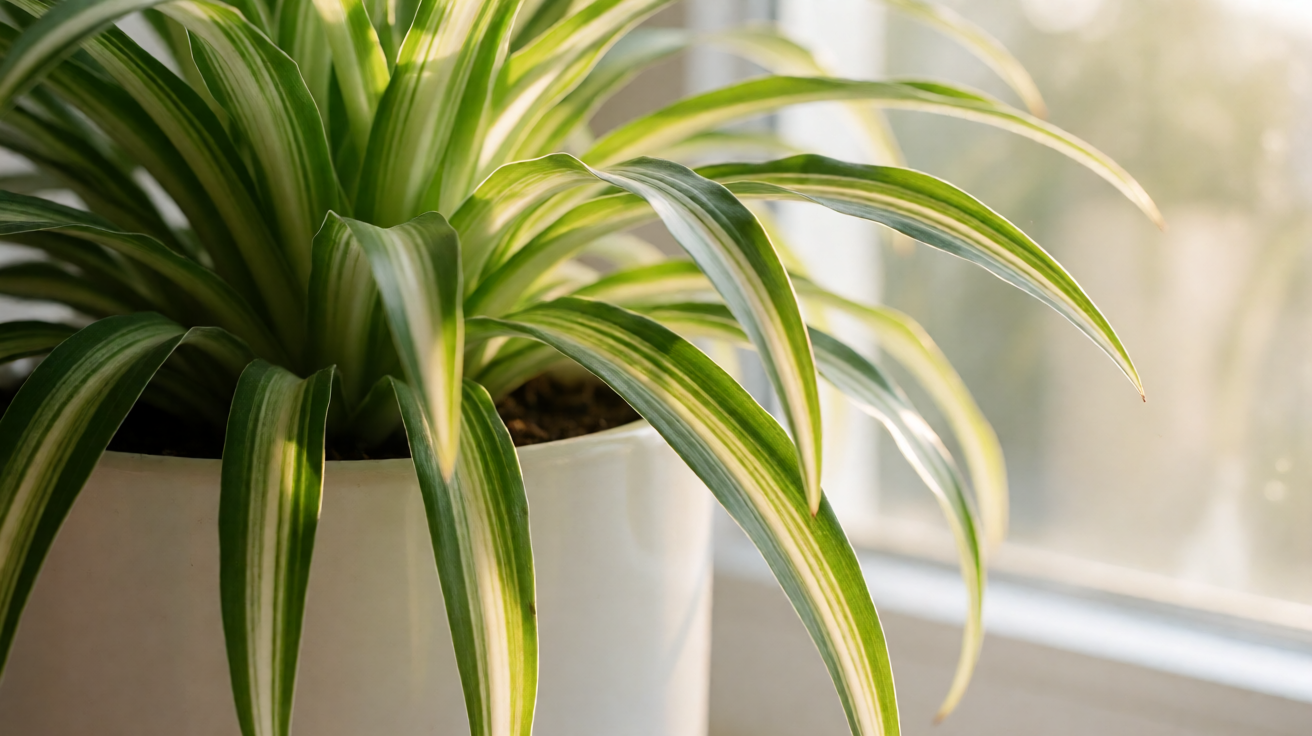
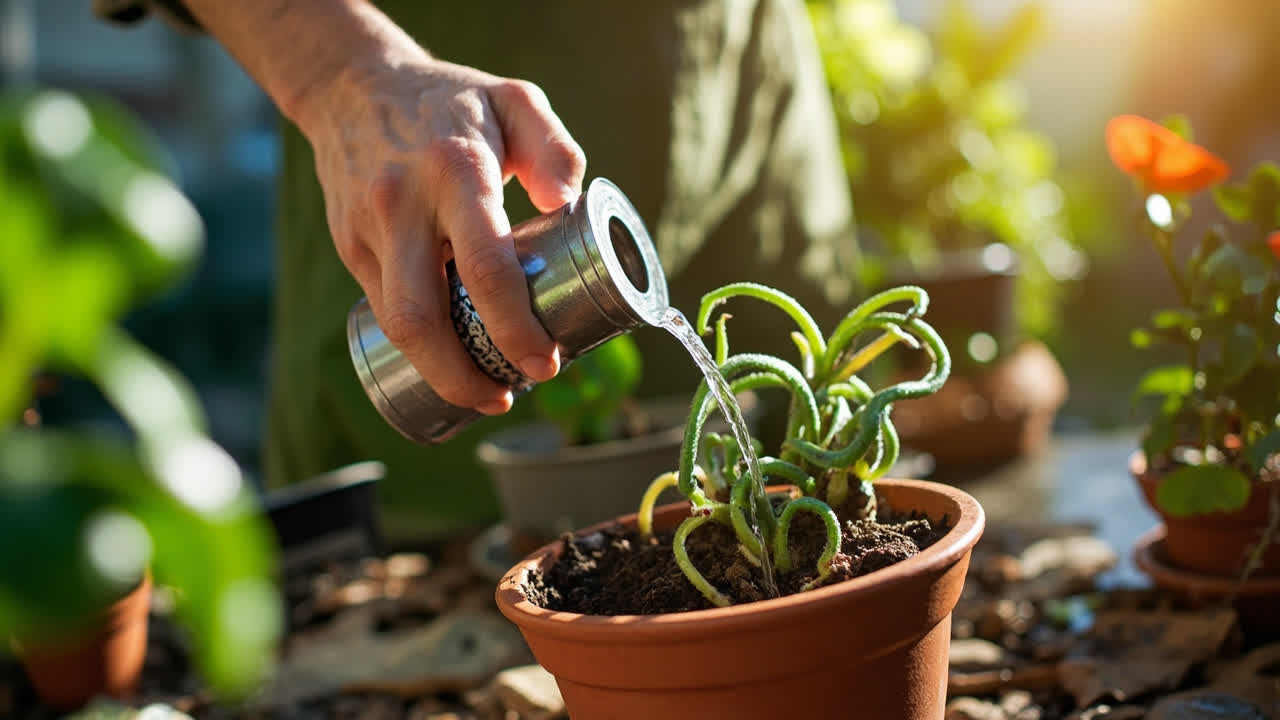
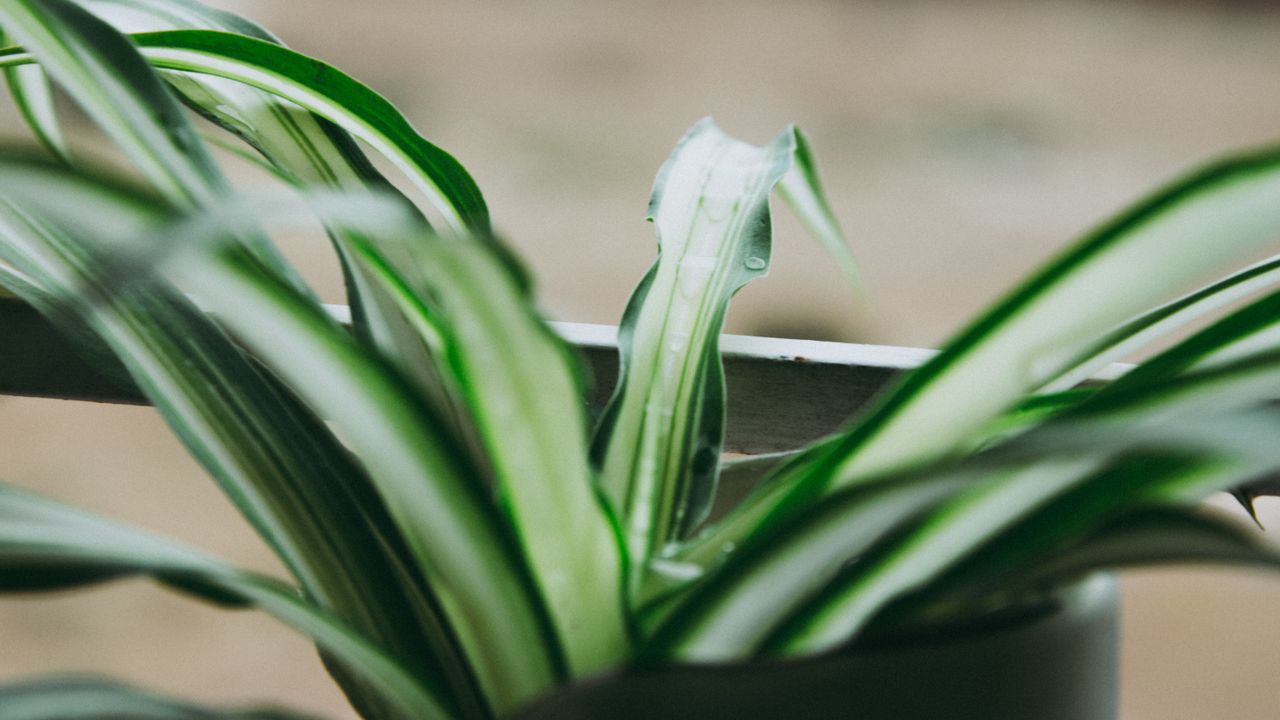
Chlorophytum comosum ‘Bonnie’ — commonly called Bonnie spider plant — is the most visually distinctive of the commonly cultivated spider plant varieties. While most spider plant leaves grow straight and arch outward, Bonnie leaves have a natural inward curl that makes the plant look compact, textural, and entirely different from its straight-leaved relatives. If you have seen a spider plant that looks almost ruffled or wavy rather than arching, you have likely seen a Bonnie.
What Sets Bonnie Apart
The defining characteristic of Bonnie is the leaf curl. The leaves do not grow flat and arching the way Variegatum and Vittatum do — they curl slightly inward along their length, creating a wave that gives the plant a denser, more rosette-like appearance. The effect is most visible when looking down at the plant from above, where the spiral arrangement of the leaves is most apparent.
The variegation on Bonnie is similar to Vittatum: a broad white or pale stripe down the centre of each leaf, with green margins on either side. The overall impression is of a plant that is more compact and contained than standard spider plant varieties. Mature Bonnie spider plants rarely exceed 12 inches in height and width, making them significantly smaller than Variegatum or Vittatum, which can spread to 24 inches or more.
Bonnie also tends to produce spiderettes, though sometimes less prolifically than the standard varieties. The spiderettes will grow on long stems just as they do on other spider plants, and they can be propagated in exactly the same way.
Light for Bonnie Spider Plants
Bonnie has the same light requirements as other spider plants: bright, indirect light is ideal to maintain good variegation and active growth. In lower light, the white centre stripe may become less distinct as the plant produces more chlorophyll to compensate for reduced light levels. Moving Bonnie to a brighter position will restore the variegation on new growth, though the existing leaves will not revert.
Direct afternoon sun should be avoided, as it causes the same brown tip and leaf scorch on Bonnie as on other spider plant varieties. East-facing windows are ideal. The compact growth of Bonnie means it is easier to fit in good light positions near windows than the larger spreading varieties.
Watering Bonnie
Water when the top inch of soil is dry, using the same thorough watering method as for all spider plants. Bonnie is not more or less drought-tolerant than other varieties — the same rules apply. The compact growth form means the plant may look more dramatic when it is thirsty — the leaves droop more visibly in a compact rosette than they do in a sprawling plant — but the watering interval is the same.
Soil and Potting
Use the same fast-draining potting mix as recommended in our spider plant care guide. The compact growth of Bonnie means it stays smaller for longer and may not need repotting as frequently as larger spider plant varieties. A 6-inch pot is often sufficient for a mature Bonnie, where a standard spider plant would need an 8-inch or 10-inch pot. Do not overpot — using a pot that is too large means excess soil that stays wet too long and increases the risk of root rot.
Where Bonnie Works Best
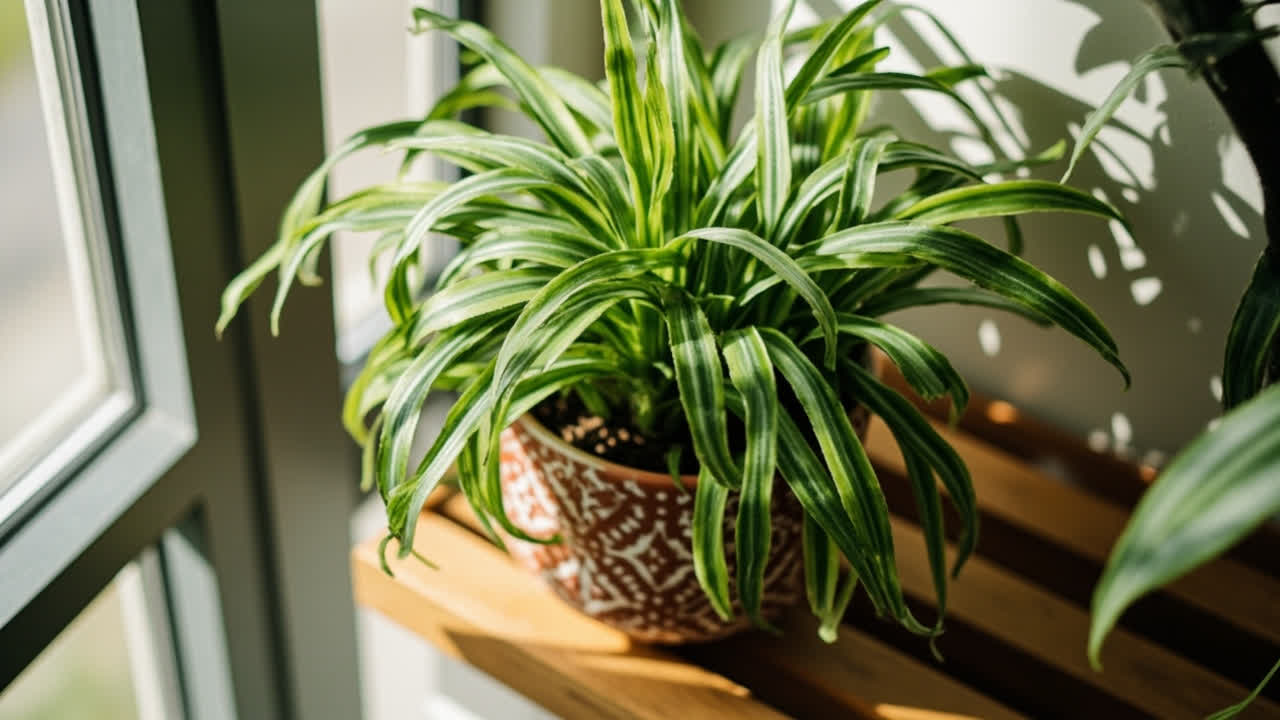
Bonnie’s compact, textural form makes it the ideal spider plant for shelves, plant stands, desks, and any surface where the plant can be appreciated from above. The compact rosette form reads beautifully from directly overhead, where the spiral arrangement of the curled leaves is most visible. It is equally at home in a hanging basket, where the spiderettes will trail below and the curly foliage creates an interesting texture above.
The plant is slightly less common in mainstream garden centres than Variegatum and Vittatum but is widely available from specialty growers, Etsy sellers, and online nurseries. It is worth looking for if you want a spider plant with a distinct character while maintaining all the same easy care requirements as the standard varieties.
Turn That PDF Into a Spreadsheet in Minutes
You've seen how to do it manually — now let the tool handle the heavy lifting. Upload your bank statement and get Excel, CSV, or QBO in a few clicks.
Try It Free