
If your hydroponic plant looks wrong, you do not have a chemical problem. You have a diagnosis problem. The same yellow leaf can mean Pythium root rot, fungus gnat larvae chewing the root tips, or a calcium deficiency that has nothing to do with pests. The fix is not the same. This page gives you the symptom-first framework: what you see, what it actually is, what to do in the next hour, and what to do so it does not come back.
Speed matters more in hydroponics than in soil because the reservoir that feeds your plants also feeds the pathogens. Pythium doubles in population roughly every 24 hours in warm, low-oxygen water. By the time roots look brown, the infection has usually been running for a week. If you wait until the plant wilts to act, you are working backward against a fast-replicating organism. The good news: hydroponic problems announce themselves early to anyone who knows the visible signals. The bad news: those signals overlap. That is why a framework, not a list of products, is the starting point.
Why Hydroponic Problems Are Harder to Diagnose (And Why Speed Matters)
In soil, the substrate buffers everything. In a hydroponic reservoir, a 2-degree temperature rise or a 0.5 pH shift is the difference between a healthy root zone and an outbreak. The soilless system is precise, which is also why it is fragile. Three things make hydroponic diagnosis harder than soil diagnosis:
- Symptoms overlap across causes. Yellow leaves can mean root rot, nitrogen deficiency, pH lockout, or fungus gnat damage.
- The pathogen moves faster. Reservoir conditions can flip from aerobic to anaerobic within 24 to 48 hours, especially above 70°F (21°C).
- The plant cannot escape. A potted plant can be isolated. A reservoir full of shared nutrient solution cannot.
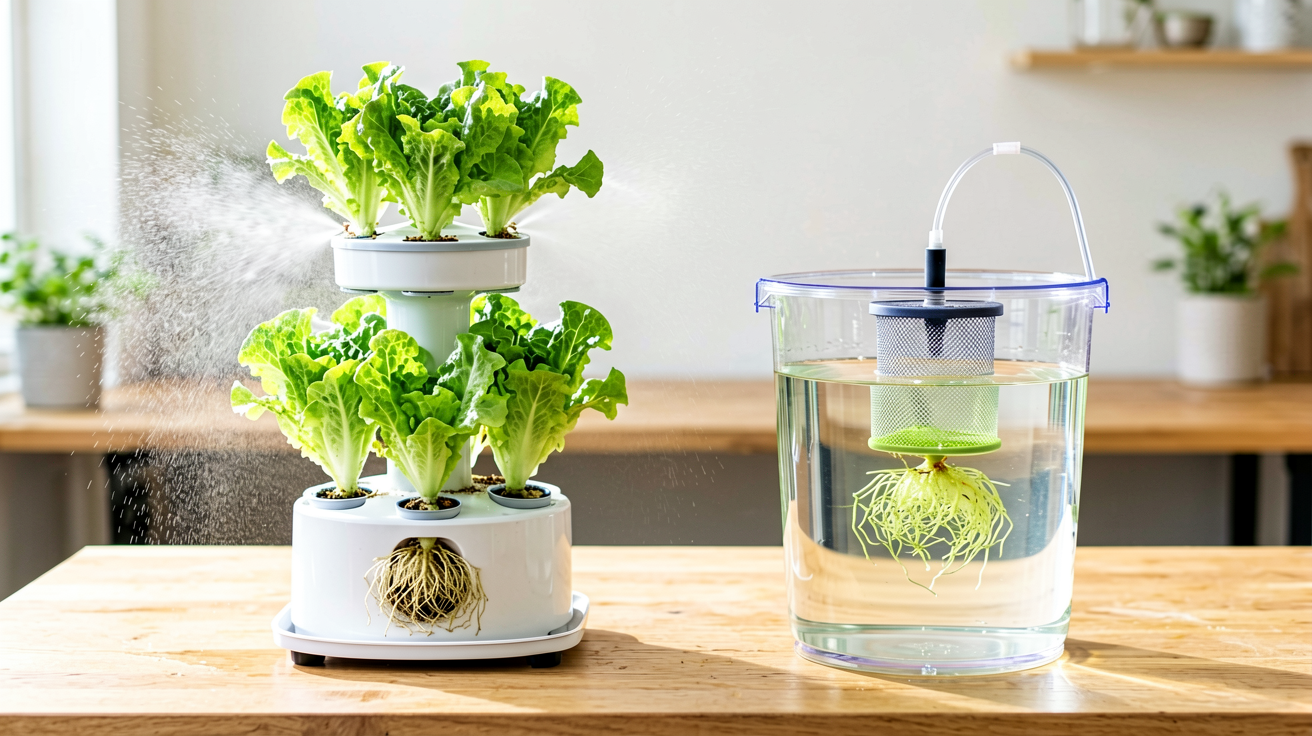
Most hydroponic failures trace back to one of three root-zone conditions: dissolved oxygen below 5 ppm, reservoir temperature above 68°F (20°C), or organic debris in the water. Each one is a controllable input. That is why Pythium in DWC is almost always a management failure rather than a pathogen problem, as our deep dive on root rot in DWC explains. The same logic applies across systems. Deep water culture (DWC) keeps roots submerged 24/7 and is the most vulnerable to oxygen and temperature failures. Nutrient film technique (NFT) keeps a thin film flowing over the roots and is more vulnerable to water pump failure and channel clogging. Ebb and flow, also called flood and drain, alternates wet and dry cycles and is more vulnerable to salt buildup. Kratky is the simplest passive method with no air pump or water pump, and is mostly vulnerable to reservoir exhaustion. Aeroponic systems mist bare roots with nutrient solution and have the fastest root development and the fastest Pythium trajectory if the mist clogs. Drip systems and Dutch bucket setups run nutrient through a separate growing medium (rockwool, hydroton, LECA, coco coir, perlite, or vermiculite) and trade root-zone buffering for higher pathogen pressure in the medium itself. The diagnostic principle is the same in every system: the cause is usually a controllable environment, and the pathogen or pest is the consequence.
The Symptom-First Diagnosis Framework
Every hydroponic problem resolves into four stages: what you see (symptom), what it actually is (diagnosis), what to do in the next hour (treatment), and what to do to keep it from coming back (prevention). Skipping any stage leads to wasted treatment. The most common skip is going straight to treatment without diagnosis. That is how people end up adding calcium to a Pythium-infected reservoir or spraying insecticide on a calcium deficiency.
Before you do anything, run this triage. Look at the plant and answer three questions:
- Where is the symptom? Roots, stem, leaves, fruit, or reservoir surface?
- Is there a visible organism? Flying insects, webbing, fuzzy growth, slimy coating, or none of these?
- Did the symptom appear on one plant or many at once?
One plant, root-only symptoms, no visible organism: probably root zone disease (root rot, Fusarium) or a single-plant nutrient problem. Many plants at once with root symptoms: probably a shared reservoir issue (oxygen, temperature, pH). One plant, leaf symptoms, no organism: probably nutrient or environmental. Any plant with a visible organism (webbing, fuzzy growth, insects flying or crawling): you have a pest or pathogen, and the next step is naming it. For broader pH and nutrient troubleshooting outside the pest/disease scope, our general hydroponic problems guide covers what this page does not.
Root Zone Diseases: Pythium, Fusarium, and Root Rot
The three pathogens that drive most hydroponic root failures are Pythium (the most common), Fusarium, and the broader category called root rot, which is really a symptom complex caused by several organisms.
Pythium (water mould, oomycete) is the headline pathogen. It thrives in warm water above 68°F (20°C) with dissolved oxygen below 5 ppm. Symptoms progress in order over 7 to 14 days: roots turn brown from the tips inward, become slimy, lose their firm white core, and develop a musty or sour smell. The reservoir may look slightly cloudy. Plants wilt even when the reservoir is full. By the time you see brown roots, the infection is usually a week old. For the full recovery protocol, see root rot in DWC; the brief version is: lower reservoir temperature to 65 to 68°F, increase air stone output, change the nutrient solution, remove visibly rotted roots with sterile scissors, and add either hydrogen peroxide at 3 ml per gallon (immediate knockdown, kills beneficials too) or a Bacillus subtilis biological product (slower, but protects the root surface long-term).
Fusarium is a true fungus that behaves like Pythium in the root zone but moves more slowly. It produces vascular wilt, with leaves yellowing on one side of the plant first, then the other. Roots turn brown but usually stay firmer than Pythium-infected roots. The tell is the one-sided yellowing pattern. Treatment overlaps with Pythium: clean reservoir, fresh nutrient solution, sterile tools, and a biological fungicide if available. Fusarium spores persist in the system for weeks; full sterilization of the reservoir between cycles is the only reliable prevention.
Root rot as a symptom is the brown, slimy, smelly root mass most growers see before they name the pathogen. Two practical questions: was the reservoir above 68°F in the last week? Was the air stone running 24/7? If both answers are yes, you almost certainly have Pythium. If temperatures were cool but roots still rotted, suspect Fusarium. Either way, the immediate action is the same: lower the temperature, raise the dissolved oxygen, and change the solution.
A note on what root rot is not. If your roots are white, firm, and slightly fuzzy, that is normal root hair growth on a healthy plant. If your reservoir has a faint green tint but no slimy coating, that is algae on the wall, not on the roots, and it is a separate problem covered in the hydroponics glossary under reservoir hygiene. If roots are pale and brown but firm with no sour smell, the cause is usually nutrient lockout from pH drift above 6.5, not a pathogen. The smell test is the cheapest diagnostic tool you have.

Foliar Diseases: Powdery Mildew, Botrytis, and Damping-Off
Foliar pathogens attack the leaves and stems above the root zone. They are usually easier to diagnose because the symptom sits on top of the plant and is visible without pulling anything out.
Powdery mildew looks exactly like its name: white powder on the leaf surface, usually starting on the upper sides of older leaves. It spreads in 5 to 7 days under humid, low-airflow conditions. Cause: airborne spores land on a leaf with a thin film of moisture and germinate. The fix is air movement and lower humidity, not a heavy chemical. A foliar spray of potassium bicarbonate or a 1:9 milk-to-water solution knocks down mild infections. Severe infections on edible crops like lettuce, basil, or strawberry warrant removal of the affected leaves and a one-time copper fungicide application, with the standard food-safety caveat: check the label for the pre-harvest interval, and wash leaves thoroughly before eating.
Botrytis cinerea (gray mold) is the soft, grayish-brown fuzz that appears on damaged or senescent leaves, especially in dense canopies with poor airflow. It is a wound pathogen: it colonizes tissue that is already dying. Tomato and pepper growers see this most often on lower leaves that the canopy has shaded out. The fix is sanitation. Remove the affected leaves with sterile scissors, increase airflow, and lower humidity below 60%. For commercial or severe outbreaks, a biological fungicide (Bacillus subtilis) applied as a foliar spray prevents new infections; chemical fungicides are rarely justified for home hydroponic Botrytis.
Damping-off is a seedling killer, and it hits hard in the propagator where lettuce, basil, tomato, and pepper seedlings start. Seedlings collapse at the soil line, leaving a thin, pinched stem that cannot hold the plant up. The pathogen is usually Pythium or Rhizoctonia, and the cause is wet, cool, low-airflow conditions around the seedling tray. Prevention beats cure: sterilize trays between cycles, use fresh rockwool or sterile media (peat-based mixes are particularly risky), and run a small fan across the seedling area. Once a seedling collapses, it does not recover.
Insect Pests: Fungus Gnats, Root Aphids, Whiteflies, Spider Mites
Pests are the most common cause of “bugs in my hydroponic system” searches. Four pests account for the vast majority of home hydroponic infestations.
Fungus gnats (Bradysia spp.) are the small dark flies hovering around the reservoir and the base of plants. The adult is annoying; the larva is the problem. Larvae live in moist media and chew fine root hairs, causing slow growth and yellowing that mimics nutrient deficiency. Fungus gnats show up most often in herb and microgreen setups, in propagator trays, and anywhere the medium stays damp. They need 8 to 14 days of larval feeding before root damage is visible. The fix is twofold: yellow sticky traps to cut the adult population, and a Bacillus thuringiensis israelensis (BTI) product like Gnatrol in the reservoir to kill larvae. Letting the top of the media dry between cycles also disrupts the larvae; this is one of the few cases where slight under-watering is therapeutic. Wick systems and Kratky setups are most prone to fungus gnats because the reservoir surface stays wet.
Root aphids are the same pest family as the leaf aphids you see outdoors, but they live below the surface on the roots in media-based hydroponic systems. Symptom: yellowing, slow growth, and a white waxy residue on the roots when you pull the plant out. They are easy to confuse with fungus gnat larvae because both appear in the root zone and cause yellowing. The difference: fungus gnat larvae are tiny, dark-headed, and wriggling; root aphids are pear-shaped, slow-moving, and clustered. Treatment is neem oil drench (neem is generally recognized as safe for food crops but always check the pre-harvest interval) or beneficial nematodes for media systems. Reservoir-only systems rarely get root aphids; the issue is mostly in rockwool, coco coir, and clay pebble setups.
Whiteflies are small, white, moth-like insects that fly up when you disturb the plant. They live on the underside of leaves and feed on sap, leaving sticky honeydew behind. Yellow sticky traps catch adults; insecticidal soap or neem oil sprayed on the leaf undersides kills nymphs. Whiteflies multiply fast in warm, dry conditions; one female can produce hundreds of eggs in three weeks.
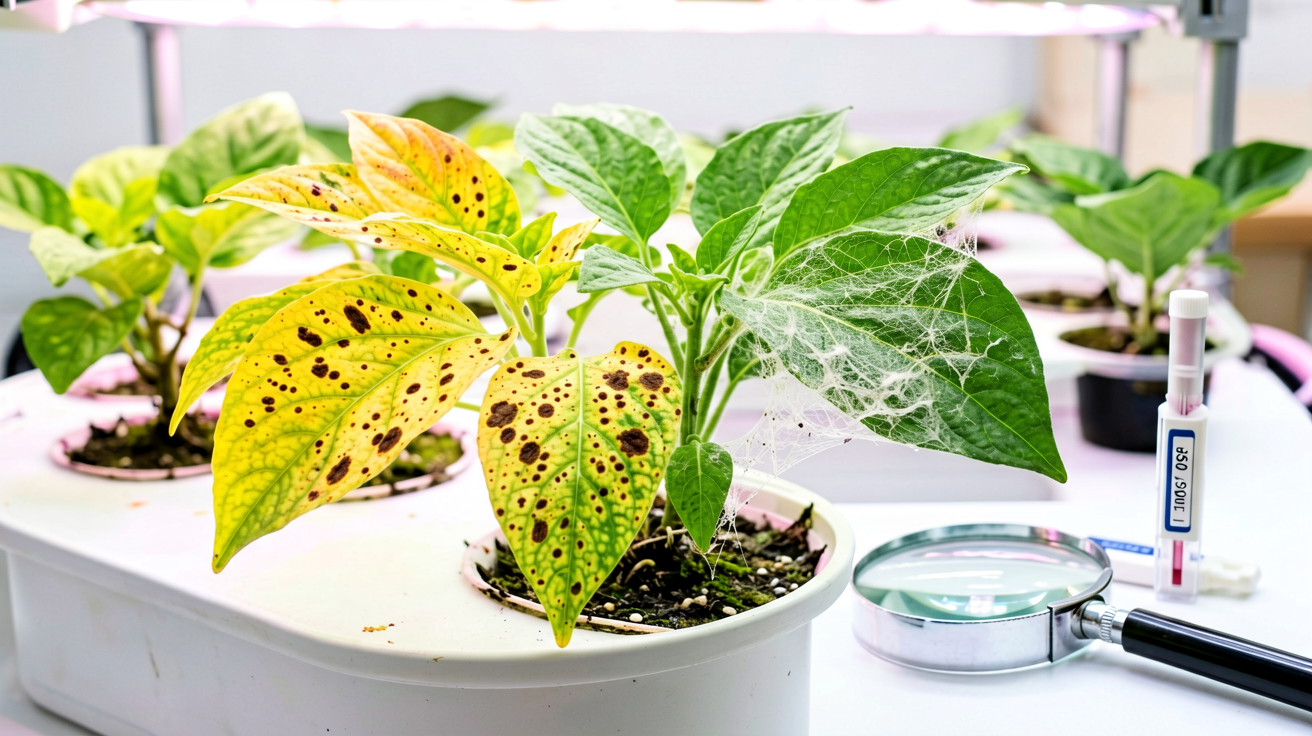
Spider mites are not insects but arachnids. The sign is fine webbing on the underside of leaves and stippled, yellow-dot damage on the leaf surface. Spider mites thrive in warm, dry air and are one of the few hydroponic pests that prefer low humidity. Treatment is forceful: insecticidal soap sprayed on leaf undersides, or a miticide for severe cases. Neem oil works preventively. Increasing humidity above 60% slows their reproduction.
Thrips are slender, fast-moving insects that rasp the leaf surface and leave silvery streaks plus tiny black fecal specks. They are less common in indoor hydroponics than the other four but show up on cuttings brought in from outside, on greenhouse vents, or on cucumber and pepper crops where they feed inside the leaf folds. Treatment: blue or yellow sticky traps, spinosad-based sprays (OMRI-listed options exist for organic production), and removal of heavily damaged leaves.
The “Is It a Pest or a Nutrient Problem?” Test
The single most common diagnostic mistake in hydroponics is treating a nutrient problem as a pest, or vice versa. Yellow leaves look the same in both cases. Here is the three-question test that separates them.
- Did the symptom appear on one plant, several plants in one system, or all plants across systems? One plant = often nutrient or localized pest. All plants across systems = often a shared environmental cause (light, humidity, water source).
- Is the symptom pattern uniform or patchy? Uniform yellowing across all leaves usually means a mobile nutrient issue (nitrogen, magnesium). Patchy yellowing with green veins usually means an immobile nutrient issue (iron, calcium, manganese) or a viral infection. Spotty damage with a visible organism = pest or disease.
- Is there any sign of life on the plant? Webbing, sticky residue, flying insects, fuzzy growth, slime on roots. If yes, you have a living cause; nutrient problems never produce visible organisms.
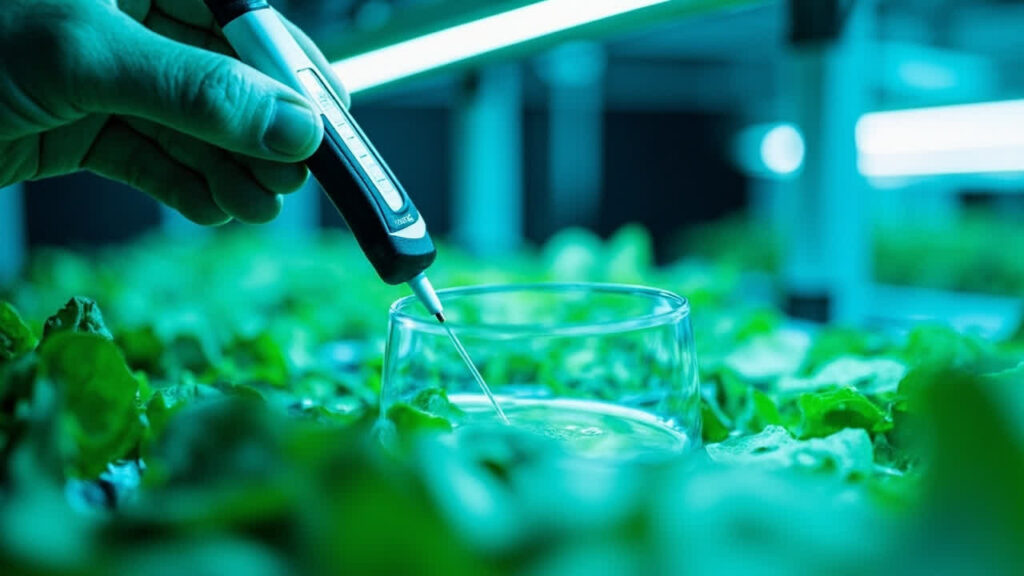
The root rot versus calcium deficiency confusion is the classic trap. Both cause brown roots and slow growth. The difference: Pythium-infected roots are slimy and smell sour. Calcium-deficient roots are firm and pale but not slimy, and the new growth tips will be deformed or die back. If you cannot tell, pull one plant and smell the roots. Sour smell = pathogen. No smell, just brown color = likely calcium or magnesium deficiency, and the fix is in the nutrient mix, not in fungicide. pH is often the underlying cause of the deficiency; if pH is drifting above 6.5, lockout follows regardless of how much calcium you add, which is why pH management is the upstream lever.
Two more diagnostic confusions worth knowing. Yellow between leaf veins on older leaves is usually magnesium deficiency, not a pathogen. Yellow between veins on new leaves is usually iron or manganese deficiency, again not a pathogen. Pale new growth with burnt leaf tips, especially on tomato and pepper, is usually a calcium deficiency triggered by low EC (electrical conductivity) and high humidity, and it shows up when the nutrient solution lacks enough calcium, magnesium, or nitrogen, or when sulfur and the micronutrients (zinc, boron, molybdenum) drift out of balance. None of these produce a visible organism on the leaf surface, no webbing, no insects, no fuzzy growth, so they fall outside the pest/disease scope and live in the nutrient chemistry pages.
Prevention Framework: Clean Reservoir, Sterile Equipment, IPM
Prevention is where hydroponic growers save the most time and crops. Most of the pests and diseases above are easier to prevent than to cure, and the prevention toolkit is small enough to fit on one shelf.
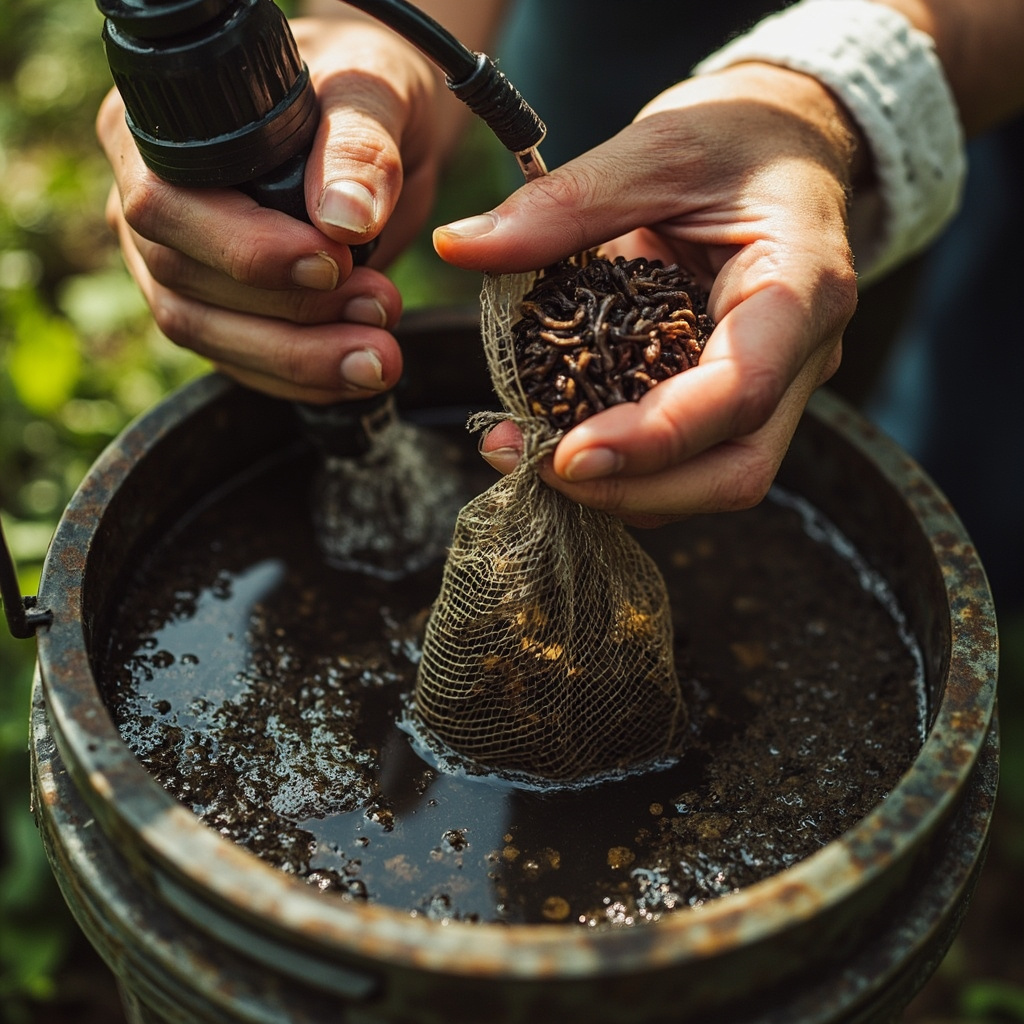
Clean reservoir protocol. Between crop cycles, drain the reservoir, scrub it with a dilute hydrogen peroxide or food-safe sanitizer, rinse thoroughly, and refill with fresh nutrient solution. Mid-cycle, top off with pH-adjusted water rather than dumping and refilling unless EC (electrical conductivity), TDS, or pH has drifted outside range. The Aqualogi weekly reservoir maintenance schedule walks through the exact cadence. A clean reservoir prevents most Pythium and Fusarium recurrences.
Source water matters. If you are filling the reservoir with tap water, check whether your municipality uses chloramine. Chloramine does not off-gas like chlorine does, so it stays in the nutrient solution and burns root tips, mimicking a pathogen. A small carbon filter on the fill line or a 24-hour pre-treatment with a Campden tablet (one tablet per 20 gallons) removes chloramine. Hard water with high calcium and magnesium skews your NPK balance (nitrogen, phosphorus, potassium) and pushes pH up over the cycle, which is why some growers run reverse osmosis and rebuild the nutrient mix from a calcium-magnesium base. Soilless systems reward stable source water; soil mixes are more forgiving. Commercial nutrient lines like General Hydroponics Flora Series publish target EC and TDS ranges per crop and stage, which is a useful starting calibration if you do not have your own recipe yet.
Sterile equipment rule. Anything that touches the reservoir or the root zone (scissors, net pots, pH probes, transfer tubing) gets wiped with isopropyl alcohol or a dilute bleach solution between plants. Cloning tools, in particular, transfer vascular pathogens from one plant to the next.
Integrated pest management (IPM). IPM is the discipline of using the lowest-impact control that works, escalating only when monitoring shows the threshold has been crossed. For hydroponics, that looks like: yellow sticky traps as the monitoring tool (they tell you what is in the system before the population explodes), beneficial bacteria in the reservoir (Bacillus subtilis as preventive root protection), beneficial insects for foliar pests (ladybugs and predatory mites work indoors in enclosed grow rooms), and chemical controls as the last resort only when monitoring shows an outbreak that biologicals cannot contain.
The next 7 days checklist. If you have just identified a problem from this page, the minimum next-week protocol is: lower reservoir temperature to 65 to 68°F; confirm air stones are running 24/7; change the nutrient solution; add Bacillus subtilis to the reservoir at the labeled rate; deploy yellow sticky traps; remove visibly damaged leaves or roots with sterile tools; and sterilize all equipment that touched the affected plants. Doing all seven covers roughly 80% of recurring hydroponic pest and disease problems.
The honest limits. Viral infections have no cure. If a plant shows mosaic patterns, severe stunting, and no visible organism but progressive decline across the whole plant, remove it and sterilize the surrounding area. Biological controls work preventively, not curatively. A Bacillus population cannot rescue a reservoir that is already 80% Pythium; it can prevent the next cycle from getting there. And chemical controls labeled for soil use are not always legal for hydroponic use. Always read the label, check your local extension service for current regulations, and on edible crops, observe the pre-harvest interval. The diagnosis-first framework is the safest starting point because it puts the right action in the right place at the right time.
Indoor growing setup checklist. For most indoor hydroponic setups running under a grow light in a tent or spare room, the same prevention framework applies: stable source water (filtered or RO if your tap runs hard or chloraminated), a calibrated EC and pH meter, a reservoir light shield to block algae growth, a clip fan across the canopy to keep leaf surfaces dry, sticky traps as your monitoring tool, and a Bacillus subtilis product ready to add at the start of every cycle. The system does not need to be expensive to be clean; it needs to be consistent. From here, the deep recovery protocols for specific pathogens live at root rot in DWC, the weekly reservoir cadence at hydroponic reservoir maintenance, and the terminology for the pathogens above at the hydroponics glossary.
Turn That PDF Into a Spreadsheet in Minutes
You've seen how to do it manually — now let the tool handle the heavy lifting. Upload your bank statement and get Excel, CSV, or QBO in a few clicks.
Try It Free