
If you have ever stood in the garden center staring at a fertilizer bag with numbers like 10-10-10 and wondered what on earth they mean, you are not alone. The NPK ratio printed on every fertilizer label is one of the most misunderstood pieces of information in gardening — and it is also the most important. Those three numbers tell you exactly what nutrients your plants will get, and getting them wrong is the single biggest cause of plant health problems I see in home gardens.
NPK stands for nitrogen (N), phosphorus (P), and potassium (K) — the three macronutrients that plants need in the largest quantities. The ratio printed on a fertilizer label shows the percentage of each nutrient by weight in that product. A bag labeled 10-10-10 contains 10% nitrogen, 10% phosphorus, and 10% potassium by weight, with the remaining 70% made up of filler materials and trace elements. Understanding what each of these nutrients does changes how you shop for fertilizer, how you feed your garden, and how you diagnose problems when something goes wrong.
This guide is the definitive explainer for NPK ratio — what those numbers actually mean for your plants, what happens when any one of them is missing, and how to match the right ratio to the right stage of plant growth. It is the pillar page for our fertilizers cluster, so every related article links back here when the topic turns to nutrient basics.
The Role of Each Nutrient in Your Plants
Each element in the NPK trio performs a distinct biological function. Getting clear on what each one does is the difference between feeding your plants and just throwing stuff at them.
Nitrogen: The Leaf Growth Engine
Nitrogen drives above-ground growth. It is the primary component of chlorophyll, the green pigment that captures sunlight and drives photosynthesis. Without adequate nitrogen, plants cannot build the proteins and enzymes they need to grow. The result is stunted, pale, yellowing foliage — starting with the oldest leaves first, since the plant can move nitrogen from older tissue to newer growing tips when supplies are short.
You will notice nitrogen deficiency as a general yellowing of lower leaves, while the top growth may still look relatively green. The plant is rationing a scarce resource, keeping it where it matters most. This is also why heavy feeding with a high-nitrogen fertilizer (something like 20-10-10 or even plain blood meal) produces lush, dark green foliage — exactly what you want for lawns, leafy vegetables, and grass.
Phosphorus: Root Development and Flowering
Phosphorus is essential for root development, flower formation, and fruit production. It plays a critical role in energy transfer within the plant — ATP, the molecule cells use for energy, requires phosphorus to function. Roots need phosphorus to grow deep and establish quickly. Flowers and fruits need it to develop properly.
A phosphorus deficiency shows up as purple-tinged leaves, particularly on the undersides and along the veins. Growth becomes stunted, plants look more compact than they should, and flowering is sparse or absent entirely. This is why fertilizers marketed for blooming — things like 10-30-20 or 5-10-5 — bump up the middle number.
Potassium: Overall Plant Health and Stress Resistance
Potassium does not get as much attention as nitrogen, but it may be the most important single nutrient for overall plant health. It regulates water balance, activates enzymes, strengthens cell walls, and helps plants resist disease and environmental stress. A plant with adequate potassium handles drought, frost, and pathogens far better than one running on low K.
Potassium deficiency manifests as brown leaf edges and scorch marks, starting at the oldest leaves and working inward. You will also see weak stems, slow growth, and poor fruit quality. High-potassium fertilizers like 0-0-60 (pure potassium sulfate) are used to correct these deficiencies and to build stress resistance in plants heading into winter or dry seasons.
Understanding Common NPK Ratio Labels
Once you know what N, P, and K do individually, reading fertilizer labels becomes much more intuitive. Here is how three of the most common ratios translate in practice.
10-10-10: The Balanced All-Purpose Ratio
A 10-10-10 fertilizer delivers equal parts of all three macronutrients. This makes it a genuinely useful all-purpose feed for established plants in healthy soil — perennials, shrubs, and trees that are not actively fruiting or pushing new growth. It is also the most commonly used ratio for general garden maintenance. Think of it as a maintenance diet, not a growth stimulant.
The limitation: if your soil is already deficient in one element, the balanced ratio may not address it. A soil test reveals which nutrient is actually missing before you buy anything.
20-20-20: The High-Performance All-Purpose Ratio
Double the concentration of 10-10-10 gives you 20-20-20 — the classic high-analysis all-purpose fertilizer. It works well for active growing seasons when plants are putting on significant new growth and need a full nutritional complement. Gardeners using it on container plants often dilute it to half-strength to avoid salt buildup, since concentrated solutions in pots can burn roots faster than in-ground plantings.
Like 10-10-10, this ratio does not target a specific growth phase. If you are trying to push flowering or root development specifically, a ratio with a dominant middle or last number will be more effective.
5-10-5: The Flowering and Fruiting Ratio
The 5-10-5 ratio is weighted toward phosphorus — the middle number is double the N and K. This is the fertilizer to reach for when plants are setting buds, blooming, or developing fruit. Tomatoes, peppers, roses, and any flowering or fruiting plant in an active blooming phase benefits most from this ratio.
It is less useful for leafy greens and lawns, where nitrogen is the dominant need. Using 5-10-5 on heavily nitrogen-demanding crops leads to lush foliage but disappointing yields — the plant puts energy into leaves, not fruit.
Secondary Nutrients: Calcium, Magnesium, and Sulfur
Beyond the big three, plants need three secondary macronutrients in significant quantities: calcium, magnesium, and sulfur. These are not printed on the NPK label, but they are just as important for complete plant nutrition.
Calcium builds cell walls and supports root development. Without it, new leaves emerge distorted or hooked, and developing fruits show blossom end rot — the black, sunken bottom rot you see on tomatoes and peppers. Magnesium is the central atom in the chlorophyll molecule, which means without it, photosynthesis simply cannot happen. Symptoms include interveinal chlorosis — yellowing between the veins of older leaves while the veins stay green. Sulfur is required for protein synthesis and enzyme function. Deficiency looks similar to nitrogen deficiency: pale, yellowing leaves, but it starts at the newest growth rather than the oldest.
These nutrients become particularly critical in container gardening, where the growing medium is finite. A liquid fertilizer with NPK plus micronutrients covers the secondary nutrients and prevents deficiencies before they start. The liquid nutrients for plants guide covers specific products and dilution rates if you are looking for something to add to your container routine.
Micronutrients: The Hidden Helpers
Iron, manganese, zinc, copper, boron, and molybdenum are needed in tiny quantities, but their absence creates real problems. Iron chlorosis — yellowing of young leaves while older ones stay green — is one of the most common micronutrient deficiencies in home gardens, particularly in alkaline soils. Manganese deficiency causes similar symptoms but appears in more acidic conditions.
The important thing to understand about micronutrients is that more is not better. These elements are required in parts per million, not percent. Adding too much iron or zinc creates toxicity that can be harder to fix than the original deficiency. Most complete fertilizers include micronutrients in the formulation, so for general feeding you rarely need to worry about them separately — the issue arises in very alkaline soils, heavily limed soils, or when plants are grown in pure coco coir or hydroponic systems where micronutrients must be added manually.
Choosing the Right NPK Ratio for Your Plants
Matching the ratio to the plant and its growth stage is where most gardeners either overthink or underthink the problem. Here is a practical framework that covers the most common scenarios.
For new transplants and seedlings, use a lower-nitrogen ratio (something like 5-10-5 or even 10-20-10) to encourage root establishment without pushing excessive top growth. A plant that puts too much energy into leaves early never develops a root system strong enough to support flowering later.
For leafy vegetables and lawns, lean into nitrogen. A ratio of 20-10-10 or 15-5-5 feeds the foliage that you are actually harvesting. Spinach, lettuce, basil, and lawn grasses all reward high-nitrogen feeding with the thick, green growth you want.
For flowering and fruiting plants, shift the emphasis to phosphorus. Tomatoes, peppers, roses, and flowering perennials do best with something like 5-10-5 or 10-20-10 once they are established. The phosphorus drives bloom development and fruit set.
For general garden maintenance, the balanced 10-10-10 ratio covers most bases. Apply it in early spring as a top-dress around perennials, shrubs, and established garden plants.
Before you apply any fertilizer, check whether you actually need it. Over-fertilization causes as many problems as under-fertilization, and the symptoms can look similar — which leads to a frustrating cycle of adding more when the plant already has too much. If you are seeing signs of stress, reading our signs of over fertilization guide before adding anything is worth the five minutes.
Organic vs Synthetic NPK Sources
Organic NPK sources come from natural materials — bone meal, blood meal, fish emulsion, kelp, composted manures, and rock phosphate. They release nutrients slowly as soil microbes break them down, which means they are less likely to burn roots but also less immediately available to plants.
Synthetic fertilizers are manufactured compounds — ammonium nitrate, superphosphate, potassium sulfate — that dissolve in water and become immediately available to plant roots. They work fast and give you precise control over ratios, but they do not build soil organic matter and can contribute to salt buildup in containers and stressed plants.
For home gardeners, the practical difference matters most in two scenarios. For long-term soil building, organic sources contribute to overall soil health, beneficial microbial activity, and improved soil structure. For fast corrections — a plant visibly deficient and struggling — synthetic fertilizers deliver results more quickly. You can also combine approaches: a base of organic fertilizer with occasional liquid feeding covers both long-term soil health and immediate plant needs.
The choice between organic and synthetic affects more than just release speed. Organic NPK sources like blood meal (high nitrogen), bone meal (high phosphorus), and kelp (high potassium with micronutrients) feed the soil ecosystem while they feed the plants — an advantage that synthetic fertilizers simply cannot match, no matter how precisely you dial in the NPK ratio. Our organic fertilizer for vegetables guide covers specific products, application timing, and how to calculate organic NPK ratios for your garden beds.
Signs of NPK Deficiency in Plants
Diagnosing nutrient deficiencies starts with knowing what to look for and where on the plant to look. The pattern of symptoms tells you which nutrient is missing.
Nitrogen deficiency shows up first on the oldest leaves — the bottom ones. They turn pale green, then yellow, in a uniform pattern across the leaf. The plant looks generally washed out and grows slowly. This is the most common deficiency in home gardens because nitrogen is easily leached from soil by rain and watering.
Phosphorus deficiency affects the whole plant but is most visible in the foliage. Leaves develop a purple or reddish tint, particularly on the undersides and along the margins. Plants look stunted and more compact than healthy specimens, and flowering is delayed or absent. Phosphorus is relatively immobile in soil, which means deficiencies can persist even after you add fertilizer — it takes time to become available to roots.
Potassium deficiency begins at the leaf edges and tips. You will see brown, scorched edges on older leaves, starting at the margins and moving inward. Stems may feel weak, and the plant overall looks stressed and wilted despite adequate water. Fruit quality suffers, with smaller, less flavorful produce.
The key diagnostic point: nitrogen deficiency affects oldest leaves first (bottom-up yellowing). Potassium deficiency also affects oldest leaves first (bottom-up browning), but the symptom is brown edges, not yellowing. Phosphorus deficiency affects the whole plant uniformly with purple tints. Learning to read these patterns saves you from guessing and buying the wrong fertilizer.
Over-Fertilization: When More Is Not Better
Excess nutrients cause real, sometimes severe damage. Over-fertilization is one of the most common causes of plant death in container gardens and raised beds, where salt concentrations can build up faster than in open soil.
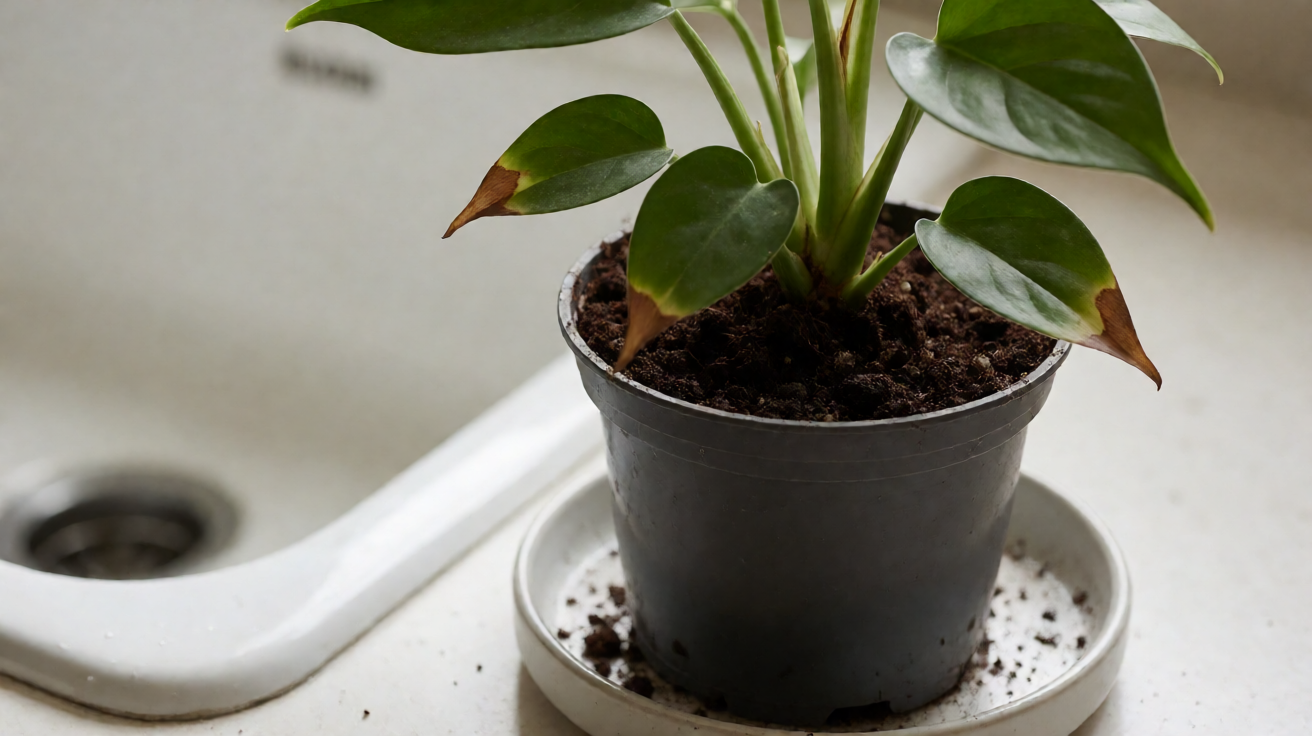
The symptoms of over-fertilization look similar to under-fertilization — stunted growth, yellowing leaves, wilting — which is why gardeners often apply more fertilizer, making the problem worse. A slow, brown leaf tip burn is a classic sign of salt accumulation. Crusting on the soil surface indicates fertilizer residue.
The fix is straightforward if caught early: flood the soil repeatedly with plain water to flush excess salts away from the root zone. For containers, this means running water through the pot several times. For garden beds, deep watering over several days helps. If the damage is severe — root burn has already occurred — recovery takes weeks and some plants will not make it.
Prevention is simple: apply fertilizers at the recommended rate, not more. If you are unsure, start at half the recommended rate — you can always add more, but you cannot remove it once it is in the soil.
Reading and Understanding Fertilizer Labels
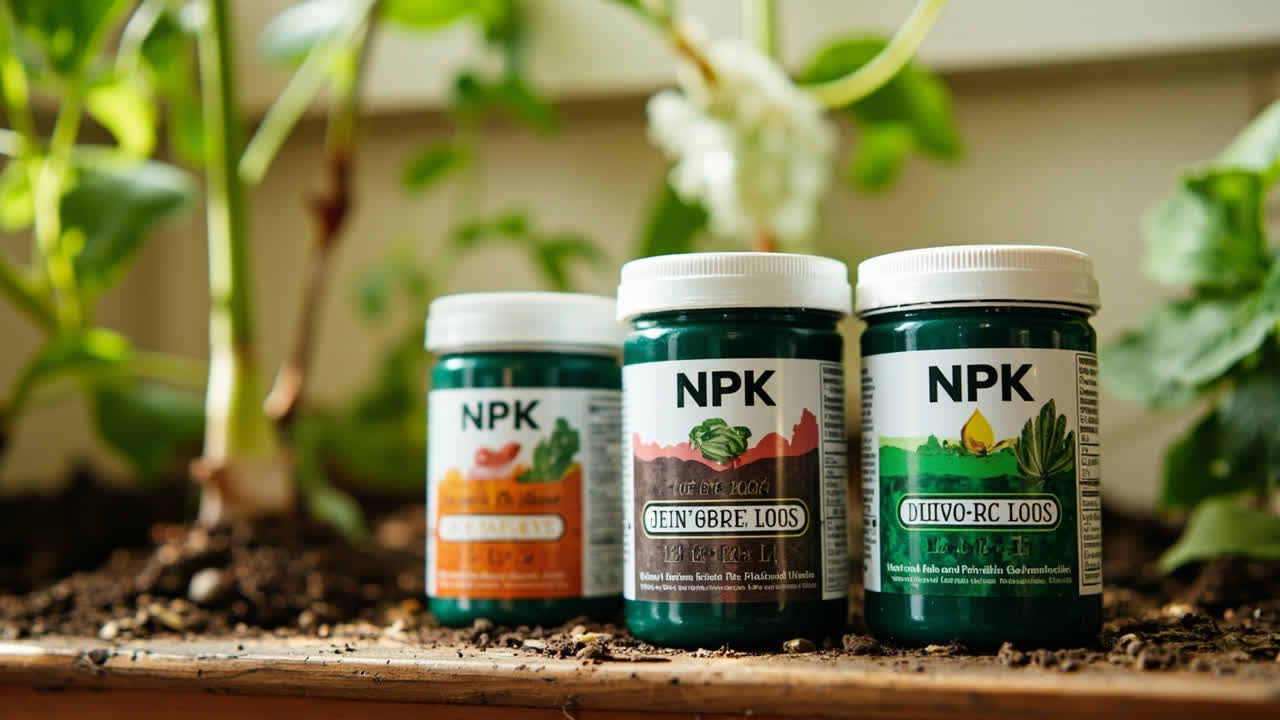
Every fertilizer label sold in the United States follows a standard format mandated by the AAFCO (Association of American Feed Control Officials). The NPK ratio appears as three numbers — always in the order Nitrogen, Phosphorus, Potassium.
Beyond the NPK numbers, quality fertilizers also list secondary nutrients and micronutrients either on the front label or the back ingredient list. Watch for the phrase “contains non-plant food ingredients” on some organic products — this means some of the listed nitrogen may come from slow-release organic sources that are not immediately available.
The guaranteed analysis on the label is a legal guarantee of nutrient content. If it says 10-10-10, the product must contain at least 10% nitrogen, 10% available phosphorus (measured as P₂O₅), and 10% soluble potassium (measured as K₂O). These are not necessarily the same as the elemental percentages — agricultural chemists express P and K in oxide forms, which is why a 10-10-10 fertilizer contains about 4.4% elemental phosphorus and 8.3% elemental potassium by weight.
Turn That PDF Into a Spreadsheet in Minutes
You've seen how to do it manually — now let the tool handle the heavy lifting. Upload your bank statement and get Excel, CSV, or QBO in a few clicks.
Try It Free