Every hydroponic grower hits the same wall eventually. One morning you check your reservoir and something looks wrong — water temperature off, roots turning slimy, leaves going yellow at the tips. The system you thought was running smoothly is quietly heading for failure.
The good news: hydroponic problems announce themselves early if you know what to look for. Root rot, pH drift, nutrient lockout, and algae blooms each have a specific cause chain. Fix the cause and the symptom resolves. Ignore it and the whole crop goes.
Root Rot : The Silent Crop Killer
Root rot is the most common hydroponic failure, especially in DWC and NFT systems where roots sit in water continuously. It’s caused by oxygen depletion in the root zone. When dissolved oxygen drops below the threshold roots need, beneficial aerobic bacteria die and anaerobic pathogens take over — Pythium, Phytophthora, and similar waterborne fungi.
What it looks like: roots turn brown from the tips inward, become slimy, and develop a musty smell. The water may look murky. Plants wilt even though the reservoir is full.
Why it happens: water temperature above 70°F (21°C) holds less dissolved oxygen. Roots in warm nutrient solution essentially drown. Combined with inadequate air stone aeration or a reservoir too small for the plant load, conditions flip from aerobic to anaerobic within 24–48 hours.
How to fix it: lower water temperature to 65–68°F (18–20°C) immediately. Increase air stone output — if you run a single air stone in a 20-gallon reservoir, upgrade to two or three. Add hydrogen peroxide at 3% concentration at 5ml per gallon to boost dissolved oxygen and kill anaerobic pathogens. Flush the system with fresh nutrient solution. Remove visibly rotted roots with sterile scissors.
Prevention: keep water temperature below 70°F (21°C) consistently, especially in summer or rooms without climate control. Size your reservoir to at least 1 gallon per plant in DWC. Run air stones 24/7. Consider a chilled nutrient circulator if your grow environment runs warm.
Deep water culture systems are particularly vulnerable to root rot because roots stay submerged continuously. A properly oxygenated DWC can completely avoid the problem — the key is never letting air stones stop running, even overnight.
pH Drift : The Invisible Productivity Killer
Hydroponic nutrient solution is sensitive to pH. When pH drifts outside the 5.5–6.5 optimal range, plants can still look healthy for a week or more before growth slows noticeably. By the time you notice yellowing leaves or slow development, you’ve already lost significant yield.
pH rises when alkaline nutrients are added to hard water or when calcium-magnesium fertilizers react. pH drops when organic matter decomposes, when certain acids build up, or when you add acid to correct a prior over-correction.
What it looks like: in early stages, no visible symptoms. As pH moves further out of range, leaves may show yellowing between veins (nutrient deficiency look) or general stunting. The pattern affects the whole plant at once — a clue it is systemic rather than a pest issue.
How to fix it: check reservoir pH every 48 hours minimum, daily if you’re adding nutrients or supplements. Use a calibrated pH meter — test strips are unreliable for hydroponics. If pH is above 6.5, drain 25% of the reservoir and add fresh pH-adjusted water. If below 5.5, do the same in reverse with pH-up solution. Never adjust by more than 0.3 pH points per day — plants need time to adjust osmotically.
pH in hydroponics explained: the acceptable range is 5.5–6.5, with 5.8–6.2 being the sweet spot for most crops. Outside this window, certain nutrients precipitate out of solution and become unavailable to roots even if they’re present in the water.
Nutrient Lockout : When the Solution Has Enough But Roots Can’t Access It
Nutrient lockout is frequently misdiagnosed. You test your reservoir and nutrient levels look fine — but plants are showing classic deficiency symptoms. The problem is not the amount of nutrients in the water but their availability, almost always caused by pH drift or excessive salt buildup.
What it looks like: leaves turning yellow uniformly across the plant (not just older leaves), stunting, slow growth. In severe cases, leaf edges brown and curl. These look like deficiency but the reservoir tests show adequate NPK.
Why it happens: when pH drops below 5.0 or rises above 7.0, certain nutrients form insoluble compounds. Iron, manganese, and calcium especially precipitate out at high pH. At low pH, phosphorus and molybdenum become locked. The nutrient is physically present but chemically unavailable.
How to fix it: test reservoir pH and EC before anything else. If pH is out of range, correct it using the method above. If pH is correct and lockout persists, the issue may be salt buildup — EC reading above 2.5 mS/cm for most crops indicates excess. Flush the system with plain pH’d water at 60–70°F (15–21°C), then restart with fresh nutrient solution at half-strength for one cycle before returning to full strength.
Hydroponic nutrient solution recipe matters here: premixed concentrated nutrients are formulated to stay in solution within the correct pH range. If you’re mixing your own from raw salts, pH management becomes more critical because some combinations push pH in unpredictable directions.
Algae Blooms : Reservoir Contamination
Algae is not just cosmetic. When it blooms in your reservoir or growing channels, it competes with plant roots for oxygen and nutrients, and when it dies and decomposes, it spikes ammonia levels — which at high enough concentrations kills roots directly.
What it looks like: green slime on reservoir walls, on growing media surfaces, in channels. Water smells swampy. In severe cases, roots may turn green from algae colonization. The problem is most common in systems with high light penetration into the nutrient solution — clear tubing, uncovered reservoirs, light透入channels.
How to fix it: immediately cover the reservoir or wrap clear tubing with opaque film. Drain and clean the affected system with 3% hydrogen peroxide solution (10ml per gallon, let sit 1 hour, then flush thoroughly). Restart with fresh nutrient solution. Algae spores are airborne and unavoidable — the control is eliminating the light that lets them photosynthesize.
Prevention: use opaque reservoir containers, wrap all clear feed lines, keep nutrient solution in darkness. In open-channel systems, use black-channel inserts or cover existing channels with opaque film. Change reservoir solution every 7–14 days regardless of how it looks.
EC Fluctuations : Over or Underfeeding
Electrical conductivity (EC) measures the total dissolved salts in your nutrient solution. It’s a proxy for how concentrated your nutrient mix is. EC that fluctuates wildly — too high or too low — causes either nutrient burn or deficiency, often within the same grow cycle.
What it looks like: EC too high shows as leaf edge burn, yellowing, and crispy foliage. EC too low shows as pale leaves, slow growth, and general frailty. Both are reversible if caught early.
Why it happens: EC rises when water evaporates from the reservoir (common in hot rooms) and nutrients concentrate. EC drops when plants consume nutrients faster than you refill them, or when you add plain water without nutrients after a drought event. Topping off reservoirs with plain water without checking EC is the most common cause of EC fluctuation.
How to fix it: check EC every 48 hours. Target EC varies by crop — lettuce tolerates 0.8–1.6 mS/cm; tomatoes want 2.0–4.0 mS/cm depending on stage. If EC is too high, add pH’d water to dilute. If too low, add nutrient solution at the same concentration as the current mix. Never top off with water without measuring EC first.
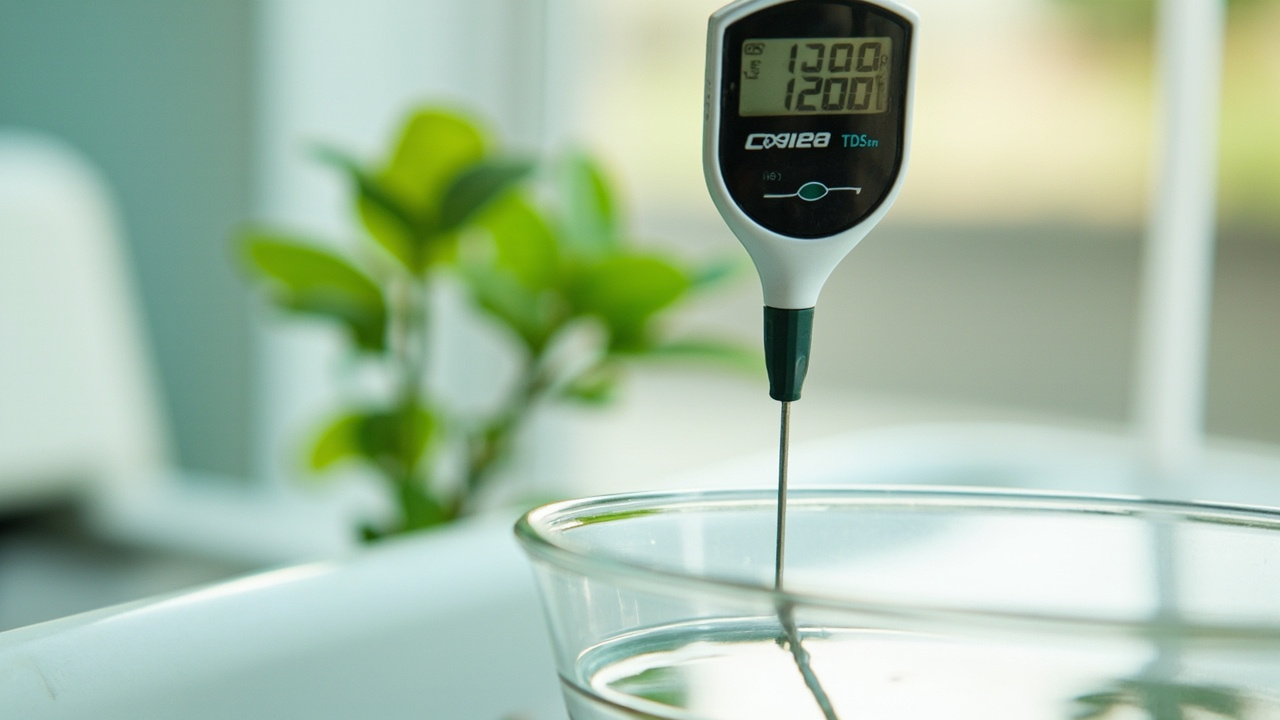
EC meters explained: calibrated EC meters are essential for hydroponic growing. Most handheld meters need calibration solution (1.41 mS/cm for the standard) every 1–2 weeks. A drifting EC meter will cause every feeding decision to be wrong.
Diagnosing Which Problem You Have
When something goes wrong in a hydroponic system, the visual symptoms overlap — yellow leaves, stunting, wilting can come from root rot, nutrient lockout, or pH drift. Here’s a quick triage sequence:
- Check reservoir temperature first — if it’s above 70°F (21°C), root rot risk is immediate regardless of other factors.
- Check pH of reservoir and runoff — if runoff pH differs from reservoir by more than 0.5, there’s a root zone pH issue.
- Check EC of reservoir — under or over-concentration rules out many causes.
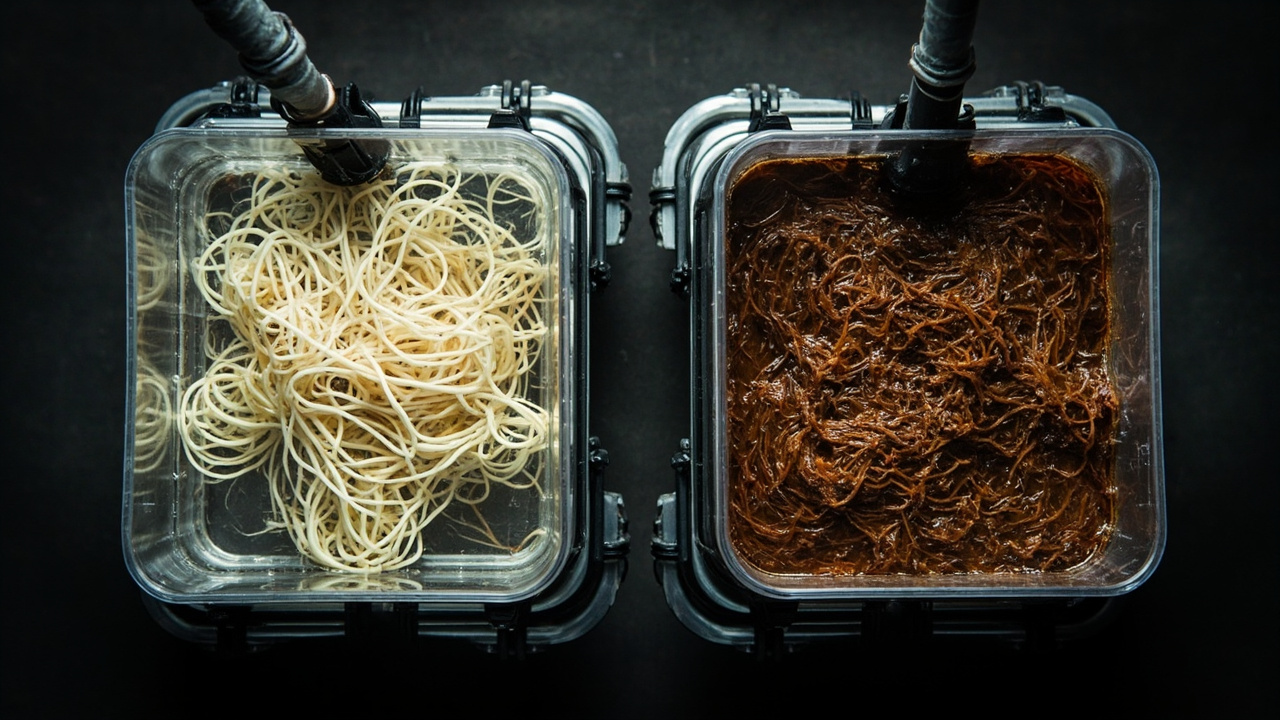
- Inspect roots — brown, slimy roots = root rot. White, firm roots = not root rot.
- Smell the reservoir — musty smell = root rot. Sulfur or ammonia smell = severe decomposition.
The sequence matters. Growers who start with leaf symptoms often misdiagnose. Starting with reservoir inspection and root inspection narrows the field faster.
Bottom Line
Hydroponic failures rarely come from a single cause. Root rot creates pH drift. pH drift causes nutrient lockout. Each problem amplifies the others. The discipline isn’t fixing failures — it’s catching them early with routine checks on water temperature, pH, and EC that take under five minutes every other day. Five minutes of monitoring prevents the collapse that costs you an entire crop cycle.
Turn That PDF Into a Spreadsheet in Minutes
You've seen how to do it manually — now let the tool handle the heavy lifting. Upload your bank statement and get Excel, CSV, or QBO in a few clicks.
Try It Free