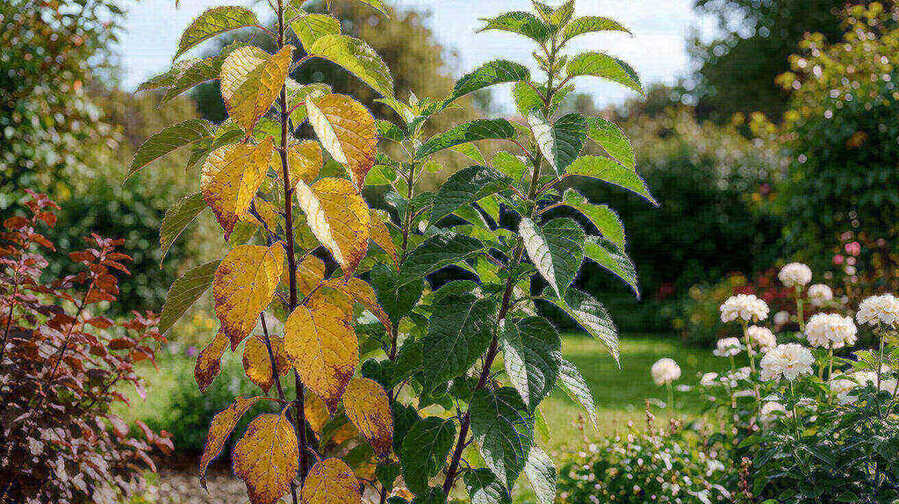

Most gardeners who see yellow leaves reach for nitrogen fertilizer. Often that is the wrong fix. The most common misdiagnosis in gardening is calling a pH problem a nutrient deficiency. When soil pH drifts outside the workable range, nutrients lock up in the soil and the plant starves even when the nutrients are present. The fix is pH correction, not more fertilizer. This article gives you a diagnostic process that separates real deficiency from lockout, watering stress, and other look-alikes, so you spend money only on what the plant actually needs.
The target question is how to recognize nutrient deficiency in plants. The goal is to name the nutrient, or to rule nutrient deficiency out, before you buy a fix.
A good diagnosis is also a cost saver. Fertilizer spent on the wrong nutrient does nothing, and excess can push the soil further out of balance. A few minutes of careful observation beats a cart full of bags.
Start with the whole plant, then zoom in. Stand back and check overall size, color, and vigor. Then inspect individual leaves from top to bottom. Note whether symptoms are uniform across the bed or isolated to one plant, since that hints at soil variation versus a single cause.
The mobile vs immobile nutrient rule (older vs newer leaves)
Nutrients split into two groups by mobility inside the plant. Mobile nutrients (nitrogen, phosphorus, potassium, magnesium) can move from older leaves to new growth when supply runs short. So deficiency shows first on older leaves. Immobile nutrients (calcium, iron, sulfur, boron) cannot relocate, so new growth suffers first. This single rule narrows any diagnosis to half the list before you look at color.
- Older leaves affected first: nitrogen, phosphorus, potassium, magnesium.
- Newer leaves affected first: calcium, iron, sulfur, boron.
If both old and new leaves look bad at once, suspect a non-nutrient cause (watering, pH, root damage, or disease) rather than a single deficiency. The rule also explains why a magnesium-starved plant can look fine on top while the bottom leaves yellow: the plant is salvaging magnesium from old tissue to feed new growth.
Use this rule as a first filter. Once you know which age of leaf is affected, you only need to match color and pattern within that smaller group. This saves time and prevents the common error of treating nitrogen when the plant actually needs magnesium.
Remember that mobility is a spectrum, not a binary switch. Some nutrients move slowly. But for field diagnosis the simple older-versus-newer split works well enough to guide the first guess, which you then confirm with a soil test.
Practice the rule on every plant you inspect. Within a season it becomes automatic, and you will spot deficiency earlier, before yield drops.
Visual symptom chart
Match the pattern you see to the nutrient. Look at which leaves, which color, and the shape of the damage. Compare several leaves, not just one, and check both sides of the plant and the top and bottom of the canopy.
| Nutrient | Where it shows | Symptom |
|---|---|---|
| Nitrogen (N) | Older leaves | Uniform yellowing, stunted growth, thin stems |
| Phosphorus (P) | Older leaves | Dark green or purple/bronze tint, stunted roots |
| Potassium (K) | Older leaves | Brown, scorched leaf edges, weak stems |
| Magnesium (Mg) | Older leaves | Interveinal chlorosis (green veins, yellow between) |
| Calcium (Ca) | New leaves | Tip burn, distorted or hooked new growth |
| Iron (Fe) | New leaves | Interveinal chlorosis on young leaves |
| Sulfur (S) | New leaves | Uniform yellowing of young leaves |
For deeper detail on what each nutrient does, see the nutrient role guides on this site.
Color alone is unreliable. Light, variety, and stress all shift leaf color. Pattern and location matter more than exact shade. Take a photo in daylight and compare to reference images from Extension services rather than relying on memory.
The 4-step diagnostic process
Run these in order. Stop when you find the cause. Skipping a step is the main reason gardeners misdiagnose and waste fertilizer.
- Check pH first. Most “deficiencies” are pH lockout. A soil pH outside the 6.0 to 7.0 range ties up iron, phosphorus, and others. Test pH before anything else. See soil pH and nutrient availability.
- Check watering. Overwatering and underwatering both yellow leaves. Squeeze a handful of soil: it should hold shape but not drip. Check drainage holes and recent rain. Note whether the plant wilts in afternoon heat and recovers by morning.
- Check recent fertilizer. Did you just feed? Salt burn mimics deficiency. Did you skip feeding? Then deficiency is plausible. Note the product and rate, and check the NPK ratio explained to confirm what you actually applied.
- Match symptoms to nutrient. Use the chart above plus the mobile/immobile rule. Confirm with a soil test if unsure.
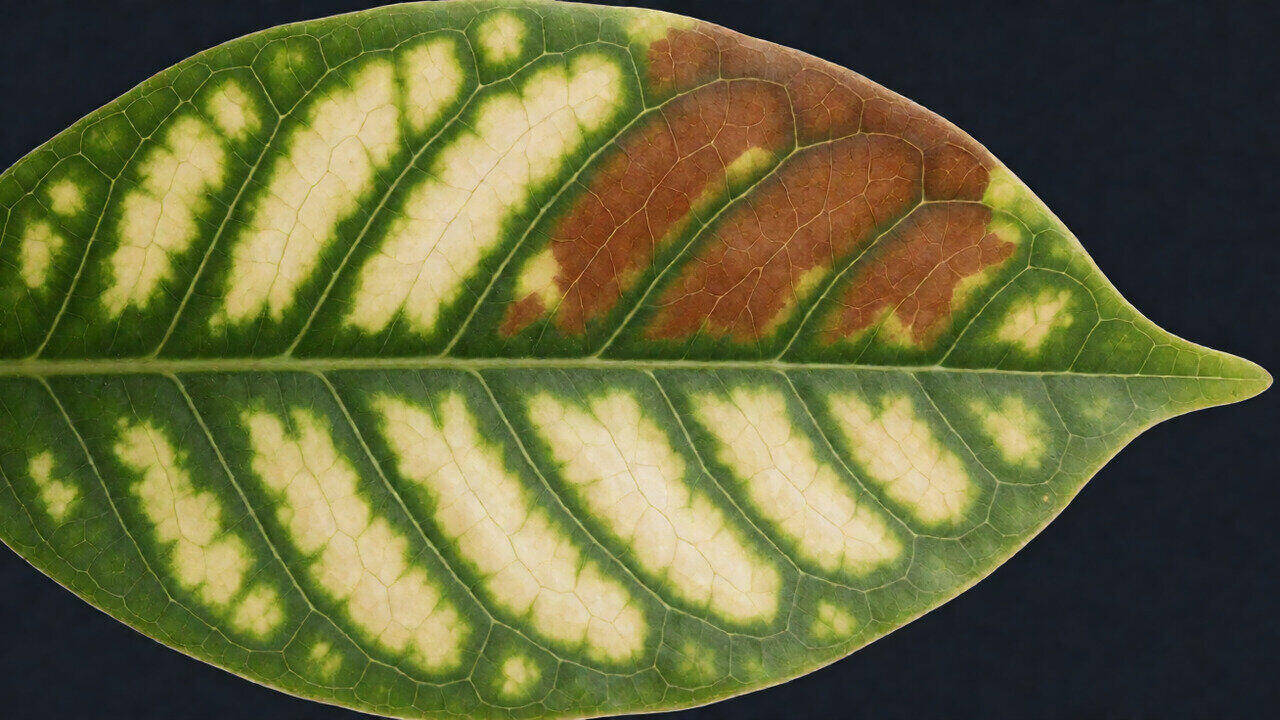
Photo caption: Yellowing on older leaves with green veins points to magnesium, not nitrogen.
Work through the steps slowly. Most errors come from jumping to step four after a glance. A five-minute check of pH and watering prevents a season of wrong fixes.
Common misdiagnoses
These three pairs cause most wrong fixes. Compare carefully before treating.
- Overwatering vs nitrogen deficiency. Overwatering yellows from the bottom up and the soil stays wet. Nitrogen deficiency yellows uniformly and the soil is dry. Squeeze test settles it.
- Iron chlorosis vs nitrogen deficiency. Iron chlorosis shows on new leaves with green veins. Nitrogen deficiency shows on old leaves uniformly. If new leaves are yellow with green veins, do not add nitrogen.
- pH lockout vs true deficiency. A soil test showing adequate nutrients with bad pH means lockout, not deficiency. Fix pH and the symptoms fade without extra fertilizer.
Other look-alikes include spider mites, which stipple leaves, and root rot, which wilts despite wet soil. Check the underside of leaves and the root color before blaming nutrients. Environmental stress such as transplant shock and heat can also yellow foliage.
When to test soil vs when to visually diagnose
Visual diagnosis is fast and free, good for obvious cases and for confirming a hunch. Soil testing is the right call when symptoms are mixed, when you have not tested in two years, or before a major amendment. A soil test removes guesswork on pH and nutrient levels. See how to read a soil test report. For the broader picture of where nutrients come from, see essential nutrients for plants in gardens.
A basic test costs little and covers pH, organic matter, phosphorus, potassium, calcium, and magnesium. Send samples from several spots and mix them for a representative result. Test in the same season each year so trends are comparable.
Visual diagnosis shines for container plants and for fast-moving problems like iron chlorosis on new growth. Soil testing shines for in-ground beds and for planning amendments before planting.
Do not test immediately after fertilizing; wait a few weeks so results reflect baseline soil, not recent additions.
Recovery: fast correction vs long-term fix
For a quick rescue, use a foliar spray of the missing nutrient. Leaves absorb it within hours and you will see color return in days. For the long term, amend the soil: compost for organic matter, targeted fertilizer for the specific nutrient, and pH correction if needed. Foliar fixes symptoms; soil fixes causes.
When choosing a product, match the label to the nutrient. Avoid blanket feeding: if only magnesium is short, a balanced fertilizer adds unneeded nitrogen and phosphorus. Read the label carefully and apply at the recommended rate.
After treating, watch new growth rather than old leaves. Old leaves rarely recover; new growth tells you whether the fix worked. Recheck in two weeks and adjust.
Water in amendments well and avoid feeding stressed or wilted plants. A plant in shock cannot take up nutrients efficiently, so fix watering and temperature first.
The “don’t guess, test” principle
Visual symptoms overlap. Two nutrients can look alike, and pH can mimic both. The cheapest path is one soil test before buying three bags of fertilizer. Test, then treat the actual deficiency. Guessing wastes money and can make things worse, since excess of one nutrient can block another. Calcium excess, for example, can induce magnesium deficiency.
Keep records of test results and treatments so patterns emerge across seasons. Over time you will know your soil and rarely need to guess. Share notes with neighbors on similar soil and compare results.
Write down what you find at each step. A short note in a garden journal turns scattered observations into a pattern you can act on next season.
When two symptoms overlap, treat the most likely cause first and reassess after two weeks. Changing one variable at a time keeps the diagnosis honest and avoids compounding errors.
Teach the process to anyone who gardens with you. A shared diagnostic habit prevents the cycle of over-fertilizing and then wondering why plants still look sick.
Seasonal timing also matters. Cool soils slow phosphorus uptake, so early spring purpling often resolves as soil warms, not from added phosphorus. Watch whether symptoms persist before treating.
Finally, accept that some yellowing is natural. Lower leaves yellow and drop as a plant matures, and that is not a deficiency. Focus on widespread, progressive symptoms that affect new growth or the whole plant.
Container plants deserve special attention. Frequent watering leaches nutrients, and potting mix holds less buffering capacity than ground soil. Feed containers lightly and often, and flush salts periodically.
Nitrogen deficiency is the most common and the easiest to confirm: pale, uniform yellowing on older leaves with slow growth. Phosphorus deficiency often hides as a purple cast on older leaves and stunted roots. Potassium deficiency scorches leaf margins. Magnesium deficiency gives the classic interveinal yellowing on older leaves. Calcium and iron both affect new growth, but calcium distorts tips while iron yellows between veins. Sulfur mimics nitrogen but on young leaves.
Keep a simple kit on hand: a pH meter or test strips, a soil probe, and a notebook. With those three tools you can diagnose most problems in minutes without buying anything else.
When results conflict, trust the soil test over symptoms. Symptoms are a hypothesis; a test is data. The actual number is the decision.
Remember that nutrients interact. High phosphorus can lock up iron and zinc. Balanced, moderate feeding beats heavy single-nutrient doses every time.
Last updated: October 28, 2026.
Sources
- University of Minnesota Extension, “Nutrient Deficiencies in Plants”
- NC State Extension, “Plant Nutrient Deficiency”
- Penn State Extension, “Nutrient Deficiencies”
- Purdue Extension, “Diagnosing Nutrient Deficiencies”
- Michigan State University Extension, “Nutrient Deficiency Symptoms”
- University of Florida IFAS, “Nutrient Deficiency”
- Washington State University Extension, “Plant Nutrient Deficiency”
The actual number is the decision.
Turn That PDF Into a Spreadsheet in Minutes
You've seen how to do it manually — now let the tool handle the heavy lifting. Upload your bank statement and get Excel, CSV, or QBO in a few clicks.
Try It Free