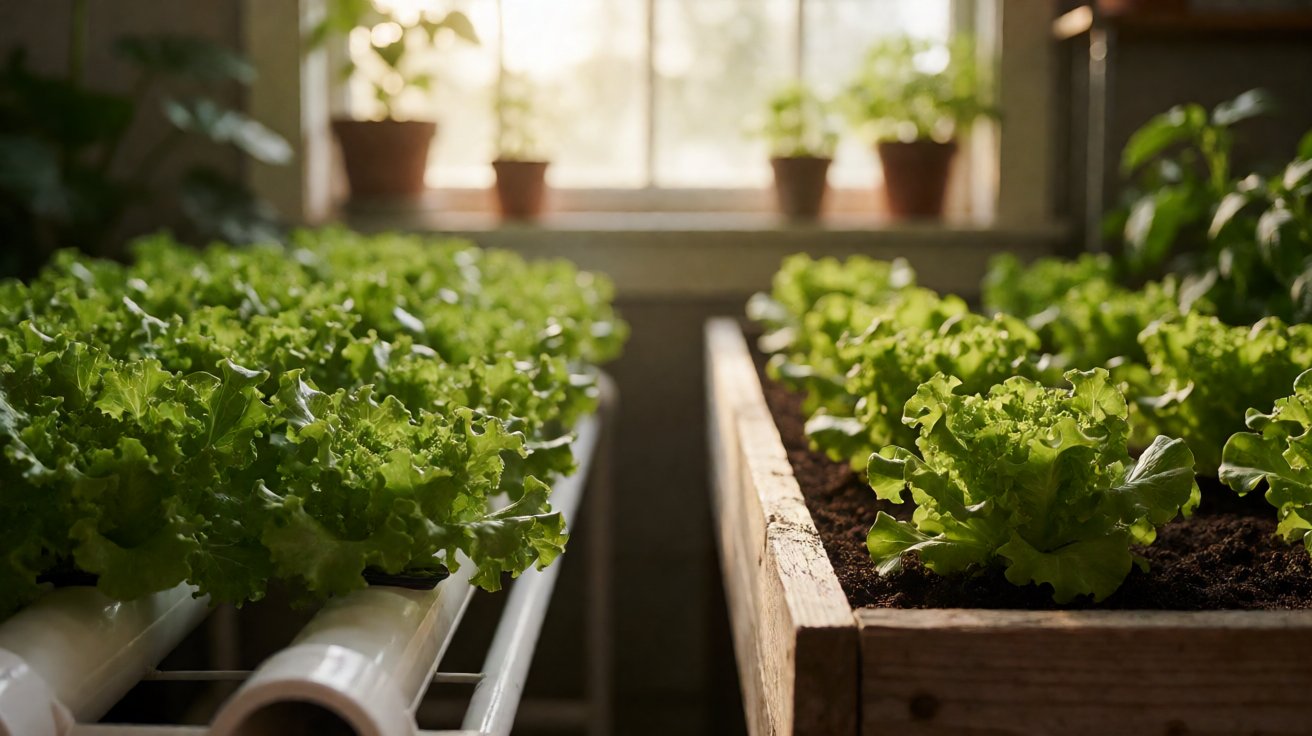

The comparison between hydroponic farming and soil farming is not really about gardening. It is about logistics. Soil is a buffer — it holds water, holds nutrients, holds air, and releases all three to roots on a delay. Hydroponics removes that buffer. The plant gets what it needs on a schedule you set, in concentrations you control, with no intermediate storage layer. That is the entire mechanism of every advantage and every disadvantage that follows.
The first honest limit up front: hydroponic farming removes one problem (the soil buffer) and adds a different one (the system becomes a piece of hardware that has to be maintained). It does not eliminate work. It moves the work from watering and weeding to calibrating and cleaning.
Latin names in this guide: Lactuca sativa (lettuce), Solanum lycopersicum (tomato), Ocimum basilicum (basil), Fragaria × ananassa (strawberry), Spinacia oleracea (spinach), Capsicum annuum (pepper).
What the Mechanism Actually Buys You
Hydroponic farming delivers four things soil cannot match, and each one is a measurable number rather than a feeling.
Faster growth under the same light. Roots in oxygenated nutrient solution at the right pH and EC do not waste energy searching for ions. The plant uses that saved energy on leaf and fruit. Published growth-rate gains over soil for lettuce range from 30% to 50% under matched lighting, with the gain coming mostly from the first 21 days. Once the plant is established, the gap narrows.
Higher yield per square foot. Because the root zone is small and controlled, plants can be packed denser than in soil. A 2-foot NFT rail holds 8–10 lettuce heads; the same square footage in soil holds 4–6. The yield per square foot of canopy is the figure to remember, not yield per plant.
Up to 90% less water. This number sounds implausible until you watch a recirculating system. The plant takes up what it needs; the rest returns to the reservoir; the only water leaving the system is what the plant stores in tissue or evaporates from the leaf. A 100-square-foot NFT setup uses roughly 20–40 gallons per week; the same square footage in soil uses 80–120 gallons per week in summer.
No weeds, no soil-borne pathogens, no soil pests. Fusarium wilt, root-knot nematodes, cutworms — all soil organisms. Hydroponic farming removes the habitat. The pathogens that do appear (pythium, phytophthora) are water-management failures, not soil failures.
For a closer look at how each system family delivers these gains, the hydroponic systems explained page walks through the six system types and where each one outperforms.
What the Mechanism Costs You
The same buffer that soil provides is the buffer you have to recreate in the system. Every advantage has a paired disadvantage, and the disadvantage is usually mechanical.
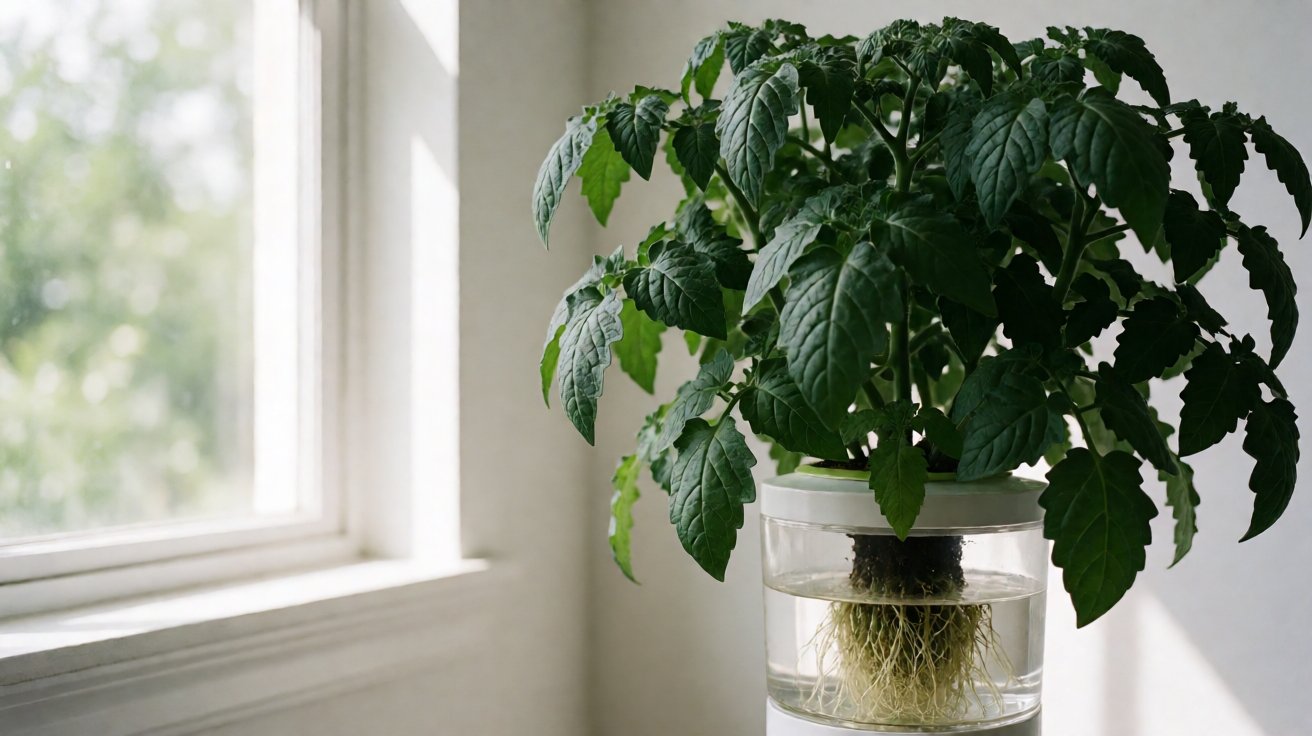
System failure kills plants faster. A tomato plant in soil can survive 5–7 days of drought. A tomato plant in DWC can survive 4–6 hours of pump failure. The buffer is gone. A power outage during a heat wave means wilted plants by evening and dead plants by the next morning if the reservoir temperature climbs above 28°C.
Setup cost is real, even at home scale. A single 5-gallon DWC bucket with pump, air stone, net pot, and nutrients costs $35–60 in 2026. A 4-bucket closet system with lights, pH meter, EC meter, and chiller runs $200–400. A garage-scale NFT with a 50-gallon reservoir, chiller, and full-spectrum LED panel runs $500–800. None of that money buys soil or sun.
Electricity is part of the budget. Pumps run 24/7. Lights run 14–18 hours/day. A small DWC setup at home uses 30–50 kWh per month; a 4-bucket closet system uses 80–120 kWh; a garage-scale setup can exceed 300 kWh. At US average residential rates, that is $4–50/month depending on scale.
You become a chemist. Soil forgives a lot. Hydroponics does not. EC drift, pH creep, nutrient imbalances all show up as leaf symptoms within days. If the idea of measuring, recording, and adjusting every few days sounds like the opposite of relaxing, this method will frustrate you.
Pollination is manual indoors. Tomatoes, peppers, and strawberries do not self-pollinate without air movement or vibration. Indoor growers hand-pollinate with an electric toothbrush or set up a small fan to vibrate the flowers daily. Outdoors and on a windy balcony, this is free. Indoors, it is a chore.
Where the Trade Actually Breaks One Way or the Other
The honest comparison is not “hydroponics vs soil.” The honest comparison is “hydroponics at this scale, with this room, for this crop, against soil at the same scale, same room, same crop.”
Hydroponics wins when: you have a small footprint and need yield per square foot (apartments, balconies, indoor shelves); you have predictable water cost and constrained supply (arid climates, drought-prone regions); you grow leafy greens or herbs year-round in a temperate climate and need a 12-month supply; you are not willing to till, weed, and amend annually; you are growing for yield-per-area rather than yield-per-plant.
Soil wins when: you have open ground and time; you grow fruiting crops with high calcium demand (tomatoes, melons) where soil buffering hides minor EC mistakes; you want lower upfront cost; you are growing perennial root crops (carrots, beets) that do not transplant well; your climate is already ideal for the crop and the soil buffer works for you, not against you.
The deeper comparison runs through the sibling aeroponics vs hydroponics page (a step further on the soilless spectrum) and the cousin aquaponics vs hydroponics page (same soilless delivery, different nutrient source).
Crop-by-Crop Trade Table
The decision to switch a crop from dirt to water is not a binary. Some crops gain 40% in hydroponics; some lose 20% because their soil biology (mycorrhizae, trace minerals from organic matter) is part of their flavor profile.
Lettuce and leafy greens: gain 30–50% growth rate, no flavor penalty. Net positive.
Basil and culinary herbs: gain 25–40%, no flavor penalty. Net positive.
Strawberries: gain 15–25% and earlier fruiting, modest flavor concentration. Net positive, especially off-season.
Tomatoes: gain 20–30% in yield, neutral to slight flavor dilution in hydroponic beefsteak varieties. Net positive for yield; subjective for flavor.
Peppers: gain 15–25%, neutral flavor. Net positive.
Root vegetables (carrots, beets, radishes): grow well but transplant poorly. Net negative for the home grower without a seed-starting setup.
Carb crops (corn, wheat, potatoes): gain in yield, but the per-acre capital cost of hydroponic infrastructure for these crops only pays off at commercial scale. Net negative for home gardening.
For the specific mechanics of which crops do best in which systems, the best plants for hydroponics list maps 12 common home crops to their preferred system family.
Common Mistakes in the First Year
Treating hydroponics as “set and forget.” The reservoir needs water top-ups every 2–3 days and a full change every 7–14 days. The pump needs to be checked weekly. The pH and EC need to be logged. Forgetting any of these for two weeks produces dead plants.
Choosing a system based on YouTube, not room. A tower system is gorgeous on a balcony. The same tower in a basement without adequate light is a tower of leggy, etiolated seedlings. Match the system to the room and the room to the light, not the other way around.
Ignoring pH. A nutrient solution at pH 7.2 will starve the plant of iron and manganese even with both in the mix. pH is the single most common silent killer in hydroponics. A $12 pH pen and one drop at a time prevents this.
Overfeeding. The instinct is “more nutrients = more growth.” The opposite is true past the EC saturation point for the crop. Lettuce burns at 2.0 mS/cm. Tomatoes want 2.5–3.5. Match the recipe to the crop, not the recipe to the bottle label.
No backup power. A small UPS (uninterruptible power supply) for $30–50 buys 30–60 minutes of pump runtime during an outage. In a heat wave, those 30 minutes are the difference between a wilting plant and a dead one.
What Changes in Your Routine
The honest account of hydroponic farming advantages and disadvantages ends here: the trade is not whether the method is “better” or “worse.” The trade is whether the work you avoid (watering, weeding, soil-borne disease management) outweighs the work you accept (calibration, cleaning, pump maintenance, pH and EC logging). For a home gardener who grows year-round in a small space, the trade is usually positive. For a home gardener with a backyard and a hose, soil still wins for most crops.
If the trade reads as worth it for your room, the next page walks through what to buy and what to skip: how to start a small hydroponic farm at home lays out a 30-day plan with parts and budget. If the trade still feels uncertain, the hydroponic farm basics guide shows the system types and which room each one fits.
From PDF to Excel in one click
Forget retyping line by line. Upload any bank statement, get a spreadsheet you can actually use. Your files are never stored, and you can test the converter with 3 free conversions.