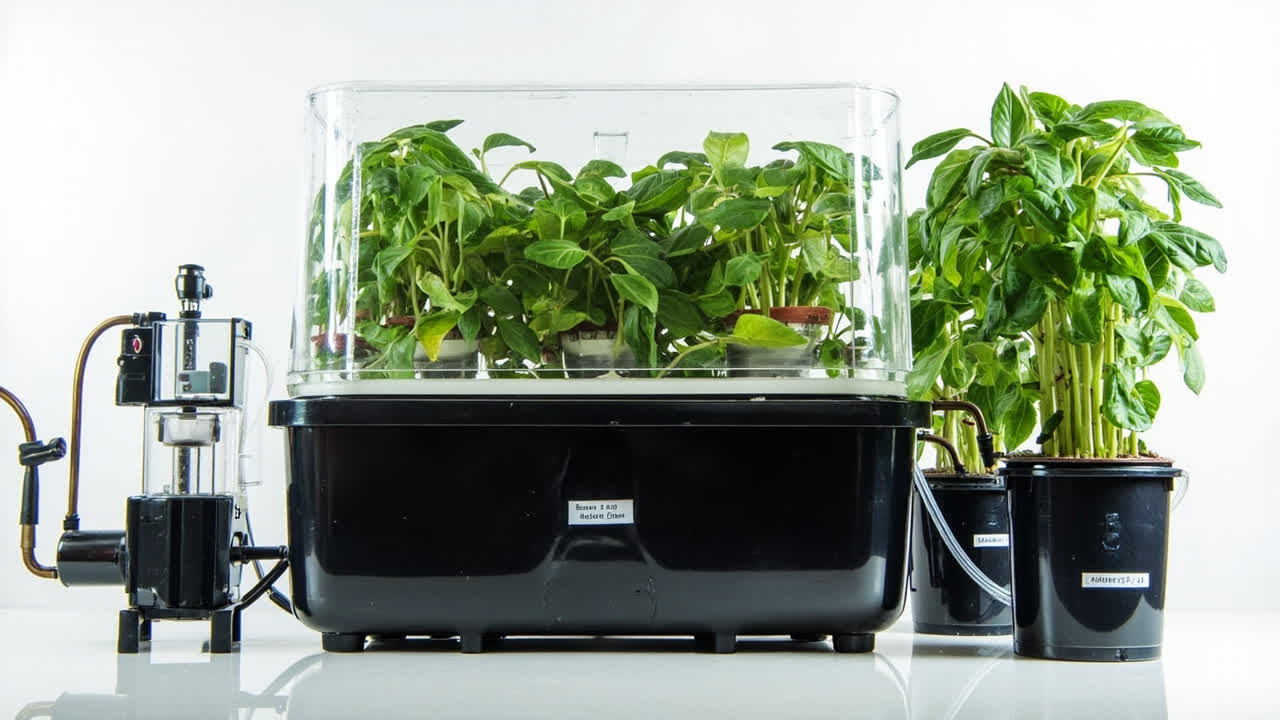
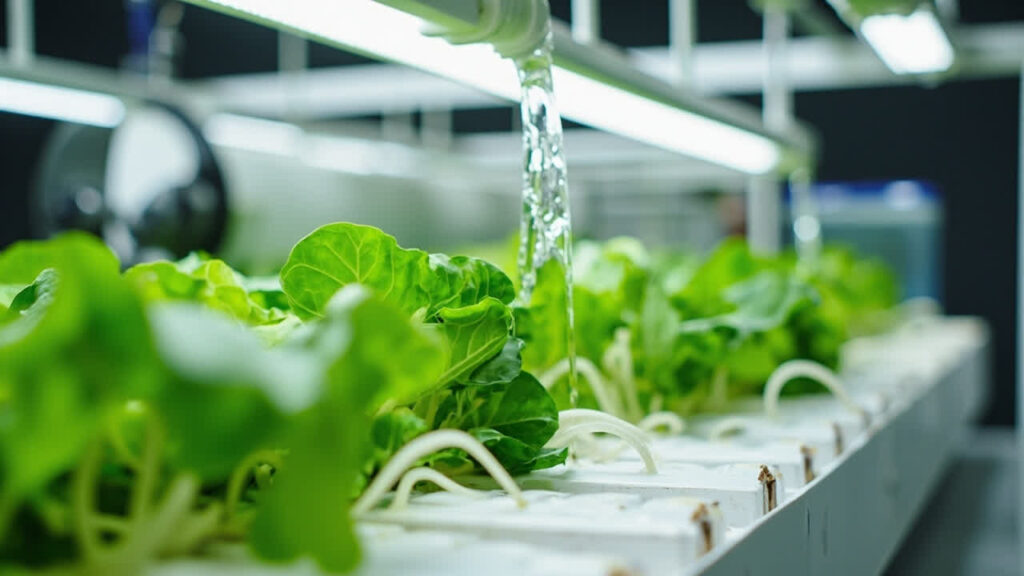
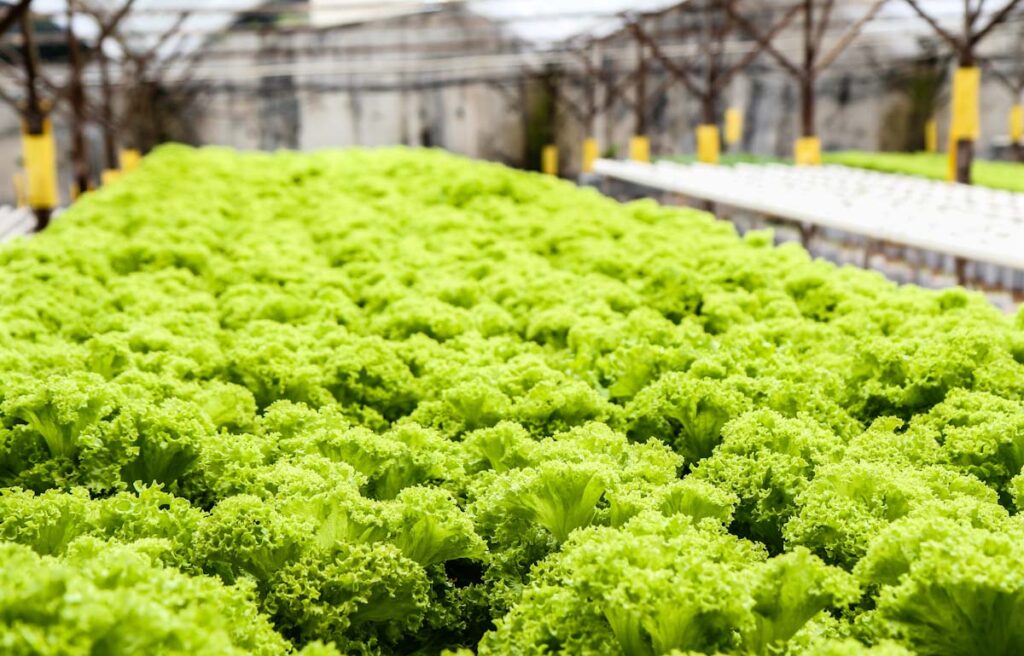
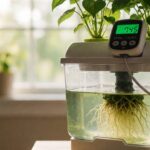
Hydroponic reservoir water temperature runs best between 65°F and 75°F (18°C to 24°C). Most vigorous growth clusters tightly around 68°F to 72°F (20°C to 22°C). If your pH and PPM look correct but plants still look pale, leggy, or suddenly wilted, the reservoir is the next place to look.
Warm reservoir water holds less dissolved oxygen. Root zones starved of oxygen stop pulling in nutrients — even when those nutrients are sitting right there in the solution.
Most growers watch pH and parts-per-million, then assume the rest of the system is fine. Reservoir temperature is the variable that quietly sabotages an otherwise dialed-in setup, and it rarely announces itself with a single obvious symptom. Instead it produces a slow drift that looks like a nutrient deficiency, a fungus, or simply “my plants aren’t thriving like the guide said they would.” Treat temperature as a primary input — measured daily, managed deliberately — and most of those mysterious problems resolve on their own.
What the Correct Reservoir Water Temperature Range Is
For the vast majority of hydroponic systems — deep water culture, recirculating drip, NFT, and the common home indoor hydroponic setups — the working target is 65°F to 75°F (18°C to 24°C). Inside that window, root metabolism, oxygen solubility, and nutrient uptake are all working in the same direction. Push past 75°F (24°C) and the gains from warmer water are outweighed by rapidly falling oxygen levels. Drop below 60°F (15°C) and the roots slow their metabolism so much that growth visibly stalls, especially in fruiting crops like tomatoes and peppers.
A useful practical anchor: aim for the middle of the range — roughly 68°F to 72°F (20°C to 22°C) — and treat excursions beyond the 65–75°F (18–24°C) band as a problem to address, not a tolerance to absorb. Diurnal fluctuation of a few degrees is normal and even healthy, mimicking what roots experience in soil; a swing of 10°F (about 5.5°C) or more between day and night is a sign of an under-buffered reservoir rather than a natural rhythm.
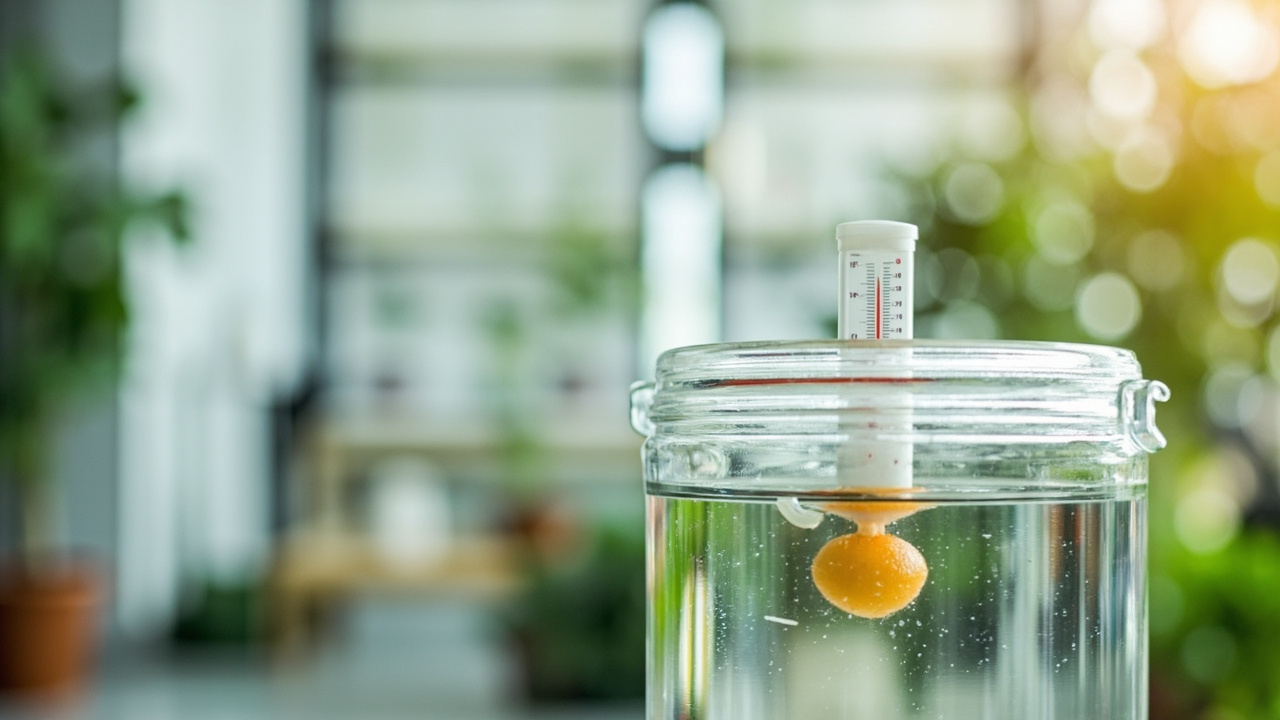
Use a floating or submersible thermometer, not the ambient air thermometer many growers keep on the wall. Reservoir water and grow-room air can easily differ by 5°F to 10°F (about 3°C to 5.5°C), and what matters is the water, not the air around it. A simple glass floating thermometer costs almost nothing and removes a major source of guesswork.
Why Temperature Drives Dissolved Oxygen and Root Health
Cooler water holds more dissolved oxygen. At 68°F (20°C), a well-aerated reservoir carries roughly 9 mg/L of dissolved oxygen; at 78°F (26°C), the same water carries closer to 8 mg/L, and at 82°F (28°C) it drops to about 7.5 mg/L.
That sounds like a small change on paper, but root oxygen demand rises with temperature at the same time. The gap between supply and demand widens faster than the numbers suggest. The result is functional oxygen starvation in the root zone, even when the air pump is working exactly as designed.
Roots that cannot respire efficiently cannot power the active uptake of nutrients. This is the mechanism behind the most common warm-reservoir symptom: a plant that looks like it has a calcium or magnesium deficiency — pale new growth, blossom-end rot, interveinal yellowing — but does not respond to added nutrients because the roots are not pulling them in. When growers chase the deficiency with stronger nutrient solution recipes, they often make things worse by adding more salt to a root zone that is already oxygen-limited.
There is also a biological consequence. Pathogens that cause root rot in DWC and other recirculating systems — most notably Pythium — multiply fastest in warm, low-oxygen water. Holding the reservoir in the 65–75°F (18–24°C) window does not sterilize the system, but it removes the temperature edge that lets opportunistic pathogens outcompete the roots.
A cool reservoir is, in practical terms, a root-rot-resistant reservoir.
How Reservoir Temperature Affects Nutrient Uptake
Nutrient uptake is temperature-dependent in a non-linear way. Below 60°F (15°C), root membranes thicken and the active transport mechanisms that pull in nitrate, potassium, calcium, and magnesium slow down — the solution in the reservoir is unchanged, but the plant’s demand-side machinery has throttled back.
Above 75°F (24°C), uptake becomes selective in the wrong direction. The plant absorbs some nutrients faster than others, which is one reason calcium deficiencies and blossom-end rot spike during summer heat waves even in well-maintained systems.
This is also why mixing hydroponic nutrients correctly is not enough on its own. A perfectly balanced solution at 82°F (28°C) will still underperform a slightly weaker solution held at 70°F (21°C), because the cool reservoir is delivering what it contains and the warm one is not. Temperature is upstream of every nutrient measurement you take.
For growers who track electrical conductivity or PPM, expect readings to drift more on warm days. Warmer water evaporates faster, concentrating the solution, and warmer roots absorb water faster than salts, so the ratio tilts. None of that is a sign that your nutrient solution recipe is wrong — it is a sign that the reservoir itself is the dominant variable.
How to Cool a Reservoir That Runs Too Warm
The first step is honest measurement. Check the reservoir at the same time each day — late afternoon works well, when the load on the system peaks. A reservoir that sits at 72°F (22°C) at 9 a.m. can climb past 78°F (26°C) by 4 p.m. in a warm room, putting the entire afternoon window outside the safe band.
One reading per day is not enough during summer or in grow rooms with inadequate ventilation. A simple floating or submersible thermometer costs less than a bag of nutrients and pays for itself in the first silent failure it prevents.
Practical cooling options, from cheapest to most effective:
- Paint or insulate the reservoir. A black reservoir in a bright room absorbs a surprising amount of heat. Wrapping the outside with reflective material or styrofoam can drop the daytime peak by 3°F to 6°F (about 2°C to 3°C).
- Add a frozen water bottle or two. A cheap, low-tech option for small reservoirs. Two 1-liter bottles swapped twice a day can hold a small DWC tub in range without any equipment.
- Increase air pump output. More agitation raises gas exchange at the surface and slightly lowers water temperature, while also raising dissolved oxygen directly. It is not a substitute for true cooling in warm climates, but it is a free improvement.
- Relocate the reservoir off the floor and out of direct light. Heat rises from lights and accumulates low in the room; lifting the reservoir onto a shaded shelf often makes more difference than growers expect.
- Install a water chiller. A dedicated hydroponic chiller is the only reliable solution for warm climates or larger systems. Sized correctly, it holds the reservoir within 1°F (about 0.5°C) of the set point regardless of ambient conditions.
Cool slowly when possible. Dropping a 78°F (26°C) reservoir to 65°F (18°C) inside an hour stresses roots and can shock foliage, especially in fruiting crops. Aim for no more than 5°F (about 3°C) of change per hour when you are bringing a hot system back into range.
How to Warm a Reservoir That Runs Too Cold
Cold reservoirs are less common in actively heated grow rooms, but they show up in basements, garages, and outdoor setups during shoulder seasons. Symptoms mimic underfeeding — purpling on stems, slow growth, slow calcium movement — because cold roots cannot pull nutrients at full rate. The fix is mechanical, not nutritional.
A small submersible aquarium heater, sized to roughly 3 to 5 watts per gallon, is the standard solution. Set it to 70°F (21°C) and let the reservoir stabilize.
Insulating the reservoir helps here too: a wrapped tub loses heat more slowly and runs the heater less often, which extends its life. For growers in genuinely cold spaces, a heat mat under the reservoir adds a few degrees of bottom-up warming that complements an aquarium heater without overheating the solution.
As with cooling, warm gradually. A 55°F (13°C) reservoir pushed to 72°F (22°C) inside an hour triggers the same root shock as a rapid chill. Let the heater do its work over several hours and verify with a second reading before declaring the system stable.
Building a Simple Monitoring Habit
The single highest-leverage habit is a daily temperature check at the same time of day, recorded somewhere you can look back at. A paper log, a phone note, or a smart outlet with a temperature probe all work; what matters is the consistency, not the technology. After two weeks you will have a baseline for your specific setup — the room, the reservoir volume, the lights, the season — and you will know when the number is genuinely off rather than just unfamiliar.
A second habit worth keeping: log the temperature at the time of any problem. If leaves are cupping on a Tuesday, the reading that matters is Tuesday’s reservoir temperature, not the one you take on Thursday after you have already added nutrients and adjusted pH. Most “mysterious” hydroponic issues become obvious once temperature is in the record.
Reservoir water temperature is the variable that ties oxygen, root health, and nutrient uptake into a single number you can actually act on. Hold the reservoir between 65°F and 75°F (18°C to 24°C), verify with a thermometer rather than a guess, and your plants will finally have the conditions the rest of your system has been trying to deliver.
Source: the Royal Horticultural Society’s indoor hydroponics guidance and University of Florida IFAS Extension’s controlled-environment agriculture notes, which together set the 65–75°F (18–24°C) reservoir band as the standard indoor target and the 9 mg/L dissolved-oxygen floor at 68°F (20°C) that this article builds on.
Turn any PDF statement into a clean sheet
Skip the typos and the hours of copying. Our converter handles any bank statement format and outputs Excel, CSV, or QBO for QuickBooks. No file retention, free to try.
Convert your statement