A hydroponic tomato is a high-performance feeding project — every gram of potassium, every milligram of calcium, every pH swing the root sees translates directly into fruit within 7 to 14 days. That is the upside.
The downside is that a hydroponic tomato has zero buffer: there is no soil to slowly release nutrients, no organic matter to chelate minerals, and no microbe population to convert anything unavailable into something the roots can take up. If the nutrient solution is wrong, the tomato plant tells you within a week, not within a season.
This guide covers the exact NPK ratios, EC levels, and pH window that drive fruit set in a hydroponic tomato system, the mix sequence that prevents calcium lockout, and the deficiency signs that show up when one element drifts off. If you only have two minutes, jump to EC Levels for Hydroponic Tomatoes at Each Growth Stage — most hydroponic tomato feeding failures are an EC problem dressed up as a deficiency problem.
Why Hydroponic Tomatoes Need a Different Fertilizer
A hydroponic tomato cannot use the same fertilizer a soil-grown tomato gets, because the root environment is fundamentally different. In soil, organic matter buffers the nutrient release, microbes convert unavailable minerals into available forms, and the cation exchange capacity holds potassium and calcium until roots come looking for them.
In a hydroponic reservoir, none of that buffering exists — the tomato plant gets exactly what you put in the water, no more and no less. A standard garden fertilizer (10-10-10 granules) in a hydroponic reservoir releases nutrients unevenly and leaves behind carrier salts that push EC above the safe range.
The hydroponic tomato fertilizer needs to be a complete, water-soluble, chelated nutrient solution designed for soilless culture — not a soil-feeding product diluted into water.
The honest trade-off: a hydroponic tomato fertilizer costs more per pound than a garden fertilizer, but you use far less of it. A single 5-pound bag of two-part hydroponic nutrient makes 200+ gallons of feed solution.
That is enough for an entire season for most home growers. The price-per-fruit-harvested is lower than the equivalent soil-grown tomato, because the hydroponic tomato uses nutrients with near-100% efficiency instead of losing 40 to 60% to leaching in soil.
The NPK Ratio That Drives Tomato Fruit Set in Hydroponics
The NPK ratio that drives fruit set in a hydroponic tomato is roughly 4-1-4 to 5-2-6 during the flowering and fruiting stage, weighted slightly toward potassium once the first fruit clusters set. Nitrogen drives leaf and stem growth — too much and the hydroponic tomato grows lush foliage with few fruit; too little and the lower leaves yellow prematurely under the load of ripening fruit.
Phosphorus drives root development and flower initiation — most hydroponic tomato deficiencies show up here when the pH drifts above 6.5 and phosphorus locks out. Potassium drives fruit fill, sugar content, and disease resistance — the hydroponic tomato’s demand for potassium roughly doubles between the vegetative stage and the fruiting stage, and the fertilizer mix must shift to match.
Expect the hydroponic tomato to consume nutrients at different rates through the season. Vegetative stage (weeks 1 to 4) wants a balanced 3-1-3 ratio with elevated calcium.
Flowering stage (weeks 5 to 8) wants a 4-2-5 ratio with extra magnesium and trace elements. Fruiting stage (week 9 onward) wants a 5-2-7 ratio with maximum potassium and reduced nitrogen.
Most single-bottle hydroponic tomato fertilizers are formulated for the fruiting stage because that is the longest phase. If you use the same bottle from seedling to harvest, you will over-fertilize early and under-fertilize late.
The two-part or three-part nutrient systems (like MasterBlend + calcium nitrate + epsom salt) let you adjust the ratio at each stage. Experienced hydroponic tomato growers use them instead of single-bottle “all-in-one” products.
Choosing a Hydroponic Tomato Nutrient Solution
The trade-off between simplicity and control is the central decision in hydroponic tomato feeding. A hydroponic tomato nutrient solution is either a one-part liquid (simplest, most expensive per gallon), a two-part powder (calcium nitrate separate from the rest, to prevent precipitation), or a three-part custom blend (most control, most mixing work). For a home hydroponic tomato grower with 4 to 8 plants, the two-part powder system is the right balance of cost, control, and mixing time.
The two parts are kept separate until you add them to water because calcium and phosphate precipitate when concentrated together — you add one to the reservoir first, mix thoroughly, then add the second. Adding them in the wrong order or as dry powders together creates a chalky precipitate that locks out both calcium and phosphorus, and the hydroponic tomato shows blossom end rot within 2 weeks even though calcium is technically present in the mix.
A reliable two-part hydroponic tomato regimen uses MasterBlend 4-18-38 at one teaspoon per gallon plus calcium nitrate (15.5-0-0) at one teaspoon per gallon plus one-quarter teaspoon of Epsom salt (magnesium sulfate) per gallon. This produces a final ratio of roughly 5-2-7 with adequate calcium and magnesium — close to the fruiting-stage target above.
Cost is about $0.04 per gallon of feed solution, which works out to less than $1 per week for a typical 4-plant hydroponic tomato system. The honest limitation: powder systems require a gram scale or measuring spoons and a bucket for mixing.
If you want to skip the mixing, a quality one-part liquid like General Hydroponics Flora Series or Jack’s Hydro FeEd will work — just expect to pay 4 to 6 times more per gallon for the convenience.
Mixing Tomato Hydroponic Fertilizer Safely
Mix hydroponic tomato fertilizer in the right order, every time. Fill the reservoir with the target volume of water first, then add the calcium-nitrate component and stir until fully dissolved, then add the phosphate-and-micronutrient component (like MasterBlend) and stir again.
Adding the powders in reverse order, or adding them as dry powders directly to the reservoir without pre-mixing, creates localized high concentrations that lock out phosphorus and iron. The visible symptom of a bad mix in a hydroponic tomato is a chalky white precipitate on the reservoir bottom within an hour, followed by yellowing new growth on the tomato plant within 3 to 5 days.
If you see the precipitate, dump the reservoir, rinse it clean, and remix correctly.
Always mix hydroponic tomato fertilizer into room-temperature water (68 to 75°F / 20 to 24°C). However, water above 90°F (32°C) is the more common failure because gardeners top off reservoirs with sun-warmed hose water — within 4 to 6 weeks the tomato roots suffer. Cold water below 60°F (15°C) does not fully dissolve calcium nitrate and the saturated solution can crash out when the reservoir warms during the day.
Hot water above 90°F (32°C) drives off dissolved oxygen, and a hydroponic tomato root system in oxygen-poor nutrient solution develops root rot within a week even when the nutrient recipe is perfect. Top off the reservoir with plain water (no fertilizer) between feedings to replace what the tomato plants have consumed — the EC will drift down as the plants drink, and a fresh batch of full-strength solution every 7 to 10 days keeps the EC stable.
EC Levels for Hydroponic Tomatoes at Each Growth Stage
Most hydroponic tomato growers who measure only one reservoir parameter should measure EC rather than pH, because EC swings cause more damage within 24 to 48 hours while pH swings cause damage over 5 to 7 days. EC (electrical conductivity) is the single most useful daily number for a hydroponic tomato, because it tells you the total dissolved nutrient concentration without needing a full lab analysis. The hydroponic tomato EC target depends on the growth stage: seedlings and rooted cuttings want 1.0 to 1.5 mS/cm, vegetative growth wants 2.0 to 2.5 mS/cm, early flowering wants 2.5 to 3.0 mS/cm, and heavy fruiting wants 3.0 to 3.5 mS/cm.
Below the target range the tomato grows slowly and shows pale leaves from underfeeding; above the range the tomato shows leaf burn, blossom end rot, and reduced fruit set from salt stress. A $20 EC meter pays for itself in 4 to 6 weeks of hydroponic tomato production by preventing both underfeeding and the more common overfeeding mistake.
Expect the hydroponic tomato EC to drift down 0.3 to 0.5 mS/cm per week as the plants drink the water but absorb the salts at different rates. When the EC drops 0.5 below target, top off with full-strength solution to bring it back.
When the EC climbs above target (which happens when the reservoir level drops from evaporation faster than the plants drink), dilute with plain water to bring it down. A stable EC means the tomato plants are taking up water and nutrients in roughly the right balance; a swinging EC is the first warning that something is wrong with the root environment, usually temperature or dissolved oxygen.
The pH Window That Keeps Hydroponic Tomato Roots Feeding
The hydroponic tomato pH window is 5.8 to 6.2, with 6.0 as the practical target. Outside this range, individual nutrients lock out and become unavailable to the roots regardless of how much is in the solution.
Below pH 5.5, calcium, magnesium, and phosphorus become less available and the hydroponic tomato shows blossom end rot even when the calcium level in the reservoir is technically adequate. Above pH 6.5, iron, manganese, and phosphorus lock out and the new growth of the hydroponic tomato turns yellow with green veins (classic iron chlorosis).
The pH drifts up over time as the tomato plant takes up cations faster than anions, so a pH-down solution added every 2 to 3 days keeps the reservoir in the productive window.
Check the hydroponic tomato reservoir pH at the same time every day, because pH swings of 0.5 to 1.0 are normal between morning and evening as the plant feeds. The number to act on is the morning pH, taken before the lights come on or before the sun hits the reservoir.
If the morning pH is above 6.3 for three consecutive days, the buffer in your water source is exhausted and you need to add pH-down more aggressively — or switch to a pH-stable nutrient like the Flora Series 3-part system, which uses pH buffers that hold the window for 5 to 7 days between adjustments.
When and How Often to Feed Hydroponic Tomatoes
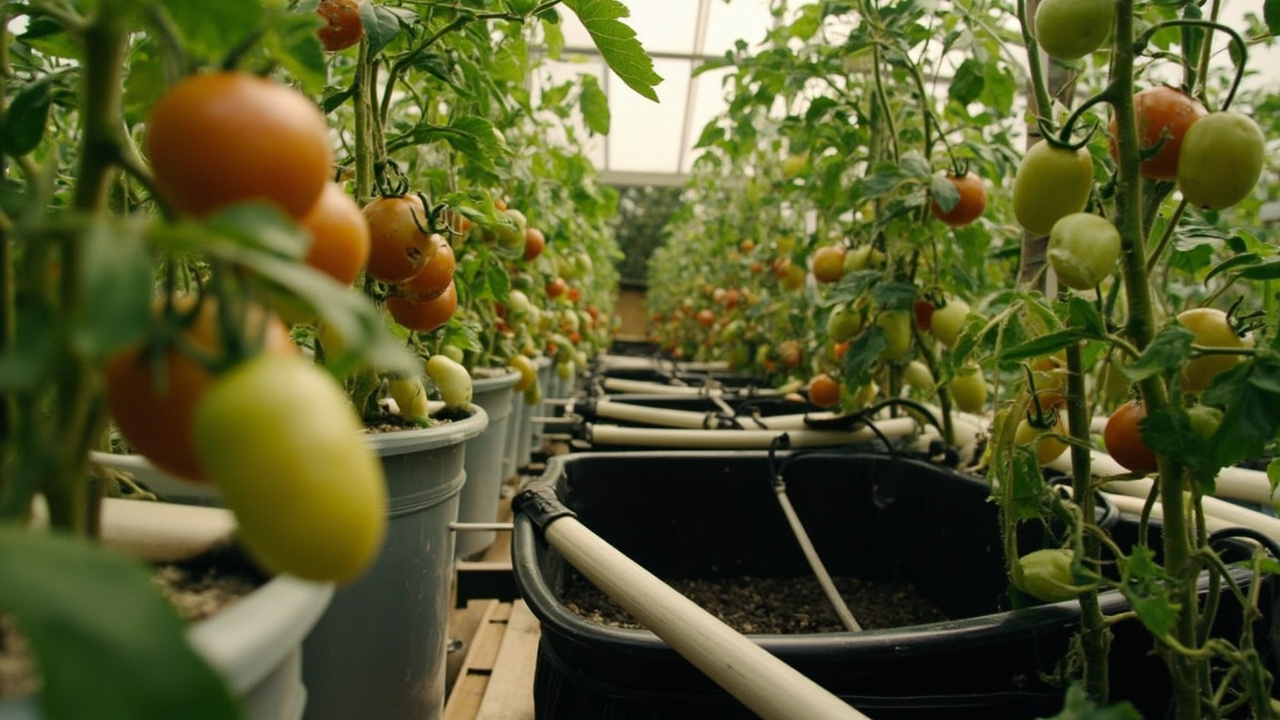
A hydroponic tomato wants continuous feeding, not a daily flood-and-drain cycle. However, the trade-off is pump electricity cost — running the pump 24/7 uses 15 to 30 kWh per month for a 4-plant system. In a drip system, run the pump 24/7 or on a 15-min-on / 15-min-off cycle to keep the roots constantly bathed in oxygenated nutrient solution.
In a deep water culture (DWC) system, the air pump runs 24/7 and the roots sit permanently in oxygenated solution — no cycling needed. In an ebb-and-flow (flood and drain) system, the flood cycles every 15 to 30 minutes during lights-on, with 2 to 3 longer dry periods per day to force the roots to seek oxygen.
A hydroponic tomato that sits in stagnant, low-oxygen nutrient solution for more than 2 hours develops root rot regardless of how perfect the recipe is — the failure is mechanical, not nutritional.
Refill the hydroponic tomato reservoir with full-strength solution when the level drops to one-third of capacity, and dump and remix with a fresh batch every 14 to 21 days regardless. A reservoir that has been circulating for more than 3 weeks accumulates depleted nutrients, excess root exudates, and algae spores that the hydroponic tomato roots would rather not be swimming in.
The 14-day remix interval also prevents the gradual pH drift from pushing the solution outside the productive window. Expect to use 1 to 2 gallons of nutrient solution per hydroponic tomato plant per week during peak fruiting in summer.
Tomato Deficiency Signs in a Hydroponic System
For a full visual catalog of hydroponic tomato deficiency patterns, the tomato problems page covers each issue.
The four deficiencies a hydroponic tomato shows most often are calcium (blossom end rot on the fruit), potassium (brown leaf edges on older leaves), magnesium (yellowing between the veins on older leaves), and iron (yellow new growth with green veins). Each has a recognizable location on the plant.
Calcium deficiency shows on the fruit, not the leaves — the tomato fruit develops a black leathery patch on the bottom. Potassium deficiency shows on older leaves first as a brown crispy edge that creeps inward.
Magnesium deficiency shows as interveinal yellowing on older leaves (the veins stay green, the tissue between turns yellow). Iron deficiency shows on new growth (the veins stay green, the tissue between turns yellow) — if you see yellow with green veins on new growth, suspect iron, not magnesium, regardless of which leaves are affected.
For a full catalog of hydroponic tomato deficiency symptoms with photos of each pattern, the tomato problems page covers each issue with the visual signature. Expect deficiencies in a hydroponic tomato to show up 7 to 14 days after the reservoir chemistry drifted off — much faster than soil-grown tomatoes, which is the cost of the precision.
The upside: corrections also show up faster. A calcium deficiency fixed by adjusting pH and adding calcium nitrate shows improvement in new fruit set within 5 to 7 days, because there is no soil buffer delaying the change.
Fixing Common Hydroponic Tomato Feeding Mistakes
The five mistakes that ruin a hydroponic tomato feed are: mixing nutrients in the wrong order (creates calcium-phosphate precipitate), running the reservoir too hot (above 75°F / 24°C starves roots of oxygen), letting the pH drift above 6.5 (locks out iron and phosphorus), feeding at the same EC through the whole season (overfeeds early, underfeeds late), and topping off the reservoir with full-strength solution instead of plain water (lets EC climb into the toxic range). None of these are obvious in the moment — they all feel like you are being thorough.
The reflex to add more fertilizer when the tomato looks pale is the most expensive mistake in hydroponic tomato growing, because the pale leaves are usually a pH lockout, not a deficiency, and adding more nutrients makes the lockout worse.
If your hydroponic tomato is already failing and you suspect one of these mistakes, dump the reservoir, rinse it, remix a fresh batch at the correct EC for the current growth stage, adjust pH to 6.0, and watch the plant for 5 to 7 days before making any further changes. Most hydroponic tomato problems resolve within 7 days once the reservoir chemistry is correct.
If the plant does not improve within 14 days despite correct EC and pH, suspect root rot from low dissolved oxygen rather than a feeding issue, and add an air stone or increase the pump cycle frequency. For related guidance on watering and feeding soil-grown tomatoes, the tomato fertilizer schedule covers the soil-side analog.
Expect the hydroponic tomato to consume 1.5 to 2.5 liters of nutrient solution per week during peak fruiting. A reservoir dropping more than 1 inch per day in summer is sized correctly. A reservoir dropping less than 0.5 inch per day is over-sized — the solution is going stale faster than the plants drink it.
Adjusting Hydroponic Tomato Fertilizer Through the Season
For related guidance on feeding soil-grown tomatoes through the same seasonal stages, the tomato fertilizer schedule covers the soil-side analog of this recipe.
A hydroponic tomato fertilizer regimen is not a static recipe — it shifts with the season, the growth stage, and the weather. In summer, when the reservoir runs hot and the tomato plant drinks faster, drop the EC by 0.3 to 0.5 mS/cm to compensate for the increased water uptake, and check pH twice daily because the temperature swings drive pH swings.
In winter, when the tomato grows slower and drinks less, raise the EC slightly (by 0.2 to 0.3) to compensate for the lower water turnover, and watch for potassium deficiency on the older leaves as the fruiting load stays high while vegetative growth slows. The hydroponic tomato is a continuous balancing act — the same recipe that produced 12 pounds of fruit in July will produce 4 pounds in December unless you adjust for the season.
Expect to remix the hydroponic tomato reservoir every 14 to 21 days and top off with plain water (not full-strength solution) between remixes. A typical 4-plant hydroponic tomato system uses 8 to 12 gallons of nutrient solution per week during peak summer production and 4 to 6 gallons per week during shoulder seasons.
Track the EC and pH daily for the first month so you learn the rhythm of your specific system, then check every 2 to 3 days once the pattern is clear. The home hydroponic tomato grower who logs EC and pH consistently produces roughly 30% more fruit per plant than the one who guesses, because the data exposes the feeding mistakes before the leaves do.
Turn PDF Bank Statements Into Workable Spreadsheets
Your bank statement is a mess of numbers, but your books shouldn't be. Use our converter to get Excel, CSV, or QBO files — ready for QuickBooks.
Try It Free Now