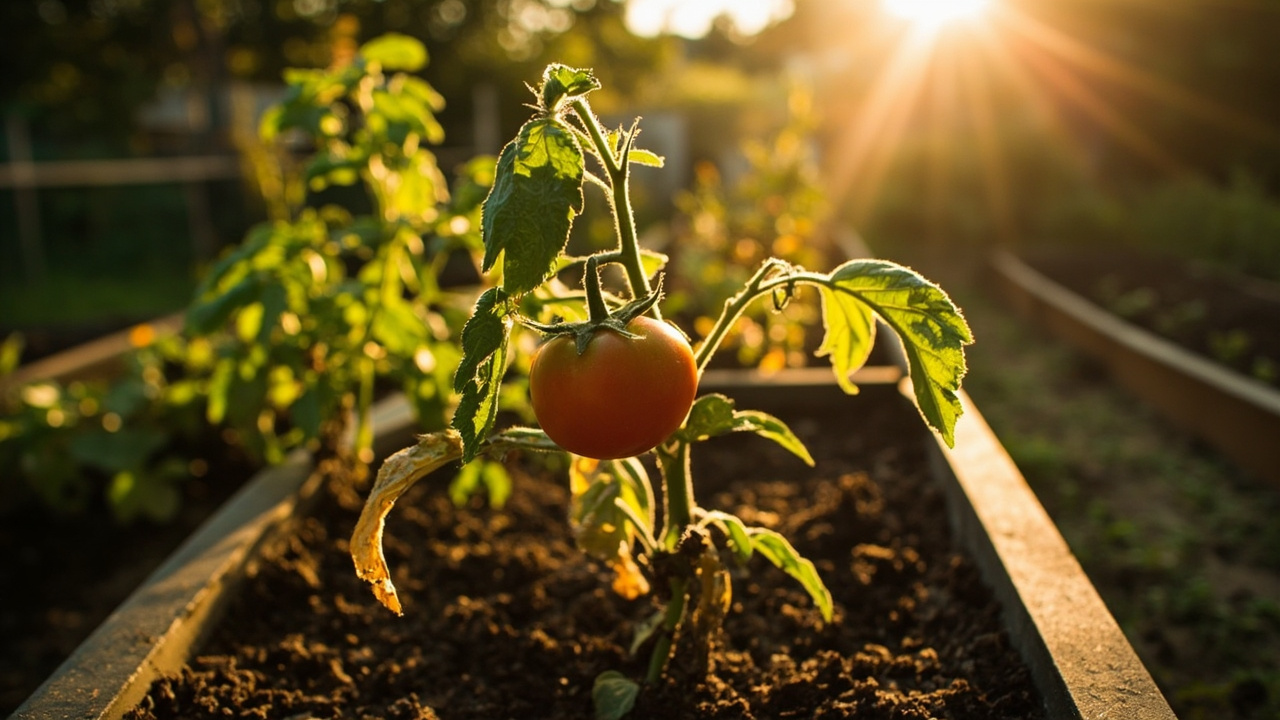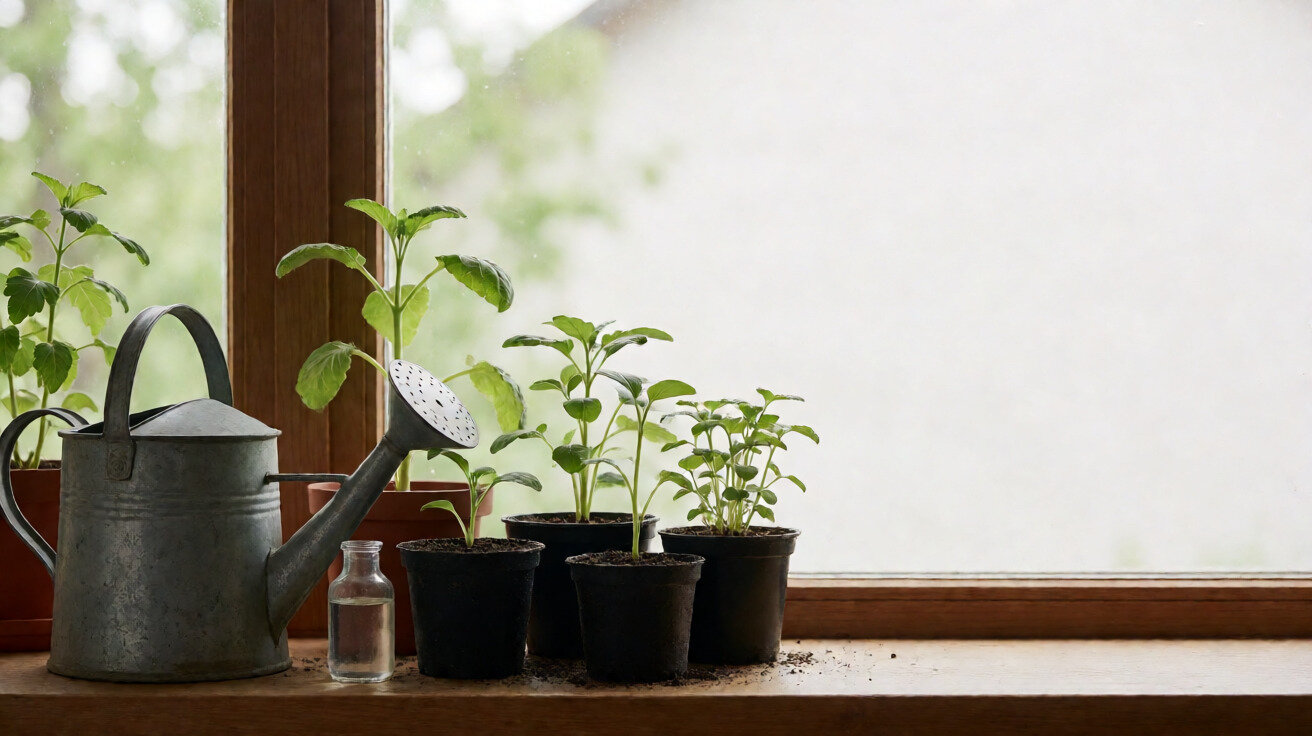

Seedlings are the one plant in your garden where “less is more” is not a figure of speech. It is a literal instruction. A seedling carries a root system smaller than a fingernail. Its leaves are thin, its cuticle is soft, and its ability to buffer excess salts is almost zero. The same fertilizer that feeds a mature tomato plant will kill a seedling at full strength. This article explains why seedlings need different feeding, when to start, which ratios to use and at what dilution, and the single rule that prevents transplant shock.
If you need a refresher on what the three numbers on a bag mean, see what the NPK ratio means. This article assumes you know that 10-10-10 means 10% nitrogen, 10% phosphate (as P2O5), and 10% potash (as K2O), and focuses on how to feed young plants safely.
Why seedlings need different feeding
Three things make seedlings different from mature plants, and all three push in the same direction: feed less.
First, the root system is tiny. A seedling’s roots occupy a few cubic centimeters of mix. There is almost no surface area to absorb water and nutrients, and almost no volume to dilute a concentrated dose. A mature plant can forage through liters of soil. A seedling cannot.
Second, the burn threshold is low. Fertilizer salts in the root zone pull water out of plant tissue through osmosis. A mature plant with a large root system can tolerate a modest salt load. A seedling loses turgor, wilts, and dies at concentrations a mature plant barely notices. The margin between “fed” and “burned” is narrow.
Third, most seedlings start in a starter mix that already contains nutrients. Quality seed-starting mixes include a light charge of fertilizer, often enough for the first two to three weeks. Adding more on top of that is not feeding the plant. It is overloading it. This is the reason most guides that say “fertilize seedlings weekly” are wrong for the first weeks: they ignore what the mix already provides.
For a broader view of where nutrients come from and when soil testing matters, see essential nutrients for plants and gardens.
It also helps to remember that seedlings are not small versions of adult plants in every respect. Their leaves are thinner, their cuticles are softer, and their root hairs are sparse. A concentration that an adult plant absorbs without stress can sit in the root zone of a seedling for days because the plant cannot take it up fast enough. The salt stays, water leaves, and the plant burns from the inside out. That is why the same bottle of 10-10-10 can be right for the garden and lethal for the tray.
When to start feeding seedlings
Wait. That is the first answer. Do not fertilize seeds, and do not fertilize seedlings that have only cotyledons (the first seed leaves). The plant is running on stored energy from the seed and on the light charge in the mix.
Start feeding only after the first true leaves appear and the seedling is two to three weeks old. True leaves look like the plant’s adult leaves, smaller and thinner. Cotyledons are usually rounder, smoother, and simpler. Once true leaves are open and expanding, the seedling is photosynthesizing hard and its root system has grown enough to handle a dilute feed.
Even then, feed lightly. The goal in the seedling stage is not maximum growth. It is steady, compact, dark-green-but-not-too-dark growth with strong stems. Pushing seedlings hard with nitrogen produces tall, soft, leggy plants that flop and break.
A practical schedule for most vegetable and flower seedlings:
| Stage | Weeks after germination | Feed? | Strength |
|---|---|---|---|
| Seed / cotyledon only | 0-2 | No | None |
| First true leaves | 2-3 | Yes, light | 1/4 strength |
| Established seedling | 3-5 | Yes | 1/4 to 1/2 strength |
| Ready to transplant | 5-7 | Yes | 1/2 strength |
Best ratios and dilution for seedlings
The three ratios that work for seedlings are 10-10-10, 2-2-2, and 4-4-4. What matters more than the ratio is the dilution. A 10-10-10 at full label strength is far too strong for a seedling. At one-quarter strength it is a gentle, balanced feed.
- 10-10-10 at 1/4 strength. The most common option. Dissolve one-quarter of the recommended rate in water. Use weekly once true leaves appear.
- 2-2-2. Already a mild ratio. Often sold as a seedling or starter formula. Can be used at half to full label rate depending on the product.
- 4-4-4. A moderate all-purpose organic blend. Use at half strength for seedlings.
The dilution rule: when in doubt, halve it again. A seedling that is slightly underfed will keep growing slowly. A seedling that is overfed can be set back for weeks or killed outright. The cost of under-feeding is a few days of growth. The cost of over-feeding is the plant.
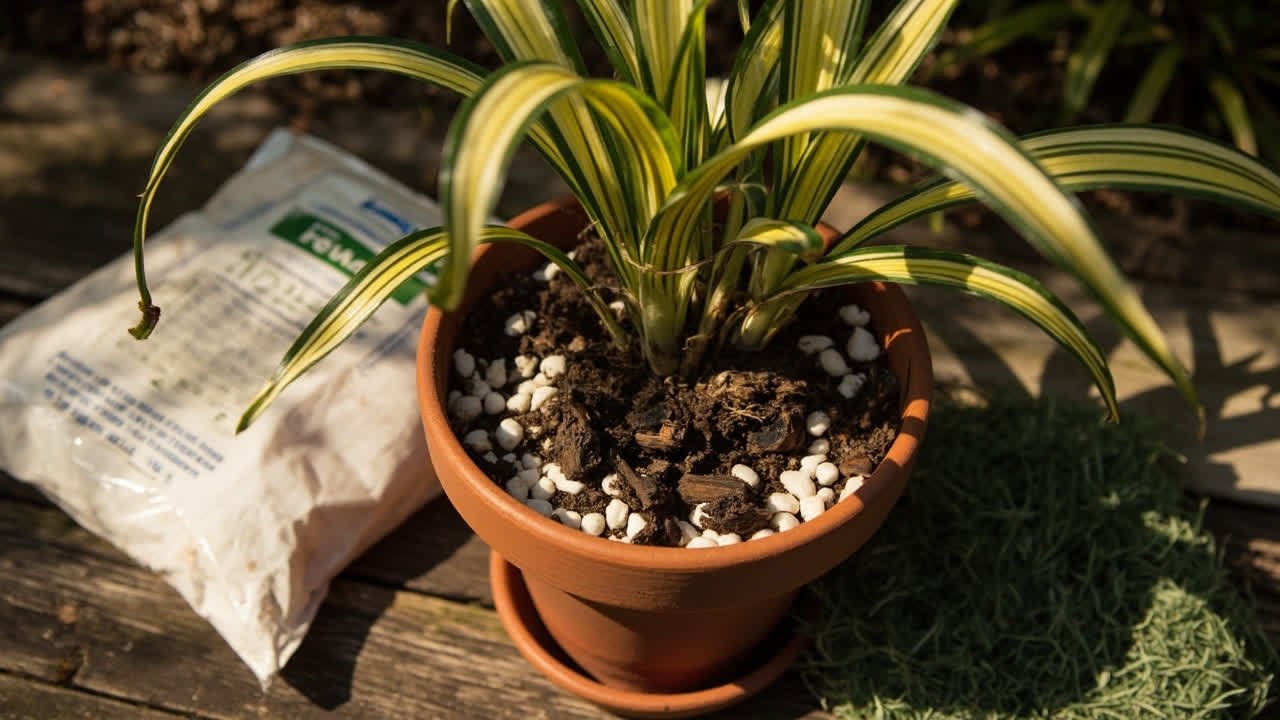
Water-soluble formulas are easier to dilute precisely than granular ones. If you use granular, mix it into the watering can at the reduced rate and stir until dissolved. Never sprinkle dry granules on top of seedling mix; the concentration at the surface is lethal.
A useful habit is to mix a stock solution at full strength in a labeled bottle, then measure one part stock to three parts water for 1/4 strength. This removes guesswork and keeps the dose consistent from tray to tray. Consistency matters more than the exact number, because a seedling’s response to a steady light feed is predictable, while its response to an erratic one is not.
For the math behind converting label rates to actual application amounts, see fertilizer application rate.
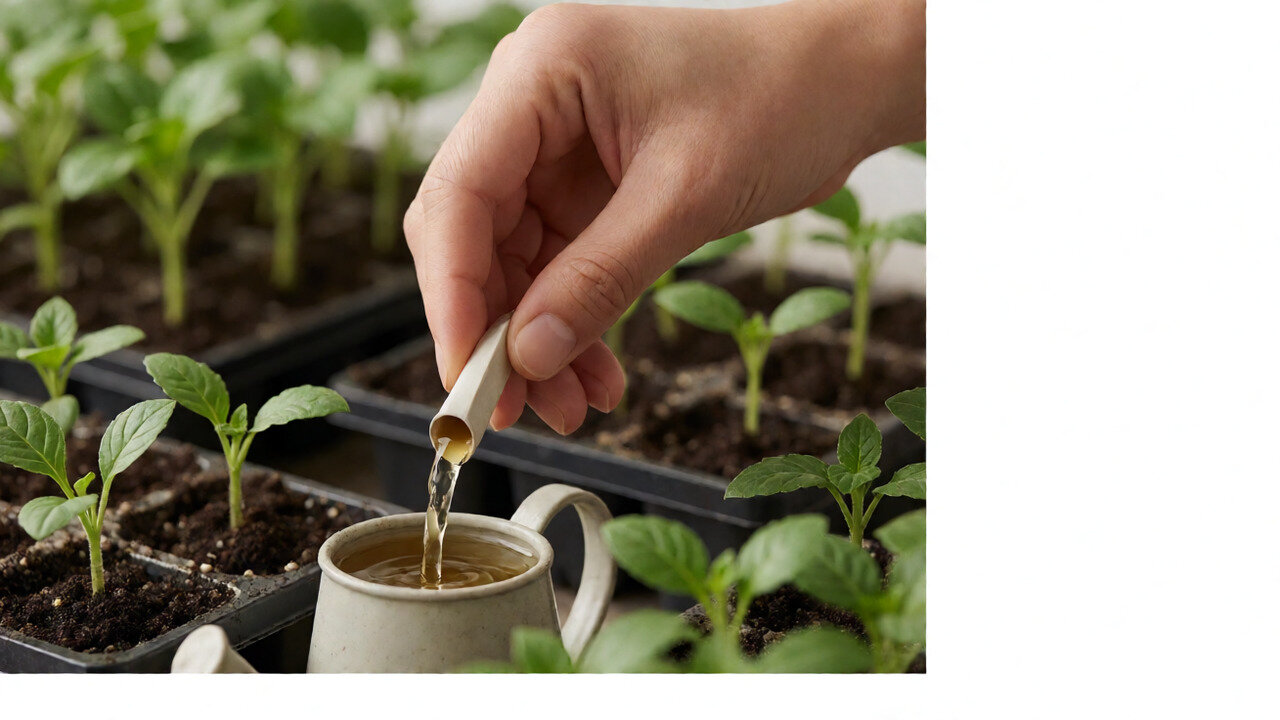
Seedlings under grow lights: feed only after true leaves appear, and always at reduced strength.
The transplant shock rule
Do not fertilize at transplant time. This is the rule most gardeners get wrong, and it is the single most useful thing to take from this article.
Transplanting damages roots. Even careful handling breaks fine root hairs. The plant’s water uptake drops for several days while new roots form. During that window the plant is stressed and its ability to take up nutrients is reduced. Adding fertilizer to the hole or the soil at planting adds salt to a root system that is already struggling to take up water. The result is worse shock, not better recovery.
The common “starter fertilizer” practice of putting 10-52-10 in the transplant hole is a myth for seedlings. That high-phosphorus formula is designed for established transplants in the field, not for tender seedlings moving from a cell tray to a garden bed. For a home gardener moving seedlings, skip it.
The correct sequence:
- Transplant into prepared soil with no fertilizer added.
- Water thoroughly to settle the soil around the roots.
- Wait two weeks.
- Begin feeding at 1/4 to 1/2 strength.
Prepared soil here means soil that has been amended before planting, not soil dosed at planting time. If your bed needs compost or a slow-release base, add it days or weeks before transplanting so it has time to integrate. Adding it to the hole on planting day puts a salt load right where the damaged roots are trying to recover.
After two weeks the root system has recovered and begun exploring the new soil. Feeding then supports growth instead of adding stress. For container plantings the same rule applies; see NPK fertilizer for containers for container-specific timing.
Signs of over-fertilizing seedlings
Over-fertilized seedlings tell you early if you know what to look for. Watch for these signs:
- Burned leaf tips and margins. Brown, crispy edges on otherwise green leaves are the classic salt-burn symptom.
- Stunted growth. The plant stops growing even though light and water are adequate. Roots may be damaged.
- Dark green, almost blue-green leaves. Excess nitrogen produces lush, dark foliage that is soft and prone to pests.
- Wilting despite moist soil. Roots damaged by salt cannot take up water, so the plant wilts even when the mix is wet.
- White crust on the soil surface. Salt accumulation visible on top of the mix.
If you see these signs, stop feeding immediately. Flush the tray or pot with plain water two or three times to leach excess salts. Do not fertilize again until the plant recovers, usually one to two weeks. Resume at half the previous strength.
One caution about flushing: waterlogged mix can rot roots, so let the tray drain fully between flushes and do not leave pots sitting in standing water. If the mix stays soggy for more than a day, move the tray to a warmer, brighter spot to speed drying. Prevention is easier than recovery, which is another argument for starting at 1/4 strength and increasing only if growth stalls.
Organic vs synthetic for seedlings
Both work. The difference is speed and control.
Synthetic water-soluble fertilizers act fast and are easy to dilute to exact strengths. That precision is an advantage with seedlings, where small differences matter. The downside is that a dosing error is immediate and there is no buffer.
Organic fertilizers release more slowly and are gentler. A mild organic blend such as 2-2-2 or 4-4-4 is harder to overdo. The downside is that release rates vary with temperature and moisture, so the dose is less predictable. Liquid organic feeds such as fish emulsion work well at 1/4 strength.
For seedlings specifically, the best choice is whichever you can dilute accurately and apply consistently. A synthetic at 1/4 strength applied on schedule beats an organic applied erratically. If you want to compare the two approaches in depth, see organic vs synthetic NPK fertilizer.
Hardening off and transition to garden
Before seedlings go into the garden they must be hardened off: a gradual exposure to sun, wind, and outdoor temperatures over seven to ten days. Fertilizing during hardening off is counterproductive. The plant needs to toughen, not grow fast. Stop feeding during the hardening-off period or reduce to a very light 1/4 strength once a week.
Once transplanted into the garden, follow the transplant shock rule above: no fertilizer at planting, wait two weeks, then begin at 1/4 to 1/2 strength. After the plant is established and growing vigorously, you can move toward the rates recommended for the mature crop.
One final note on the transition: seedlings started indoors in sterile mix have never encountered soil microbes. When they move to garden soil, the microbial community begins working on nutrients immediately. That is another reason to hold off on fertilizer at transplant time. Let the soil and the plant settle into each other first.
Last updated: October 28, 2026.
Sources
- University of Minnesota Extension, “Starting Seeds Indoors”
- Penn State Extension, “Seed Starting”
- Purdue Extension, “Starting Seeds”
- NC State Extension, “Seed Starting”
- Washington State University Extension, “Starting Seeds”
- Cornell Cooperative Extension, “Seed Starting”
The actual number is the decision.
Turn any PDF statement into a clean sheet
Skip the typos and the hours of copying. Our converter handles any bank statement format and outputs Excel, CSV, or QBO for QuickBooks. No file retention, free to try.
Convert your statement