If your worm bin smells bad, has flies, or suddenly has worms climbing the sides, the worms are usually reacting to the bin conditions. Most worm bin problems come back to four variables: moisture, oxygen, food volume, and bedding balance.
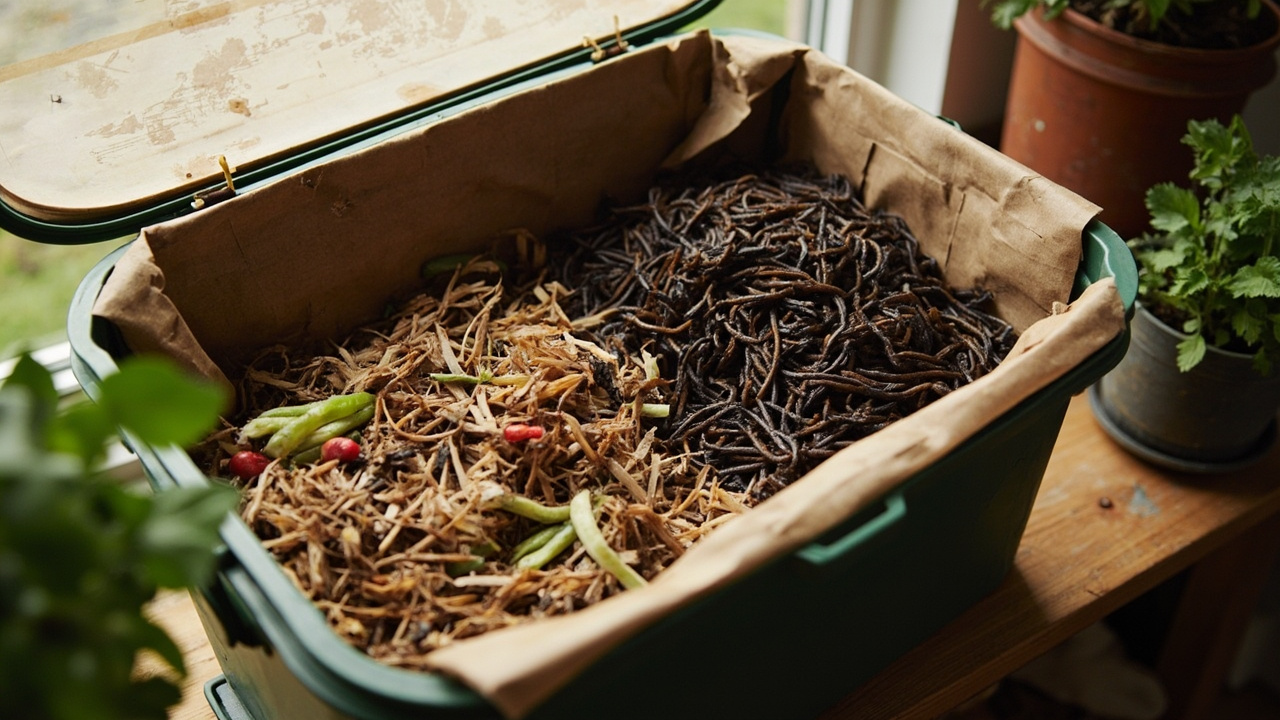
The worms are not the problem. They are the signal. A healthy bin smells earthy, processes food gradually, and has damp bedding that feels like a wrung-out sponge. When the bin turns sour, swampy, or fly-heavy, something in that balance has shifted.
Use this as a diagnosis page first. Once you know the likely cause, the fix becomes much easier and you can go back to the setup or maintenance step that created the issue.
Quick Diagnosis Table
Start with the symptom you can see or smell. Worm bin problems often overlap, but one cause usually sits underneath the others.
| Symptom | Most likely cause | What it means |
|---|---|---|
| Sour smell | Too much wet food or acidic scraps | The bin is fermenting faster than worms can process it |
| Rotten egg smell | Anaerobic bedding | The lower layer has too little oxygen |
| Fruit flies | Exposed food scraps | Food is sitting near the surface uncovered |
| Fungus gnats | Wet surface bedding | The top layer is staying damp too long |
| Worms escaping | Heat, flooding, acidity, or fresh bedding shock | The worms are trying to leave unsuitable conditions |
| Food not disappearing | Overfeeding or low worm activity | The bin is receiving more than it can process |
If several symptoms appear at once, revisit the basic worm bin setup before changing only one variable.
Bad Smells Mean the Bin Has Gone Out of Balance
A worm bin should smell like damp soil or forest floor. Anything sharper tells you which part of the system has slipped.
- Sour smell: too much fruit, citrus, coffee, or wet food is fermenting before worms can eat it.
- Ammonia smell: the bin has too much nitrogen-rich material and not enough carbon bedding.
- Rotten egg smell: the bedding has gone anaerobic, usually from compaction, flooding, or a buried mass of food.
- Garbage smell: unsuitable scraps such as dairy, meat, oily food, or large cooked leftovers may be rotting in the bin.
The mechanism is simple: worms need air around the bedding. When wet food fills the pore spaces, microbes that tolerate low oxygen take over and produce the smells people associate with failed bins. Indoor bins have less margin for odor, so vermicomposting indoors depends on moisture and feeding discipline.
Flies Usually Mean Exposed Food or Wet Surface Bedding
Fruit flies and fungus gnats point to the surface of the bin. Fruit flies are drawn to exposed scraps, especially fruit peels. Fungus gnats prefer damp organic surfaces where larvae can feed.
If flies show up soon after feeding, the food was probably not buried deeply enough or the bedding cover is too thin. If they persist even when food is covered, the surface may be staying wet all the time. That usually means too much feeding, not enough dry carbon, or poor airflow.
A steady DIY worm castings system keeps food covered and bedding balanced before flies become established. Once flies are active, the bin is telling you that the surface layer has become attractive habitat, not just that a few scraps were present.
Escaping Worms Are a Stress Signal
A few worms on the lid after a new setup is normal. A mass escape is different. When worms climb the sides, gather under the lid, or leave the bin, they are reacting to stress in the bedding.
Check temperature first. Red wigglers are most comfortable around 55-80°F (13-27°C). Above that range, heat can drive them upward or kill them. Next, check moisture. Flooded bedding pushes air out and forces worms away from the lower layer. Very dry bedding can also make them move in search of moisture.
Acidity is another trigger. Too much citrus, onion, coffee grounds, or fermenting fruit can make the bin uncomfortable. Fresh bedding shock can happen when worms are added to dry cardboard, unwashed coco coir, or bedding that has not been moistened evenly. Long-term stability comes from how you raise worms for castings, especially feeding rate and bedding condition.
Wet Bedding and Slow Processing Point to Overfeeding
Overfeeding is the quiet cause behind many worm bin problems. Food scraps contain water. If you keep adding scraps before the previous feeding is mostly gone, the bin gets wetter and heavier even if you never pour water into it.
Slow processing can also happen when the bin is too cold, too acidic, or low in worms, but the most common home-bin pattern is simple: the food supply is larger than the worm population can handle. The uneaten scraps rot, the bedding compacts, oxygen drops, and odors or flies follow.
The honest trade-off is that a smaller, slower bin is often healthier than a bin pushed to process every kitchen scrap. Feed less than you think for a week and watch whether the smell improves and the surface dries slightly. If the lower layer is finished but the top stays wet and messy, it may be time to separate worms from castings and reset the bedding.
What to Check First
Do not change everything at once. Work through the bin in a simple order so the real cause does not get hidden.
- Smell the bin and identify whether it is earthy, sour, ammonia-like, or rotten.
- Squeeze a handful of bedding and check whether it drips, crumbles, or holds together.
- Look for exposed food on the surface and bury or remove it.
- Check temperature, especially if the bin sits near sun, appliances, or outdoor heat.
- Stop feeding until most visible food is gone.
Most worm bin problems improve once moisture, oxygen, and feeding return to a steady range. If the worms are alive and the bin still has an earthy layer somewhere inside, the system is usually recoverable.
Turn any PDF statement into a clean sheet
Skip the typos and the hours of copying. Our converter handles any bank statement format and outputs Excel, CSV, or QBO for QuickBooks. No file retention, free to try.
Convert your statement