Sedum and echeveria are easy to confuse at the nursery — both are rosette-to-spreading succulents that want full sun and lean soil — but they fill different roles in the garden, and the right one for the reader depends almost entirely on their climate and whether they want a plant for the ground or a plant for the windowsill. The “which is better” question has no universal answer; the better question is “which fits the situation.”
The reading decision is a one-question rule: outdoor groundcover in a cold zone → sedum; indoor windowsill or patio container in a mild zone → echeveria. The rare case where both belong is the gardener in zones 9–11 who can plant sedum in the ground and echeveria in containers. Everywhere else, the climate and the use case point to one answer.
The rest of this guide compares the two on appearance, climate, growth, propagation, problems, and use cases. The goal is not to crown a winner but to help the reader buy the right plant the first time, so the next decade is a thriving garden rather than a series of replaced plants.
The One-Question Decision (Which One Fits Your Situation?)
The choice reduces to climate plus use case. Both plants are succulent, both want sun and lean soil, both are drought-tolerant — but the climate tolerance and the growth habit are different enough that wrong-plant-wrong-place is the most common failure mode for both.
If the reader plants outdoors in zones 3–7 and wants a groundcover, rock garden, or border perennial, sedum is the answer. Upright varieties like Autumn Joy handle zone 3 winters without protection, and groundcover varieties like Dragon’s Blood and Angelina handle zone 4. The plant comes back every spring, expands to fill its space, and flowers for pollinators in late summer. The full sedum landscape guide is in the complete sedum care guide.
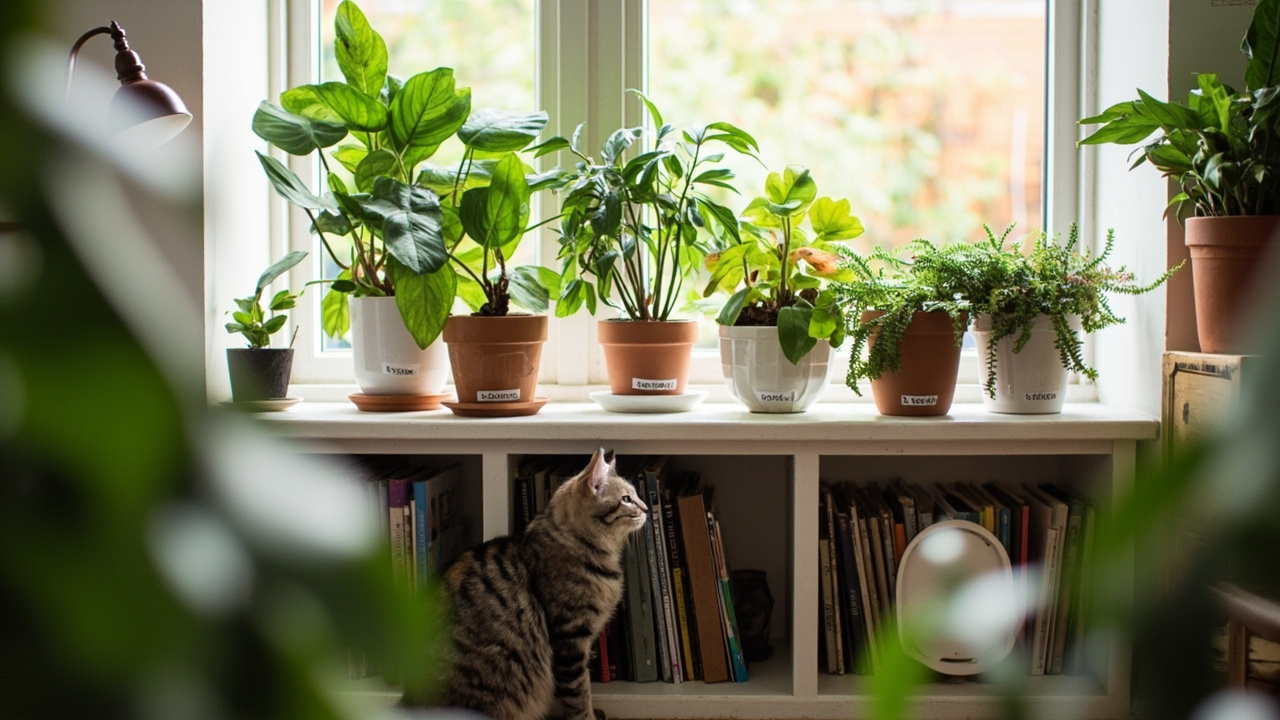
If the reader wants an indoor windowsill plant, a patio container, or a dish garden centerpiece, echeveria is the answer. The geometric rosette shape is the look most people picture when they say “succulent,” and echeveria thrives in the stable indoor environment with bright indirect to direct light. Outdoor echeveria is only reliable in zones 9–11; everywhere else, it is a houseplant or a seasonal outdoor plant that comes inside for the winter.
The rare case: a gardener in zones 9–11 who can plant sedum in the ground as a perennial AND echeveria in containers on the patio. Both thrive in the same climate, and the two genera complement each other — sedum for the landscape, echeveria for the close-up container. The full sedum range is in the watering guide; the cluster’s main guide is the complete sedum care guide.
Appearance (Rosette vs Spreading, Color, and Form)
Both genera form rosettes, but echeveria is the tighter, more sculptural one, and sedum is the more variable one — upright, spreading, trailing, or mat-forming depending on the species.
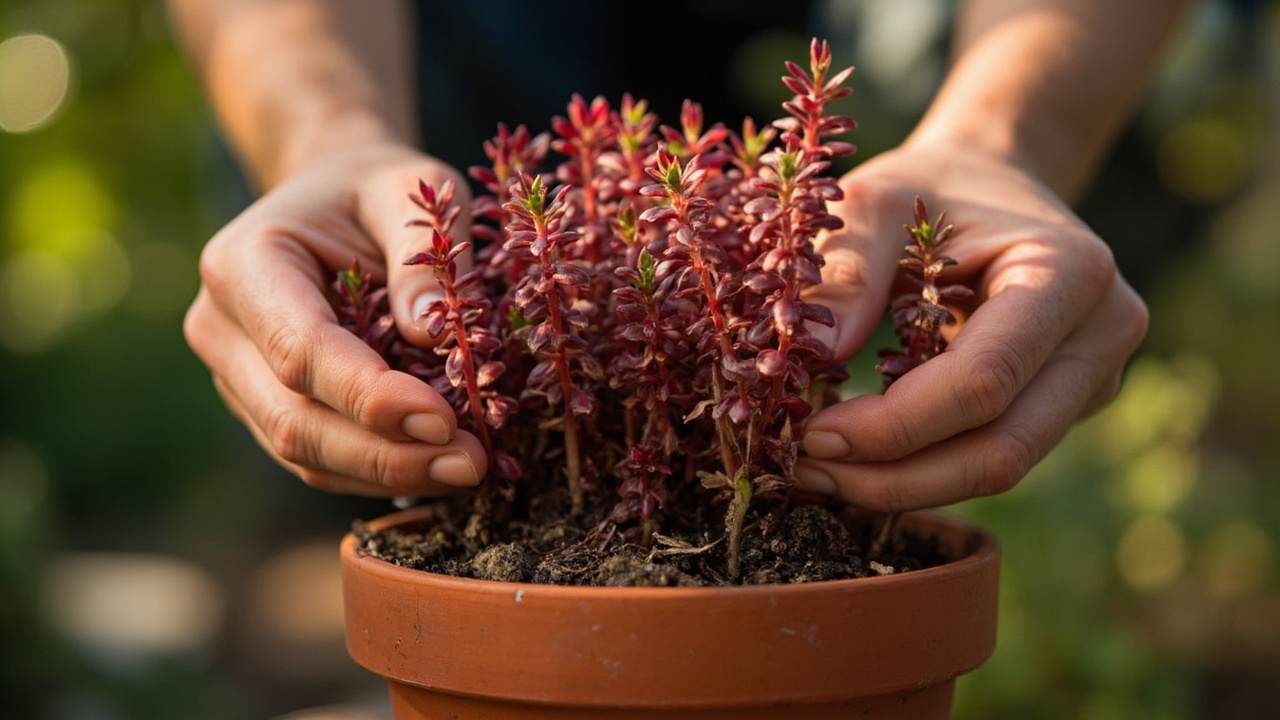
Sedum appearance is wide-ranging. Upright varieties like Autumn Joy and Matrona form 30–60 cm tall clumps with flat, slightly fleshy leaves arranged in opposite pairs along the stem. Groundcover varieties like Dragon’s Blood and Angelina form 5–15 cm tall mats with small, narrow leaves that spread along the soil. Trailing varieties like Burro’s Tail (Sedum morganianum) form long pendulous stems covered in tear-drop leaves. The common thread is that the leaves are smaller and flatter than echeveria, and the plant tends to grow in multiples rather than as a single specimen.
Echeveria appearance is consistent. The plant forms a tight geometric rosette with thick, plump leaves arranged in a Fibonacci spiral. The leaves are wider and more cupped than sedum, and most varieties are covered in farina — a waxy powder that protects the leaf from sun and water. The rosette is the entire plant; there is little stem visible, and offsets form at the base rather than trailing. Color ranges from blue-gray (Echeveria elegans) to pink (Echeveria ‘Perle von Nurnberg’) to near-black (Echeveria ‘Black Prince’).
The visual identification test: if the plant has a visible stem with multiple leaves arranged along it, it’s sedum. If the plant is a single tight rosette with no visible stem, it’s echeveria. The distinction holds across most varieties, with the exception of some shrubby echeveria hybrids that develop a stem over time.
Climate and Hardiness (Where Each One Thrives)
Sedum is the cold-hardy one; echeveria is not. The climate split is the single biggest reason to pick one over the other.
Sedum ranges across zones 3–11 depending on species. Upright varieties like Autumn Joy, Matrona, and Neon are hardy to zone 3, surviving winter temperatures down to -40°C (-40°F). Groundcover varieties like Dragon’s Blood and Angelina are hardy to zone 4. Alpine varieties like Sedum acre and Sedum album are hardy to zone 3 and tolerate thin rocky soils. The full sedum hardiness range is in the varieties guide, with zone-by-zone recommendations.
Echeveria ranges from zones 9–11. Most echeveria species tolerate temperatures down to about -1°C (30°F) for brief periods, but sustained cold kills the plant. The leaves are particularly frost-sensitive — a hard frost turns them to mush within hours. In zones 9–11, echeveria can live outdoors year-round. In zones 3–8, echeveria is an indoor plant or a seasonal outdoor plant that comes inside for the winter. The full overwintering approach is in the complete sedum care guide; the parallel echeveria overwintering is to bring the plant indoors before the first frost.
The practical implication: in zones 3–7, sedum is the only outdoor perennial option. Echeveria is a houseplant or a seasonal container. In zones 8–11, both can live outdoors, but sedum stays in the ground year-round and echeveria stays in containers that can be moved indoors during cold snaps. The light requirements guide covers the climate-specific sun needs for both genera.
Growth Rate and Habit (How Each One Fills a Space)
Sedum is the speedier spreader; echeveria is the slow grower. The pace difference is the second reason to pick one over the other.
Sedum grows fast once established. Upright varieties reach 30–60 cm tall and 30–45 cm wide by year 2, then expand slowly year over year. Groundcover varieties fill 30–60 cm in one growing season and continue to spread by rhizomes each year. Trailing varieties like Burro’s Tail can grow 30–60 cm of stem in a single season under ideal conditions. The pace is fast enough that the reader can plant a 10 cm pot in spring and have a 30 cm wide plant by fall. The full growth-rate guidance is in the sedum care guide.
Echeveria grows slowly. A single rosette is typically 5–15 cm wide and doubles in 12–18 months under ideal conditions. Mature size — 20–30 cm wide for most varieties — takes 3+ years. The plant offsets at the base, so a single mature plant might form a cluster of 3–5 rosettes by year 4, but the cluster size is still small compared to a sedum clump. The pace is slow enough that the reader should buy the largest echeveria they can afford if they want an immediate visual, rather than waiting for a small plant to grow.
The implication: sedum is the right plant for filling a slope, a border, or a large container quickly. Echeveria is the right plant for a focused container or a single windowsill — the visual is sculptural rather than mass-planting. Many gardens use both: sedum for the landscape, echeveria for the close-up patio container.
Propagation (How Each One Multiplies)
Both genera are easy to propagate, but the techniques differ. Sedum is the bulk propagator; echeveria is the careful patient propagator.
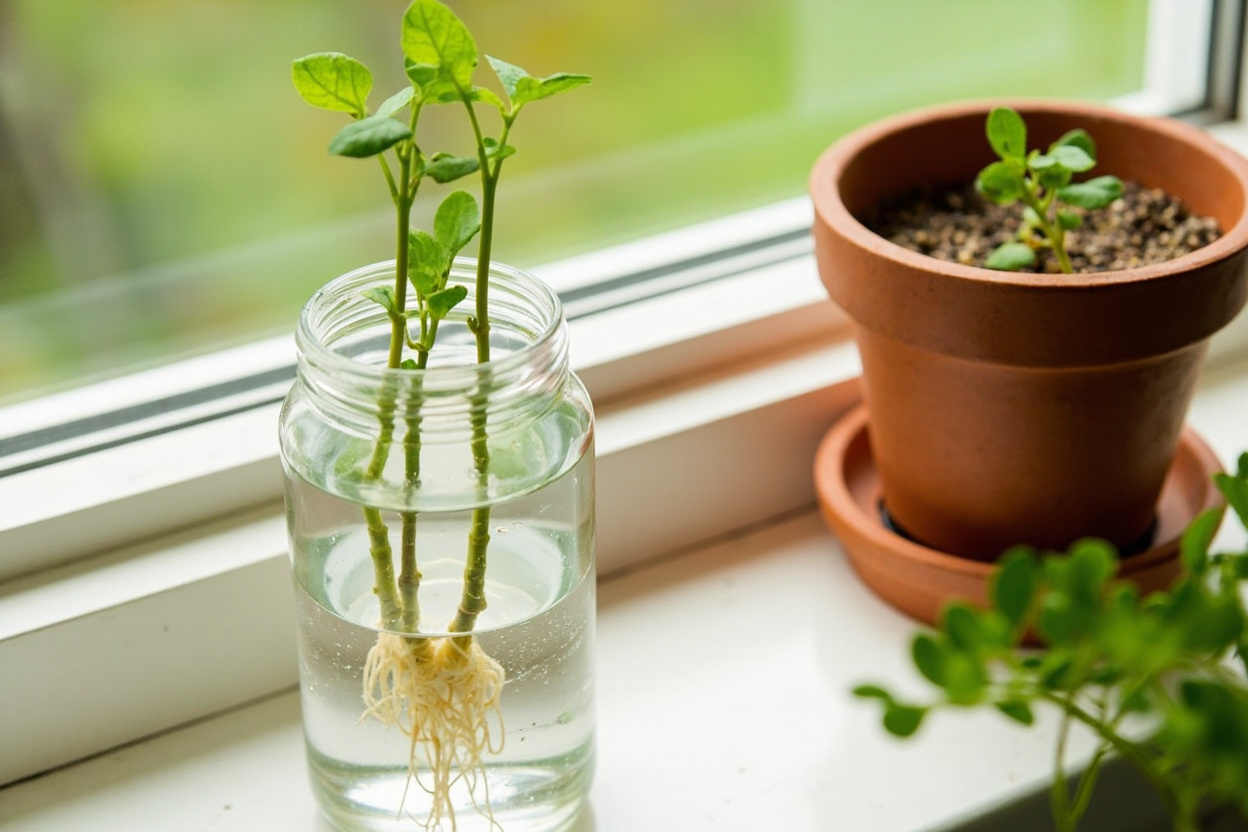
Sedum propagation is fast and forgiving. Leaf cuttings lay on top of dry gritty mix and root in 2–4 weeks. Stem cuttings root in 1–2 weeks. Division of established clumps works year-round except in deep winter. The success rate is close to 100% with healthy material. The full technique is in the varieties guide, with diagrams of leaf, stem, and division.
Echeveria propagation is slower but still reliable. Leaf cuttings lay on top of dry mix and root in 6–8 weeks, with a substantially lower success rate than sedum — typically 60–80% depending on variety. Stem cuttings root faster, in 3–4 weeks. The most reliable method is offsets: the small rosettes that form at the base of the mother plant. An offset is essentially a clone, and it roots within 2–3 weeks when separated and planted. The full echeveria propagation is similar to the sedum propagation guide, with the offset method as the primary technique.
The implication: a sedum planting can be expanded to fill a space in 1–2 seasons using leaf or stem cuttings. An echeveria planting expands slowly, with offsets as the primary multiplication. For a gardener who wants to grow a large collection, sedum is the faster path. For a gardener who wants a single specimen plant focused on a windowsill, echeveria’s pace is fine.
Common Problems (Quirks and Failure Modes)
Sedum’s number-one killer is soil that holds water; echeveria’s number-one killer is cold. Each genus has a different failure mode that the reader should plan for.
Sedum problems center on water. Overwatering produces yellow leaves and root rot; cold-zones sedum can suffer crown rot in wet winters if drainage is poor; full sun is essential for compact growth, so a shaded sedum stretches and flops. The full sedum problem guide is in the soil mix guide. The headline is that sedum forgives watering mistakes as long as the soil is lean and gritty, and the sun is direct.
Echeveria problems center on cold and humidity. A single cold night below freezing turns the leaves to mush. High humidity with poor air circulation promotes mealybugs and fungal disease. Direct sun without acclimation produces sunburn on the most-exposed leaves. Insufficient light produces the same stretching pattern as sedum — long internodes, pale color, leaning toward the window. The fix is the same — more direct sun — but the threshold is different: echeveria tolerates bright indirect to direct light, while sedum really wants six or more hours of direct sun.
The implication: sedum forgives watering mistakes and is the more forgiving plant for outdoor settings. Echeveria forgives more light variation and is the more forgiving plant for indoor settings. The choice between them depends on which failure mode the reader is more able to prevent.
Use Cases (Where Each One Shines)
Sedum is the outdoor landscape plant; echeveria is the indoor specimen plant. The use cases are different enough that the two rarely compete for the same spot.
Sedum roles: groundcover for slopes and rock gardens, pollinator border in late summer, green roof in lean soil, container thriller in patio displays, edging plant along sunny paths. The common thread is that sedum fills space, supports pollinators, and survives winter in cold zones. The full use-case guide is implicit in the varieties guide, with variety-by-variety role recommendations.
Echeveria roles: indoor windowsill specimen, patio container centerpiece, dish garden plant, wedding favors, terrarium plant (in open terrariums), gift plant. The common thread is that echeveria is a focused, sculptural plant that the viewer sees up close. The geometric rosette is the visual centerpiece, and the slow growth means the plant doesn’t outgrow its container for years. The full echeveria care is similar to sedum’s indoor care in the complete sedum care guide, with the addition of cold protection.
The implication: plant the right genus for the role, and the failures disappear. Choosing sedum for an outdoor slope or echeveria for a sunny windowsill is the high-success path. Choosing the wrong one for the role is the most common reason either genus fails in a home garden.
The Verdict (Picking the Right One for Your Situation)
The verdict is specific to the reader’s situation, not a universal ranking. Most readers will find the answer within three rules.
If the reader lives in zones 3–7 and wants an outdoor groundcover, rock garden, or pollinator border, sedum is the right plant. The plant comes back every year, fills its space, and supports pollinators in late summer. The full outdoor sedum guide is in the complete sedum care guide, and the variety selection is in the varieties guide.
If the reader lives in any zone and wants an indoor windowsill plant, patio container, or dish garden centerpiece, echeveria is the right plant. The plant tolerates indoor conditions, rewards close viewing with its sculptural rosette, and propagates easily from offsets. The complete sedum care guide covers the indoor light, water, and soil requirements that echeveria shares; the addition is cold protection for outdoor plants in zones 3–8.
If the reader lives in zones 9–11, both plants work in different roles. Sedum in the ground as a perennial landscape plant; echeveria in containers on the patio or windowsill. The two complement each other — sedum for the wide view, echeveria for the close-up. The full sedum cluster is in the complete sedum care guide, with light, water, soil, propagation, and problem-solving for the right plant in the right place.
Turn PDF Bank Statements Into Workable Spreadsheets
Your bank statement is a mess of numbers, but your books shouldn't be. Use our converter to get Excel, CSV, or QBO files — ready for QuickBooks.