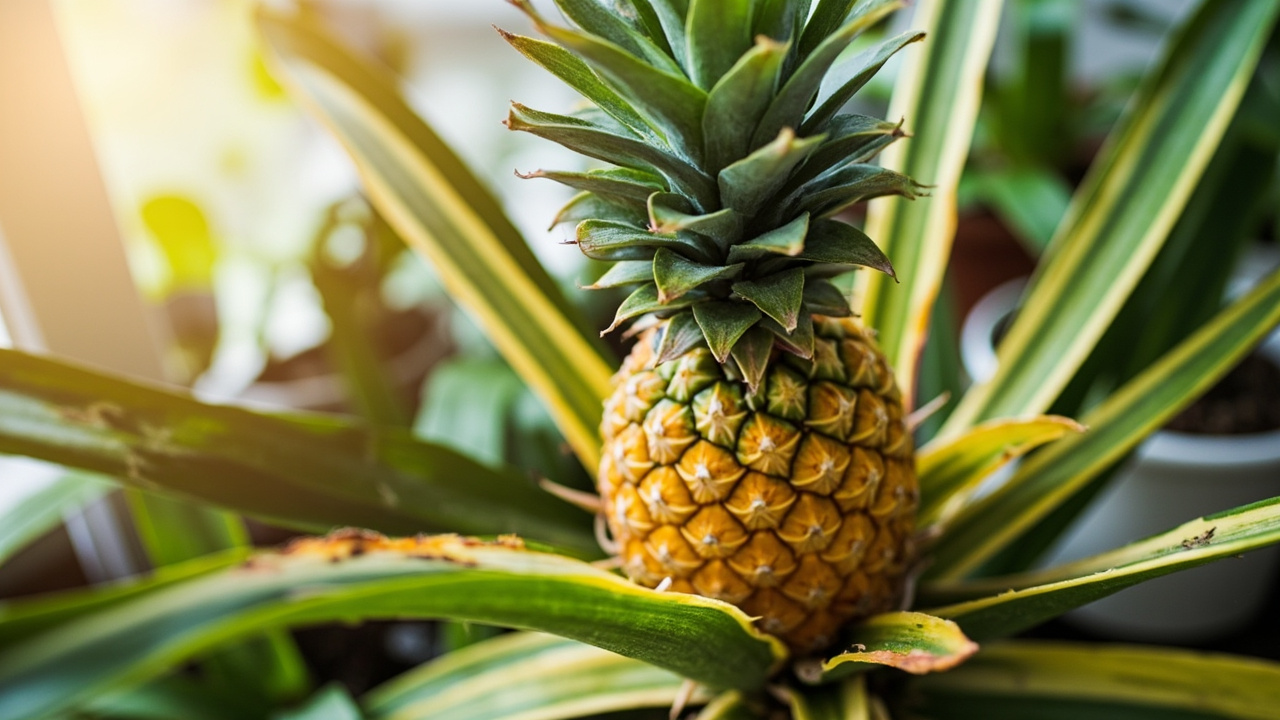
A pineapple plant with yellow leaves is not giving you one simple message. It is giving you a category of warning. The job is to narrow down which warning it actually is.
This is where people go wrong fast. They see yellow leaves and immediately add fertilizer, or immediately water less, or move the plant into stronger sun without checking the full pattern.
Sometimes that helps. Sometimes it makes the real problem worse!
The better approach is to read the yellowing pineapples leaves logically: which leaves are yellowing, how quickly, what the soil feels like, and whether the center is still growing. Once you understand those four clues, the cause is usually much clearer.
When Yellowing Is Normal
Not all yellow leaves mean trouble. Outer leaves on a mature pineapple plant naturally age and die over time. If the oldest bottom leaves slowly turn yellow while the center stays green and active, that is usually normal leaf replacement.
What happens next in a healthy plant is simple: the yellow outer leaf dries, weakens, and can eventually be removed once it is mostly spent. The center should keep pushing new growth. If that is happening, the plant is still functioning well.
When Yellow Leaves Mean Overwatering
This is the most common real problem. The right watering rhythm for pineapple plants is covered in our watering guide. If the soil stays wet too long, the roots stop breathing properly. Then the leaves start yellowing because the plant can no longer move water and nutrients effectively.
- yellowing starts from older leaves and moves inward
- soil feels damp for too long
- pot stays heavy several days after watering
- leaf bases may feel softer than normal
If that is your pattern, stop watering on schedule and start checking the soil properly. Then read the watering guide because the fix is rarely just “less water.” It is usually better drainage plus better timing.
When Yellow Leaves Mean Not Enough Light
Pineapple plants need strong direct light. In dim conditions, they gradually lose vigor, and the leaves often shift from healthy green to washed-out yellow-green.
Strong direct light is non-negotiable for pineapple plants. If you are growing indoors and natural light is limited, a grow light can fill the gap — our light requirements guide covers the specifics. The signs usually look like this:
- overall pale color, not just one or two leaves
- slow or stalled center growth
- plant leaning toward the window
- smaller new leaves
What happens next if you do nothing is a long slow decline. The plant may not collapse dramatically, but it stops building strength. Move it into stronger light or use a grow light. The light requirements guide covers the setup in detail.
When Yellow Leaves Mean Nutrient Issues
If the soil drains well, the watering is reasonable, and the plant gets enough sun, yellowing can point to a nutrient problem. This often shows up as pale new growth or yellowing between veins rather than uniform whole-leaf yellowing.
Iron and magnesium issues are common when the pH drifts too high or feeding is inconsistent. A consistent feeding schedule helps prevent this — our pineapple fertilizer schedule covers exactly how much to feed and when. The plant is not necessarily starving in absolute terms. It may simply be unable to access what is already in the mix.
That is why throwing stronger fertilizer at the plant is not always smart. If the root zone is stressed, more fertilizer creates a second problem. Start by checking light and soil first. Then adjust feeding.
Cold Stress Can Also Cause Yellowing
Pineapple plants do not like cold. For container-grown plants, choosing the right pot size also affects root temperature stability — see our pineapple pot size guide. If temperatures dip below 55°F / 13°C for long, growth slows sharply. Below 50°F / 10°C, visible stress becomes much more likely, especially indoors near chilly glass or outdoors at night.
- yellowing after a cold snap
- slowed center growth
- leaf texture becoming dull or slightly limp
What happens next depends on duration. A brief cold event may cause cosmetic damage only. Repeated exposure weakens the plant more seriously. Move it back into warmth and avoid feeding until it resumes active growth.
How to Diagnose Yellow Leaves Correctly
Run through this sequence before you act:
- check which leaves are yellow — oldest only or whole plant?
- check the soil moisture — dry, balanced, or still wet?
- check the light — enough direct sun or not?
- check recent temperature exposure
This matters because the same symptom can come from opposite causes. Yellowing with soggy soil is not treated the same way as yellowing with dry soil and weak light.
What to Do Right Now
If Overwatering Is the Cause
Let the soil dry more deeply, improve the mix if necessary, and make sure the pot drains completely. The next thing you should see is the yellowing slowing down, even if the already-damaged leaves do not turn green again.
If Low Light Is the Cause
Move the plant into stronger direct sun gradually. Over the next few weeks, new growth should emerge greener and firmer. Existing pale leaves usually do not fully recover.
If Feeding Is the Cause
Use a balanced fertilizer lightly, not aggressively. Then wait and watch the new growth, not the old damaged leaves. The center tells you whether the correction worked.
Should You Cut Off Yellow Leaves?
Only if they are mostly spent. If a leaf is more than 50–70% yellow and clearly declining, you can remove it cleanly with sanitized pruners. If it is only partly yellow, leave it for now. The plant may still reclaim some remaining resources from it before letting it go completely.
This is the trade-off: removing old yellow leaves improves appearance, but removing them too early reduces the plant’s chance to recycle what is left in that tissue.
When Yellowing Means Bigger Trouble
If the center crown yellows, the base softens, and the plant smells sour at the soil line, the problem is more serious. That points toward crown or root failure rather than a minor care imbalance. In that case, go straight to the dying pineapple plant guide or the root rot article because the plant may need intervention fast.
The Honest Take
Most yellow pineapple leaves are not mysterious. They are either normal aging, too much water, or too little light. The key is not reacting emotionally to the color. Read the pattern first, then correct the cause.
If the center is still active, the plant is usually recoverable. That is the part worth paying attention to most.
Turn any PDF statement into a clean sheet
Skip the typos and the hours of copying. Our converter handles any bank statement format and outputs Excel, CSV, or QBO for QuickBooks. No file retention, free to try.
Convert your statement