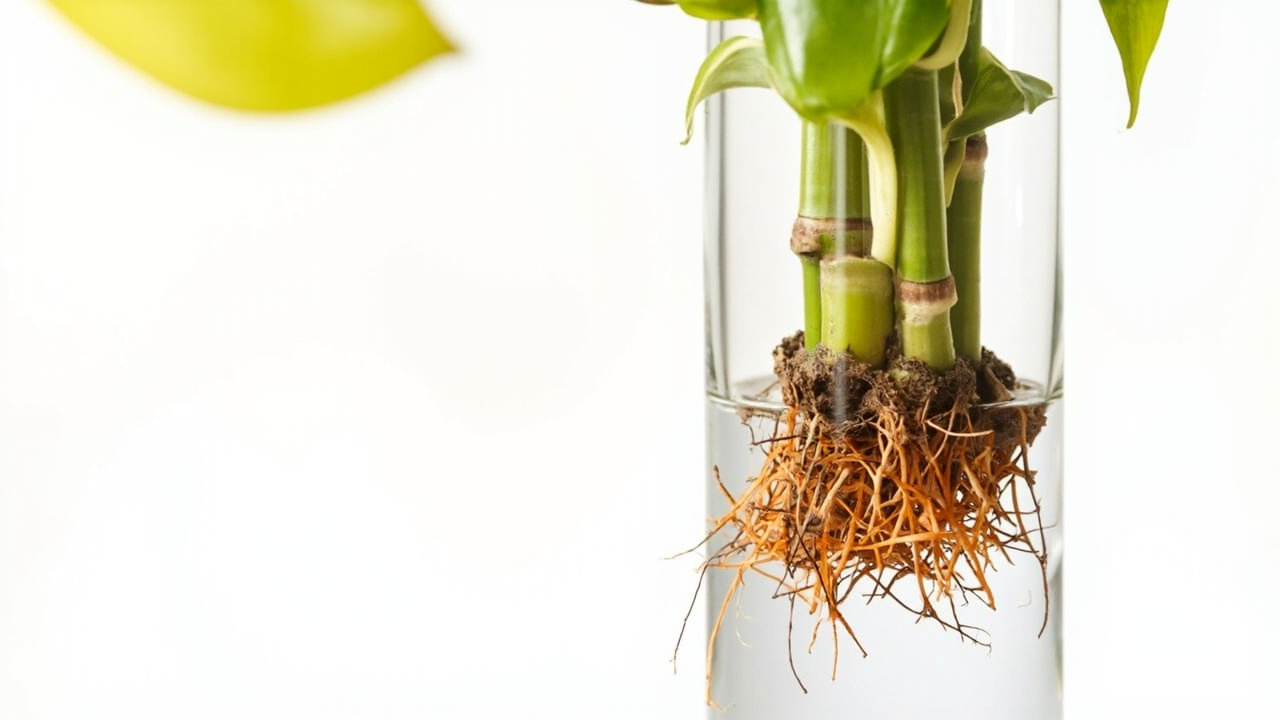

Lucky bamboo root rot is one of the most common reasons a previously healthy plant declines, and it is almost always caused by the same two things: water that does not circulate and soil that stays wet for too long.
The good news is that if you catch it early enough, the plant can almost always be saved by cutting away the affected roots and resetting the cutting in fresh water or clean soil. The bad news is that the symptoms — yellow leaves, soft stems, a musty smell — are easy to miss until the damage is already significant.
How water and soil culture affect the plant’s behaviour is covered in our lucky bamboo water versus soil comparison.
The reason root rot is so damaging is that lucky bamboo roots are not like the dense root balls of typical potted plants. Dracaena sanderiana roots are relatively sparse and function differently in water culture versus soil, which means the plant has less redundancy to compensate when those roots are lost.
Once rot sets in and begins travelling up the root system, it can reach the base of the stalk within days, at which point the entire plant may be beyond recovery.
What makes root rot particularly tricky is that the symptoms show up in the leaves before most people look at the roots. By the time you notice the plant is struggling, the below-ground damage has been building for weeks.
Understanding what healthy lucky bamboo roots look like and checking them periodically is the single most effective prevention.
How to Identify Lucky Bamboo Root Rot
Healthy lucky bamboo roots in water are typically orange, reddish, or cream-coloured, with a firm texture that snaps cleanly when pulled. They should smell clean — like fresh water, not like pond or sewer. When you lift the plant from its container, the roots should hold their shape and not slide off the base of the stalk when touched gently.
Rotting roots are dark brown to black, mushy, and slimy. They collapse when you touch them and may come away from the stalk leaving a dark, wet stub. The smell is unmistakable — a sour, unpleasant odour that is distinct from normal plant material. If the roots smell bad, they are rotting. In advanced cases, the base of the stalk itself becomes soft and dark, which means the rot has travelled up from the roots into the plant tissue proper.
Leaf Symptoms to Watch For
Yellow leaves on lucky bamboo are the most visible early warning sign of root problems, but they are often misdiagnosed. When roots are damaged by rot, they cannot absorb water and nutrients efficiently, which shows up as yellowing in the newer or upper leaves first. A full breakdown of yellow leaf causes and what each pattern means is available in our lucky bamboo yellow leaves guide. If the yellowing starts at the base of older leaves and moves upward, the problem may be something else — but combined with smelly or mushy roots, it confirms root rot is at work.
Soft lower stems are a more serious sign. The stalk should feel firm all the way from the roots to the top. Press gently at the base with your thumb — if it gives or feels hollow and papery, the rot has reached the vascular system and saving the plant becomes significantly harder. Brown, crispy leaf edges that appear after yellowing suggest the plant has been under stress long enough for secondary issues to develop.
How to Confirm by Touch
The most reliable test is to remove the plant from its container and rinse the roots under running water at around 68°F / 20°C. Spread the roots out and examine them individually. Firm, coloured roots with good texture are healthy. Any that are dark, slimy, or break apart under light pressure should be trimmed away. If most of the root system is compromised but the base of the stalk is still firm, the plant can still be propagated from the cutting above the damaged area.
How to Treat Lucky Bamboo Root Rot Step by Step
Once you have confirmed root rot, the treatment is straightforward but must be done carefully. The goal is to remove all rotted material, sterilise the remaining plant tissue, and place it in a clean container with fresh water or soil.
Step 1: Remove the plant from its container and rinse the roots thoroughly. Tip the container and lift the plant out. Hold the roots under lukewarm running water to wash away all the murky residue and slime. This lets you see exactly what you are working with.
Step 2: Cut away all dark, mushy, or smelly roots. Use clean scissors or pruning snips that have been wiped with rubbing alcohol. Cut at the point where the root changes from firm and coloured to soft and dark — do not try to save the margin. If the entire root system is rotted, cut them all off cleanly. The plant will regrow roots from the base if it is still viable.
Step 3: Examine the base of the stalk. If the base is firm and pale, the plant is still viable. If it is soft, dark, or has a foul smell when you cut into it, the rot has travelled into the stalk and that particular cutting will not survive. In that case, take healthy stem cuttings from above the affected area and treat those as new propagations instead.
Step 4: Rinse the container and pebbles or refresh the soil completely. Do not put a cleaned plant back into the same dirty water — the pathogens are still present. Wash the glass container with hot soapy water, then rinse it with a solution of 1 part bleach to 9 parts water, let it soak for 10 minutes, and rinse thoroughly with clean water. If using pebbles, boil them for 10 minutes or run them through a dishwasher cycle to sterilise them.
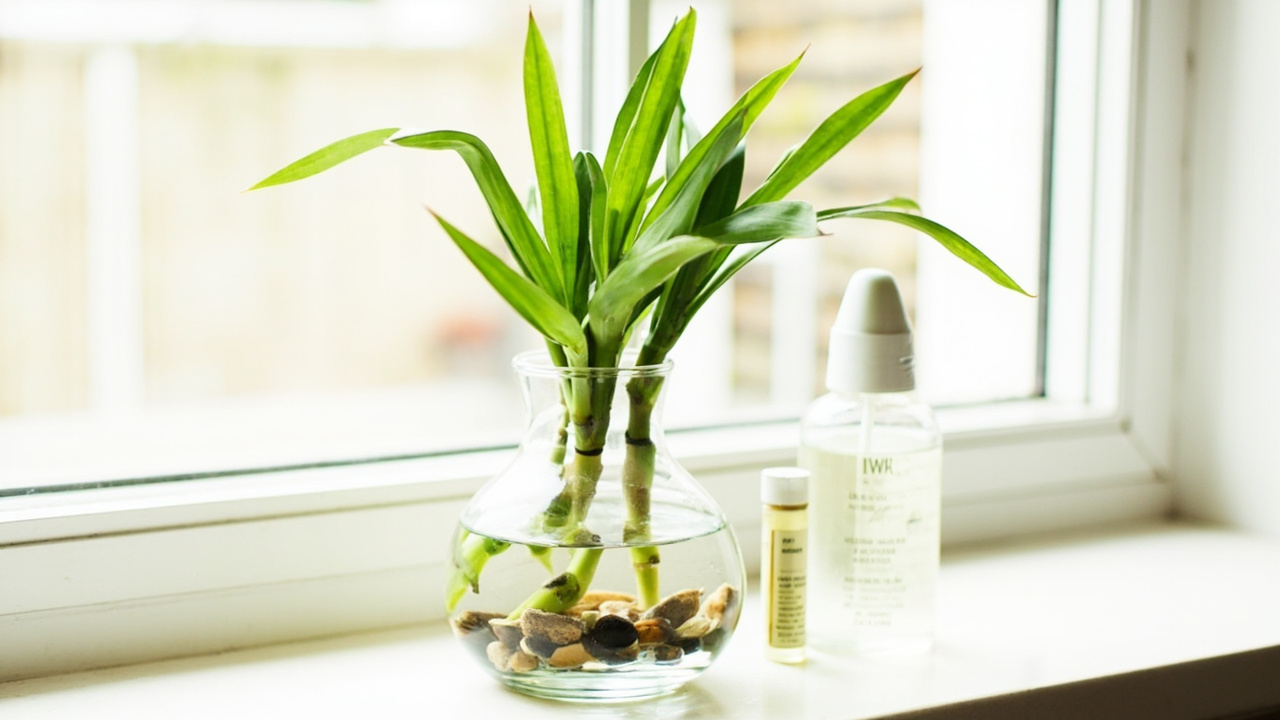
Step 5: Place the cleaned plant in the sterilised container with fresh water. Fill with clean water at room temperature — roughly 68–72°F / 20–22°C — and set the plant so the roots are fully submerged but the base of the stalk is not sitting in water at the very bottom, which can encourage new rot to start. Put the container in bright indirect light, away from direct sun which heats the water and encourages bacterial growth.
Within 2–4 weeks, you should see new root growth beginning from the base of the stalk — pale, firm, growing tips that look nothing like the mushy rotted ones. This is the signal that the plant has recovered and is functioning again. To propagate additional plants from the healthy sections you have cut, follow the method described in our lucky bamboo propagation guide.
Preventing Root Rot in Lucky Bamboo
Prevention is entirely a matter of water management, and for water-grown lucky bamboo the rules are simple: change the water completely every 2–3 weeks, not just topping it up. Topping up is the main reason root rot develops in water culture — as water evaporates, the concentration of dissolved minerals and any bacterial load increases, and the roots are sitting in a increasingly hostile environment.
The container itself matters. Narrow-necked vases look attractive but trap roots in a small space and restrict oxygen flow. Wide-mouthed containers allow better air circulation around the root zone, which suppresses the anaerobic bacterial growth that causes rot. If you are using a narrow vase, change the water more frequently — every 10–14 days — to compensate for the lower oxygen levels.
For soil-grown lucky bamboo, the rule is equally straightforward: water only when the top 1–2 inches of soil feel dry to the touch. Lucky bamboo tolerates drought better than it tolerates wet soil. In winter or in air-conditioned rooms where evaporation is slower, watering once every 10–14 days is usually sufficient. Always use a pot with a drainage hole — never let the plant sit in a saucer of standing water for more than a few hours.
The temperature of the water also plays a role. Cold water slows root metabolism and can cause stress that makes rot more likely. Room-temperature water at roughly 68–72°F / 20–22°C is ideal for both water and soil culture. If you live in a cool climate, avoid using water straight from the tap in winter — let it come to room temperature first.
After treating root rot and saving the plant, the recovery period is fragile. Do not add any fertilizer for at least 8–10 weeks after the reset — the roots are regrowing and concentrated nutrients will burn the new tissue before it is mature enough to handle them. Once you see strong new root growth and the plant is producing fresh leaves again, resume your normal care routine at half the usual fertilizer strength for the first few cycles. The full fertilizer schedule for healthy lucky bamboo is covered in our fertilizer guide.
Root rot does not have to mean the end of your lucky bamboo. The plant is more resilient than it looks, and a quick response — catch it, cut it, clean it, restart it — almost always works when the stalk itself is still firm. The key is checking the roots before the leaves look too bad, and not waiting to see if the plant “bounces back” on its own.
From Bank Statement to QuickBooks-Ready File
That manual cleanup you just read about? This tool skips it. Turn your PDF into QBO for QuickBooks without storing your data anywhere.
Start Converting