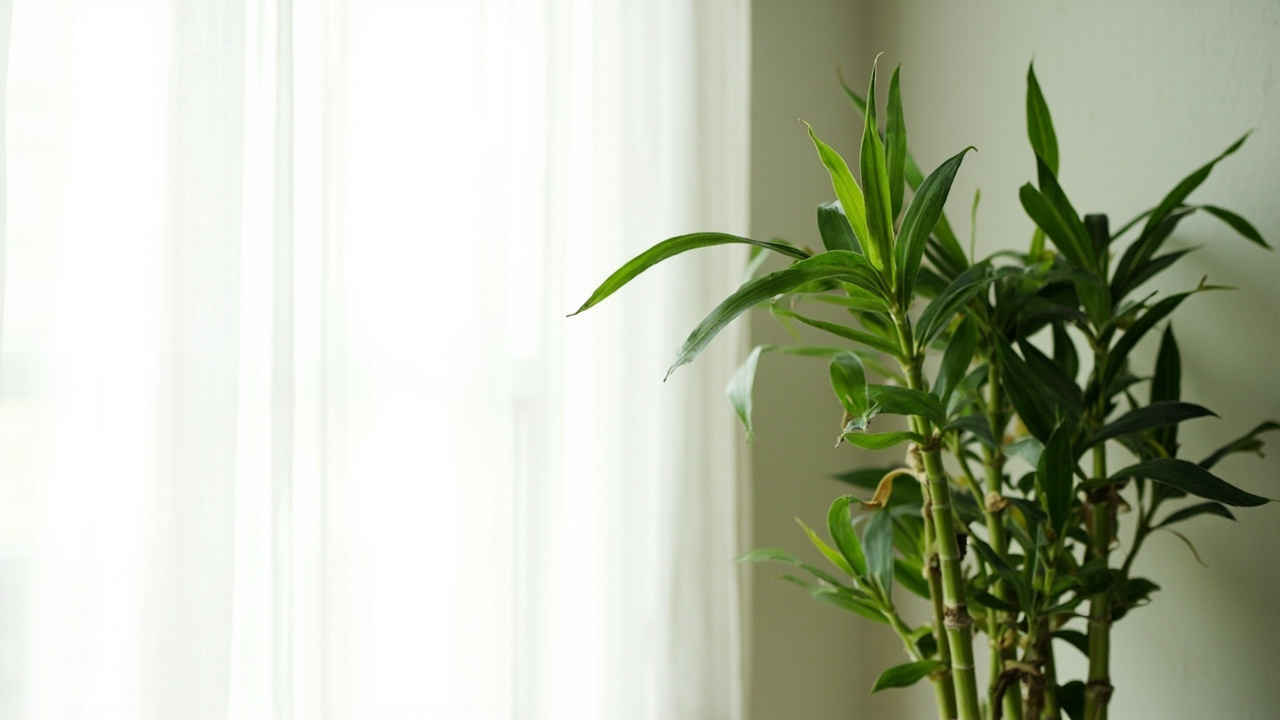
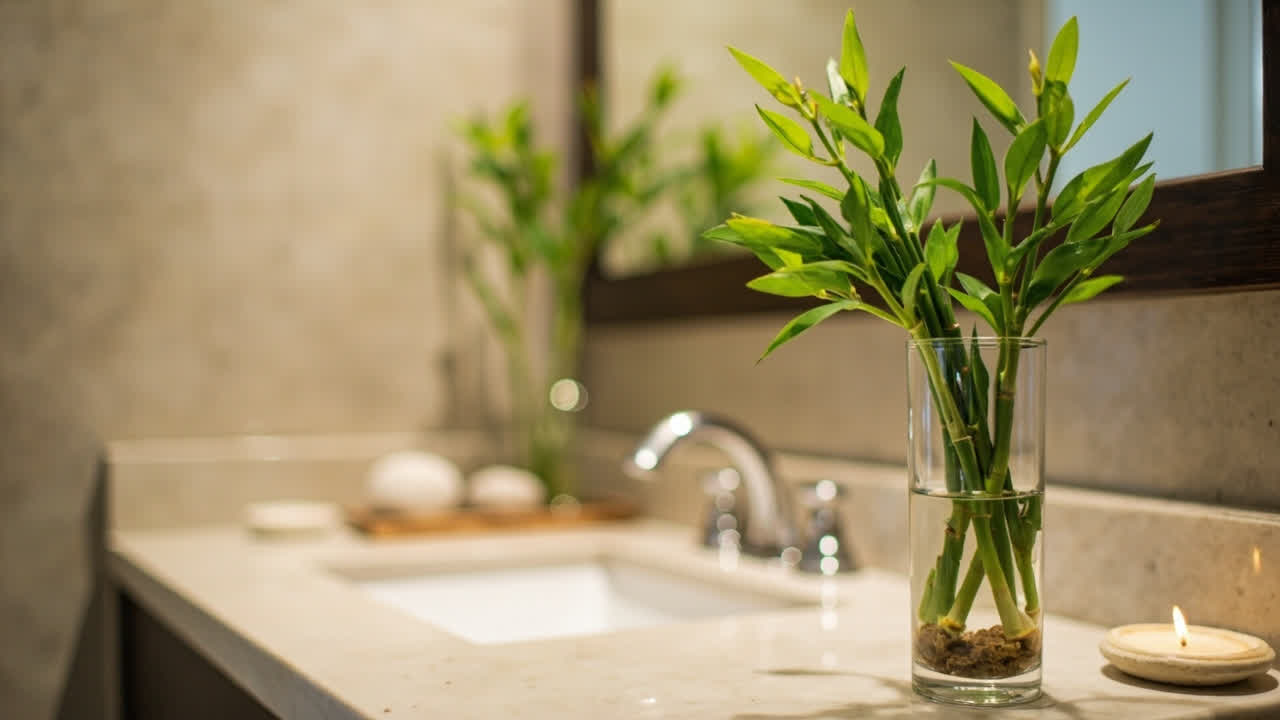
Lucky bamboo plants are everywhere in homes and offices, and they share a shelf or tabletop with cats and dogs far more often than most people realise. What many pet owners do not know is that lucky bamboo — properly called Dracaena sanderiana — is toxic to both cats and dogs, and the symptoms that follow a chewing incident can be alarming even when the outcome is ultimately fine. The plant is a Dracaena, not a true bamboo, and all Dracaena species carry the same toxicity profile for pets (the full species context is covered in our Dracaena sanderiana species guide).
The confusion starts with the name. Lucky bamboo is not bamboo at all, it is a Dracaena, and the ASPCA Poison Control Center lists Dracaena species as toxic to both cats and dogs. True bamboo, by contrast, is generally non-toxic to pets. This distinction matters because the plant most people call “bamboo” in a home context is almost always Dracaena sanderiana, not a genuine bamboo grass. Anyone with pets who has received a lucky bamboo as a gift or placed one on a shelf should understand the specific risk, not the generic one.
The toxins in Dracaena sanderiana are steroidal saponins, compounds the plant produces as a natural defence. When a cat or dog chews the leaves or stems, these saponins irritate the lining of the digestive tract. General lucky bamboo care (including watering, light, and common problems) is covered in our lucky bamboo care guide. The plant is not lethal, but it is uncomfortable and stressful for the animal — and worrying for the owner.
Symptoms of Lucky Bamboo Poisoning in Cats and Dogs
The first signs most pet owners notice are drooling and pawing at the mouth. This starts within minutes to an hour of chewing the plant, as the saponins begin irritating the oral mucosa. The affected animal may make repeated swallowing motions, shake its head, or show signs of oral discomfort that look like something caught in its throat.
Vomiting follows, sometimes within 30–60 minutes, and may be repeated 2–4 times over the next few hours. The vomit often contains visible pieces of green leaf material, which is how you know the source is the plant. Diarrhoea can develop alongside the vomiting, particularly if a significant amount of plant material was ingested. For a broader breakdown of what lucky bamboo problems look like and how to address them, see our lucky bamboo problems guide. Lethargy and apparent weakness — the animal moving less, seeming subdued — is common in the hours after ingestion as the digestive tract protests.
Symptoms in Cats Specifically
Cats are often more severely affected by Dracaena toxicity than dogs. Beyond drooling and vomiting, cats may show signs of depression and inappetence that lasts 24–48 hours after ingestion. Some cats develop dilated pupils after eating lucky bamboo, which is a neurological sign of irritation that usually resolves on its own but should be monitored. The ASPCA notes that cats who ingest Dracaena may also show signs of weakness and incoordination, though these are less common.
Symptoms in Dogs Specifically
Dogs who chew lucky bamboo typically show drooling and vomiting as the primary symptoms, with diarrhoea appearing in about half of documented cases. Dogs are more likely than cats to develop a genuinely upset stomach that leads to repeated retching. Abdominal pain — which shows as a hunched posture, reluctance to lie down, or sensitivity when the belly is touched — indicates the gut inflammation is more significant and may warrant a veterinary visit even if vomiting has stopped.
What to Do If Your Pet Eats Lucky Bamboo
Remove the plant from your pet’s reach immediately and check the mouth for any remaining plant pieces stuck to the teeth or gums. Rinse your pet’s mouth gently with water from a syringe or a cupped hand, using lukewarm water at roughly 68–72°F / 20–22°C, to flush residual plant material from the oral cavity. Do not force water into a resisting animal’s mouth — this risks aspiration.
Your vet may recommend withholding food for 12–24 hours to let the gut settle, then reintroducing a bland diet such as boiled chicken and rice for 2–3 days. This is not always necessary for mild cases, but it does help the digestive tract recover more quickly. Fresh water should always be available — offer it freely and encourage drinking to help flush the system. The ASPCA Animal Poison Control Center is available 24 hours at (888) 426-4435 if you need immediate guidance.
How to Keep Lucky Bamboo and Pets Safely Together
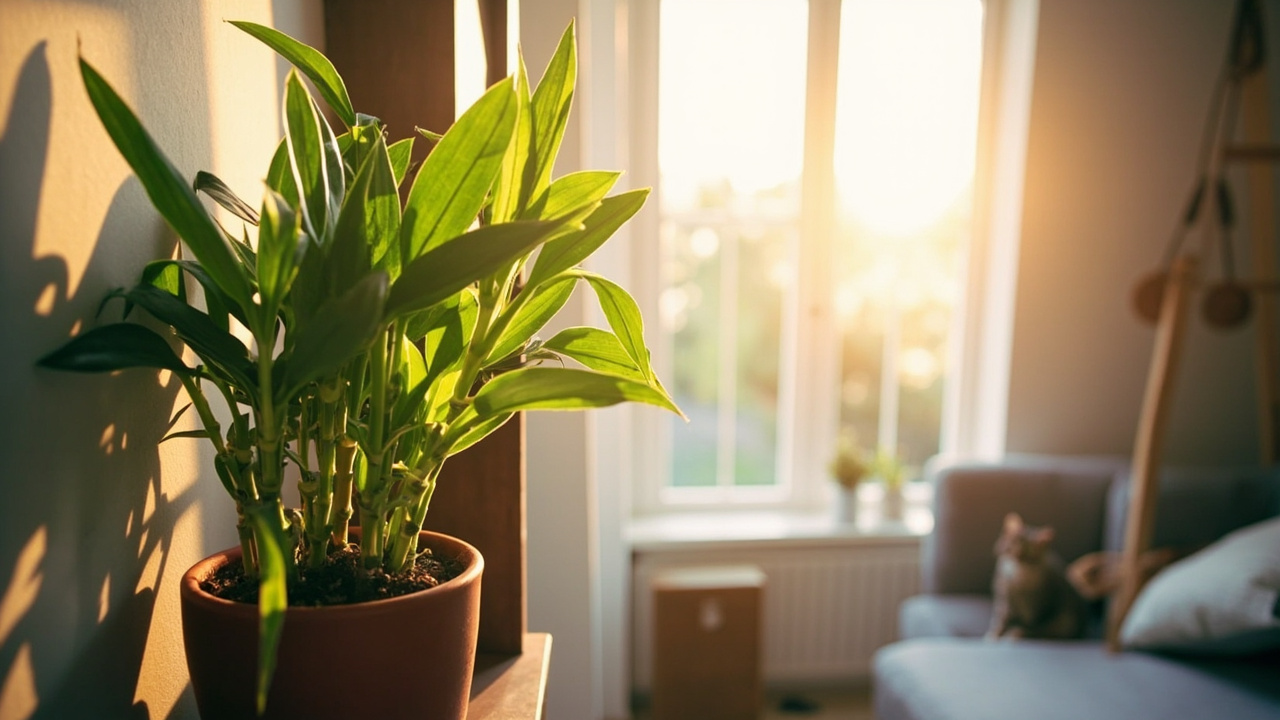
The most effective strategy is simply placing the plant where your pet cannot reach it. Lucky bamboo does well on high shelves, in hanging planters, or in rooms where pets are not allowed. The plant tolerates lower light conditions better than most people realise, so a shelf 1.5–2 metres from a window is perfectly adequate — and well out of jumping range for most cats.
If you have a dog who is particularly prone to chewing, the issue may be behavioural rather than simply curiosity. Dogs who chew houseplants often do so because they are bored, anxious, or not getting enough exercise. Addressing the underlying cause reduces plant-chewing incidents more reliably than any physical barrier. Crate training when unsupervised, providing chew toys, and ensuring adequate daily walks are the real long-term fix.
For cats, the motivation to chew plants is partly behavioural and partly olfactory — they are attracted to the smell and texture. Offering a tray of cat grass (which is non-toxic and often preferred) gives the cat a legal outlet for the same instinct. Catnip and cat grass kits are widely available and give cats something to chase and chew that will not make you reach for the phone. The tradeoff is that not all cats will accept a substitute, so placement discipline remains necessary even with alternatives on offer.
Some pet owners ask whether washed or boiled lucky bamboo is safe — whether cooking removes the toxins. The answer is no. Steroidal saponins are heat-stable and remain toxic after cooking. There is no home preparation method that makes Dracaena sanderiana safe for pets. The only safe version of lucky bamboo around cats and dogs is the one they cannot reach.
The bottom line is straightforward: lucky bamboo belongs up high or behind a closed door if you share your home with cats or dogs. It is not the most dangerous plant in a typical household, but it is genuinely toxic and not worth the risk of an avoidable sick pet. If your animal has already chewed it, watch for symptoms, call your vet, and you will almost certainly have a fully recovered pet within 48 hours.
From Bank Statement to QuickBooks-Ready File
That manual cleanup you just read about? This tool skips it. Turn your PDF into QBO for QuickBooks without storing your data anywhere.