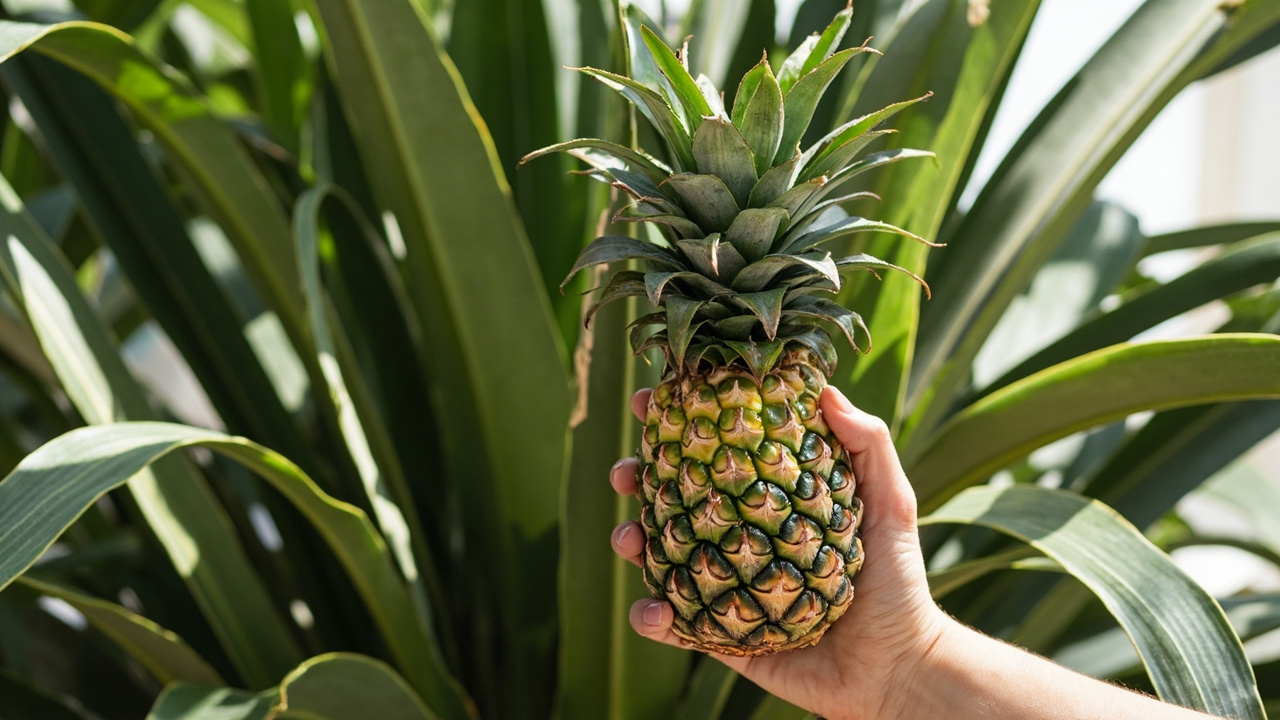
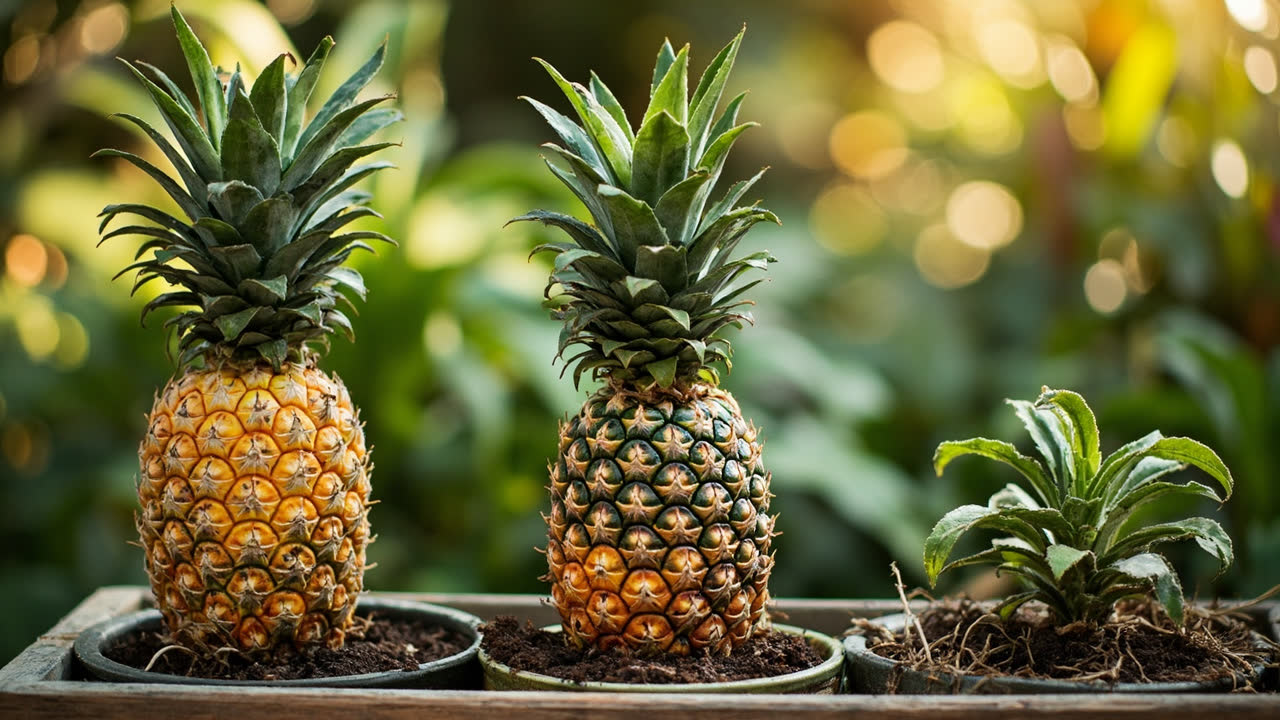
Pineapple can be propagated in water or directly in soil. Neither method is fake. Neither method is automatic. And neither one is best for everyone. The real difference is not just technical — it is behavioral.
Water propagation suits growers who like visible progress and careful monitoring. Soil propagation suits growers who prefer fewer steps and can resist the urge to keep checking and fussing. If you choose the wrong method for your own habits, that is usually when problems begin. So before you decide, ask yourself honestly: am I the type who needs to see what is happening, or the type who will keep second-guessing myself if I can see it?
Why Water Propagation Works for Pineapple Crowns
Water propagation gives immediate feedback. You can see whether roots are forming, whether the base is staying clean, and whether rot is starting before it becomes irreversible.
- easier to monitor — you are not guessing what is happening below the surface
- useful for beginners — the visual confirmation helps build confidence
- lets you catch failure earlier — if the base starts turning, you know before the whole cutting is lost
What happens next in a successful water setup is encouraging: root bumps form within a week or two, white roots extend downward, and the crown stays visibly alive instead of disappearing into a pot where you can only guess what is happening.
For a full walkthrough of what success looks like, the main propagation guide has the complete process with timing notes for crowns, pups, and suckers.
The Real Weakness of Water Propagation
The roots that form in water are different from the roots that grow in soil. Water roots are adapted to submerged conditions — they are thinner, more fragile, and optimized for underwater function. When you move that plant into soil, those water roots have to die off and be replaced by soil roots.
That is the trade-off. You get visibility upfront, but you add a second adjustment phase when the plant moves into mix. If the transfer is rough, or if the new soil is too wet, the plant can stall right when you thought the hard part was over.
Why the Transition Is Where Most People Lose Plants
The transfer from water to soil is the highest-risk moment in water propagation. The roots that looked healthy in water can rot quickly if the soil stays too wet. The plant has to rebuild its entire root system in a different medium while managing less energy than it had when the water roots were functioning.
How do you make that transition safer? Use a very fast-draining mix and keep watering extremely restrained for the first few weeks. Do not pour water aggressively just because the plant is in a new container. Let it ask for water before you give it.
Why Soil Propagation Works for Offsets
Soil propagation skips the transition problem entirely. The roots form directly in the medium where the plant will keep growing, and they develop in a way that is already suited to soil conditions.
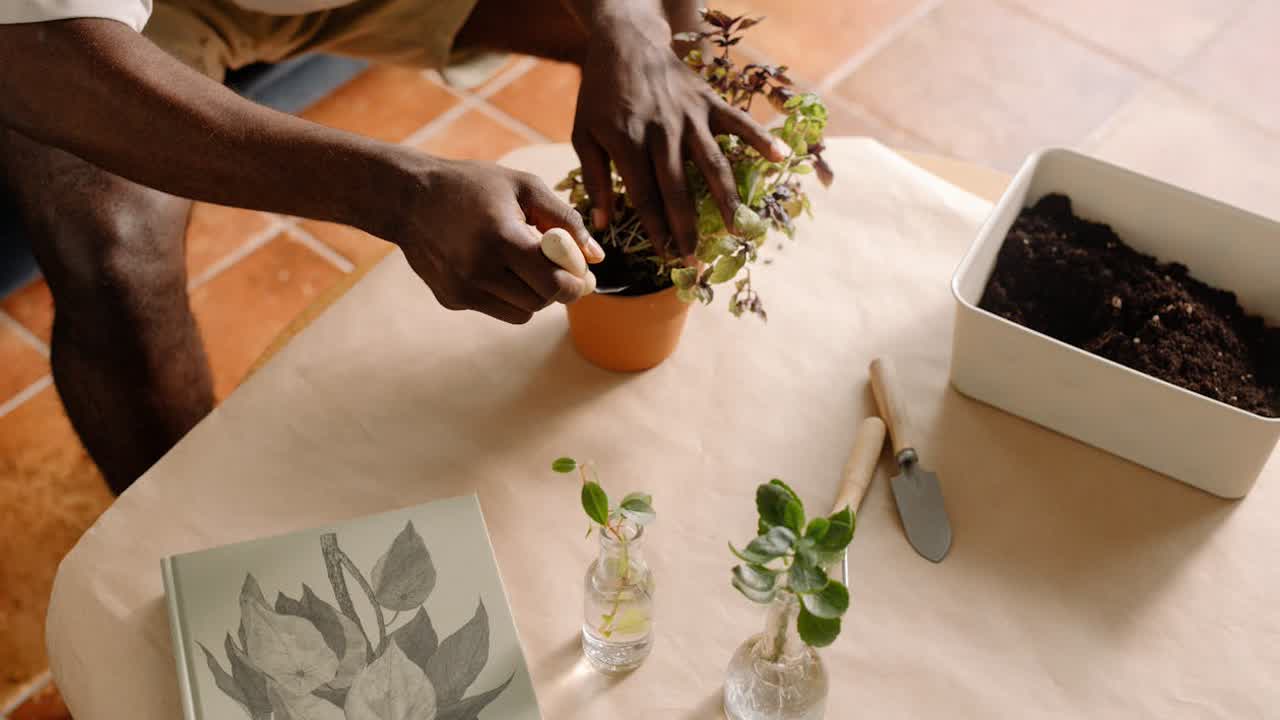
- fewer handling steps — no transfer moment to manage
- no transplant shock from water to soil — the plant never has to relearn how to root
- more natural root establishment path — roots grow the way they will function permanently
What happens next in a good soil setup is steady hidden progress. That is great if you are patient, and frustrating if you are not. The biggest risk in soil propagation is overwatering while waiting — because you cannot see what is happening, you may feel the urge to help by adding more water, which usually makes things worse.
The Real Weakness of Soil Propagation
You cannot see what is happening below the surface. If the base is rotting, you may not realize it until the top growth weakens and turns yellow. If the roots are forming nicely, you still have to wait for visible signs in the leaves to confirm it.
That uncertainty leads many growers to overwater. They want to help, but they end up drowning the base before it settles. If you have a tendency to water on a schedule or whenever the surface looks dry, soil propagation will test that habit.
How to Monitor Without Looking
The best approach is to watch the leaves, not the soil. If new center leaves are still growing and the existing leaves stay firm, the plant is establishing regardless of what is happening below the surface. If the center starts looking weak or the leaves soften, that is your signal to check the base directly.
Which Method Is Better for Pineapple Crowns?
For crowns from store-bought fruit, water propagation is often the safer beginner route because crowns are more failure-prone in the first phase. Being able to see root formation helps you avoid blindly watering an unrooted crown in a pot.
The trade-off is the later transplant step. Still, for many growers, managing one transition is easier than trying to diagnose what is happening inside a pot with an unrooted cutting. If you are new to pineapple propagation, water gives you more information to work with.
If you want to start with a crown, the how to grow from crown guide has the full preparation steps before you even get to propagation method.
Which Method Is Better for Pups or Suckers?
For larger offsets like pups and suckers, direct soil propagation often makes more sense. They usually have more stored energy and sometimes partial root development already, so they do not need the same level of visible reassurance.
What happens next is often quicker establishment with fewer transitions, provided the soil is open and the watering stays restrained. Offsets that were already growing on the mother plant have a head start that crowns do not have, and soil propagation lets them use that head start without interruption.
The Best Conditions for Either Method
Method matters, but conditions matter more. A good method in bad conditions still fails. For both water and soil propagation, the non-negotiables are the same:
- warm temperatures: 70–85°F / 21–29°C — below this range, rooting slows dramatically and rot risk rises
- bright light: enough to support energy without scorching tender tissue
- clean preparation: trimmed, dried, and calloused base if needed before placing in water or soil
What happens next when these conditions are met is faster rooting and fewer failures. What happens next when temperatures drop or light is weak is slow root development and higher loss rates even with the right method.
How to Choose the Right Method for Your Situation
Choose Water Propagation If…
- you are propagating a crown from store-bought fruit
- you want visible progress to build confidence
- you tend to learn better with feedback you can actually see
- you can manage the later transition to soil carefully
Choose Soil Propagation If…
- you are working with pups or suckers that already have some root development
- you have a very good fast-draining mix and can resist overwatering
- you want to skip the transition step entirely
- you are confident in your watering restraint
Choose Based on Your Worst Habit, Not the Method’s Reputation
Here is the simplest practical rule: use the method that reduces your own worst habit. If you overwater blindly, start in water — the visibility will help you catch problems before they become fatal. If you tend to transplant too roughly or are impatient with slow hidden progress, start in soil — it removes one high-risk moment from the process.
The main propagation guide has more on timing and starting material selection if you are not sure whether you are working with a crown, pup, or sucker yet.
The Honest Recommendation
For crowns, I usually lean water first. For offsets, I usually lean soil first. Not because one method is universally superior, but because that pairing gives each type of starting material the setup it usually handles best.
If you want the simplest practical rule: use the method that reduces your own worst habit. If you overwater blindly, start in water. If you transplant too roughly, start in soil. Either way, the conditions matter more than the method — and that is the part most guides overlook.
Turn That PDF Into a Spreadsheet in Minutes
You've seen how to do it manually — now let the tool handle the heavy lifting. Upload your bank statement and get Excel, CSV, or QBO in a few clicks.
Try It Free