
Successful mass cane plant care requires precise calibration of hydration and light to mimic the tropical understory of its native African habitat.
As a member of the Asparagaceae family, this woody Dracaena fragrans specimen utilizes its trunk as a hydrostatic reservoir to survive seasonal fluctuations.
The primary failure risk for indoor growers is fluoride toxicity and root hypoxia, which often manifest as irreversible leaf tip necrosis.
Mastering the balance of soil oxygenation and moisture levels ensures the structural integrity of the mass cane while maintaining a healthy, slightly acidic soil pH of 6.0–6.5.
Getting to Know Mass Cane Plant: Biology and Structure
The Mass cane plant is a perennial monocotyledonous evergreen belonging to the Asparagaceae family, specifically the genus Dracaena.
Biologically defined as Dracaena fragrans, this plant is distinguished by its thick, woody “canes”—apically dominant stems that serve as primary xylem-based water reservoirs.
In its native tropical African habitat, it functions as an understory shrub, a trait that translates to its moderate light requirements and shade tolerance in indoor environments.
Varieties such as the yellow-striped Massangeana or the solid green Janet Craig represent specific cultivar attributes that influence the plant’s metabolic rate and photosynthetic needs.
| Feature | Details |
| Family | Asparagaceae |
| Botanical Name | Dracaena fragrans |
| Common Names | Mass Cane, Corn Plant, Janet Craig |
| Main Engine | Water-storing woody canes |
| Growth Logic | Slow and steady (Auxin-regulated) |
The Mass Cane is a slow-growing evergreen that moved from the shady forest floors of West Africa to our living rooms and offices.
It’s built around the “cane”—a vertical trunk that acts as a highway for water and nutrients.
Because these plants only grow about 6–12 inches a year, any damage to the leaves stays visible for a long time. That’s why preventing problems is much easier than trying to fix them later.
Why the Tips Turn Brown: The Fluoride Problem
A lot of people think brown tips mean the plant is thirsty. In reality, the most common culprit is Fluoride Toxicity, and unfortunately, just letting your water sit out overnight won’t fix it.
How it happens?
Fluoride ions travel up the cane and get stuck in the leaf edges. Once there, they mess with the plant’s calcium metabolism, stopping the cells from building strong walls.
The result… the cells collapse, and you get those crispy mass cane brown tips. Since fluoride doesn’t evaporate like chlorine, you have to filter it out or use distilled water or rainwater.
Now, how to fix it?
If your plant already has brown tips, do a “Soil Flush” every few months. Pour about three times the pot’s volume of distilled water through the soil to wash away the built-up salts and minerals.
To boost recovery and soil health, many indoor gardeners integrate natural amendments like worm castings which provide gentle, slow-release nutrients without the risk of further mineral burn.
The “Silent Killer”: Wet Feet and Root Health
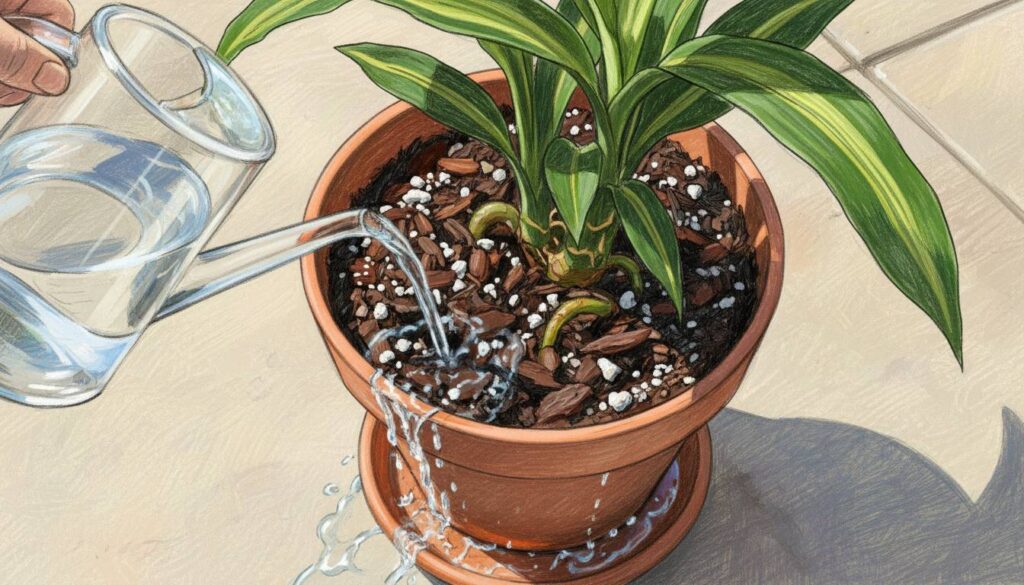
Your Mass Cane’s health depends on the air-to-water ratio around its roots. While light and humidity are vital, the most common failure point is hydration frequency; you must master how often to water mass cane plant to prevent root rot.
- Delicate Roots: These plants have fine root hairs that need to “breathe.” When the soil stays soggy, oxygen is pushed out, causing Root Hypoxia.
- The Shutdown: When roots can’t breathe, they stop making Cytokinins—the hormones that tell the plant to grow new leaves.
- The Downward Spiral: The plant goes into a “stasis” where nothing happens for months. If it stays wet, rot (like Pythium) sets in, making the base of the cane feel mushy.
The solution, don’t use heavy, “standard” potting soil! Mix your own using 40% peat moss, 30% perlite (for air pockets), and 30% orchid bark (to keep things from packing down).
When managing indoor collections, knowing how to save a dying calathea plant can offer broader insights into reversing the effects of root rot and moisture stress in sensitive tropicals.
Seasonal Shifts: Adjusting for Winter and Light
Mass Canes don’t grow at the same speed all year. Their “metabolism” changes with the seasons based on the photoperiod and ambient temperature.
The Winter Slowdown
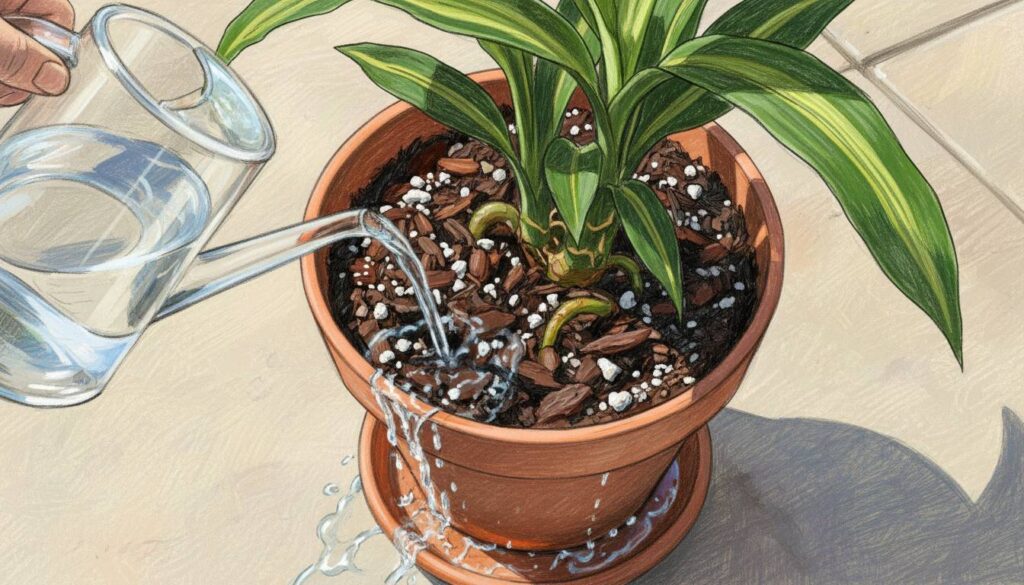
When the days get shorter and darker, the plant’s “breathing” (transpiration) slows down significantly. Because the plant enters a semi-dormant state, the xylem transport system moves water much slower.
So, you should cut your watering in half during winter. And stop fertilizing completely until spring so you don’t burn the dormant roots with unused mineral salts.
The Light x Hydration Interaction
In low-light winter months, the rate of evaporation from the soil often exceeds the rate of transpiration from the leaves. This imbalance is why overwatering in winter is the leading cause of “soft cane” collapse.
Finding the “Sweet Spot” for Light:
- Too Dark (<800 Lux): Photosynthetic activity cannot meet the plant’s basic respiratory needs. The plant will start dropping lower leaves (leaf abscission) to save energy.
- Just Right (1,000–2,500 Lux): Bright, indirect light keeps the yellow stripes vivid and supports steady ATP production.
- Too Bright (>5,000 Lux): Direct hot sun will bleach the chlorophyll, leading to “sunburn” or photo-oxidation of the foliage.
While light and soil are important, the most common reason for failure is improper irrigation; therefore, you must master the specific technique of how to water mass cane plant to maintain root health.
Variegation Energy
If your plant has bright yellow stripes (like the Massangeana cultivar), it actually needs about 20% more light than a solid green one to stay healthy.
Since mass cane yellow leaf tissue lacks chlorophyll, the plant has a smaller “solar panel” and must work harder to fuel its vascular system.
Mass Cane Plants Early Warning Signs
You can usually tell a problem is coming before the leaves actually die. Watch for these signals on your mass cane plant:
- The “Swamp” Smell: If you sniff the soil and it smells sour or musty, you’ve got stagnant water at the bottom.
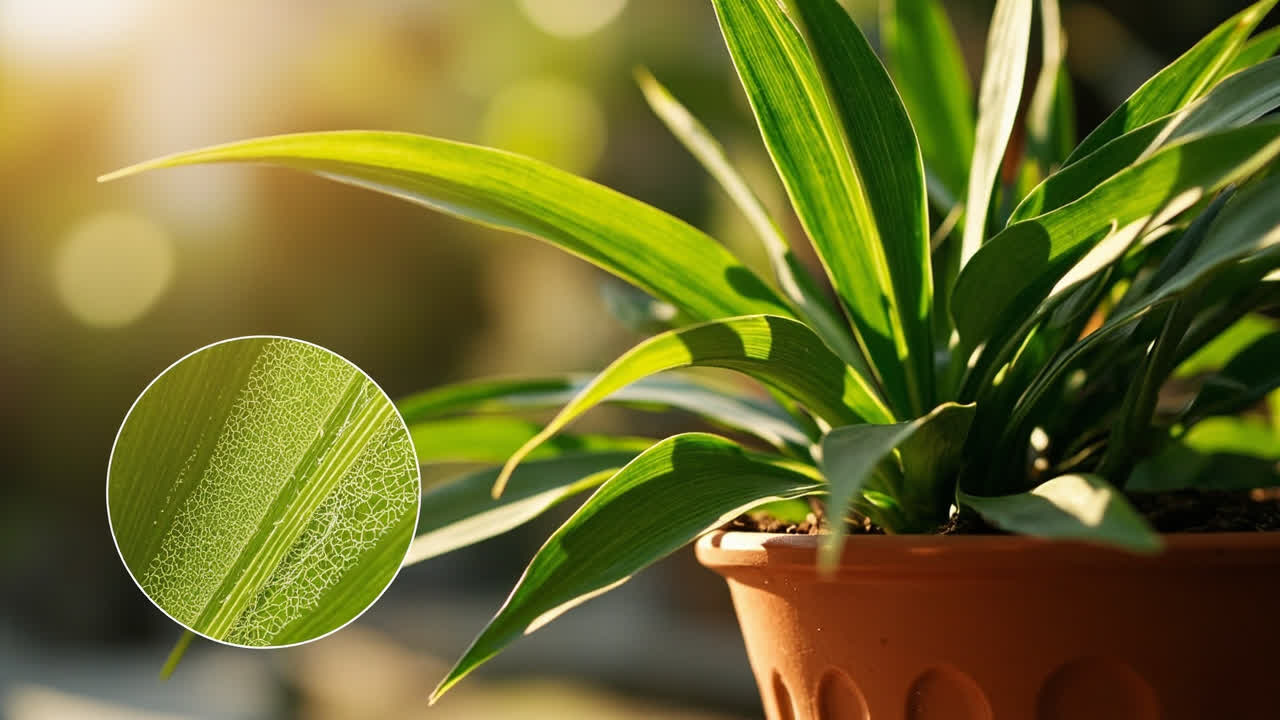
- Tiny Dots: If you see tiny yellow or white speckles (stippling) on the leaves, look closely for spider mites before they start spinning webs.
- Curling vs. Drooping:
- Curled Edges: The plant is trying to hold onto moisture (usually because of dry AC/Heating air).
- Limp/Drooping: The roots are likely damaged by rot or a sudden cold draft.
If the foliage decline persists despite adjustments, understanding why tomato plants wilt and die can help you identify similar vascular pathogens or environmental shocks that affect plant hydration across various species.
Dealing with Pests and Diseases
| The Problem | What to Look For | How to Fix It |
| Spider Mites | Dusty leaf bottoms / Fine webs | Raise humidity; wash leaves with insecticidal soap. |
| Scale | Waxy brown “scabs” on the cane | Scrub them off; use horticultural oil. |
| Fungus Gnats | Tiny black flies on the soil | Let the soil dry out more; use “Mosquito Bits” (BTI). |
| Leaf Spot | Brown circles with yellow rings | Keep leaves dry; use a copper-based spray. |
Common Myths: Setting the Record Straight
- “It’s a Miracle Air Purifier”: Not really. While the NASA study is famous, you’d need a literal jungle in your living room to notice a difference in air quality. It’s great for your mood, but it’s not an industrial air filter.
- “It Loves Dark Corners”: Myth. It tolerates low light for a while, but it won’t grow. In the dark, it will eventually get “leggy” and thin.
- “It Doesn’t Need Much Water”: Misleading. It can survive a dry spell because of the cane, but if you let it stay bone-dry for too long, the growth points (nodes) go dormant and may never wake up again.
Pruning: How to Get a “Fuller” Look
If your plant becomes “leggy”—meaning the stems are long with sparse leaves—or reaches the ceiling, pruning is necessary to reset the plant’s architectural form.
This process leverages the plant’s hormonal balance to force lateral branching.
The Science of Apical Dominance
Mass Canes exhibit strong Apical Dominance. The growing tip produces a hormone called Auxin, which travels downward through the phloem and actively suppresses the “dormant nodes” along the cane.
By removing the top portion of the cane, you eliminate the primary Auxin source, allowing Cytokinins to stimulate these dormant buds into active growth.
Execution Steps for Successful Pruning:
- Sterile Cut: Use a sharp, sterilized saw or bypass pruners. A clean cut is vital to prevent “crushing” the vascular tissue (xylem/phloem), which can lead to die-back.
- Positioning: Cut at a slight 45-degree angle. This prevents moisture from pooling on the open wound, reducing the risk of fungal infections.
- Sealing the Wound: To prevent “cane rot” or infection, seal the cut with horticultural wax or a light dusting of cinnamon (a natural antifungal). The scar will never grow taller, but it serves as the anchor for new growth.
- Node Activation: Within 4–8 weeks, you will observe small green bumps emerging from the sides of the cane. These develop into 1–3 new foliage heads, significantly increasing the plant’s density and creating a tiered, tree-like aesthetic.
See more on watering mass cane plant after pruning.
Propagating the Cuttings
Do not discard the pruned top. You can perform cane propagation by stripping the lower leaves and placing the stem in a jar of distilled water or a moist perlite mix.
Once roots reach 2 inches, you can plant it back into the base of the mother pot to create a lush, multi-level arrangement.
Is the Mass Cane Right for Your Space?
Selecting a Mass Cane over other tropicals should be a decision based on your micro-environment and commitment to mineral management.
Unlike “set-and-forget” succulents, the Dracaena fragrans is an active monitoring plant.
Choose the Mass Cane If:
- Vertical Space is Your Priority: You want a tall, architectural “indoor tree” that fits into tight corners without requiring a massive horizontal footprint.
- Stable Lighting: You have a spot with consistent, bright indirect light (1,000–2,000 Lux), such as near a North or East-facing window.
- Controlled Water Quality: You are willing to use distilled water, rainwater, or a high-quality filter to bypass fluoride accumulation and tip necrosis.
- Office Environment Suitability: Mass Canes thrive in modern office settings because they tolerate the dry, climate-controlled air better than high-humidity favorites like Ferns or Calatheas, provided the soil is flushed quarterly.
Reconsider the Mass Cane If:
- Pet Safety is a Concern: Mass Canes contain saponins, which are toxic to cats and dogs. Ingestion can cause vomiting, drooling, and dilated pupils.
- Low Humidity Environments: If your home humidity is consistently below 30% (common in desert climates or homes with heavy winter heating), leaf edges will crisp rapidly regardless of watering.
- Maintenance Preference: You prefer a plant you can “ignore” during winter dormancy. Mass Canes require you to actively adjust your watering frequency as their metabolic rate shifts with seasonal light angles.
Mass Cane Plants With Other Plants
| Factor | Mass Cane | Snake Plant | ZZ Plant |
|---|---|---|---|
| Light Need | Bright Indirect | Very Low to High | Low to Moderate |
| Drought Tolerance | Moderate | Extreme | Extreme |
| Water Sensitivity | High (Fluoride) | Low | Low |
| Pet Toxicity | Toxic | Toxic | Toxic |
| Best For | Statement Tree | Low-Light Corners | Low-Maintenance Office |
If you eventually decide to move toward edible gardening or want a more utility-focused potted experience, you might explore growing tomatoes in pots as an alternative way to utilize your indoor or balcony space with high-reward harvests.
Happy gardening!