Something is wrong with your mass cane plant. The leaves are losing their colour, or there are sticky spots on the stems, or a fine webbing has appeared where the leaf meets the stalk. You’ve checked the light. You’ve reviewed the watering. Everything looks fine — except the plant is clearly declining. Mass cane plants (Dracaena massangeana) are affected by a recognisable set of pests and diseases, and the reason most of them go undiagnosed until they’re severe is that their early symptoms look almost exactly like drought stress.
The result is a common and counterproductive cycle: gardeners see the symptoms, water more (because the plant looks wilted or dry), create better conditions for the actual problem, and wonder why the plant keeps getting worse. This guide is built for that moment — when you know something is wrong but can’t yet put a name to it.
The Three Most Common Mass Cane Pests
Three pests account for the overwhelming majority of mass cane infestations. All three are treatable, and all three are easier to resolve when caught early. The key diagnostic skill for each is knowing what to look for before the plant is obviously and severely infested.
Spider Mites on Mass Cane : The Most Prevalent Invader
Spider mites are the single most common pest issue with Dracaena massangeana, particularly in dry indoor environments and during winter when heated indoor air drops the humidity. They’re tiny — usually not visible to the naked eye — and their presence is confirmed by the damage they leave behind rather than by seeing the mite itself.
Early signs that are commonly missed:
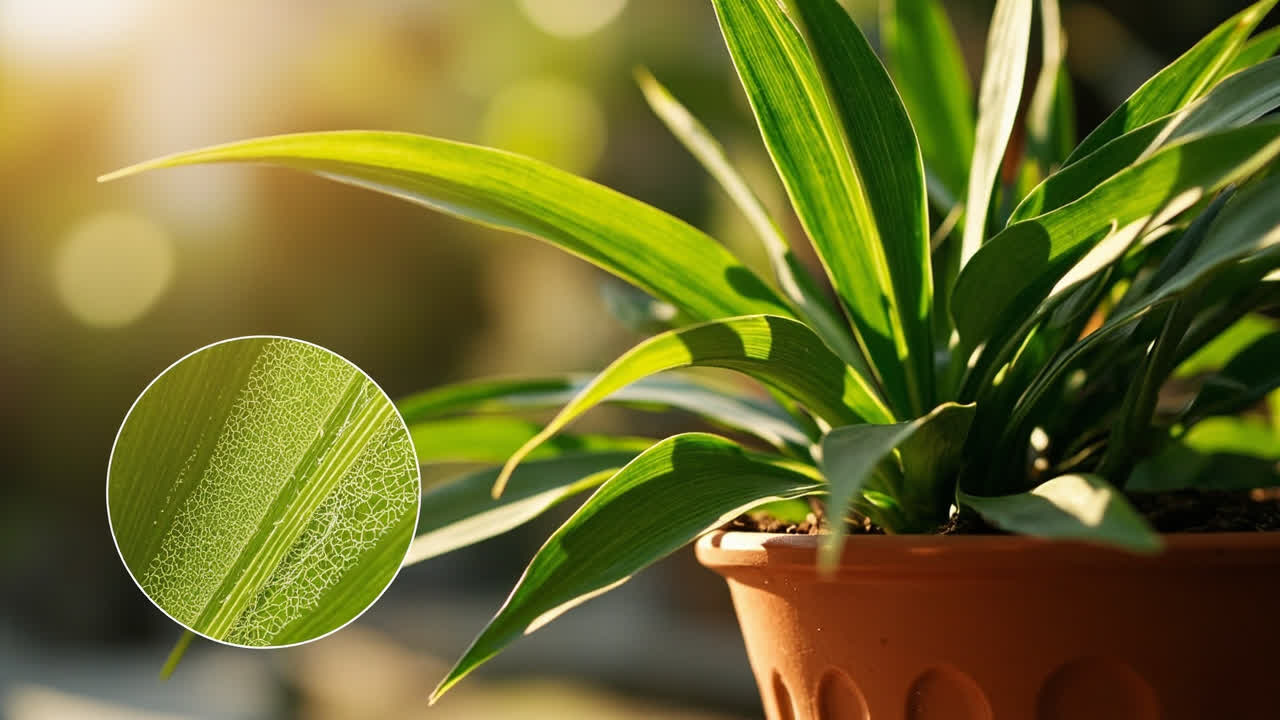
- A fine, almost invisible webbing between leaf bases and stems, or on the underside of leaves at the midrib
- A stippled or mottled appearance on the upper leaf surface — not solid discolouration but a fine speckling that looks like tiny bites
- Leaves that look slightly dusty or sooty before there’s obvious webbing
- Plant decline that accelerates during heating season when indoor humidity drops
What happens if left untreated: leaves yellow, then brown, then drop. The webbing becomes visible across multiple leaves and the growing tip can be damaged. By the time spider mites are visibly webbing the plant, the infestation is well advanced.
Treatment: First, isolate the affected plant. Spider mites spread through contact with other plants, clothing, and air currents. Wipe the visible surfaces with a damp cloth to physically remove as many mites as possible. Then apply neem oil solution or insecticidal soap to all leaf surfaces — upper and lower — every 3–4 days for a two-week period. This breaks the reproductive cycle, which is the real challenge: a single treatment won’t eliminate an established population because mite eggs take several days to hatch.
Raise the humidity around the plant while treating it — spider mites thrive in dry conditions and struggle in humidity above 50–60%. A pebble tray with water under the pot, or a room humidifier, shifts the environment in the plant’s favour.
Mealybugs : The White Cottony Clusters
Mealybugs are distinctive enough that once you’ve seen them, you’ll recognise them immediately. They appear as small, white to pale grey, cottony or waxy clusters — most commonly at the base of leaf stems, along the main cane, or in the central crown where new leaves emerge. They move slowly and are often mistaken for mould or old leaf debris.
What makes them particularly problematic for mass cane specifically is their attraction to the growing tip — the newest, most tender growth. A mealybug infestation in the crown of a mass cane damages the plant’s ability to produce new leaves, which sets back the overall form and density of the plant significantly.
Early signs:
- White, cottony dots or clusters at leaf joints or in the central crown
- A sticky or sugary residue (honeydew) on the leaves below the affected area
- Generalised yellowing or slowing of new growth without obvious soil or light causes
- Sooty mould developing on the honeydew deposits — blackened leaf surfaces below the mealybug cluster
Treatment: For light infestations, dab each visible mealybug with a cotton swab dipped in isopropyl alcohol (rubbing alcohol). This dissolves their waxy coating and kills them on contact. For more established infestations, spray with neem oil or insecticidal soap, targeting the crown, leaf bases, and cane joints where they hide. Repeat every 5–7 days for three weeks minimum.
Mealybugs shelter in hard-to-reach places, so pay particular attention to the leaf axils where the leaf joins the cane — that’s where they are most protected from spray treatment.
Scale Insects : The Brown Bumps on Stems and Leaves
Scale insects appear as small, brown, raised bumps on the stems and, less commonly, on the leaf surfaces of mass cane plants. They look like natural bumps or growth irregularities at first glance — which is why they’re often left untreated until the population has built up significantly.
Two types affect mass cane: soft scale (which produces honeydew) and hard or armored scale (which doesn’t). Both feed by sucking sap from the plant, weakening it progressively. The honeydew from soft scale leads to the secondary problem of sooty mould on the leaves below.
Early signs:
- Brown or tan raised bumps on the cane that don’t scrape off with a fingernail and don’t move
- Sticky residue on leaves or surfaces below the plant
- Yellowing or drop of leaves even when watering appears correct
- A general loss of vigour in an otherwise healthy-looking plant
Treatment: For light infestations, scrape individual scales off with a fingernail or a soft toothbrush. Apply neem oil or horticultural oil with a soft cloth to the affected areas. For more severe cases, spray with insecticidal soap or a systemic insecticide labelled safe for indoor foliage plants. Because scale insects are protected by their armored coating, contact sprays work best when applied thoroughly and repeated — especially against the younger, mobile “crawler” stage before they settle and coat over.
The Two Most Common Diseases
Fusarium Stem Rot : The Most Serious Risk
Fusarium stem rot is the disease that causes the most rapid, irreversible damage to mass cane plants. It is caused by the fungus Fusarium oxysporum, which attacks the vascular tissue of the cane, blocking the plant’s ability to transport water and nutrients upward. The plant doesn’t wilt dramatically — it slowly collapses from the top down as the cane softens from the inside.
Early signs that are easy to miss:
- A brown or black discolouration visible at the base of a leaf stalk where it joins the cane — not just brown tips but a zone of dark tissue
- The cane feeling slightly softer or yielding slightly when pressed just above a leaf joint
- A brown ring visible if you slice through an affected cane — the inside will show dark vascular staining rather than healthy white or pale green
- One cane declining while the others still look healthy (in multi-cane plants)
What to do: Fusarium stem rot is very difficult to treat once established. Remove and dispose of affected canes immediately — do not compost them. If only a portion of a cane is affected, cut back to at least 5 cm below the visible discolouration into healthy, white tissue. Sterilise cutting tools with alcohol or bleach between cuts to avoid spreading the fungus to healthy parts of the plant.
If the rot has reached the base of the plant or multiple canes are showing symptoms, the plant cannot realistically be saved and should be removed to protect other houseplants nearby. The fungus can persist in the soil of the pot, so also dispose of the soil.
Prevention is the real tool here: Fusarium is almost always introduced through contaminated tools, infected potting mix, or the reuse of pots from affected plants without proper sterilisation. Use fresh, sterile potting mix when repotting, and clean tools between plants.
Phytophthora Root Rot : Poor Drainage Disease
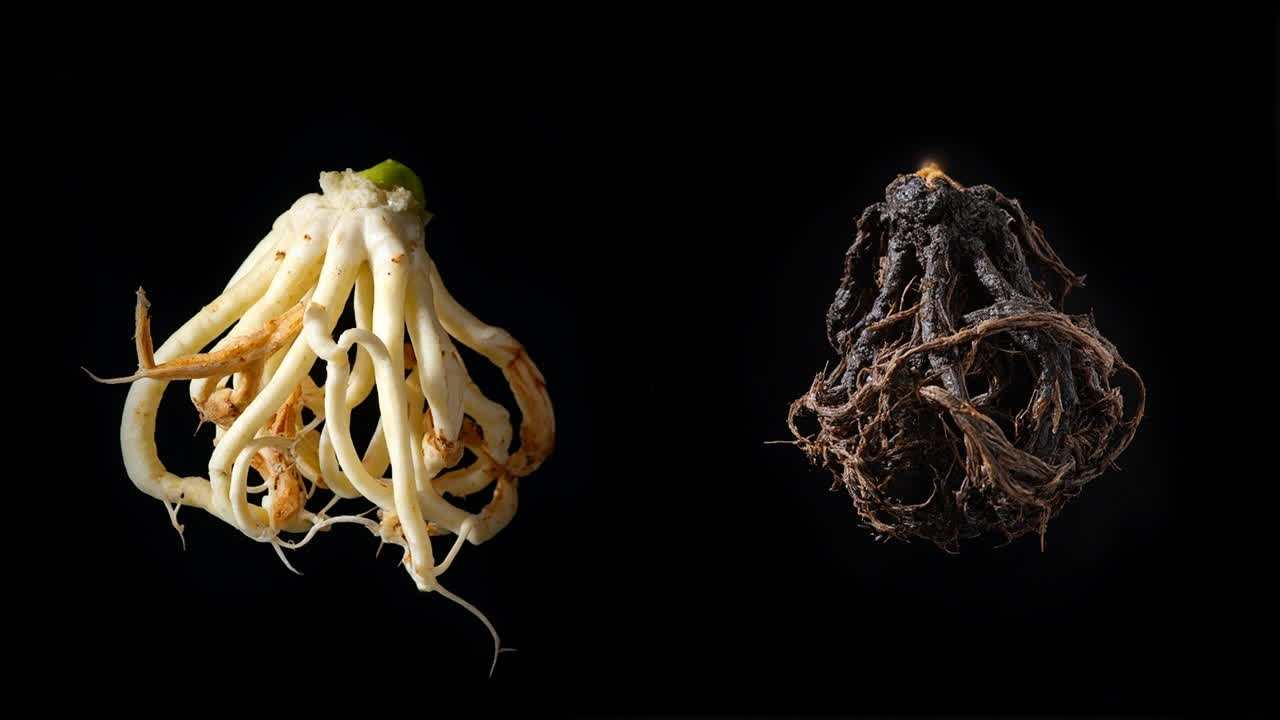
Phytophthora root rot is a water mould that develops in consistently waterlogged soil conditions. Unlike Fusarium, which can appear in otherwise well-managed plants, Phytophthora is almost always a result of overwatering combined with poor drainage. It is preventable and, if caught very early, recoverable.
Signs of Phytophthora root rot:
- Generalised plant decline — wilting, yellowing, slowed growth — with no obvious above-ground pest cause
- Soil that stays wet for extended periods and doesn’t drain well after watering
- Roots that are dark, mushy, and smelly when you inspect them (healthy mass cane roots are firm and off-white)
- The plant declining despite being in appropriate light and away from draughts
Treatment: Stop watering immediately and let the soil dry out. If the pot has no drainage hole or is in a decorative outer pot that holds water, correct that now. In early stages, allowing the soil to dry fully for 2–3 weeks may be enough to stop the rot. If the plant continues to decline, remove it from the pot, trim all dark and mushy roots, and repot in fresh, sterile, well-draining mix in a terracotta pot with proper drainage.
The critical factor is ensuring the new soil mix drains freely and the pot drains fully after each watering. The underlying cause must be fixed at the soil level — you cannot treat your way out of a drainage problem.
Prevention : The Routine That Actually Works
For mass cane specifically, prevention is far more effective than treatment. These habits, done consistently, reduce the likelihood of every major pest and disease problem:
- Quarantine new plants for 2–3 weeks before placing them near existing houseplants. Most pest infestations on mass cane are introduced from other plants brought into the home.
- Inspect during watering. Turn leaves over and check the undersides and leaf joints when you water. Most pest problems are far easier to treat when caught on a single leaf than when they’ve spread across the whole plant.
- Maintain humidity above 40% in the space where mass cane grows. Spider mites in particular cannot establish populations in consistently humid conditions.
- Use free-draining soil and unblock drainage holes. Every major disease issue that isn’t Fusarium is linked to waterlogged soil conditions.
- Sterilise tools (scissors, trellis wires, knives) with alcohol between plants and after cutting any visibly diseased material.
What to Do When You See Symptoms but Can’t Identify the Cause
If your mass cane is declining and you can’t identify the cause, work through this sequence:
- Turn over every leaf and inspect undersides and leaf joints for webbing, white clusters, or raised brown bumps.
- Check the soil moisture at the root level — not just the surface. If it’s wet below the top inch and you haven’t watered recently, drainage is the problem.
- Press gently on the cane just above each leaf joint. Soft, yielding tissue at any point is a Fusarium warning sign.
- Smell the soil. A sour, fermenting smell indicates root rot from bacterial or fungal overgrowth in waterlogged conditions.
- Isolate the affected plant from other houseplants until you’ve identified and treated the cause.
If you’ve ruled out pests and drainage issues and the plant is still declining, the next reference to check is our how to save a dying mass cane guide, which covers the broader recovery framework — including when a plant has declined far enough that recovery is unlikely and when it’s worth continuing to fight for.
For general prevention alongside good watering habits, our mass cane care and maintenance guide covers the full baseline — light, water, and soil — that keeps the plant’s natural defences intact.
Turn any PDF statement into a clean sheet
Skip the typos and the hours of copying. Our converter handles any bank statement format and outputs Excel, CSV, or QBO for QuickBooks. No file retention, free to try.
Convert your statement