![Watering Mass Cane Plant After Trimming [Post-Pruning Care]](https://www.aqualogi.com/wp-content/uploads/Watering-Mass-Cane-Plant-After-Trimming-Post-Pruning-Care.jpeg)

The way you water your Dracaena Massangeana after trimming matters more than most people realise. Trimming removes a significant portion of the plant’s leaf surface area, which directly changes how much water the plant needs and how it moves through the soil. Getting this wrong — either watering too much and causing root rot in the reduced root system’s compromised environment, or watering too little and leaving the recovering plant stressed — is the most common reason Mass Cane Plants fail to bounce back after a trim. Here is exactly what to do with the watering can and how to read the plant’s signals during recovery.
How Trimming Changes Your Plant’s Water Needs
When you prune a Dracaena Massangeana, you are removing the organs that drive transpiration — the process by which the plant pulls water up through its roots and releases it through the leaves. With fewer leaves, the plant’s water demand drops by 30 to 50 percent in the first weeks after trimming, depending on how much you removed. If you continue watering on the same schedule as before the trim, the soil stays wet longer, the roots stay saturated longer, and the conditions for root rot are set. This is the critical adjustment you need to make after any significant pruning of your Mass Cane Plant.
The reduction is not permanent. As new shoots emerge and the leaf surface area increases, the plant’s water demand gradually returns to its pre-trim level. This usually happens over four to six weeks, once you see visible new growth appearing from the cut surfaces or from the nodes below them.
The Two-Week Recovery Window : Water Adjustments
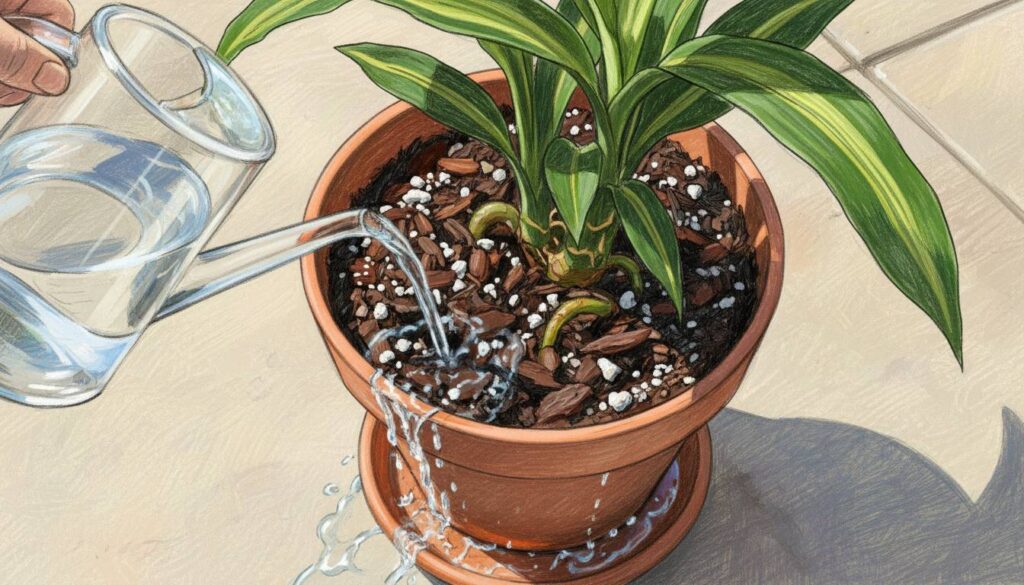
For the first two weeks after trimming your Dracaena Massangeana, water 25 percent less than you normally would. The exact approach depends on your current watering method. If you normally water until water runs through the drainage holes, water only until the soil is evenly moist — do not flood it. If you normally water with a measured amount, reduce the volume by a quarter. The soil should still be drying to the 5 cm finger test depth between waterings, but it will take longer now that the plant’s transpiration rate has dropped.
The finger test remains your reliable guide throughout: insert your finger up to the second knuckle into the soil. If it feels dry at that depth, water. If it still feels moist, wait. Do not water on a fixed schedule during recovery — the plant’s needs are changing, and the schedule needs to follow the plant.
After the initial two weeks, when you see new growth emerging — small tightly furled leaf buds visible at the cut points or from the base of the plant — resume your normal watering routine. The new growth signals that the root system has re-established enough to support increased water demand. Until you see this new growth, hold at the reduced level.
Water Quality : A Detail Most Guides Skip
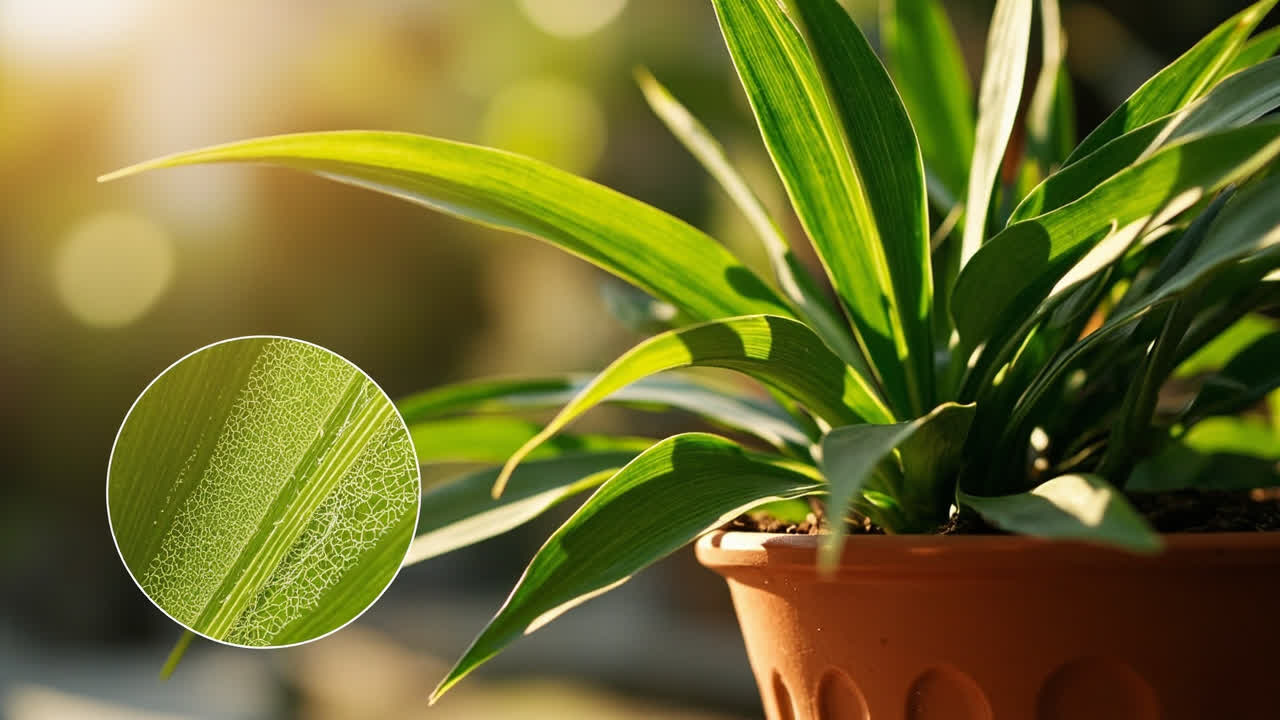
Mass Cane Plants are sensitive to fluoride and chorine in tap water, and this sensitivity becomes more visible after pruning because the plant is already under stress. The most common manifestation of fluoride sensitivity is brown slit-like marks on the leaf margins — these are not from overwatering or underwatering, but from fluoride accumulation in the leaf tissue. After trimming, when the plant is most vulnerable, these marks can appear rapidly if you are using tap water with significant fluoride content.
The practical fix is straightforward: use filtered or rainwater for your Mass Cane Plant, especially during the recovery period after pruning. If filtered water is not available, let tap water sit in an open container for 24 hours before using — this allows chlorine to evaporate, though fluoride remains. A charcoal water filter removes a meaningful proportion of fluoride and is the practical solution for home use. The leaf damage from fluoride will not heal, so prevention through water quality matters more than treatment.
Use room-temperature water. Cold water shocks the root system and impairs water uptake at a time when the plant’s recovery mechanisms are already under pressure.
Soil Moisture Management After Pruning
Mass Cane Plants prefer a soak-and-dry watering approach at all times, but this becomes more nuanced after pruning because the plant’s signal to the soil is reduced. Here is what to watch for:
In moderate indirect light — the ideal conditions for a recovering Dracaena Massangeana — the soil typically needs watering every 10 to 14 days in the post-trim period. In brighter conditions, it dries faster. In lower light, it stays wet longer. Do not be rigid about these numbers — use them as a starting point and adjust based on actual soil moisture, not the calendar.
The three factors that affect how quickly the soil dries after pruning:
Light intensity. More light drives faster photosynthesis, which drives faster water use. A recovering Mass Cane Plant in a bright spot will dry the soil faster than the same plant in a shaded corner.
Pot size. A pot that is significantly larger than the root ball holds more soil and therefore retains moisture for longer. An oversized pot after pruning is the single most common cause of overwatering during recovery. The root system is reduced; the soil volume is not — and the extra soil stays wet long enough to cause root damage.
Ambient humidity. Singapore’s humidity slows soil drying. In an air-conditioned room with lower humidity, the soil dries faster. Adjust your checking frequency accordingly.
Signs That Something Is Wrong During Recovery
Overwatering signs to watch for:
Yellowing lower leaves that progress upward. Soft, mushy stems near the soil line. A sour or musty smell from the pot. White or green surface growth on the soil — algae or fungal growth indicating persistently wet conditions. If any of these appear, stop watering immediately and allow the soil to dry fully before watering again. If the stem is soft at the base, see the Mass Cane Plant root rot guide — this is a different problem from recovery adjustment and requires direct intervention.
Underwatering signs to watch for:
Crisp leaf edges and curling leaf margins. The plant looking limp even though the soil is dry. Soil pulling away from the sides of the pot, indicating it has dried out completely multiple times. If these appear, water more frequently — the reduced schedule may be too conservative for your specific conditions.
What to Do After Recovery Stabilises
Once the plant is showing active new growth — new shoots at the cut points, new leaves emerging normally, no yellowing or browning beyond the normal stress response of the remaining foliage — you can resume your normal watering routine. At this point, the standard watering approach for Mass Cane Plant applies: water when the top 5 cm of soil is dry, use room-temperature filtered or rainwater, and empty the drainage saucer within 30 minutes of watering.
The fertiliser schedule also resumes at this point. Resume feeding at half the normal concentration one month after trimming, using a balanced liquid fertiliser. Do not fertilise in the first four weeks — the recovering root system cannot process nutrients efficiently and excess fertiliser becomes a salt problem rather than a growth driver. For the full feeding schedule that keeps your Mass Cane Plant healthy through the year, see the Fertiliser for Mass Cane Plant guide.
For the pruning process itself — where to cut, which canes to remove, what to do with the cut sections — see the how to trim a Mass Cane Plant guide. The trimming and the watering are two parts of the same recovery process; doing one correctly without the other leaves the plant incomplete.
Turn PDF Bank Statements Into Workable Spreadsheets
Your bank statement is a mess of numbers, but your books shouldn't be. Use our converter to get Excel, CSV, or QBO files — ready for QuickBooks.
Try It Free Now