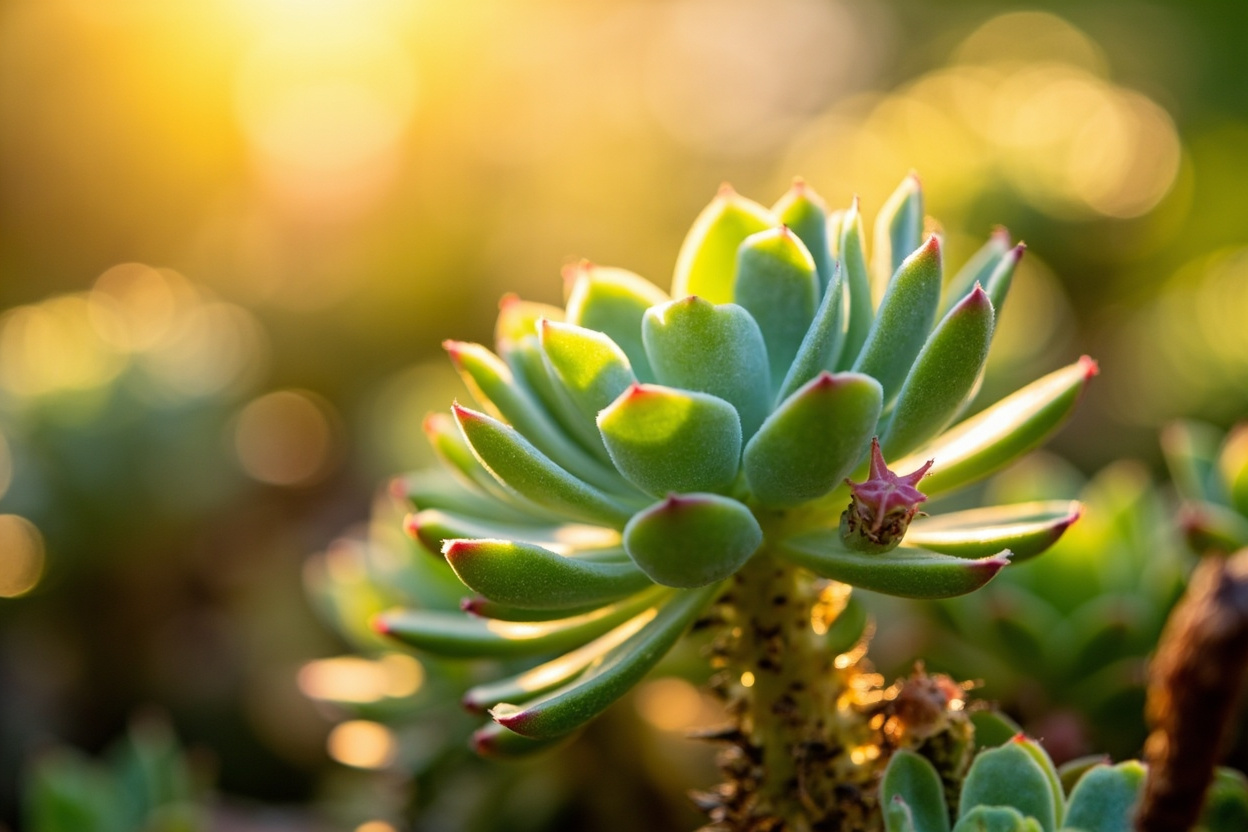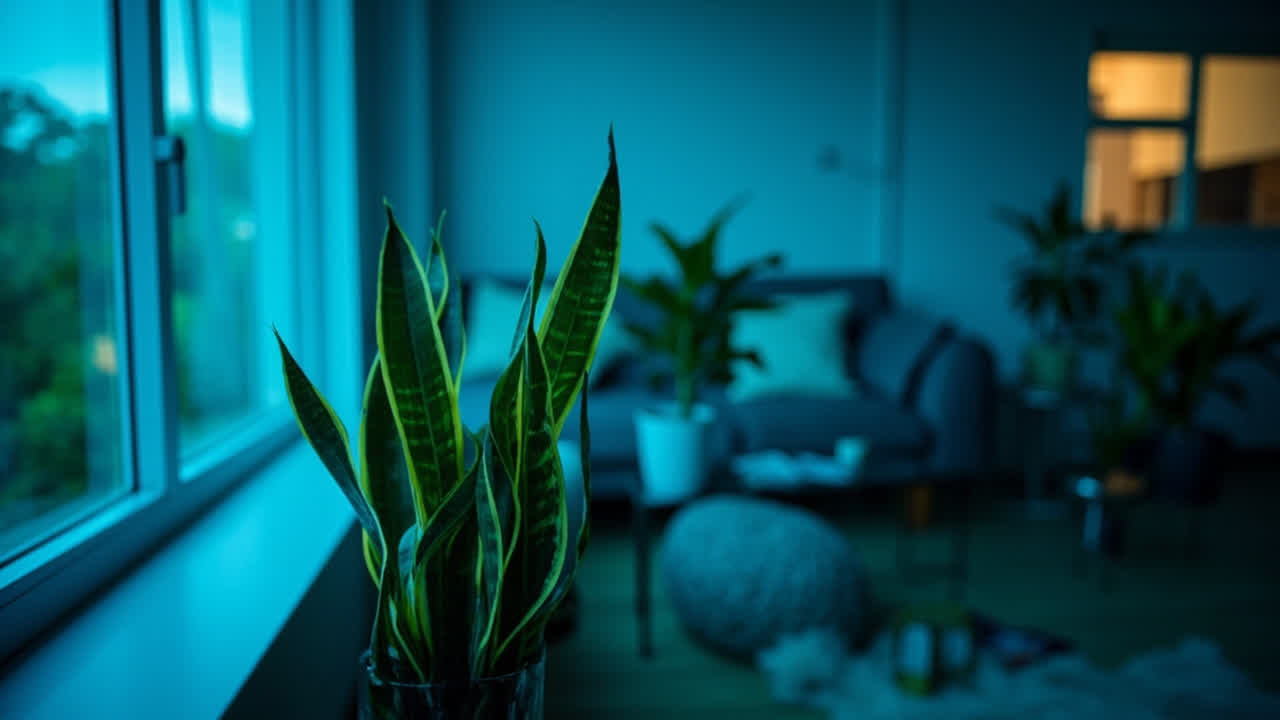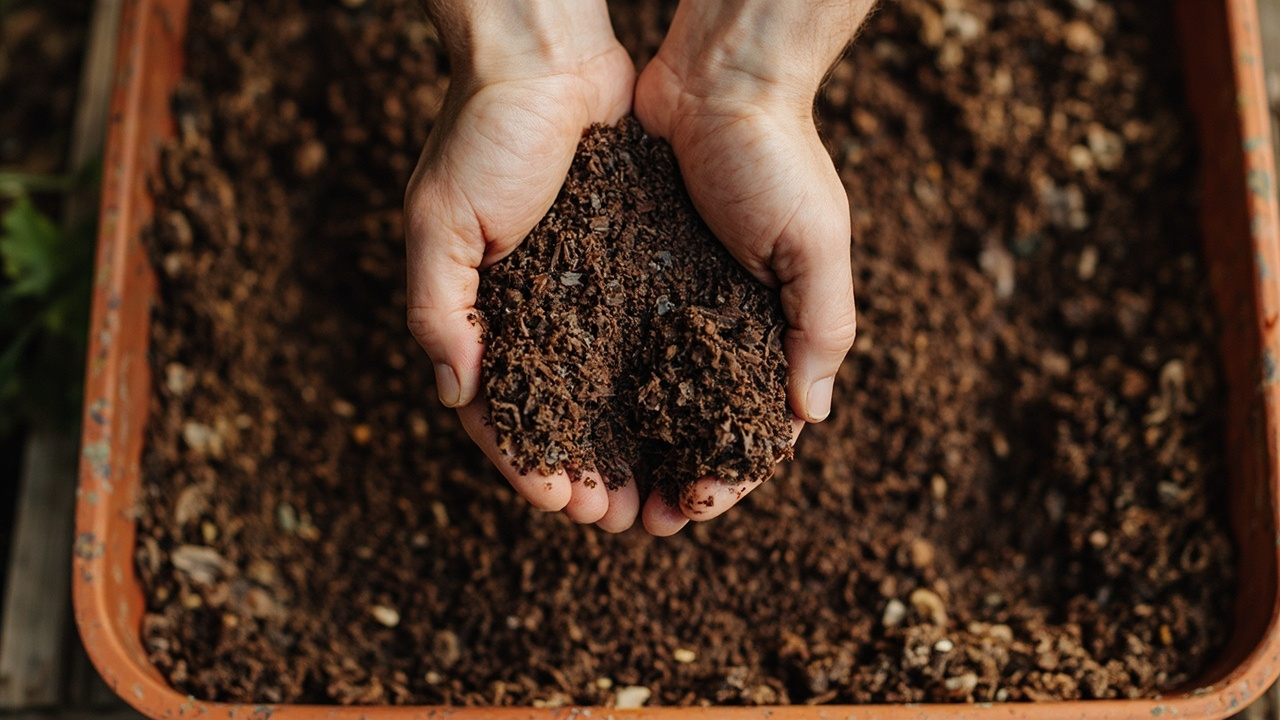

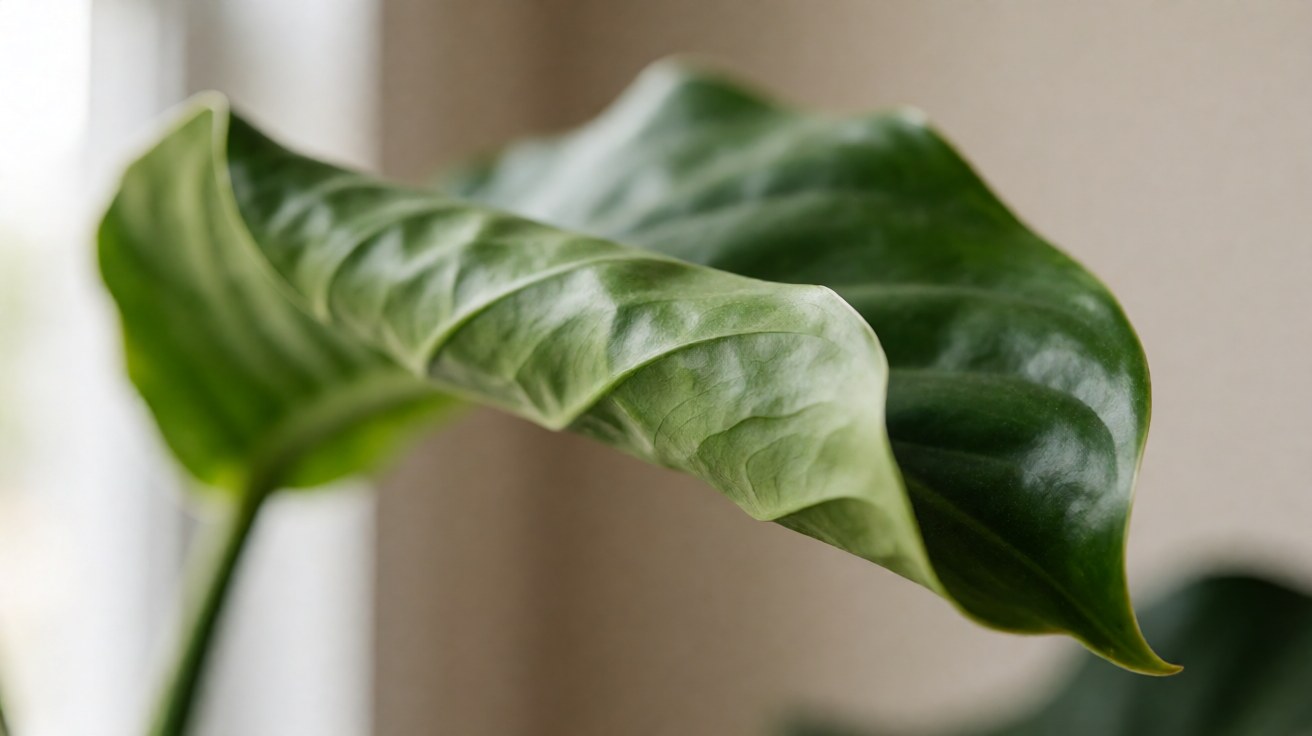
A leaf curls because the cells on one side of the blade are growing longer than the cells on the other side. That is the whole event. Water moves into a leaf cell, raises its turgor pressure, and the cell swells. If the upper epidermis of a leaf gains water faster than the lower epidermis, the leaf curls downward. If it loses water faster, the leaf curls upward and inward to shrink the surface it is losing it through. The plant is not sick. It is solving an arithmetic problem about water, and the shape of the curl is the answer written on the surface.
Two failure modes follow. Either the roots are not supplying water fast enough, so the leaf conserves what it has. Or the roots are supplying it fine and the plant is losing it faster than the pot can refill, from heat, dry air, or direct sun. Both look identical from across the room. One kills the plant in a week if you get it wrong, and the fix for one makes the other worse.
Most growers reach for the watering can first. That is the expensive guess. The cheapest test is already in your hand, and it takes ten seconds: lift the pot. A pot that feels light is telling you the soil has no water left in it. A pot that feels heavy is telling you the opposite problem. Read that before you read any list of seven causes. The curl tells you which direction water is moving. The pot tells you whether there is any water to move.
Read the Curl Before You Water
Direction of the curl and the feel of the leaf together narrow the cause faster than any cause list can. Upward and inward, rolling into a taco shape, with the soil dry two fingers down, is drought. Downward and soft, with a heavy pot that stays wet for days, is root damage. Tight puckers on the newest leaves only, with soil that is fine, is a sap-feeder you cannot see.
There is a table for that, and it is worth reading twice, because most people are carrying the wrong one in their head. The table everyone remembers sorts by cause, which forces you to guess a cause first. Sort by what your hand can find instead.
| What the curl looks like | What the pot feels like | What is happening |
|---|---|---|
| Edges roll up and inward, taco shape | Light, soil pulls from the rim | Water outpaces water supply |
| Leaves cup downward, soft and limp | Heavy, wet days after watering | Roots suffocating, not delivering |
| Crisp edges, curl at the tips | Normal weight | Vapor pressure deficit, dry air |
| Newest leaves puckered and twisted | Normal weight, slightly damp | Sap-feeder on tender growth |
| Evening curl, flat by morning | Anything | Nyctinasty, not a symptom |
Read across the row, not down the column. The left column alone will mislead you constantly, because an upward curl in a wet pot means something entirely different from an upward curl in a dry one. In a dry pot, upward is thirst. In a wet pot, upward curl on a species that normally hangs down is a root problem wearing a disguise.
Why a Leaf Curls at All
Leaves are built with two skins that do not expand at the same rate. The upper epidermis is thicker and more tightly bonded. The lower epidermis is thinner, and in most species it is where the stomata sit, the pores that let water vapour escape. Water in the upper cells pushes up. Water in the lower cells pushes down. Bend one surface relative to the other and the leaf has no choice but to curve.
That is differential expansion, and it is the same principle as a sheet of paper wrinkling when one side gets wet and the other does not. The leaf has no muscles. It cannot decide to curl. It curls because the chemistry of water uptake demands a shape.
Two separate pressures produce those curves. Turgor pressure is the outward push of water inside a living cell, the firmness you feel in a crisp leaf. When a leaf is fully hydrated, turgor is high and the blade is flat or slightly convex. As water leaves, turgor drops, and the leaf goes limp before it curls. The second pressure, water potential, is the gradient that decides which direction water moves: from soil to root to leaf to air, or in reverse when the air is drier than the root zone.
Indoors, that gradient is driven by vapor pressure deficit, the dry gap between the water inside the leaf and the air in the room. A heated winter room at 20 percent relative humidity pulls water out of a broad tropical leaf fast enough that the plant has to reduce its exposed area to keep up. Rolling the edges under cuts surface area and buys time. The curl is not a fault in the plant. It is a valve.
One consequence of this deserves its own warning, because it is where most first-time curl diagnoses go wrong. A curling leaf is often older than the cause. The plant can take five to ten days to express a change in water status as visible curvature, and a leaf that curled last week may still be curled after you fixed the problem this morning. Judging a fix by an old leaf is how people end up watering twice in a day and creating the problem they were trying to fix.
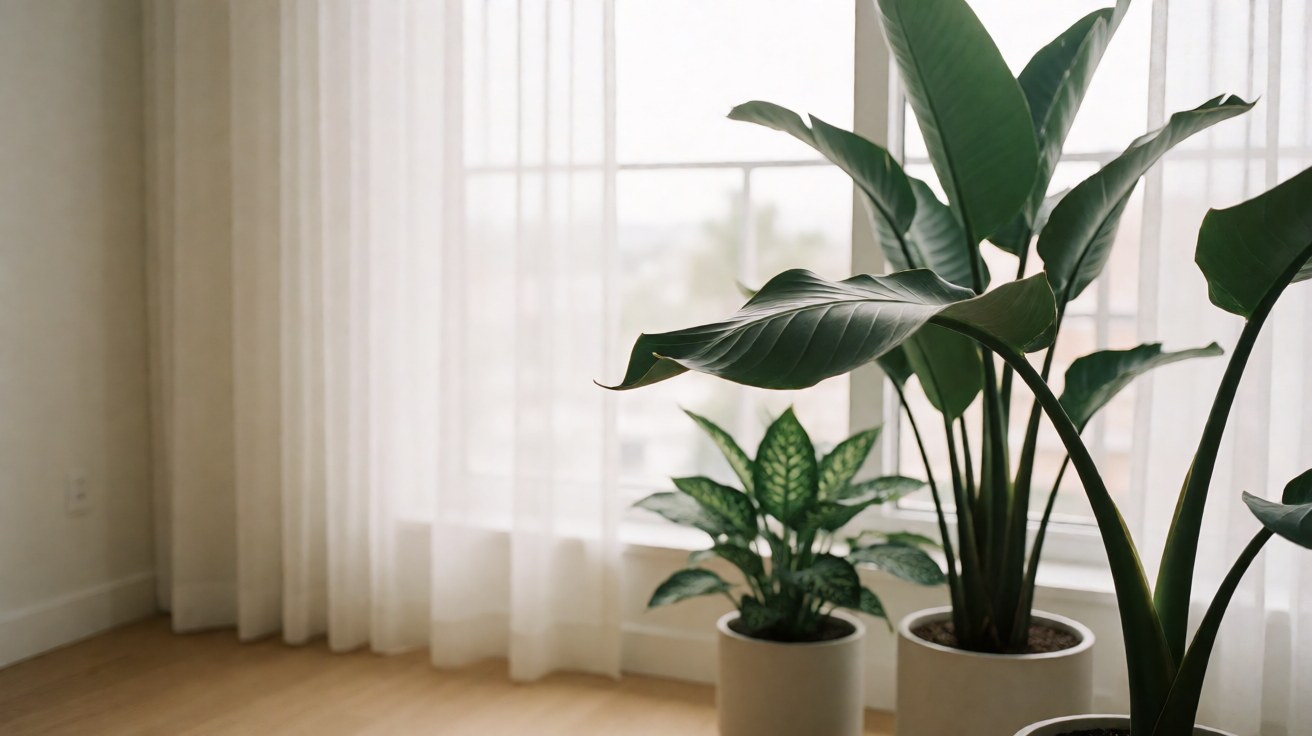
The second consequence is species. A broad, thin blade such as Strelitzia nicolai or a banana has far more surface per gram of tissue than a narrow succulent leaf, so it curls under a load that leaves a Crassula ovata unchanged. The same room, the same air, two plants, two different appearances. If you have read a curl guide for a different species, the direction you were taught may not be the direction yours uses. See strawberry leaves curling and soft for that plant specifically.
Water Stress: Too Little and Too Much
The dry case is straightforward and everyone gets it eventually. The soil has given up its available water, root water potential drops, and the plant cannot replace what the leaves are losing. Stomata close to slow transpiration, which is the correct response, but the leaf blade still curves as turgor falls. Feed it and the curl relaxes within hours, usually overnight.
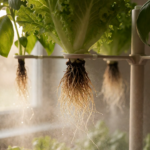
The wet case kills far more plants, and it does it quietly. Saturated soil has no air in it. Roots need oxygen to take up water actively, and when the pore space fills, they suffocate. The paradox that confuses people: a suffocated root system delivers less water, so the leaf does exactly what a thirsty leaf does. It curls. Meanwhile the soil is wet, and you water it again.
The tell is the pairing. Limp downward curl with a pot that stays heavy is root damage, not thirst. The other tell is smell, and it is a good one. Healthy root systems smell like wet earth. Rotting ones smell sour, because anaerobic bacteria are producing the compounds you associate with a swamp. If you have to ask yourself whether the pot smells wrong, it probably does.
If the damage has progressed, the rescue procedure is species-specific and worth doing properly. Root rot explained covers what you are looking at inside the pot, and the watering schedule by species covers the intervals that keep soil from re-saturating after the surgery.
Heat, Light, and the Moving Window
A leaf can be perfectly watered and still curl, because the demand side changed. A plant moved from a dim interior to a south-facing window in February will curl within days, and so will one parked two inches from a radiator. The water supply is unchanged. The transpiration load just tripled.
What makes this deceptive is the timing. Curl usually lags the cause by five to ten days, so the window move or the heating you switched on happened well before you noticed the leaves. The Epipremnum aureum on a shelf that gets afternoon sun every winter has been coping all season. The week the curtains changed, it did not.
The pattern here is different from drought curl. Heat and light stress typically produce curl at the edges and tips, sometimes with pale or bleached patches where the light hit hardest, while the leaf base stays flat and green. If you see scorch and curl together, stop adding water and start moving the pot. Watering a scorched plant makes the margin worse, because wet soil holds more heat and the leaf is already losing water from the tissue that died.
Species light thresholds vary enormously here, and getting a number wrong is how people talk themselves into low-light myths. The indoor plant care guide has the light bands, and spider plants in low light shows what tolerating a dim room actually looks like: survival, not growth.
The Curl You Cannot See Coming
Not all sap-feeders are visible from above. Broad mites, Polyphagotarsonemus latus, are roughly a fifth of a millimetre long and translucent. They feed on the underside of new growth, and the tissue they damage while still forming cannot expand normally, so it comes in puckered, twisted, and thickened.
This gets misdiagnosed as a watering problem constantly, because the affected leaves are the newest ones and a grower with a new pot often blames the fresh soil. The distinguishing feature is that no soil test explains it. Water it perfectly for two weeks and the distortion keeps coming, on every new leaf, while older leaves stay flat.
Thrips, Thysanoptera, leave a different signature. Their feeding scars show as silvery streaks that turn brown, and they leave black specks of frass on the leaf surface. Tap a suspect leaf over white paper and you will see the movement. For the full treatment decision, go to common indoor plant pests, which covers the isolation step most guides skip.
One more pest deserves a note because it produces curl without any insect visible and without any webbing. Herbicide drift, usually from an aerosol window cleaner or a treated lawn two floors down, damages the meristem while new leaves are still forming. The result is narrow, strap-like or cupped growth on the newest leaf only, and no soil test will ever explain it. If your watering is provably correct and the newest leaves keep emerging deformed, chemistry is the next suspicion.
Two Curls That Are Not Problems
First, nyctinasty. Maranta leuconeura prayer plants and Goeppertia roseopicta calatheas lift their leaves into a folded position at night and flatten them again by morning. This is a circadian movement driven by the pulvinus, the swollen joint at the base of each leaflet, and it has nothing to do with water. Spathiphyllum wallisii does the same thing.
Spraying a prayer plant because its leaves folded at dusk is one of the more expensive misunderstandings in this whole cluster. The test takes ten seconds: note whether the leaf is flat and green the next morning. If it is, you have a working plant and no problem.
Second, some species simply grow this way. Hoya carnosa and several Chlorophytum comosum cultivars carry leaves with a permanent longitudinal fold or a rippled margin. Coleus scutellarioides cultivars, particularly the frilled ones, hold cupped new growth for days before it flattens. Species-shape is not a symptom, and it is fixed by the cultivar rather than by anything you do. See coleus leaves curling for that plant specifically.
Your Seven-Day Read
Change one variable, then stop looking at the plant and start counting days. Pick the newest fully expanded leaf and mark it mentally or with a soft pencil dot on the stem. Most curl takes seven to fourteen days to resolve or progress, and the newest growth is the honest indicator, because older leaves do not uncurl once they have set.
Three checkpoints, all specific enough to be falsifiable:
- Day 2. An existing curled leaf has changed nothing, and that is expected. Turgor recovery shows up in the new growth, not the old.
- Day 7. The newest leaf is opening flat. If it is opening puckered instead, the cause is not water, and you are looking at pest feeding or a genetic habit.
- Day 14. Two or three consecutive new leaves flat and firm means the variable you changed was the variable that mattered. Whatever the original cause was, it is now off your list.
Species detail changes the interval and the thresholds but not the direction of the logic. Hoya leaves curling and wilting covers the wax-plant case, calathea leaf curling covers the humidity-driven version that trips up the same test, and pineapple leaf curling shows the bromeliad shape where the tank, not the soil, is the water source. If your plant curls and none of that sounds like yours, echeveria leaves curling and soft covers the succulent case, where soft means rot rather than thirst.
One honest limit before you start: a curl tells you which direction water is moving. It does not tell you why the plant lost its balance, and no single test covers every case. When the leaves keep curling after two clean changes and the soil is behaving normally, the honest answer is that you have eliminated the common causes and the remaining suspects need magnification.
Your plant isn’t dying. It is describing a gradient, and it drew the gradient on the leaf so you could read it. Lift the pot.
Read also: houseplant yellow leaves, brown leaf tips on houseplants, houseplant leaves drooping and houseplant leaf drop if the leaf is changing colour or falling rather than curling. Species-level detail for haworthia leaves curling and soft and prayer plant leaves curling sits inside those pages.
Turn That PDF Into a Spreadsheet in Minutes
You've seen how to do it manually — now let the tool handle the heavy lifting. Upload your bank statement and get Excel, CSV, or QBO in a few clicks.
Try It Free