Calathea leaf curl is the plant’s distress signal, and it’s almost always one of four causes: underwatering, low humidity, cold drafts, or a sudden change in light or temperature. The direction and timing of the curl tells you which one it is. A Calathea with all leaves curled inward at the same time, all day, in a dry room, in winter, is almost always a humidity problem. A Calathea with leaves that curl only in the afternoon and uncurl overnight, in a warm bright room, is almost always underwatering. Getting the diagnosis right means the difference between a 2-day fix and a 6-week recovery — and when the underlying issue is more than one variable off, the Calathea brown leaves guide and the dying Calathea rescue walk through the recovery path.
The good news: Calathea leaf curl is reversible in most cases, and the plant will push new, fully-uncurled leaves within 2 to 4 weeks once the underlying cause is fixed. The leaves that are already curled may or may not uncurl depending on the severity of the damage and how long the plant was under stress, but the new growth tells you whether you solved the right problem.
This page covers the four causes of Calathea leaf curl, how to read which one is your plant’s specific problem, and the recovery path for each.
Why Calathea Leaves Curl in the First Place
Calathea leaves curl to reduce the surface area exposed to the air. The plant does this when it’s losing water faster than the roots can replace it, which is a protective response — the smaller the surface, the slower the water loss. The trigger is usually either a dry atmosphere (the leaves are losing water to the air faster than the roots can supply it) or a dry root ball (the roots can’t supply water fast enough regardless of the air).
Calathea also have a small joint at the base of each petiole called the pulvinus that controls daily leaf movement — leaves lift at night and lower during the day. A pulvinus that’s been damaged by chronic underwatering or low humidity can lose its ability to drive this movement, and the leaves stay partially curled both day and night. This is a more serious sign than the daytime-only curl and takes longer to recover from.
Cause 1: Low Humidity (the most common cause indoors)
Indoor humidity in heated homes drops to 25% to 35% relative humidity during winter, which is well below the 50% to 60% floor a Calathea needs. The leaves curl to reduce water loss to the dry air, the edges crisp and turn brown, and the curl is usually uniform across all leaves regardless of age.
The fix is to add a humidifier within 3 to 5 feet of the plant and run it on a humidistat set to 55% to 60%. The leaves should start to uncurl within 5 to 7 days of the humidity stabilizing. New leaves will come in fully extended if the humidity stays in range.
Distinguishing feature: humidity curl happens in winter when the heat is on, affects all leaves roughly equally, and the edges will also be brown and crispy. If only some leaves are curled or the edges are intact, humidity is probably not the cause.
Cause 2: Underwatering (the second most common cause)
A Calathea that dries out between waterings will curl its leaves in the afternoon as the day’s transpiration pulls the last available water from the leaves. The curl reverses overnight when transpiration slows and the roots have a chance to catch up. Over repeated cycles, the leaves stop uncurling fully and the plant looks “tired” all the time.
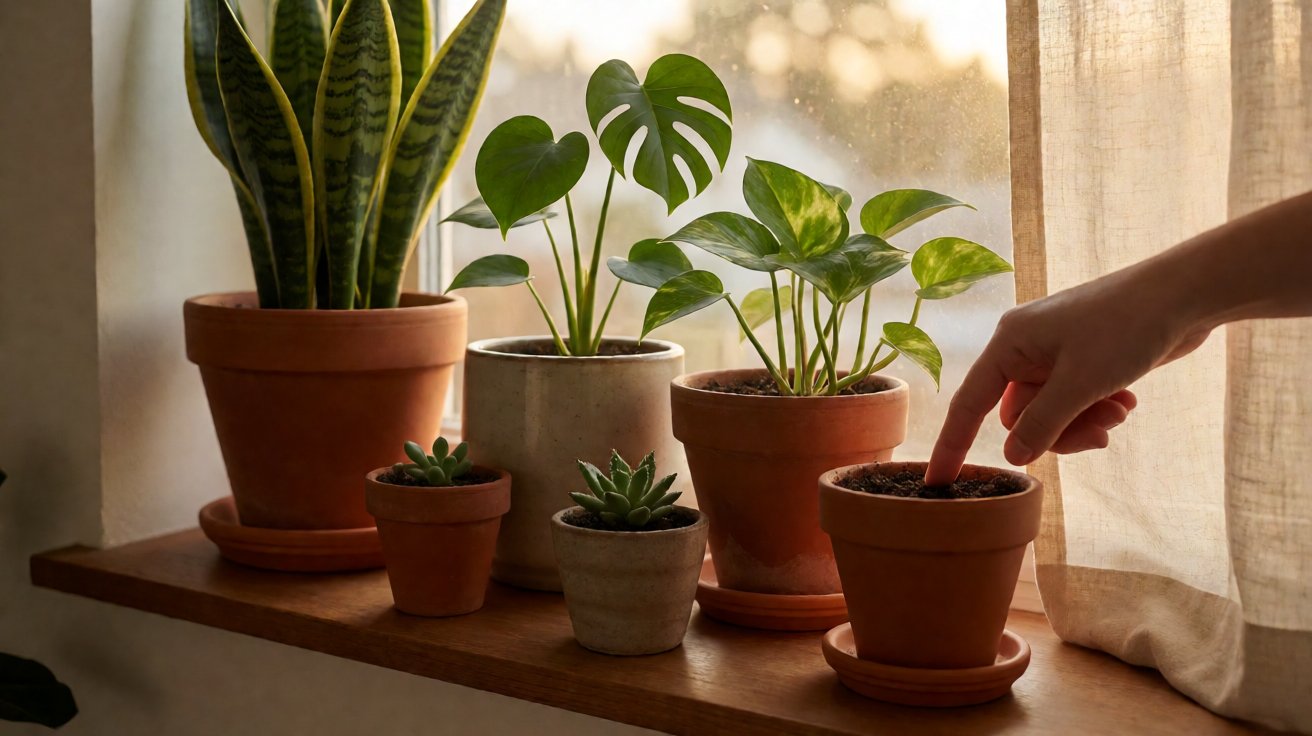
The fix is to water more thoroughly when you do water, and to check the soil moisture more often. Push a finger 1 to 2 inches into the soil — if it’s dry at that depth, water. If only the surface is dry but the soil below is moist, the plant is fine and the curl is from another cause. Lift the pot and feel the weight — a Calathea that needs water feels noticeably lighter than a freshly-watered one.
Distinguishing feature: underwatering curl reverses overnight (or within 4 to 6 hours of a thorough watering) and the leaves are otherwise healthy in color, just curled. If the leaves stay curled 24 hours after a thorough watering, the cause is something else.
Cause 3: Cold Drafts or Temperature Stress
Calathea evolved in the understory of tropical rainforests and don’t tolerate temperatures below 60°F / 15°C. A Calathea sitting next to a drafty window in winter, under an AC vent in summer, or near a door that opens to cold air will curl its leaves to protect the leaf tissue from cold damage. The curl is usually one-sided — the leaves on the side facing the draft are curled, while the leaves on the protected side are normal.
The fix is to move the plant 2 to 3 feet away from the draft source. The curled leaves will usually uncurl within 3 to 5 days once the cold stress is removed. New leaves will come in normal if the plant isn’t repeatedly exposed to cold.
Distinguishing feature: temperature curl is one-sided or follows the pattern of an air current, the affected leaves may also have a slight grayish or purplish tint from cold damage, and the problem gets worse on cold nights or when the AC kicks on.
Cause 4: Light Change (the easiest to fix)
Calathea leaves will curl temporarily when the plant is moved to a new location with different light, or when the seasons change and the light shifts. The curl is the plant’s pulvinus recalibrating to the new light pattern, and it usually resolves within 3 to 5 days on its own. This is the only leaf curl that doesn’t need intervention — just leave the plant alone and let it adjust.
The fix is to wait. Don’t water more, don’t add humidity, don’t move the plant again. The leaves will uncurl as the pulvinus recalibrates. If the leaves are still curled after 7 days, then the cause is one of the other three and you should investigate further.
Distinguishing feature: light-change curl happens within 1 to 3 days of a move or a seasonal light shift, affects all leaves roughly equally (because the new light hits all of them), and resolves on its own within a week.
Reading the Pattern: A Diagnostic Flow
When a Calathea has curled leaves, walk through this in order:
1. Check the humidity. If your home is below 45% relative humidity in winter, that’s probably the cause (or a major contributor).
2. Check the soil moisture. If the top 1 to 2 inches is bone dry, water thoroughly and see if the leaves uncurl within 4 to 6 hours.
3. Check for drafts. Is the plant near a window that gets cold, an AC vent, or a frequently-opened door to outside?
4. Check the light. Did you move the plant in the last week, or did the season just shift from fall to winter or spring to summer?
In most cases the cause is humidity or watering, in roughly equal proportion. The diagnostic order above catches the most common cases first.
What to Do With Leaves That Won’t Uncurl
Once a leaf has been curled for more than 2 to 3 weeks, the pulvinus at the base of the petiole loses some of its elasticity and the leaf may stay partially curled even after the underlying cause is fixed. This is a permanent change to that specific leaf, not a sign that the plant is still stressed.
New leaves will come in fully uncurled if the underlying cause is fixed. The old curled leaves will either slowly uncurl over 4 to 8 weeks or stay partially curled for the rest of their lives. Either outcome is fine for the plant’s health — the curled leaves still photosynthesize, just less efficiently than a fully-flat leaf.
If the aesthetic bothers you, you can trim the worst-affected leaves with sterile scissors at the base of the petiole, close to the soil. Don’t remove more than ⅓ of the leaves at once or the plant will struggle to recover — the remaining leaves need to photosynthesize enough to support the root system while new leaves grow in.
Preventing Leaf Curl in the First Place
The cheapest prevention is a $10 digital hygrometer placed at leaf height next to the Calathea. With a humidistat-controlled humidifier and a watering schedule based on soil moisture (not a calendar), most Calathea never curl their leaves at all, because the two most common causes are caught before they cause damage.
Position the Calathea away from cold drafts in winter and AC vents in summer, and avoid moving the plant more than necessary — Calathea are slow to adjust to new light and the pulvinus needs 3 to 5 days to recalibrate after any move. A stable spot with consistent light, consistent humidity, and consistent watering is what keeps a Calathea’s leaves flat and the variegation sharp.
Quick Curl Diagnostic Checklist
Use this when a Calathea has curled leaves:
1. Is the room humidity below 45%? → Add a humidifier, expect recovery in 5 to 7 days.
2. Is the top 1 to 2 inches of soil bone dry? → Water thoroughly, expect recovery in 4 to 6 hours.
3. Is the plant in a cold draft or near an AC vent? → Move 2 to 3 feet away, expect recovery in 3 to 5 days.
4. Did the plant move in the last week or did the season just change? → Wait 7 days, the pulvinus will recalibrate.
If the cause is one of these four and you address it, the plant will recover. If the leaves are curled for a different reason — overwatering causing root rot, fertilizer burn, severe pest infestation — the leaves will also be yellowing, spotting, or showing other damage, and the recovery path is different. Curl alone, with green leaves, is one of these four causes. Curl with other symptoms needs a different diagnosis.
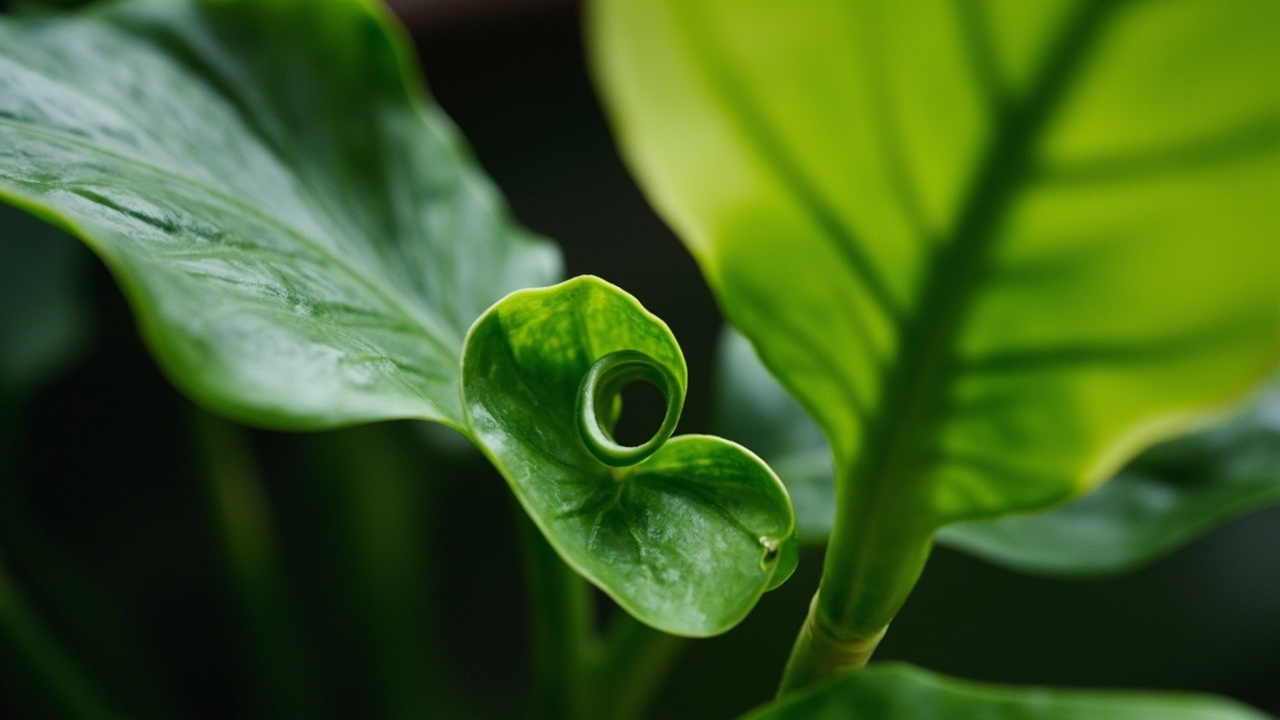
Read also: Houseplant Leaves Curling: How to Read the Curl if the leaves are curling rather than changing colour.
Turn any PDF statement into a clean sheet
Skip the typos and the hours of copying. Our converter handles any bank statement format and outputs Excel, CSV, or QBO for QuickBooks. No file retention, free to try.
Convert your statement