
The NASA Clean Air Study is real. The marketing around it has run a long way past what the researchers actually measured.
In 1989, B.C. Wolverton, Anne Johnson, and Keith Bounds ran a sealed-chamber experiment at NASA’s John C. Stennis Space Center. They tested a small list of houseplants against elevated concentrations of three volatile organic compounds (benzene, formaldehyde, trichloroethylene) inside sealed steel containers over a fixed period. The plants removed measurable amounts of each compound. That part is true. What the study did not test, and what most listicles quietly skip, was a real room with real ventilation and the VOC concentrations a normal home actually has.
This page is the honest-trust version. You will get the actual scope of the NASA study, the four real air-quality benefits indoor plants deliver, tiered picks for each reader situation, the math on how many plants a room would need to match a HEPA filter, and the mental-health-vs-air-cleaning distinction that explains what readers are actually buying plants for.
What NASA Actually Found (and What the Marketing Got Wrong)
The headline claim compresses a small lab result into a universal home recommendation.
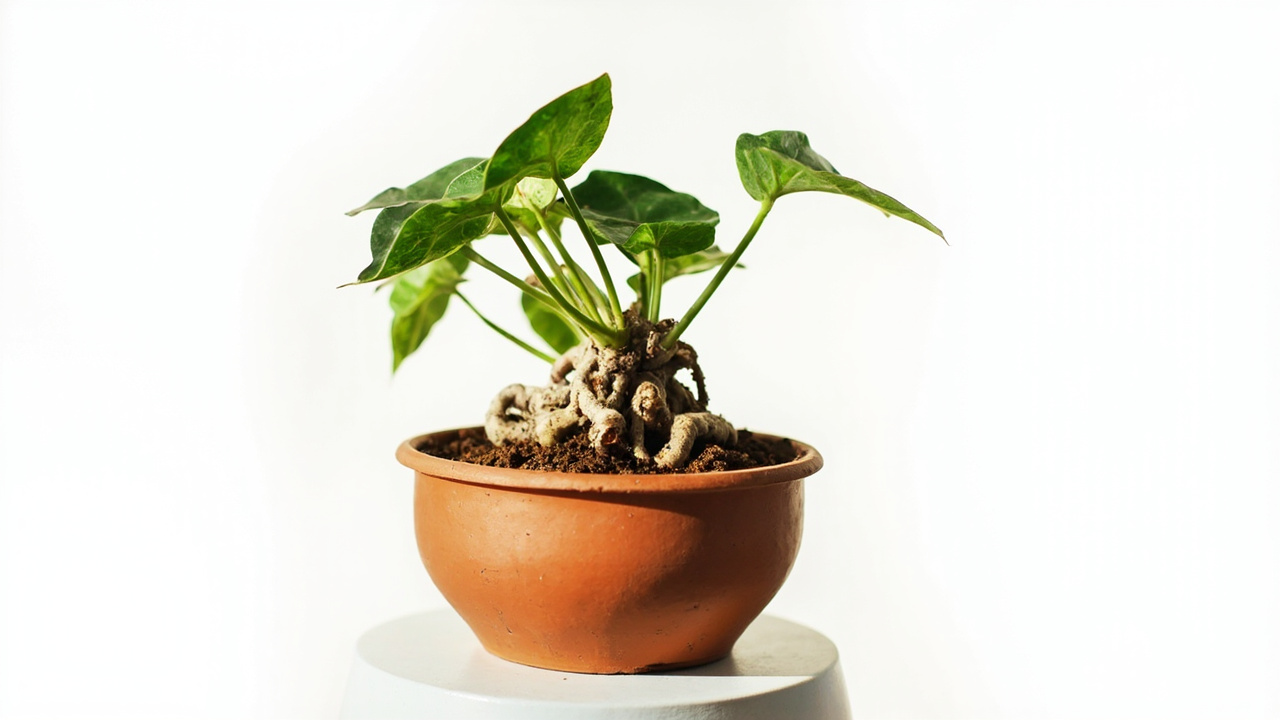
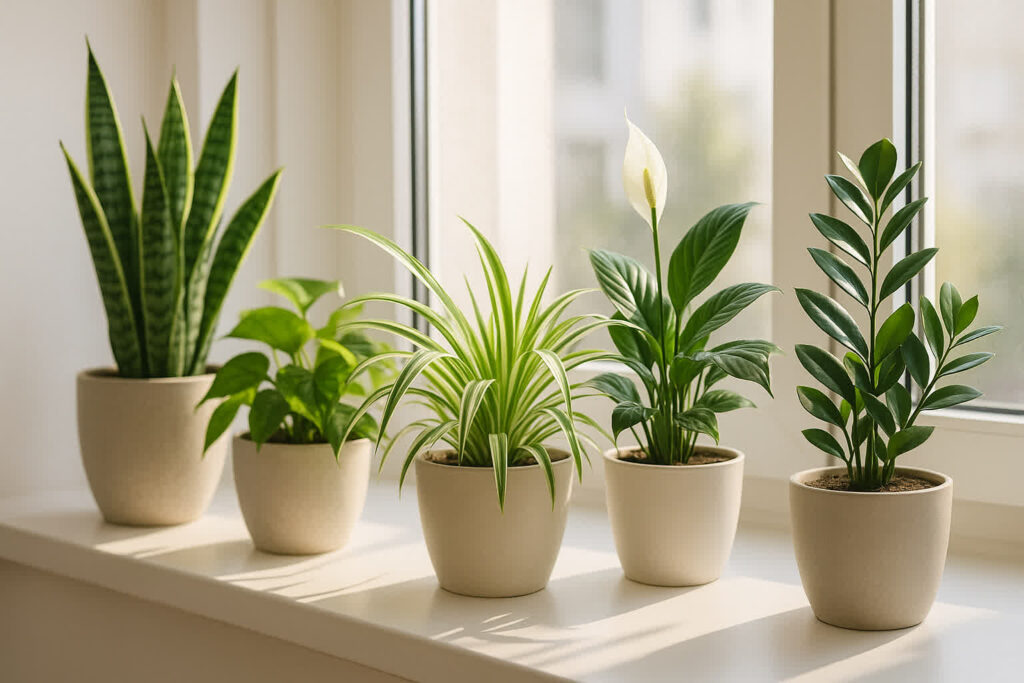
The 1989 NASA Clean Air Study placed individual houseplants in sealed Plexiglas or steel chambers, injected known concentrations of benzene, formaldehyde, and trichloroethylene (VOCs emitted by paint, furniture, cleaning products), and measured how much each compound the plant plus its root-zone microbes removed over a roughly 24-hour period. The plants that performed best on those three compounds included peace lily, spider plant, golden pothos, snake plant, and bamboo palm. Several other species appeared in follow-up work by Wolverton and colleagues through the early 1990s.
What the study did not do. It did not test normal homes. It did not measure the typical home concentration of these VOCs.
The honest summary: indoor plants can pull VOCs out of still air. A real home is not still air. Ventilation, air exchange, and the modest concentrations of VOCs in most homes mean the plants you keep on a shelf remove a sliver of what you, an open window, or a HEPA filter handle in a minute. The plants are not lying. The marketing is. Knowing the difference is what makes this page worth your time.
If you are choosing plants at all, light is the upstream gate. A plant that drops its leaves in your dim living room cleans zero air, and the species list below is filtered for plants that survive normal indoor light, including bright indirect light from an east-facing window. If you want to think in numbers, the picks below tolerate around 50 to 200 foot candles for most of the day, which is what a bright room with filtered sun delivers. The full light map is in our indoor plant light requirements guide.
The 4 Real Air-Quality Benefits of Indoor Plants
Marketing has flattened the air-purifying claim to a single number that does not exist.
1. Humidity from transpiration. Living plants release water vapor through their leaves as they pull water up from the soil, and a healthy root system in well-draining soil keeps that flow steady. A group of medium-sized leafy plants can raise the local relative humidity of a dry room by a few percentage points. That matters in winter when heated indoor air drops below 30% and your skin, sinuses, and sleep quality suffer. The catch is drainage: a plant sitting in soggy soil is a root rot risk and a transpiration shut-down, not a humidity gain. A small humidifier alongside the plants is a fair comparison.
2. Carbon dioxide uptake during photosynthesis. With sufficient light, plants pull CO2 out of the air.
3. Dust and particle trapping on leaf surfaces. Broad, slightly waxy or hairy leaves (peace lily, spider plant, philodendron) collect airborne dust the way a velvet curtain does. This does not purify the air the way a filter does, but it does remove visible particles from the breathing zone near the plant. A monthly leaf wipe, just water on a soft cloth, lifts the trapped material before it resettles. Skip leaf-shine sprays; they clog the stomata and reduce both transpiration and the small gas exchange that makes the plant a plant.
4. Low-concentration VOC uptake at the root zone. This is the mechanism the NASA study actually demonstrated, scaled down to reality. Plant roots and their microbes can break down certain VOCs (benzene, formaldehyde, toluene) at low concentrations. The real-home effect is small and contested, but the mechanism is real. The plants that score well in chamber tests for this are the species the marketing pages keep naming: peace lily, snake plant, pothos, spider plant, philodendron, and a few palms. A struggling plant with yellow leaves or a root-bound pot is doing almost none of this work; the root zone has to be alive.
None of these four benefits turns a houseplant into an air purifier. Together, in a room with several healthy, well-lit plants and reasonable humidity, they are a real, gentle improvement to comfort and to the small stuff (dust, low-concentration VOCs) that you would otherwise ignore.

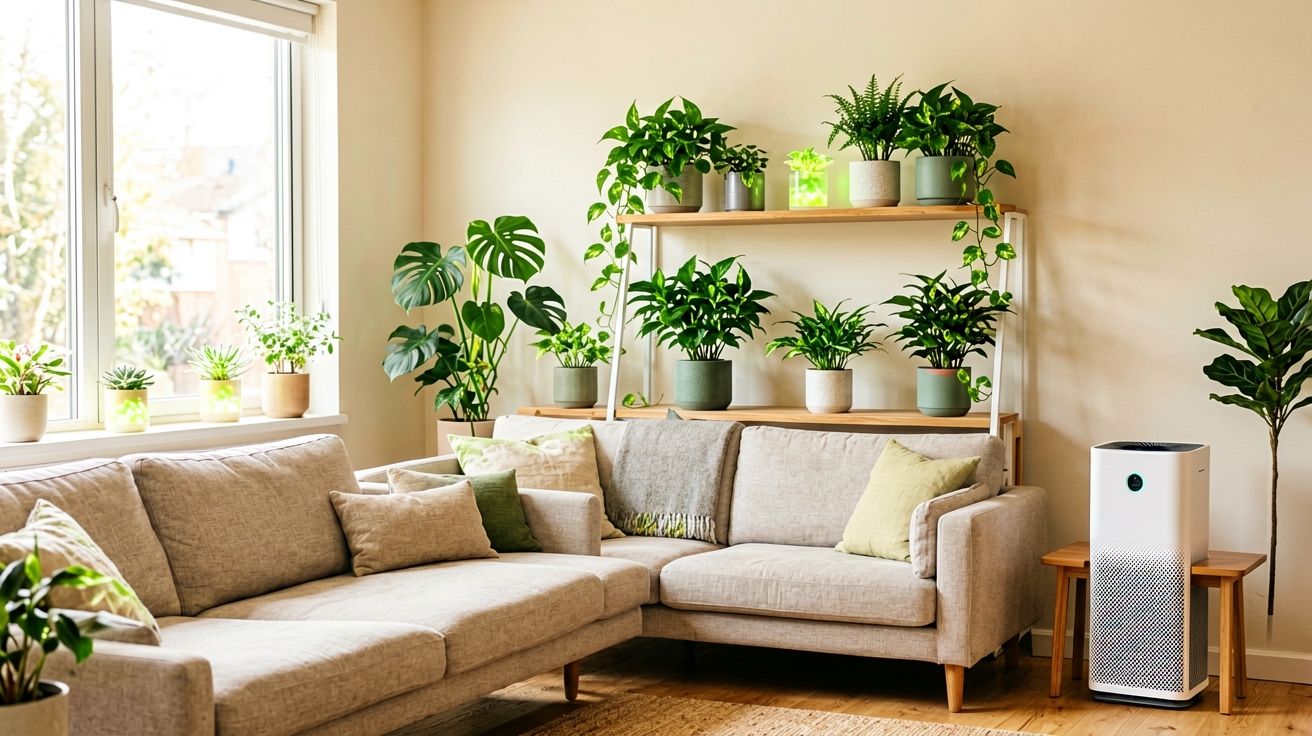
A line-up of healthy indoor plants will not replace a HEPA filter, and it should not have to. The point of the four benefits above is to choose the right reason to buy plants, then pick plants that fit that reason.
Tiered Air-Purifying Picks: What Works for Each Reader
A flat “best air-purifying plants” list is the trap. The honest picks depend on why you are buying the plant and what your room can keep alive. Here is a tiered framework that maps the NASA study species onto real reader situations, with bright indirect light as the shared assumption.
Best overall for most living rooms: golden pothos and peace lily. Pothos is forgiving, fast-growing, easy to propagate from a stem cutting at any node, and one of the species that performed well in the original chamber tests. Peace lily is the most-cited NASA study plant, forgives a missed watering, and is one of the few that also flowers indoors. Both want bright indirect light and a well-draining soil mix in a pot with a drainage hole, and both will tell you when something is wrong with brown tips or yellowing leaves. Pothos species depth is in our pothos care guide.
Best for the bedroom: snake plant and spider plant. Both survive low light that would kill a pothos over a season, both tolerate dry indoor air and a forgiving watering schedule, and both are commonly cited in air-purifying marketing for the right reasons. Snake plant is the lowest-maintenance houseplant on this entire list, an easy houseplant that shrugs off under-watering more readily than overwatering. Spider plant gives you faster growth, sends out baby plantlets you can root in water for propagation, tolerates the same dim corners, and tolerates dry air without browning at the leaf tips. For a deeper shade-tolerant comparison, see our best indoor plants for low light guide.
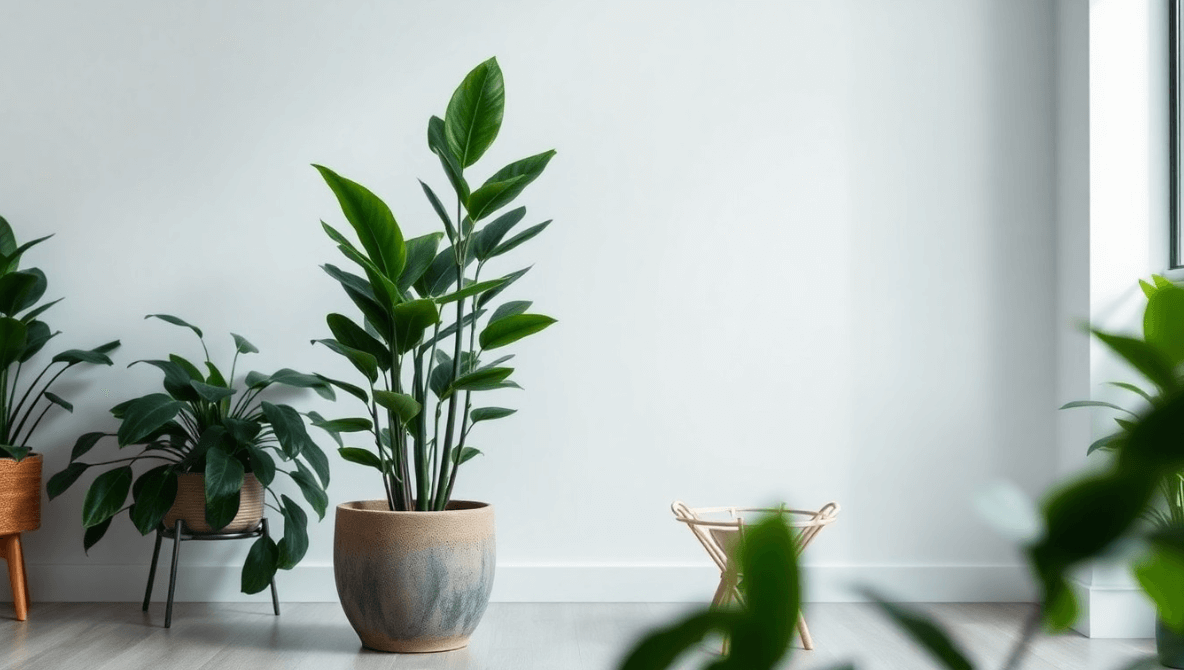
Best for the office or desk: ZZ plant and philodendron. Both survive fluorescent light, both tolerate the dry office air and the occasional forgotten weekend, and both score reasonably in the NASA chamber rankings. ZZ is the most hands-off option here, an indestructible beginner houseplant that prefers to dry between waterings and detests root rot; a root-bound ZZ in a four-inch pot quietly thrives for years. Philodendron offers more leaf shape variety and is forgiving of an irregular fertilizing schedule. For the office desk specifically, ZZ is the safer pick; philodendron’s trailing vines get in the way of paperwork within a month. The full low-maintenance breakdown for any indoor houseplant is in our best indoor plants for beginners guide.
Best statement plant with a real air-quality story: areca palm or Boston fern. Both are larger plants with more total leaf area, which scales the humidity and dust-trapping benefits up. Both are fussier than the species above. Areca palm wants consistent moisture, bright indirect light, and a pot with a drainage hole; it is one of the few tropical foliage plants that delivers both height and a real humidity lift. Boston fern wants humidity and browns at the leaf tips when humidity drops below the comfort range. If your motive is visual impact plus measurable leaf area, these are the honest choices.
One honest caveat: a single plant in a 20-square-meter living room is a decor choice.
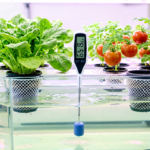
A short note on keeping the plants you do buy alive. Most of the picks above want a basic indoor potting mix with good drainage (a pot with a drainage hole, not a cachepot that holds water), bright indirect light, and a watering schedule that lets the top inch of soil dry between waterings. I prefer an inexpensive moisture meter over a calendar because light and season change soil moisture day to day. Skip misting, it does not raise humidity where it matters and it can encourage fungus gnat eggs in the topsoil. Skip leaf-shine products. If pests show up (mealybug, spider mite, fungus gnat, aphid, whitefly, scale), start with insecticidal soap or neem oil. If you have cats or dogs, run the species list through ASPCA’s pet-safe database before you buy; peace lily and pothos are both toxic to pets if chewed.
Two failure modes show up most often on this exact species list, and both kill the air-quality benefit along with the plant. Overwatering is the bigger one: soggy soil starves roots of oxygen, yellow leaves follow, and root rot sets in; classic leaf drop on a peace lily is usually overwatering. Underwatering is the smaller one: brown tips, leaf curl, and crispy edges. The fix in both cases is a finger in the soil before you water, not a calendar. A plant in bright sunlight dries faster than the same plant in a dim corner; a terracotta pot dries faster than a glazed one; a room with active heating dries faster than a humid one. Let the soil tell you. Nutrient deficiency shows up as a third, slower failure mode; the species on this page tolerate it well.
How Many Plants Does It Actually Take (The Math)
This is the section the marketing pages skip. The honest math is the part that turns “air-purifying houseplants” from a feel-good claim into a number you can compare against.
The widely-cited estimate, traced to a 1990s-era modeling exercise (commonly attributed to Penn State’s Department of Horticulture), is that you would need roughly one plant per 100 square feet (about 9 square meters) of floor space to produce meaningful improvement in indoor air quality from plant-only mechanisms in a sealed environment. In a normal home with air exchange, the requirement jumps. The planning estimate for a normal home is on the order of 100 or more plants per average room to match a basic HEPA filter. Indoor plant care for those 100 plants would be a full-time job.
Read that number again. 100+ plants in one room to match a $60 box. The honest conclusion is not “do not buy plants.” It is “do not buy plants expecting them to do the job of an air purifier.” Indoor plant care for that many plants would be a full-time job.
What the plants can do, in realistic numbers, is what the four real benefits above describe: bump humidity a few points, take up some dust, take up some CO2 in daylight, and modestly help with low-concentration VOCs. If you want measurable air cleaning, you need a filter. If you want plants that also help with comfort, the tiered picks above are honest picks.
What Works Better Than Plants (The Honest Comparison)
Plants are not the most efficient way to clean indoor air. Three engineered options do more, faster.
HEPA air purifier. A true HEPA filter removes 99.97% of particles at 0.3 microns and pulls down dust, pollen, and pet dander.
Activated carbon filtration. This targets the VOCs that the NASA study plants process in chambers.
Ventilation. Open a window for ten minutes. That single act exchanges more air than a shelf of plants does.
The honest trade-off: a HEPA filter does more for measurable air quality than 50 plants will. It does not put leaves on the shelf.
The Mental-Health vs Air-Cleaning Distinction
Here is the part most readers did not expect. The strongest evidence for indoor plants is not about air cleaning. It is about how a room with plants feels.
Environmental psychology research shows that rooms with living plants lower perceived stress and support recovery from mental fatigue in workplaces and healthcare settings. The effect is modest but real, and it depends on a person looking up from a screen and seeing leaves. Indoor plant care for a thriving shelf is what makes the difference.
For sleep, the picture is more honest than the marketing. Snake plant and orchids technically continue gas exchange at night via CAM metabolism, but the magnitude of nighttime oxygen contribution from a few houseplants is too small to measure. The reason a snake plant helps a bedroom is the same reason any low-light tolerant plant helps: it survives the room, it is alive, and a quiet green presence on the nightstand is a real comfort cue for many sleepers.
For biophilic comfort, the species matters less than the care. Plants that match the room’s light, that get watered on a schedule you can keep, and that do not drop leaves onto your books will quietly improve how the room reads. That is the benefit plants actually deliver, and it is the one most readers were reaching for when they Googled “best air-purifying houseplants” in the first place.
Picking the Right Plants for Your Actual Reason
The framework below collapses the eight sections into a pick protocol.
If your real reason is cleaner measurable air. Get a HEPA filter with an activated carbon stage. Use it in the room you spend the most time in. Add a few snake plants or pothos for the small real benefits, and pick species you can keep alive. Snake plant is the lowest-friction species to start with; full care, including the right indoor potting mix and how to read your indoor plant care schedule, is in our snake plant care guide.
If your real reason is a calmer-feeling bedroom. Pick a low-light tolerant plant that survives your actual light, water it on a schedule that fits your week, and stop there. Snake plant and pothos are the most forgiving bedroom options. The romantic claim that “plants give you oxygen at night” is overstated, but the calm of a green presence on the nightstand is real. If the room is darker than an east-facing window during the day, a grow light on a timer keeps a pothos from stretching into sparse, leggy stems with long gaps between leaves.
If your real reason is a more pleasant workspace. Pick a plant that tolerates fluorescent light and a dry office, that will forgive an irregular watering schedule, and that does not drop leaves onto paperwork. ZZ plant and philodendron are the honest picks here; pothos works in a brighter office near a window. Choose a plant you will not abandon in two months.
If your real reason is a statement plant that earns its space. Areca palm and Boston fern are the only species on this page where leaf area is large enough that the real air-quality benefits scale meaningfully. Both are fussier than the smaller species. Only pick them if you have a stable spot with the right light and humidity.
If your real reason is all of the above, and you have a window. Get a HEPA filter for the measurable job. Pick three to five plants from the tiers above that fit your light. Skip the marketing lists. Water what you actually bought, and let the room do its quiet work. If you have a pet and the species above are not pet-safe for your home, swap to ASPCA-confirmed non-toxic picks like Boston fern or areca palm; the air-quality story is essentially the same.
For a wider beginner-friendly picking list across all houseplant types, our best indoor plants for beginners guide is the right next stop. If your constraint is light rather than motive, the canonical shade-tolerant picking comparison lives at best indoor plants for low light. The reference vocabulary for any indoor plant care guide you read along the way is in the houseplant glossary.
The honest-trust version is shorter and more useful.
Turn That PDF Into a Spreadsheet in Minutes
You've seen how to do it manually — now let the tool handle the heavy lifting. Upload your bank statement and get Excel, CSV, or QBO in a few clicks.
Try It Free