Haworthia leaves that curl or feel soft trigger a specific kind of alarm for owners because the two most common causes — underwatering and overwatering — produce opposite treatments, and guessing wrong accelerates the damage. Unlike sudden yellowing or brown tips, curling and softening develop over one to three weeks and follow patterns that are consistent across all Haworthia species, from the windowed Haworthia cooperi to the striped Haworthia fasciata. The right fix depends entirely on which pattern your plant is showing, and the thirty-second texture test below resolves the ambiguity without guesswork.
Quick Diagnostic Split: The 30-Second Leaf Texture Test
Soft or curling Haworthia leaves come from three possible causes, and the wrong guess — watering when the plant is already overwatered, or drying out when it is already dehydrated — makes the problem worse in under a week. The fastest way to split the patterns is a tactile test that takes thirty seconds and requires no tools.
Gently squeeze one of the affected leaves between your thumb and forefinger at the midpoint. Three outcomes split the diagnosis into the sections below. If the leaf feels hollow, thin, and deflated like a partially emptied water balloon, the plant is dehydrated — the cause is underwatering. If the leaf feels watery, mushy, and collapses under light pressure with a translucent appearance near the base, the roots are rotting from overwatering — the cause is overwatering. If the leaf feels firm but the margins are curling inward or the edges look dry and crispy, the cause is environmental — the cause is heat stress. A fourth pattern — leaves that curl and soften evenly across the entire rosette with no change after adjusting water — points to a root-bound container and is covered in the matching section below.
This diagnostic works because Haworthia leaves store water in specialized parenchyma cells that respond predictably to different stress types. Dehydration collapses these cells evenly, producing a uniform limpness. Overwatering causes cell-wall rupture from bacterial activity, producing a wet, mushy texture with visible discoloration. Heat stress causes marginal cell death, producing dry curling without changing the core leaf structure. The Haworthia plant care complete guide covers the healthy leaf baseline for comparison.
Underwatering: Deflated, Curling Inward, Hollow-Feeling Leaves
An underwatered Haworthia responds in a specific sequence that is easy to recognize once you know what to look for. The oldest outer leaves are the first to lose turgor because the plant prioritizes water delivery to the central growing point. These outer leaves curl inward along their length — the leaf margins curl toward the centerline of the leaf, creating a trough shape — and the leaf surface looks wrinkled or deflated rather than plump and smooth. When you squeeze the leaf, it feels hollow because the water-storage cells have shrunk.
The cause is a watering interval that is too long for the current environment. Haworthia in a fast-draining gritty mix in a terracotta pot in low indoor humidity may need water every seven to ten days during the growing season, not the every-two-weeks schedule that works for the same plant in a glazed ceramic pot. The fix is straightforward: give the plant a full soak — submerge the pot in room-temperature water until the medium is saturated and no more bubbles rise — then let it drain completely. Do not mist the leaves; Haworthia absorbs water through its roots, not its foliage, and misting on curled leaves can pool in the crevices and cause secondary rot.
Within 48 hours of a full soak, the leaves should begin plumping back to their normal firmness, starting with the inner rosette and progressing outward. If the leaves remain deflated after three days, the roots are not absorbing water — check for root rot by gently sliding the plant out of the pot (covered in the overwatering recovery section below). The Haworthia watering guide has the seasonal soak-and-dry schedule that prevents recurrence, including the weight method that tells you when the pot is dry without guesswork.
Overwatering: Soft, Mushy, Curling Outward with Translucency
Overwatering produces the opposite physical response from underwatering, which is why the two are so often confused by casual inspection. Instead of curling inward, overwatered leaves curl outward — the leaf tips and margins bend away from the centerline — because the water-storage cells are swelling beyond capacity and the cell walls are beginning to break down. The leaf surface develops a translucent, water-soaked appearance, especially near the base of the leaf where it attaches to the stem. Gentle pressure causes the leaf to collapse like a wet paper bag.
The primary cause is soil that stays wet for too long: the fibrous Haworthia roots need air circulation between waterings, and when the gritty mix remains moist beyond ten to fourteen days, anaerobic bacteria colonize the root zone and begin digesting the root tissue. The damaged roots cannot deliver water to the leaves even though the soil is wet — a paradox that often leads owners to water more, which accelerates the rot. Check the soil moisture at the bottom of the pot through the drain hole; if it feels cool and damp four inches down while the top inch is dry, the pot has a perched water table that is suffocating the lower roots.
The fix starts with an immediate drought period. Stop all water and let the pot dry completely — this can take two to three weeks in a dense medium. If the translucent curling affects more than half the rosette, remove the plant from the pot, trim all brown and mushy roots with sterile scissors, and repot into fresh dry gritty mix. Do not water for at least seven days after repotting to allow the cut root ends to callus. Leaves that have already turned completely translucent cannot recover; remove them at the base to prevent fungal spread to the healthy tissue. The Haworthia soil mix guide has the gritty mix recipe that provides the drainage and aeration Haworthia roots need to avoid this pattern entirely.
Heat Stress: Curling Leaf Margins with Dry Edges
Heat stress produces a curling pattern that neither underwatering nor overwatering explains: the leaf margins curl inward or upward, but the leaf body between the margins stays firm, and the curled edges develop dry, brown, or crispy tips. The center of the leaf remains plump and green. This pattern appears most often in summer when a Haworthia near a south- or west-facing window receives direct afternoon sun through the glass, which amplifies the temperature at leaf level beyond what the plant can tolerate — leaf surface temperature above 95°F (35°C) causes localized cell death at the leaf margins.
Unlike underwatering curling, which affects the entire leaf evenly, heat-stress curling is strongest on the side of the plant facing the window. The affected leaves also show subtle bleaching along the curled margin — a lighter green or pale yellow line that marks the boundary between living and dead tissue. Move the plant at least three feet back from the window or filter the light with a sheer curtain. The curled and crispy margins will not regenerate, but the undamaged leaf tissue continues photosynthesizing and the next flush of new leaves will emerge flat and smooth at the correct light level.
Heat stress and underwatering can compound each other — a hot windowsill dries out a terracotta pot twice as fast as a cool shelf, producing both marginal curling from heat and deflated leaves from dehydration. Treat the heat stress first by relocating the plant, then assess the watering interval separately. The Haworthia light requirements guide has the exact foot-candle readings and window orientation recommendations that prevent heat stress without sacrificing light quality.
Root-Bound Stress: Curling That Persists After Correct Watering
Root-bound curling is the least common pattern but the most frustrating because it resembles underwatering curling despite correct watering. A Haworthia that has filled its pot with roots — the root mass forms a dense plug with no visible gritty mix between the root strands — cannot absorb water efficiently because there is not enough soil volume to hold moisture between waterings. The water runs straight through the root mass and out the drain holes, leaving the roots dry within hours of a full soak. The result is persistent soft, curling leaves that never fully plump up no matter how often you water.
Check for root binding by lifting the pot and looking at the drain holes. If you see a thick mat of roots protruding from the holes, or if the root ball slides out of the pot as a single dense cylinder with the original soil shape still visible, the plant is root-bound. Haworthia can tolerate being slightly root-bound — in fact, some species bloom more readily in tight pots — but when the leaves start curling from lack of retained moisture, the pot is too small. Move up one pot size — from a 4-inch to a 5-inch pot, for example — and use fresh gritty mix that holds enough moisture for three to five days of drying time. Do not go more than one size larger; an oversized pot stays wet too long and creates the overwatering problem instead. The Haworthia repotting guide has the step-by-step root handling and pot-size selection criteria.
Recovery Plan: Match the Fix to the Pattern
The recovery timeline depends on matching the right pattern to the right action. Underwatered plants bounce back within 48 hours of a full soak. Overwatered plants with minor root damage recover in three to four weeks with the dry-out-and-repot protocol. Heat-stressed plants recover in one growing season — the curled leaves stay curled but new leaves emerge flat. Root-bound plants recover immediately after repotting; the leaves should firm up within a week.
Three recovery rules apply to all patterns. First, never fertilize a plant with curled or soft leaves — the roots cannot process nutrients while stressed, and fertilizer salts burn the damaged root tissue. Wait until the leaves return to normal firmness and then apply a diluted succulent fertilizer at quarter strength. Second, keep the plant in bright indirect light during recovery — low light slows root regeneration and prolongs the soft-leaf period. Third, do not remove curled leaves until they are completely dry and crispy; the plant reabsorbs nutrients from dying leaves, and removing them prematurely wastes resources that the root system needs for repair.
If the entire rosette has gone soft and translucent with no firm leaves remaining at the center, the rot has reached the growth point and the plant cannot be saved as a whole. At this stage, inspect the base for healthy offsets that are still firm and green. Separate these from the mother plant with a clean knife, let the cut surface callus for 48 hours, and pot them in dry gritty mix. Even single leaves that are fully turgid — not translucent, not mushy — can be propagated, though Haworthia leaf propagation is slow and produces a new rosette in three to six months. The Haworthia propagation guide covers offset division and leaf-cutting techniques in detail.
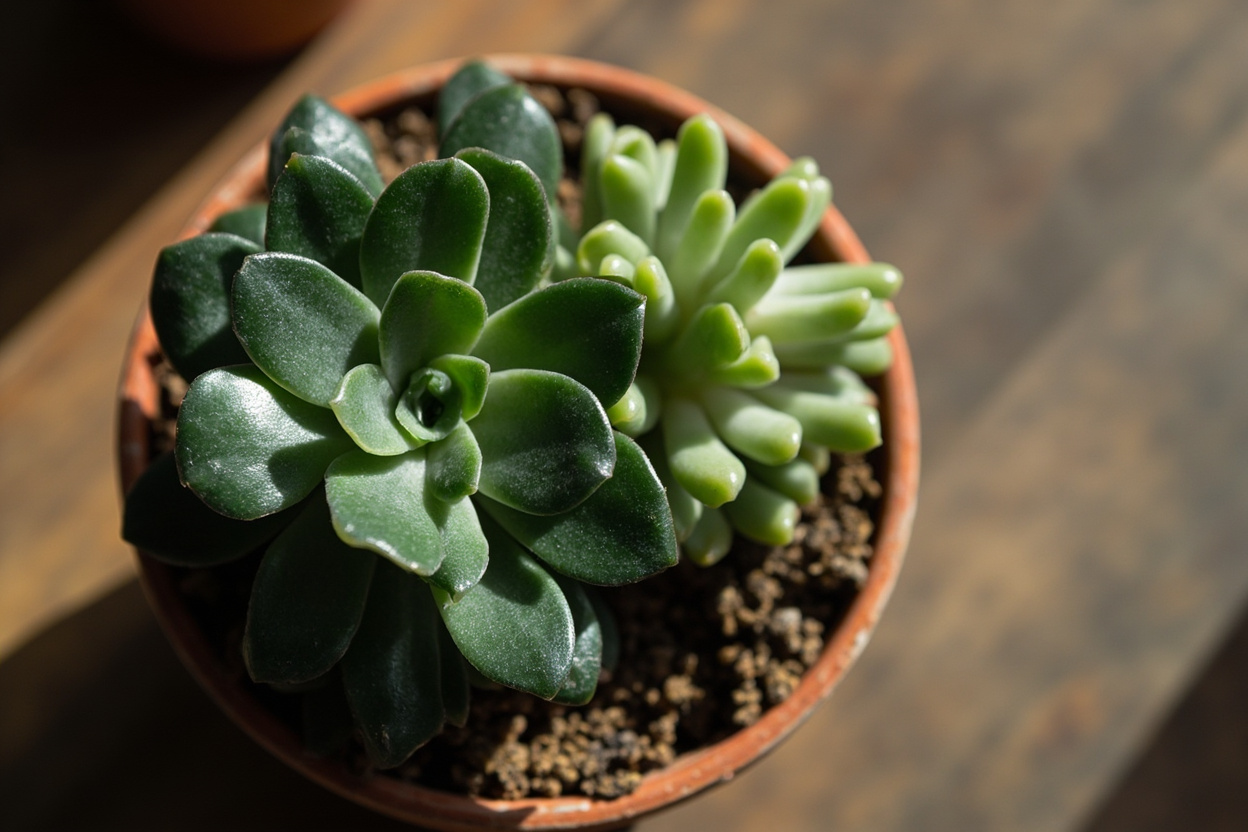
Read also: Houseplant Leaves Curling: How to Read the Curl if the leaves are curling rather than changing colour.
Turn PDF Bank Statements Into Workable Spreadsheets
Your bank statement is a mess of numbers, but your books shouldn't be. Use our converter to get Excel, CSV, or QBO files — ready for QuickBooks.
Try It Free Now