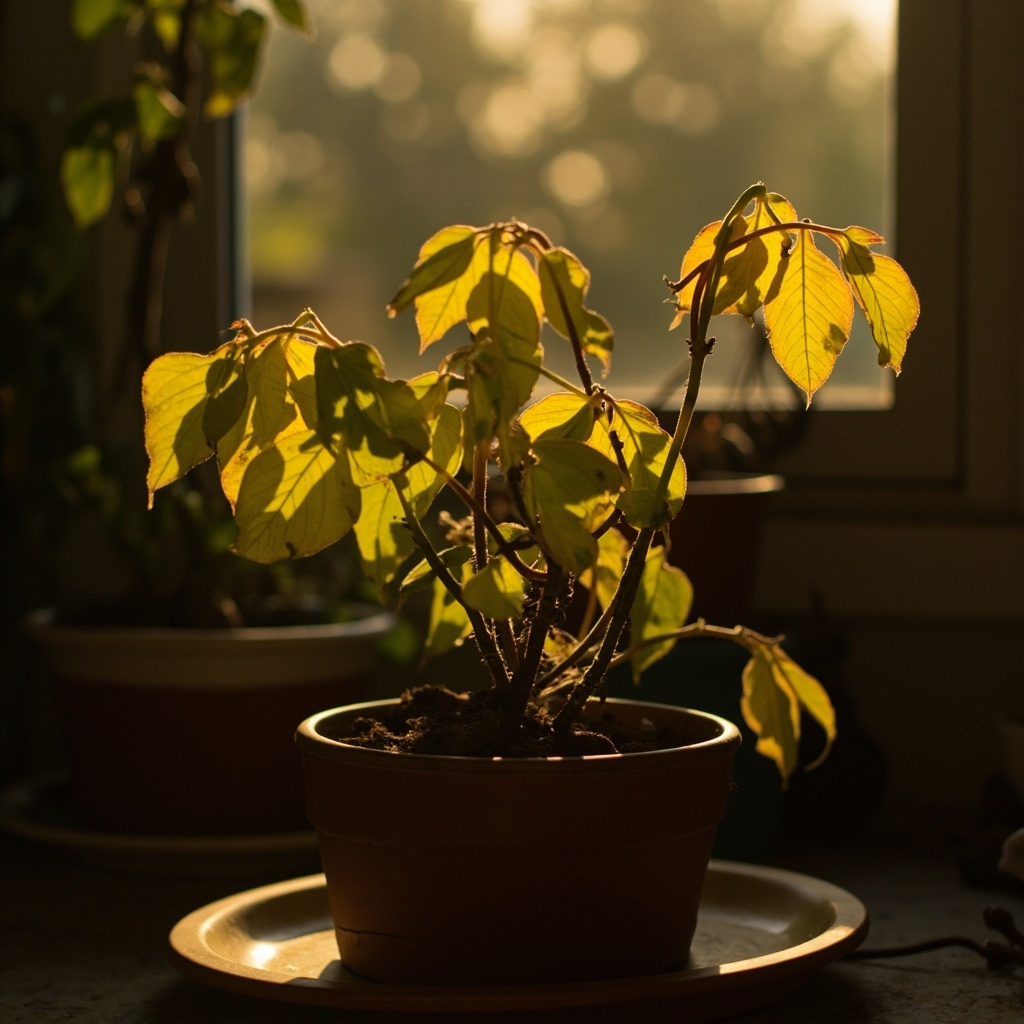
Your Hoya leaves are curling inward, and the vine looks tired and less plump than usual. The direction of the curl tells you what to do next — and the wrong response, watering more when the real problem is root rot, accelerates the decline. Curling Hoya leaves are a distress signal that distinguishes between underwatering, low humidity, salt stress, and root collapse, but only if you read the curl pattern correctly.
Four curl patterns cover 95% of Hoya wilting cases: inward curl from underwatering, outward limp from overwatering, edge crisp from salt or sun, and systemic wilt from root collapse. This guide walks through each pattern, the corresponding root-zone cause, and the recovery protocol — including when the curl is permanent and the vine needs to come off.
Reading the Curl: Four Patterns and What They Mean
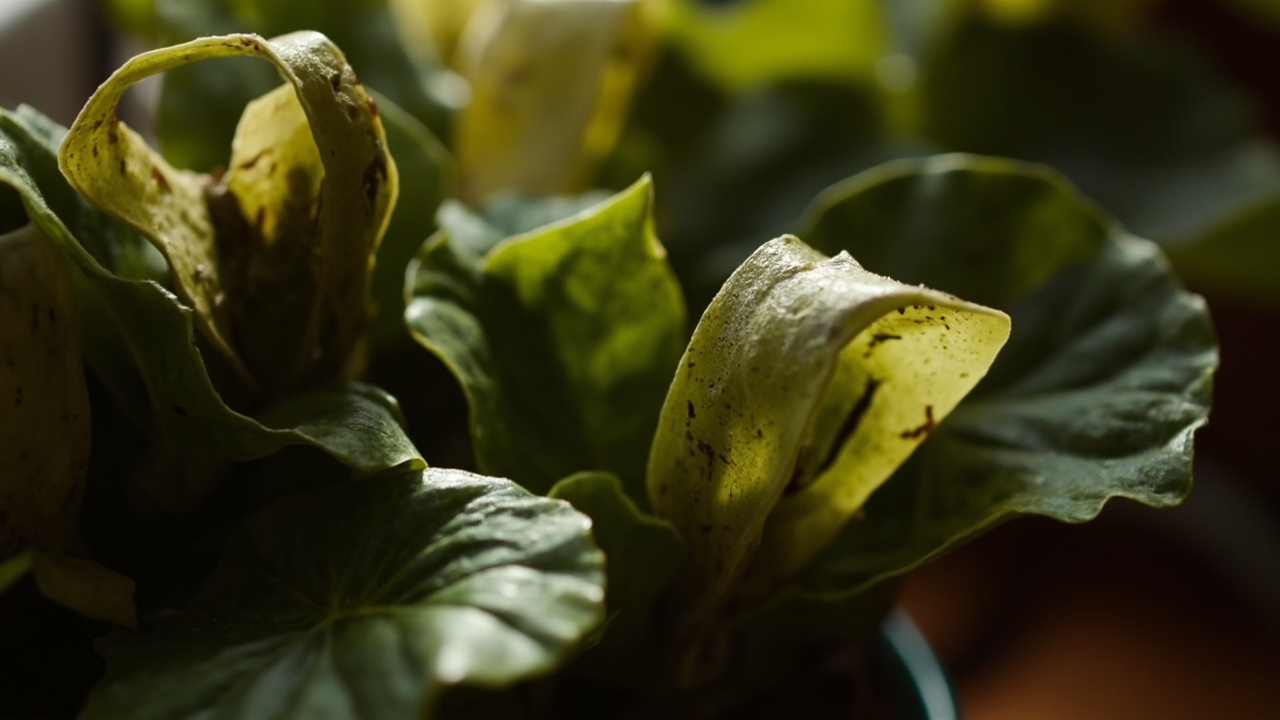
Look at the leaf curl direction first. Pattern one — inward curl: the leaf margins roll toward the midrib, reducing the leaf’s surface area. This is a water-conservation response from the plant: it is losing moisture faster than roots can supply it.
The cause is either dry mix (underwatering) or low ambient humidity (below 40% RH). Pattern two — outward leaf drop: leaves hang limp and slightly reflexed (curving away from the stem). This signals root damage — usually from overwatering or root rot — where physiologically wet mix cannot deliver water to the leaves because the roots are non-functional.
Pattern three — edge crisp: leaf margins turn brown and brittle while the inner leaf stays green. This is salt toxicity or direct sun scorch, not a water-supply problem. Pattern four — systemic wilt: all leaves droop simultaneously and stems lose structural integrity.
This is vascular failure, either from severe dehydration or from fungal invasion of the stem tissue. Each pattern demands a different response.
Underwatering: The Classic Inward Curl
Hoya watering guide defines the moisture sweet spot: water when the top 2 inches feel dry. A Hoya left 3 weeks without water in a warm room enters drought stress. The leaf cells lose turgor pressure, and the leaf blade curls inward to minimize surface exposure.
The curl is a feature, not a failure — the plant is buying time.
The fix is a thorough soaking. Place the entire pot in a basin of room-temperature water and let it sit for 30 minutes. Capillary action draws water up through the drainage holes and wet the root ball from below.
Remove the pot, let excess water drain, and the leaves rehydrate within 24–48 hours. Do not water from the top only: dry repellent mix channels water down the pot walls and out the drainage holes while the root ball stays bone-dry inside.
Prevention: in rooms above 75°F, check the mix every 5 days instead of weekly. A Hoya in a 4-inch terracotta pot in an 80°F room can go from adequately moist to drought-stressed in 6 days. The Hoya soil mix guide covers mix compositions that retain moisture without becoming waterlogged.
Overwatering and Root Rot: The Limp Outward Drop
A common misread: the mix feels wet, the leaves are wilting, so the owner waters more. But overwatered Hoya leaves curl outward and hang limp because the roots are suffocating or rotting — they cannot transport water to the leaves even though the surrounding mix is saturated. Adding more water pushes the root system past the point of no return.
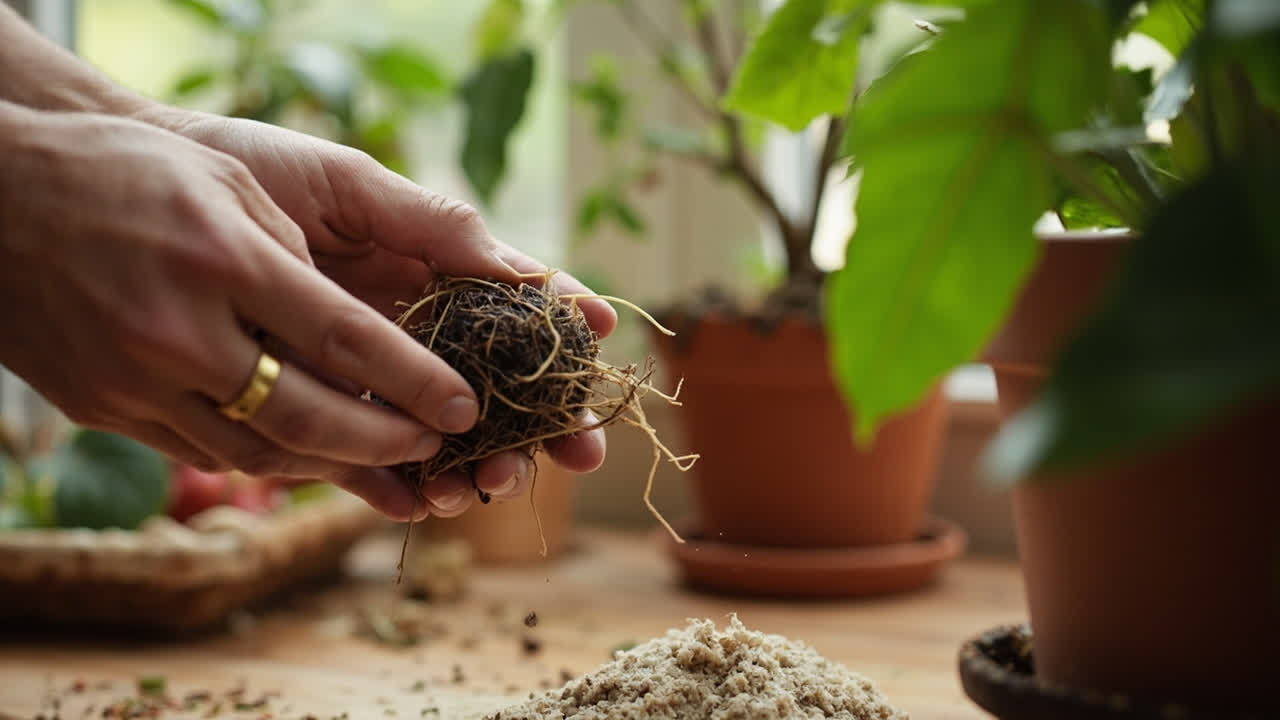
The diagnostic: smell the mix at the drainage hole. A sour, anaerobic odor indicates root rot. Slide the plant from the pot and inspect the roots — brown, slimy roots that slip off the central core confirm the diagnosis.
Hoya leaves turning yellow page covers the full surgical protocol: trim, sterilize, repot in dry mix, withhold water for 7 days.
After the surgical repot, place the recovering plant in bright indirect light and maintain 60%+ humidity. The leaves that were limp at the time of repotting may not recover — leaves that have lost turgor for more than 72 hours often stay partially collapsed. New growth emerges turgid if the root system re-establishes.
Low Humidity and the Curling Response
Hoya leaves curling inward with green, firm texture and no sign of dry mix point to low humidity. Below 40% RH, the leaf stomata cannot keep up with transpiration demand even when the root system is delivering adequate water. The leaf curls to reduce the exposed surface area and slows further water loss.
The Hoya humidity temperature page maps the ideal range: 50–70% RH for most varieties. Below 40%, add humidity through a pebble tray (a shallow tray filled with water and pebbles, pot sitting above the waterline), grouping the Hoya with other plants, or running a small humidifier nearby. Misting is not effective — the humidity spike lasts 15 minutes and the water droplets on Hoya leaves can invite fungal leaf spot in stagnant air.
In winter, indoor RH can drop below 30% when heating systems run. A digital hygrometer placed at plant level removes the guesswork. If the Hoya is near a heating vent or radiator, relocate it — the direct airflow strips moisture from leaves faster than the roots can replace it.
Salt Buildup and Sun Scorch: The Crispy Edge Curl
Fertilizer salts accumulate in the mix over time, especially if the plant is fed monthly and the excess is not flushed. A white crust on the mix surface or pot rim signals salt buildup. The high salt concentration in the soil solution draws water out of root tips by osmotic stress, and the oldest leaf margins turn brown and curl crispy.
The fix: flush the mix with distilled water (three times the pot volume, letting it drain completely) and reduce fertilizer frequency to every 6 weeks. The Hoya light requirements page covers the light threshold that prevents the other cause of crispy edge curl: direct afternoon sun scorches leaf margins above 85°F leaf surface temperature, and the damage is permanent — the affected tissue does not green up again. Trim scorched margins with clean shears for aesthetics, but leave partially scorched leaves in place; they still photosynthesize.
When Curling Means Permanent Damage: Irreversible Wilting
The honest limit of rehydration: once Hoya stems have collapsed from severe wilt — the vines hang straight down, the tissue feels hollow when squeezed — they do not re-erect after watering. The vascular tissue has been damaged beyond recovery, and the stem’s structural integrity is permanently compromised. The save dying Hoya plant guide covers the salvage protocol: cut collapsed stems back to the highest firm node, propagate healthy sections in water or soil, and let the root system regenerate from scratch if the roots are still white and firm.
A Hoya that has wilted systemically but still has a firm crown can be saved. Remove all wilted stems, place the crown in bright indirect light, and water only when the top inch of mix is dry. New shoots emerge from dormant buds at the crown base within 4–6 weeks at 72–78°F.
But a plant with more than 80% crown involvement — where the base feels soft or hollow — is in the terminal stage and should be composted. Take 3–4 node cuttings from any firm, green vines before discarding.
Sources and the limits of the four-pattern diagnosis
The University of Florida IFAS Extension notes that Hoya leaf curl is a mechanical response to turgor loss, with the curl direction indicating the water status of the root zone. Inward curl with firm leaves signals dehydration; outward curl with soft leaves signals root rot. The Royal Horticultural Society (RHS) Hoya care guidance adds humidity and salt as secondary variables, both of which produce inward curl when acute.
For example, a Hoya near a heating vent in winter often shows inward curl at the growing tips within 48 hours of exposure, long before the soil dries out. However, the four-pattern model has limits: when two or more variables change at once — a cold draft plus a missed watering, or a salty fertilizer plus low humidity — the curl pattern can mask the dominant cause. The variables that control leaf turgor in Hoyas are humidity, root water uptake, and salt concentration in the substrate.
Apply the four-pattern test first, then verify by changing one variable at a time and waiting 24–48 hours for a response.
The underlying cause of turgor loss in Hoya leaves is a mismatch between root water uptake and leaf transpiration. The components of a healthy Hoya root system — fine white feeder roots, a breathable epiphyte mix, and consistent moisture at 30–50% volumetric water content — buffer against curl in most indoor conditions. The variables that control leaf turgor are humidity, root water uptake rate, salt concentration, and ambient temperature — keep the room between 65–78°F (18–26°C) to stay inside the safe range.
If you see inward curl with firm leaves, the variables to adjust are humidity and watering frequency. Choose a humidity target between 50% and 65% relative humidity for indoor Hoya, and use a 6-inch pot for plants in 4-inch pots to slow substrate drying.
Read also: Houseplant Leaves Curling: How to Read the Curl if the leaves are curling rather than changing colour.
From PDF to Excel in one click
Forget retyping line by line. Upload any bank statement, get a spreadsheet you can actually use. Your files are never stored, and you can test the converter with 3 free conversions.
Try it free