Most indoor plant pests can be identified before the damage gets serious if you know what to look for. Sticky leaves usually point to sap-sucking pests, fine webbing usually means spider mites, and tiny flies around the pot usually mean fungus gnats. Once you match the symptom to the pest, treatment gets much simpler and much faster.
The mistake most growers make is treating every problem the same way. If your indoor plant leaves are turning yellow, the cause might be watering stress, but it might also be insects feeding on the plant. A quick inspection under the leaves and around the stem joints saves a lot of wasted effort.
Aphids
Aphids are small, soft-bodied insects that cluster on tender new growth. They are usually green, black, yellow, or translucent, and they gather on stem tips, flower buds, and the undersides of young leaves.
The earliest signs are curled new leaves, sticky residue on nearby surfaces, and weak-looking fresh growth. That sticky residue is honeydew, and it is one of the clearest clues that aphids are feeding.
Start with a strong rinse under lukewarm water to knock the colony back. Then wipe visible aphids away with a cotton swab dipped in 70 percent isopropyl alcohol. If the infestation keeps returning, apply neem oil every 3 to 4 days for about two weeks. Avoid pushing new soft growth with excess fertilizer while the plant is recovering.
Spider Mites
Spider mites are one of the most common indoor plant pests because they love dry, warm rooms. They are almost invisible at first, so the damage usually appears before the pest itself does. Look for pale stippling on the leaves, dull color, and eventually fine webbing between stems and leaf joints.
If your home stays dry, it helps to improve air moisture as part of the treatment plan. A simple humidity adjustment can make your plant less hospitable to mites, especially on tropical foliage plants. This is one reason guides on how to increase humidity for indoor plants matter in real pest prevention.
Isolate the plant immediately, rinse the foliage well, then coat both sides of the leaves with neem oil or horticultural oil. Repeat every few days for at least two weeks because spider mites reproduce quickly and one missed cycle is often enough for them to rebound.
Fungus Gnats
Fungus gnats are small dark flies that hover around the soil rather than the foliage. Adults are mostly a nuisance, but the larvae in the potting mix can feed on tender roots, especially in seedlings and recently rooted cuttings.
They usually show up when the soil stays wet too long or when the potting mix is rich in decomposing organic matter. If you are propagating indoors or keeping plants in decorative cachepots, you are much more likely to run into them.
Let the top layer of soil dry out more thoroughly between waterings, add yellow sticky traps to catch adults, and use a hydrogen peroxide drench if the infestation is established. Good drainage matters here just as much as insect control. If a plant is declining, it is worth checking whether the issue is gnats or root stress before assuming it just needs more water.
Mealybugs
Mealybugs look like tiny bits of white cotton tucked into leaf axils and stem joints. They move slowly, hide well, and often spread before you notice them. They also produce honeydew, so sticky leaves and black sooty mold often follow.
Light infestations can be handled with alcohol on a cotton swab, but larger colonies need follow-up treatment. Horticultural oil works well if you cover every crevice. For valuable non-edible houseplants with a heavy infestation, a systemic product can be more effective, though many gardeners prefer to start with the least aggressive option first.
Scale Insects
Scale insects often look like part of the plant rather than a pest. They appear as small brown or tan bumps on stems and leaves, and mature insects cling tightly in place under a protective shell.
This is why scale is often discovered late. By the time you notice it, the plant may already be losing vigor, dropping leaves, or producing sticky residue. Scrape off what you can by hand, then follow with horticultural oil. You need patience with scale because eggs and crawlers can keep emerging after the visible adults are removed.
Thrips
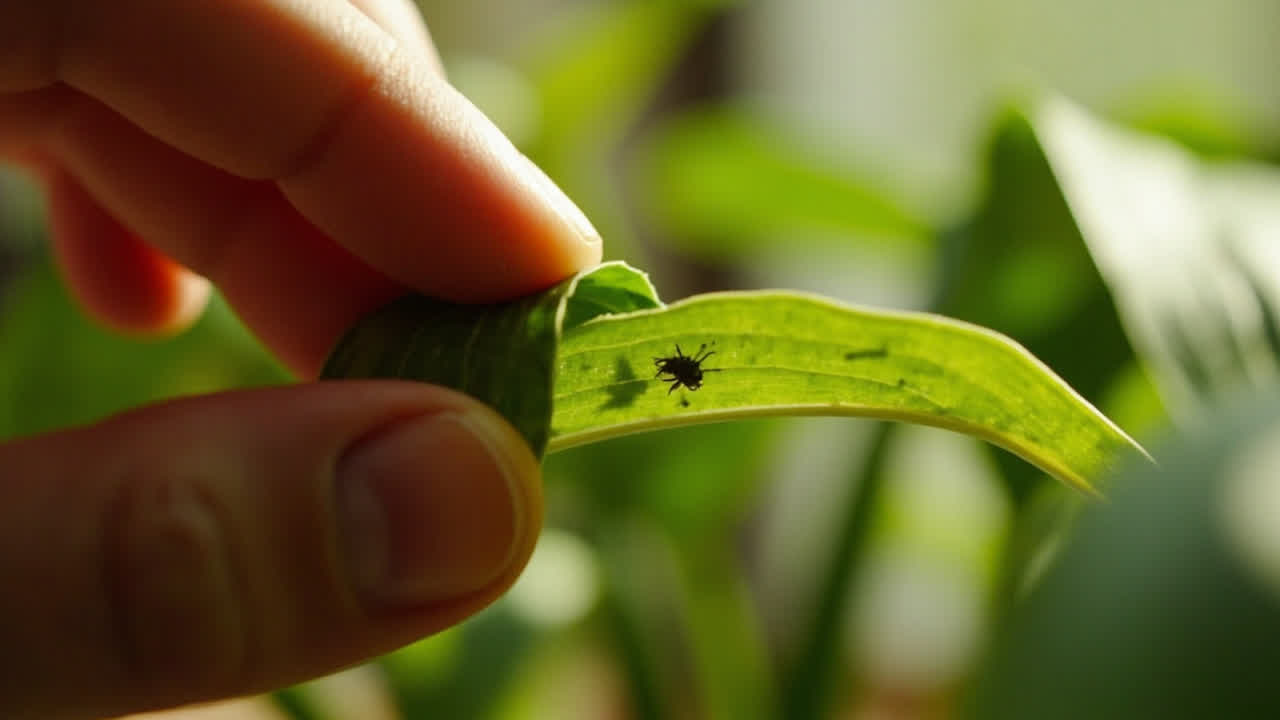
Thrips leave a very particular kind of damage: silvery streaks, distorted new growth, and tiny black specks on the leaf surface. They are slender, fast, and easy to miss, but they can ruin young leaves quickly.
Blue or yellow sticky traps help monitor them, but a trap alone is not enough. Spinosad is usually the most effective first treatment for indoor ornamentals, with repeated applications spaced according to the label. Neem oil can help, but consistency matters more than intensity with thrips.
A Quick Visual Diagnosis
- Sticky leaves and curled new growth: aphids or mealybugs
- Fine webbing and pale stippling: spider mites
- Tiny flies rising from the pot: fungus gnats
- Brown bumps on stems: scale
- Silvery scars and black specks: thrips
How to Keep Pests From Coming Back
Always quarantine new plants before placing them with the rest of your collection. Clean leaves regularly, avoid overwatering, and do not keep stressed plants in poor light just because they look tidy in that corner. A weak plant attracts trouble faster and recovers more slowly.
If a plant is already struggling, combine pest treatment with better basic care. For example, many growers discover that a plant they thought had a simple pest problem also needed pruning, brighter light, or propagation. If the damage is severe, guides on how to propagate house plants can help you save healthy sections before the decline spreads further.
The best indoor pest control is early identification paired with realistic follow-through. One careful inspection and two weeks of consistent treatment usually works better than a shelf full of products used once.
Turn PDF Bank Statements Into Workable Spreadsheets
Your bank statement is a mess of numbers, but your books shouldn't be. Use our converter to get Excel, CSV, or QBO files — ready for QuickBooks.
Try It Free Now