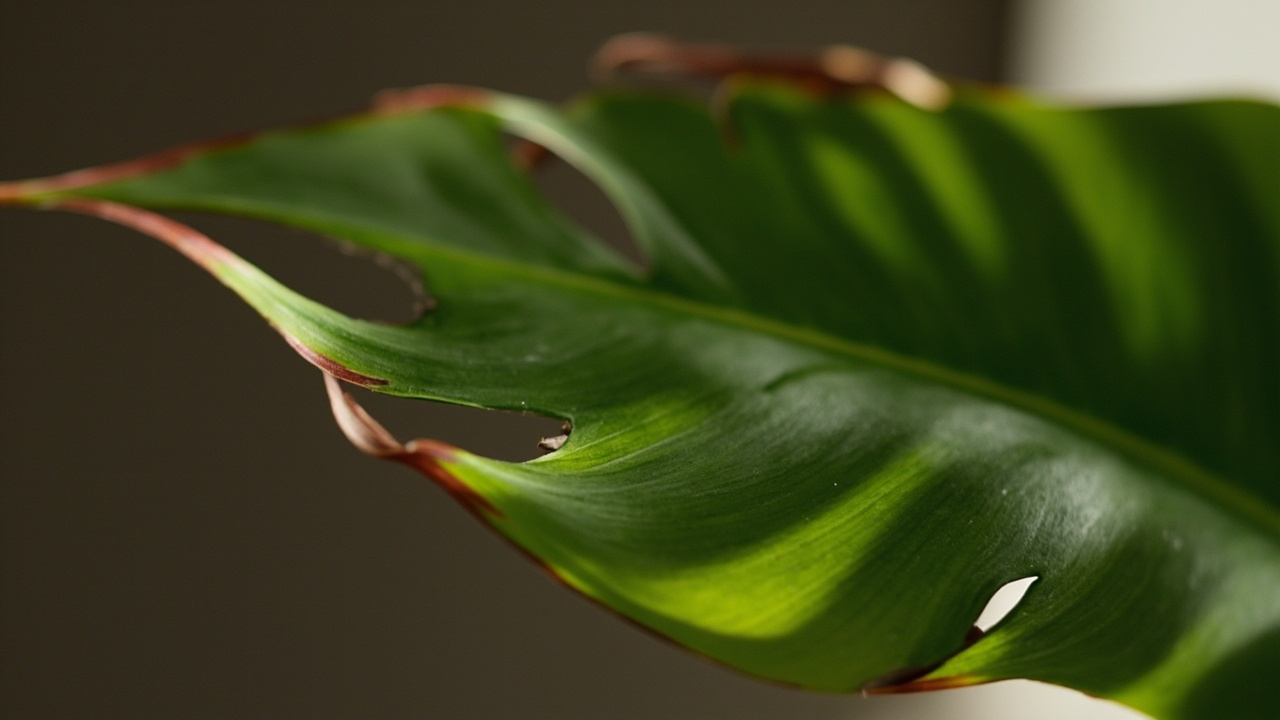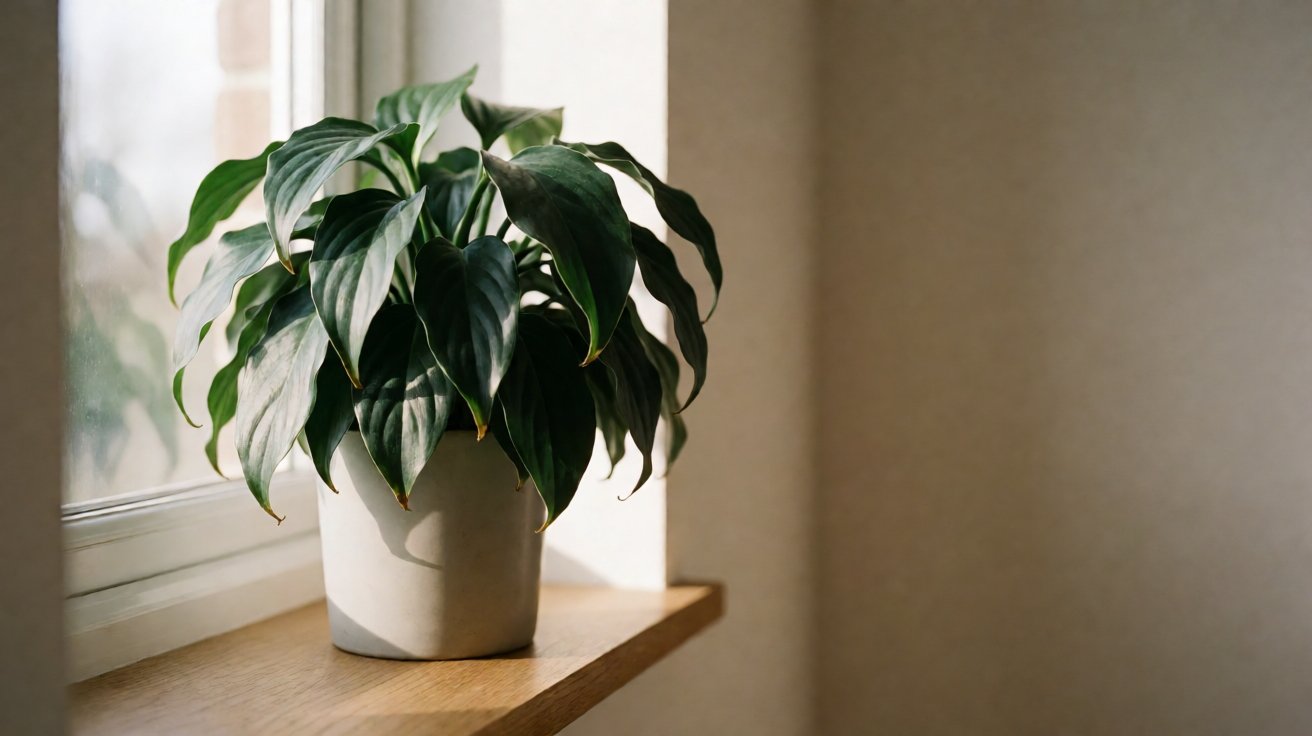

A drooping houseplant leaf is a pressure reading, not a verdict. Inside that leaf, millions of cells are holding water against the cell wall, and that internal pressure, turgor, is what keeps the leaf rigid instead of limp. When a leaf softens, turgor has fallen. That happens when the plant can no longer pull enough water out of the soil to replace what it is losing through its leaves. The leaf does not know why it lost pressure. It only reports it.
Here is the part that makes drooping leaves genuinely confusing. Two opposite failures produce the identical shape. A pot that has dried out too far and a pot that is sitting in water both end with a flaccid leaf. In the first case the plant is starving for water. In the second case the roots are drowning, they have stopped functioning, and the plant is starving for water anyway because the roots that were supposed to fetch it are dead or anaerobic. Same posture, opposite cause, opposite fix. Watering the dry plant is right. Watering the drowned plant is the mistake that finishes it.
Most people guess wrong because they read droop as thirst. It usually is not. It is the far end of the same curve as thirst, and by the time a plant droops from too little water, the soil has already dropped below the point where roots can pull anything out of it. One honest limit up front: no test in this article will tell you which roots are alive. That needs the plant out of the pot, and a plant that has been sitting in water for weeks may not survive the answer.
What drooping actually is: turgor pressure failing
Turgor is not a loose word for hydration. It is a measurable internal state. Water inside a plant cell pushes outward against the cellulose wall, the wall pushes back, and the cell becomes stiff. Stiff cells stacked in a leaf blade hold it up against gravity. Lose the pressure and the same structure collapses, because the walls are thin and the leaf’s own weight now exceeds what the tissue can carry.
What drives turgor down is the water balance between root and leaf. A plant loses water through transpiration, mostly as vapor through stomata, driven by the tension that develops as water is pulled up the xylem. This is the cohesion-tension mechanism, and it is a pull, not a push. Roots do not pump water to the canopy. The canopy pulls it, and the column in the xylem stays under negative pressure the whole way. Your Epipremnum aureum is not sipping through a straw you feed. It is hanging from a thin column of water being tugged upward by evaporation.
Here is the consequence that catches people. Turgor loss is not only a symptom of insufficient water, it feeds back on itself. Once cells lose pressure, stomata close, partly because the guard cells controlling them are themselves losing turgor. Transpiration drops, which sounds like a saving, but the leaf also stops cooling and stops pulling, so the water column weakens further. The plant becomes worse at moving the water it still has. In the plant-science literature, wilting is described as coordinated dysfunction across hydraulics and cell structure, not one valve going bad.
Which means the leaf is a lagging indicator. By the time you see droop, the water deficit has been climbing for hours or days. The posture is the plant’s last report, not its first.
Two failures, one posture
Let us name the two failures precisely, because everything downstream depends on telling them apart.
Water deficit: the pot ran out
When the soil water potential drops far enough, roots can no longer pull water into the plant faster than the leaves lose it. Turgor falls through the leaf, and the plant sheds leaves and stems to protect the rest. This is a hydraulic failure with a clear cause and a reversible fix, provided you catch it before the fine roots die.
Order matters here. The newest, most tender tissue shows it first because it has the least stored water behind it. A Spathiphyllum wallisii collapsing at the soil line while the outer leaves hold on is a plant in deficit, not a plant in rot.
Root asphyxia: the pot cannot drain
When pore space fills and stays full, oxygen in the soil drops toward zero. Roots respire, and they need oxygen to move nutrients across their membranes by active transport. In waterlogged soil, oxygen diffusion collapses roughly ten thousand times faster than water can replace it, and a root that has been anaerobic for hours begins to die. Meanwhile the plant is still transpiring through a full canopy, so the water column weakens anyway.
Add the feedback that makes this lethal. Dead and dying roots release ethylene, a gas. Trapped in wet soil it diffuses upward and inflates the cells just above the soil line. That is stem collapse at the base, and it is the signature of a plant that has been sitting in water far too long. By then, watering again is not a neutral act. You are pouring water onto soil with no oxygen and no living roots to take it up.
The ten-second test that tells them apart
You can separate these two failures with your hands, in about ten seconds, before you reach for the watering can.
Test one: the soil, by feel and by weight
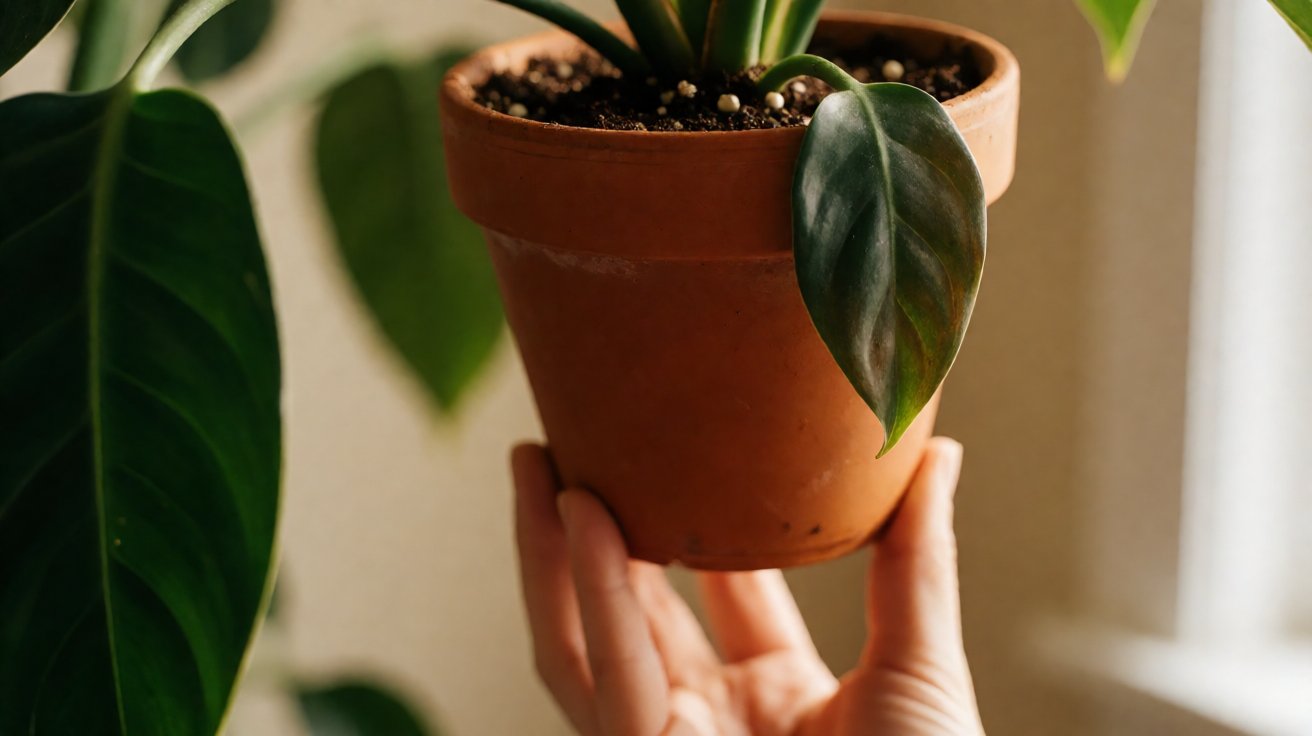
Lift the whole pot off the saucer and feel its weight. This is the single most reliable signal most people never use. A pot holding wet soil is heavy. A pot holding dry soil is light. A pot that felt heavy on Monday and light on Thursday is a pot that drained, and its plant drooped between those two dates.
Then put a finger in the top inch. Two outcomes, and only two.
If the top inch is dry and the soil below is dry and the pot is light, the plant is in deficit. Water it thoroughly, drain it completely, and expect visible improvement within four to six hours. Our watering schedule by species tells you what interval keeps it there.
If the top inch is wet or soggy, or you find standing water in the saucer, the pot is not in deficit. It cannot be. The water is right there. Root asphyxia is the more likely cause, and adding more water is the one move that makes it worse.
Test two: the soil smell
Put your nose near the drainage holes. Healthy damp potting mix smells like forest floor, a little sweet, like turned earth. Waterlogged mix smells sour, stagnant, faintly like a bin. That smell is anaerobic bacteria producing compounds that only thrive without oxygen. If the smell is sour, you are in the asphyxia case regardless of what the leaves look like.
Test three: the stem at the soil line
Pinch the stem just above the soil between thumb and forefinger. A healthy stem on a Ficus elastica or a Dracaena trifasciata feels firm, solid, almost woody. If it feels soft, hollow, or squashes under light pressure, the cells just above the soil have inflated. That is ethylene damage, and it means the damage is at the root end, not the watering-can end.
Three tests, one conclusion. Light pot and dry top inch is thirst. Heavy pot with a sour smell or a soft stem is root failure. Everything in this article follows from that split, including which container you choose next.
What each cause looks like on the actual plant
Turgor loss is universal, so droop alone tells you little. What differs is where it starts and how the rest of the plant looks around it.
Deficit signature. Collapse begins at the tip and margin. The newest growth and the top leaves go first, because they sit furthest from the roots and have the least stored water behind them. Stems stand, leaves hang off them like wet paper. Soil is dry or nearly dry. Growth elsewhere is upright and normal. You may see a crisp brown edge on the lowest leaves as tissue that was already marginal dies. A Chlorophytum comosum in deficit looks exactly like this, and it recovers fast. The same browning shows up on the tip of an otherwise healthy plant for an entirely different reason, which our brown leaf tips guide covers separately.
Root failure signature. The lowest leaves go first, and they go before anything else changes. They yellow from the base while still soft rather than crisping, and soft yellowing low on the plant is a different signal from the crispy lower-leaf pattern in our yellow leaves diagnostic. The stem may be dark at the soil line, and the soil stays wet long after you would expect it to have dried. The whole plant sags evenly, like it has lost its skeleton, rather than tipping from the top. Growth stops entirely. In a Calathea orbifolia, uniformly limp new leaves plus soil that never dries is the pattern to watch for.
The overlap you cannot separate. A plant that has been dry for weeks will also show brown tips, and sometimes yellowing at the base, so it looks like root failure until you lift the pot. This is where the weight test earns its place. It does not need the leaf symptoms to be clean. It only needs the pot to be honest, and dry soil weighs less than wet soil every single time.
What actually works for each one
If it is simple deficit
Water the entire root ball, not the surface. Run water through the pot until it comes out the bottom, then empty the saucer. A shallow pour wets the top inch and leaves the wettest, oldest roots in dry soil, which teaches the plant to hold its shallowest roots and abandon the rest. The recovery clock starts at that full soak, not at the first sip.
Then fix the interval, not the symptom. Repeatedly rescuing a plant from collapse trains it to collapse. The complete indoor plant care guide covers how light, pot size, and airflow change how fast a pot dries, and the speed of your watering should track that rather than a fixed calendar.
If it is root asphyxia
Get the plant out of the pot and look. Healthy roots are pale cream or white and firm. Dead roots are dark brown to black, soft, and often smell sour on their own. Trim them with clean scissors. Cutting away dead root is not damage to the plant, it is the removal of tissue that is already gone and is poisoning the rest.
Repot into a container with drainage holes you can actually see, and use a mix that holds air rather than a dense soil that collapses into a brick when wet. Water it once to settle the new medium, then leave it alone until the top two centimetres are dry. Overwatering a repotted plant is the most common way people kill a plant they were trying to save.
Repotting is also the moment to check the roots of a plant that was already struggling, which is the first move in our seven day rescue plan.
If you are not sure which case you are in
Change one variable for a week and watch. If the droop came from drought, a single thorough watering changes the plant within a day. If nothing at all changes, the water was never the binding constraint and the root system is the problem. That single test costs you a week and saves you from months of guessing.
The next seven days will tell you which one you had
Fixing the cause takes minutes. Confirming the fix takes a week, because living tissue responds on its own schedule and new growth is the only proof that counts.
If it was simple deficit, the lifted leaves should look noticeably firmer within four to six hours of a thorough watering, and the whole plant should hold its posture again within two days. New growth over the next seven to fourteen days tells you the roots recovered rather than merely the leaves.
If it was root asphyxia, do not expect a week. Removing the plant from the pot and cutting away dark, mushy, sour-smelling roots is the first step, and you should expect it to be unpleasant. Expect four to eight weeks before you see new growth, and expect some leaf loss along the way. That loss is not a setback. It is the plant cutting its overhead to survive on what it has.
If nothing changes in seven days, the third possibility is the one nobody wants to name: the roots are gone. A plant can be limp because it is dehydrating over a root ball that no longer has enough living tissue to fetch water, no matter what the soil surface says. Our comprehensive wilting plant guide covers the longer recovery sequence once you are past the first week.
Species-specific droop behaves differently in the details. A money plant drooping often means a buried stem node is looking for light rather than water. A calathea that drops is usually reacting to dry air before the soil is involved at all. A snake plant leaning is usually a light and pot-shape problem, not a water problem at all. Same posture, different physics.
Run the weight test tonight. The pot will answer, and the leaves will confirm it by morning.
From PDF to Excel in one click
Forget retyping line by line. Upload any bank statement, get a spreadsheet you can actually use. Your files are never stored, and you can test the converter with 3 free conversions.
Try it free