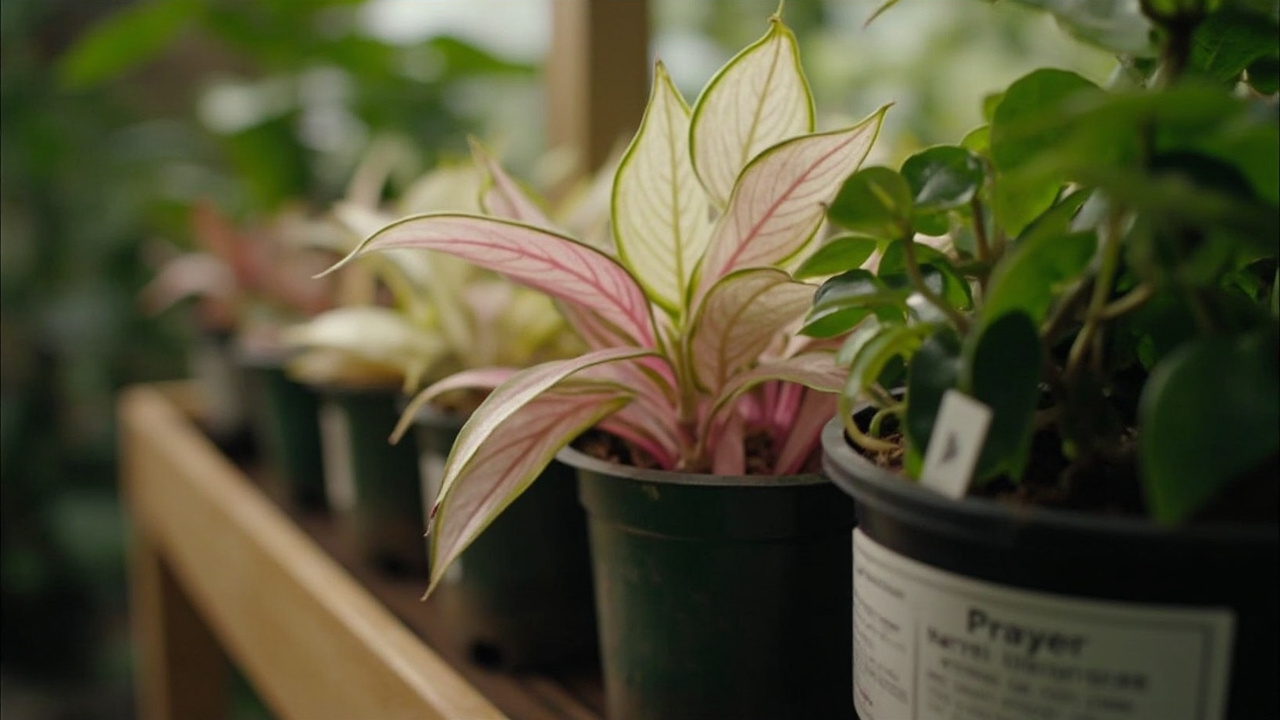
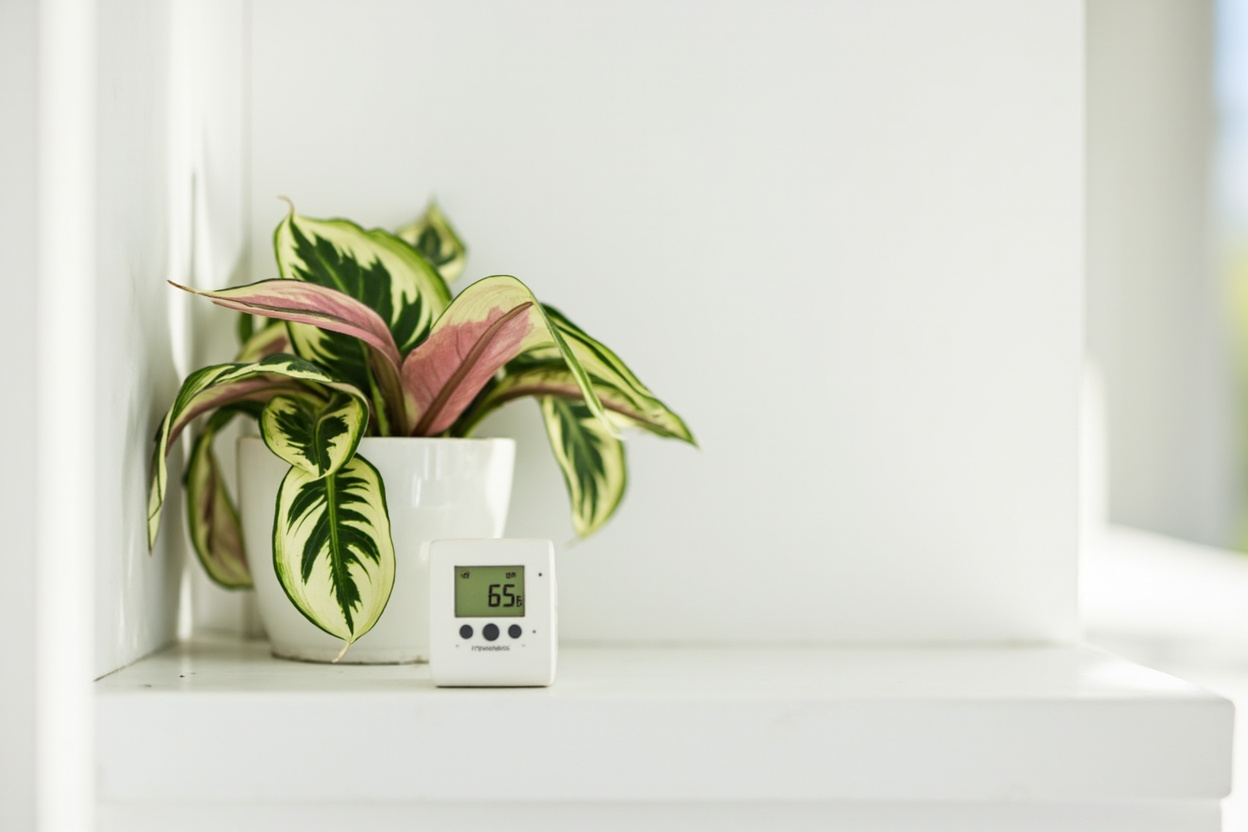
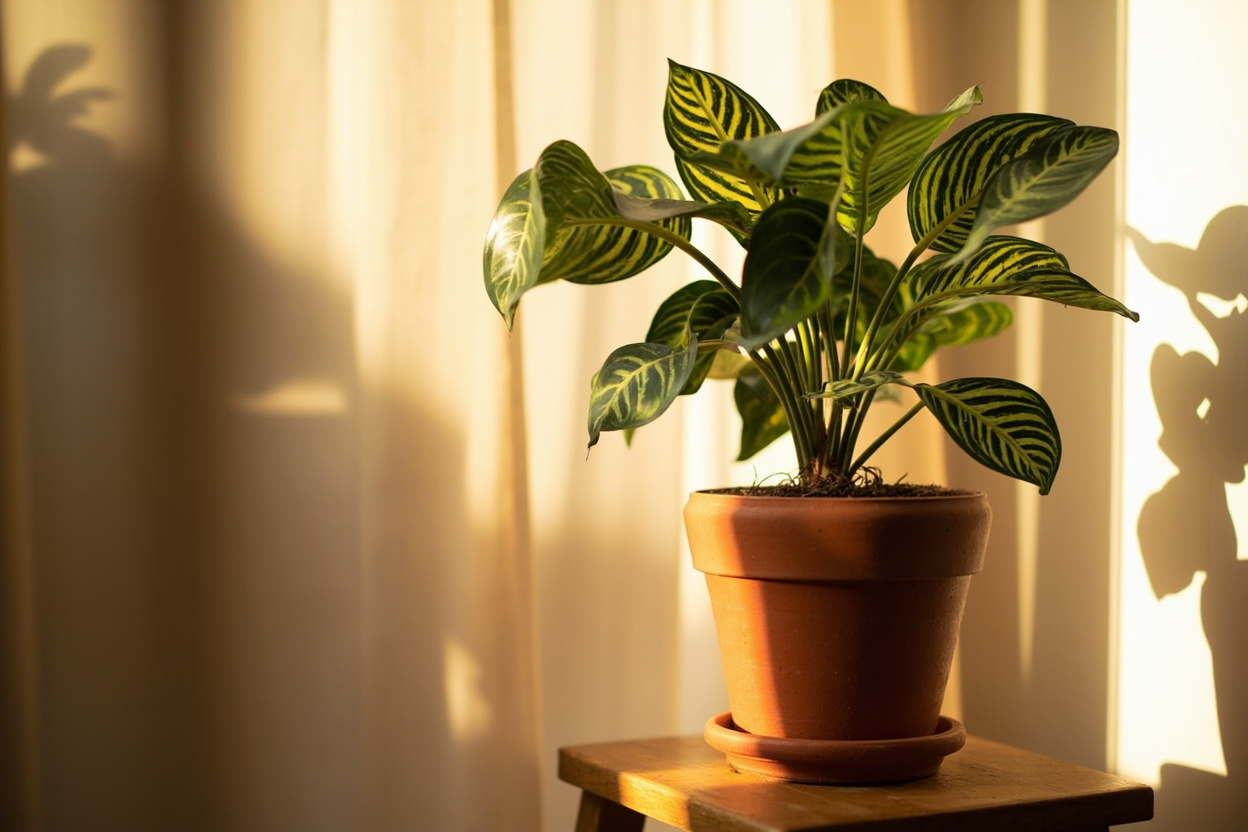
Curling prayer plant leaves are a water message. Inward curl, downward curl, and soft curl each mean something different — and the fix for one makes the other worse. Guess wrong and the curl sets permanently on the leaf. The reader who reads fast wins; the reader who guesses loses the leaf.
The prayer plant’s broad, thin leaves respond to water stress faster than almost any other houseplant. A pothos wilts in days. A prayer plant curls in hours. The speed is a feature: fast feedback lets the reader catch the problem before root damage starts.
This guide walks through the three curl types, what causes each one, and the triage order that fixes the right problem first. The deadline for each fix is named — miss it and the leaf stays curled for good.
The Three Curl Types: Inward, Downward, and Soft
Identify the curl type by the leaf angle. Inward curl rolls the leaf edges toward the center line.
Downward curl drops the whole leaf from the petiole. Soft curl combines downward droop with a limp texture.
Inward edge curl is a humidity signal. The prayer plant rolls its leaf edges to reduce surface area and slow transpiration.
The cause is almost always below 40% RH.
Downward whole-leaf curl is a root-zone signal. The roots cannot supply enough water to keep the leaf turgid.
The cause is almost always underwatering or tap water chemical stress.
Soft curl with yellow tinge is a root-rot signal. The roots are suffocating in wet soil and the leaf goes limp from the base up.
Act within 48 hours or the plant declines past recovery.
For the full care routine that prevents all three curl types, the cluster prayer plant care guide covers the baseline.
Curl Type 1: Inward Edge Curl: Low Humidity or Salt Buildup
Inward edge curl is the most common prayer plant signal and the most misdiagnosed. The reader sees the curl and waters more — but water at the roots does not fix a humidity problem at the leaf surface.
The prayer plant rolls its leaf edges inward to reduce exposed surface area. It is a mechanical response: the stomata on the leaf underside close, transpiration slows, and the leaf curls because the cells at the edge lose turgor pressure first.
Below 40% RH, the prayer plant shows inward curl within 7 to 10 days. Below 30% RH, the curl appears in 3 to 5 days. Most heated homes sit at 25 to 35% RH in winter. The prayer plant never adapts.
Salt buildup from fertilizer causes the same inward curl through a different path. Dissolved salts reduce the water potential in the soil, so the roots work harder to extract moisture. Flush the soil and the curl stops on new growth within 1 to 2 weeks.
The honest limit: no prayer plant leaf that has been curled for 6+ weeks uncurls fully. The existing curled leaves stay curled.
For the humidifier, grouping, and pebble-tray methods that raise local RH above 60%, the cluster prayer plant humidity is the pair.
Curl Type 2: Downward Whole-Leaf Curl: Underwatering or Tap Water
Downward prayer plant leaf curl is a dehydration signal. The leaf drops from the petiole because the roots cannot supply enough water to keep the tissue turgid. The whole leaf is affected, not just the edges.
Underwatering is the primary cause. The soil has dried past the top 2 inches — the reader waited one watering too long, or watered too lightly and only wet the top layer. The fix: water slowly until it runs out the drainage hole, wait 5 minutes, water again. The leaves perk up within 24 to 48 hours.
Tap water is the secondary cause. Chlorine and fluoride stress the root hairs. The soil is moist but the plant acts thirsty. Switch to distilled or rainwater and the curl resolves in 1 to 2 weeks.
Winter tap water is colder and shocks the prayer plant’s roots within minutes. Let cold tap water sit at room temperature for 24 hours before using it. A one-time cold-water shock recovers in 3 to 5 days.
For the full watering cadence, the cluster prayer plant watering guide covers the fluoride trap and seasonal adjustments.
Curl Type 3: Soft Curl with Yellow Tinge: Overwatering or Root Rot
Soft curl is the prayer plant’s emergency signal. The leaf goes limp from the base up, and the color shifts from green to yellow-green. The reader has 48 to 72 hours to act before the root system is too damaged to recover.
The cause is overwatering or poor drainage — or both. The soil stays wet for 10+ days between waterings. The roots suffocate, then rot. A sour, musty smell at the base of the plant confirms the diagnosis.
Remove the prayer plant from its pot and check the roots. Healthy roots are white or cream-colored with a firm texture. Brown, slimy roots mean rot has started. Trim rot back to healthy tissue with sterilized scissors.
Repot in a 1:1 peat-and-perlite mix with drainage holes that actually drain. For the first 5 to 7 days, the soil stays moist but not wet. Wilting continues during this window — resist the urge to water more.
The honest limit: if the crown is soft and mushy, the rot has reached the growing point. The plant will not recover. Save healthy stem cuttings and start over.
Triage Order: Which Curl to Fix First and How Long to Wait
Work through the three curl types in this order. Each step has a deadline.
Inward edge curl: raise humidity to 60%+ within 2 weeks of noticing the curl. Expect new uncurled growth in 3 to 4 weeks. Existing curled leaves stay curled — the fix is for the next generation.
Downward whole-leaf curl: water thoroughly if the soil is bone-dry. Expect perk-up in 24 to 48 hours. If the curl persists after 72 hours with moist soil, check for tap water chemical stress and switch to distilled.
Soft curl with yellow tinge: act within 48 hours. Check roots, trim rot, repot. New growth appears in 2 to 3 weeks if the rot was caught early.
For the brown-leaf companion that often follows a curl diagnosis that went too long, the cluster prayer plant leaves turning brown walks through the patterns.
When Curling Leads to Browning: The Progression Line
The curl-to-brown progression is a timeline. Week 1 to 2: the leaf curls but feels normal. Week 3 to 4: the curl sets and the edges start to crisp. Week 5 to 6: the curled tissue turns brown and dies.
Catch the curl at week 1 to 2 and fix the cause: the leaf never browns. Catch the curl at week 3 to 4: the curled leaf stays curled but does not brown. Miss the curl past week 5: the leaf browns and the reader trims it off.
The progression is the same for all three curl types. The difference is speed: root-rot soft curl goes from first curl to dead leaf in 2 to 3 weeks. Humidity inward curl goes from first curl to dead leaf in 5 to 6 weeks. Fast curl means fast response.
For the brown-leaf patterns that result from curl progression, the cluster prayer plant leaves turning brown covers the edges-vs-tips-vs-spots diagnostic.
Turn PDF Bank Statements Into Workable Spreadsheets
Your bank statement is a mess of numbers, but your books shouldn't be. Use our converter to get Excel, CSV, or QBO files — ready for QuickBooks.
Try It Free Now