Blueberries need more nitrogen than almost any other fruit crop, but the wrong fertilizer will push your soil pH above 5.5 and lock out the iron your plants need to use it. That tension — high nutrient demand in a narrow acidic window — is why most generic feeding advice fails for blueberries.
The fix is straightforward: use acid-forming nitrogen sources that feed the plant while keeping pH low. Ammonium sulfate and sulfur-coated urea do this. Standard lawn fertilizer, Miracle-Gro, and most all-purpose plant foods do not. The difference shows up in leaf color within a single growing season.
This guide covers which products work, when to apply them through the season, how much to use at each plant age, and what to do if you over-feed. Start with the soil pH test — if it is above 5.5, fix that first with elemental sulfur before adding any fertilizer. No feed can overcome an alkaline root zone. Our blueberry soil pH guide covers testing and amendment in detail.
Why Blueberry Fertilizing Is Different from Other Fruit Bushes
Blueberries have a nitrogen demand comparable to raspberries and blackberries — roughly 1 ounce of actual nitrogen per year for a mature bush — but they evolved in acidic, low-fertility soils where ericoid mycorrhizal fungi do the heavy lifting on nutrient uptake. These fungi thrive at pH 4.5-5.5 and shut down above 6.0, which means the plant’s entire nutrient acquisition system depends on maintaining that narrow range.
Most common fertilizers use nitrate-nitrogen or urea formulations that temporarily raise rhizosphere pH as soil bacteria convert ammonium to nitrate. In neutral-soil gardens this is harmless. In blueberry plantings, it triggers iron chlorosis: leaves turn yellow between veins while the plant sits in soil that technically has enough iron — it simply cannot absorb it above pH 5.5. Cornell Cooperative Extension notes that this is the single most common nutritional disorder in home blueberry plantings, and it is almost always fertilizer-induced rather than a true soil deficiency.
The ericoid mycorrhizal partnership is the reason blueberries survive in soils where other fruit crops starve. These fungal hyphae extend far beyond the root zone and chelate iron, manganese, and zinc directly from organic matter in acidic conditions. Feed the fungi with the right pH, and they feed the plant. Disrupt the pH with alkaline fertilizers, and you sever the partnership. The plant does not die immediately — it declines over two to three seasons, which is why many growers miss the connection between their fertilizing habit and the slow yellowing they attribute to age.
The Right Fertilizers for Acid-Loving Blueberries
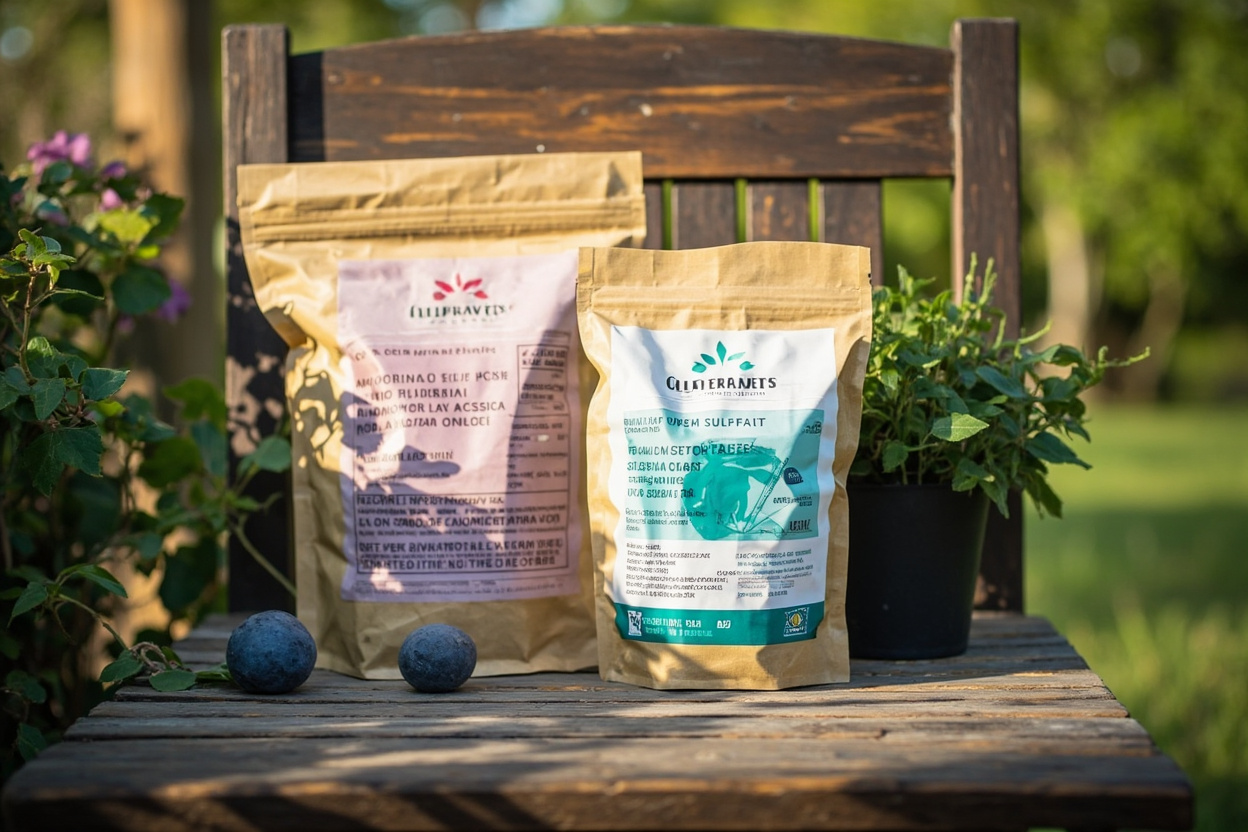
The acid-forming fertilizer principle applies to other ericaceous fruit crops too — gooseberries benefit from similar low-pH nutrition, though they tolerate a wider pH range (5.5–7.0) than blueberries.
Ammonium sulfate (21-0-0) is the standard recommendation from university extension services for established blueberry bushes in soil with pH above 5.0. It delivers nitrogen in the ammonium form, which soil bacteria convert to nitrate while releasing hydrogen ions — a process that actively lowers pH. The trade-off is burn risk: apply more than 2 ounces per foot of bush height, or band it against the crown, and you will see leaf scorch within a week. Cornell’s guideline is 1 ounce per foot of current-season cane growth, banded at the drip line, applied in two split doses.
Sulfur-coated urea (SCU, typically 36-0-0 or 40-0-0) is the safer option for container plantings and for growers who want a slower release. The sulfur coating delays nitrogen availability by 2-3 weeks and provides additional acidification as the coating breaks down. Use roughly two-thirds the rate of ammonium sulfate because the analysis is higher. University of Florida IFAS recommends SCU for southern highbush varieties in pine-bark-based container mixes, where the low native organic matter gives you less pH buffering and faster drift.
Organic options work but require more volume and planning. Cottonseed meal (6-2-1) is naturally acidic and releases nitrogen over 4-6 weeks — apply 2-3 pounds per mature bush in early spring. Blood meal (12-0-0) is faster-acting but pH-neutral, so pair it with a top-dressing of elemental sulfur. Fish emulsion (5-1-1) is the best liquid option for container blueberries: dilute to half strength and apply every 3-4 weeks from April through July. Penn State Extension cautions that compost-heavy regimes, especially those using municipal compost, often contain limestone particles that slowly push pH above the blueberry threshold — test compost pH before applying it to blueberries.
Avoid anything with a significant nitrate fraction (calcium nitrate, potassium nitrate), any fertilizer containing dolomitic lime, and high-phosphorus formulations. Blueberries are phosphorus-sensitive — excess phosphorus binds iron in the soil and causes the same chlorosis symptoms as high pH. If your soil test shows adequate phosphorus above 25 ppm, skip it entirely. Variety also affects nutrient demand — our blueberry varieties guide notes which types are heavy feeders.
When and How to Feed Blueberries Through the Season
The primary feeding happens at bud break, when the first flower buds begin to swell and show silver scaling — typically March in USDA zones 6-7, April in zones 4-5, and February in zones 8-9. Apply ammonium sulfate at 1 ounce per foot of bush height (measure from ground to the tallest living cane), banded in a ring 6-12 inches from the crown, then water in with 1-2 gallons. Do not apply to dormant bushes — the roots are not actively uptake-ready and the nitrogen will leach before the plant can use it.
The second feeding, if needed, happens at petal fall when 50% of petals have dropped and the first tiny fruitlets are visible. Use half the spring rate. Only apply this second feeding if the spring leaf color is pale green or yellow-green rather than deep green. Dark green leaves in May mean the spring feeding was sufficient; a second dose will push vegetative cane growth at the expense of next year’s flower bud initiation, which happens in June and July.
Container blueberries need a different protocol entirely. Soilless pine bark mixes have almost no native nutrient reserve, and frequent watering leaches nitrogen within days. Feed container bushes every 3-4 weeks from April through July using half-strength fish emulsion or a quarter-strength ammonium sulfate solution (1 teaspoon per gallon of water). NC State Extension research shows that missing more than two consecutive feedings in June-July directly reduces the flower bud count for the following spring, because the initiation window is narrow and the plant prioritizes cane survival over reproduction when nitrogen is scarce.
Stop all nitrogen feeding by July 1 in zones 6-7, July 15 in zones 8-9. Late-season nitrogen pushes tender new growth that has not hardened off before frost. This growth winter-kills at temperatures below 20°F, and the dieback creates entry points for fungal canker diseases. If your bushes are genuinely underperforming in August, the problem is almost always pH or drainage, not nitrogen deficiency — test before you feed. First-year bushes have different needs — our planting guide covers the establishment-year protocol.
Signs of Over-Fertilizing and How to Recover
Nitrogen burn shows up as brown, crispy margins on the newest leaves within 7-10 days of application. The damage is cosmetic on mature leaves but stunts the current season’s cane growth if it hits the terminal bud. The fix is immediate: flush the root zone with 2-3 gallons of water per bush to push excess nitrogen below the root depth, then skip the next scheduled feeding. The plant will recover — blueberries are resilient — but you will lose 2-3 weeks of growing season.
A subtler over-fertilization symptom is dark green, almost blue-green leaves with abundant soft cane growth but few or no flower buds by mid-summer. This is nitrogen excess without a phosphorus or potassium balance, and it is common in growers who feed monthly to be safe. The plant is in full vegetative mode and has no signal to shift into reproductive growth. Correct by skipping the next two feedings and ensuring soil phosphorus is adequate (a soil test confirms this). The following spring, the plant will reallocate to flower bud production.
If you suspect pH drift from repeated alkaline fertilizer applications, test the soil immediately. A reading above 5.8 confirms the diagnosis. Apply elemental sulfur at the rate recommended for your soil type (1 pound per 100 square feet for sandy soil, 2 pounds for clay, to lower pH by one full point), water in well, and retest in 6-8 weeks. Do not apply sulfur and ammonium sulfate simultaneously in the same week — the combined acidification can drop pH below 4.0 and damage the root zone. If your bush shows severe decline from fertilizer damage, our save dying blueberry plant guide covers recovery surgery.
Soil Testing: The Step Most Blueberry Growers Skip
Test soil pH in early March before the first feeding, and again in mid-June after the second feeding if you applied one. A rise from 5.0 to 5.8 between those two tests means your fertilizer is too alkaline for blueberries, even if the plant looks healthy right now. The chlorosis will appear next spring when the mycorrhizal network has further degraded.
A $15 home pH meter with a soil probe is sufficient for monitoring trends between lab tests. Insert the probe 4-6 inches deep at the drip line, water the area lightly if the soil is bone-dry, and wait 60 seconds for the reading to stabilize. For a full nutrient panel — nitrogen, phosphorus, potassium, iron, manganese, and organic matter — send a sample to your state extension lab. The cost is typically $15-25 and the results include lime or sulfur recommendations calibrated to your soil type. Most state labs offer a specific acid-loving plants panel that includes the micronutrients blueberries care about most.
If your pH is in the 4.5-5.5 range but older leaves are uniformly pale green or yellow between veins, the problem is likely true iron deficiency rather than pH lockout. Apply chelated iron (Fe-DTPA or Fe-EDDHA) at 1 ounce per bush as a soil drench, or foliar-spray at the label rate for a faster green-up within 7-10 days. Chelated iron bypasses the pH-lockout pathway by keeping iron soluble in a form the roots can absorb directly. It is a rescue treatment, not a substitute for correct pH management — use it to green up the plant while you address the underlying pH drift with sulfur. Iron chlorosis from high pH also weakens roots against Phytophthora root rot, the most common soil-borne disease in waterlogged blueberry plantings.
Turn any PDF statement into a clean sheet
Skip the typos and the hours of copying. Our converter handles any bank statement format and outputs Excel, CSV, or QBO for QuickBooks. No file retention, free to try.